Invader: The Elusive Artist Turning the World Into a Global Game
Invader is the anonymous French street artist who has transformed the world into a playable artwork. Across more than 4,400 mosaics in 87 territories, his pixelated ceramic figures have appeared on city walls, rooftops, monuments, underwater sites, in the stratosphere and aboard the International Space Station. What begins as the visual language of 8-bit gaming becomes, in Invader’s hands, one of the most ambitious public art projects of the contemporary era.
His mosaics are often described as tags, yet they function more precisely as coded coordinates within a global composition. Each one marks a point of contact between digital culture and physical architecture, between the 8-bit pixel and the city wall, between private authorship and collective pursuit. Invader converts public space into a game board, then invites the world to play.

Fontainebleau Invaded: The Mosaic Art of Street Artist Invader Takes Over the Historic Town. Image © Invader
- Who Is Invader?
- Why Does Invader Use Mosaics?
- How Did Invader Turn Public Space Into a Game?
- What Is Flash Invaders?
- How Many Invader Mosaics Are There?
- Where Has Invader Installed His Work?
- From SpaceOne to the ISS: How Invader Made the Name Literal
- Why Is Invader One of the Most Exciting Artists of Our Generation?
- GraffitiStreet Perspective
- Frequently Asked Questions About Invader
- Discover Invader at GraffitiStreet
Who Is Invader?
Invader is an anonymous French artist whose practice began in the late 1990s and has since expanded into a worldwide network of ceramic mosaic invasions. His chosen name comes from the 1978 arcade game Space Invaders, and his visual language draws from the pixelated forms of early video games, where blocks of colour became characters, signals, threats and rewards.
The anonymity is essential to the work. Invader’s hidden identity allows the project to become larger than biography. The artist withdraws so that the system can expand. His authorship is built through disappearance. He is everywhere through the work, yet absent as a conventional public personality.
This absence gives the mosaics their unusual authority. They appear without announcement, fixed to architecture like fragments of a coded language. They can be grand or modest in scale, often encountered by chance, or part of a planned hunt, yet together they form a project of extraordinary ambition. Invader has created a world of signs that can be read locally, mapped globally and pursued obsessively by those who enter the game.
His practice now occupies several worlds at once: public art, gaming culture, urban mythology, digital participation, mapping, travel and contemporary visual culture. That breadth is exactly what makes Invader so important. He has created a system that can live on a wall, inside an app, in a photograph, in a city guide and in the memory of a passer-by who suddenly begins to look up.

Invader, Djerba 2019. Image copyright Invader
Why Does Invader Use Mosaics?
Invader uses mosaics because ceramic tiles allow him to translate the visual language of 8-bit video games into the physical world. Each tile behaves like a pixel. Placed together, they form the blocky, low-resolution characters that defined early arcade culture, especially the graphic universe of Space Invaders.
This is one of the most elegant ideas in his practice. The pixel, usually held inside a screen, becomes tactile, architectural and public. A digital image is rebuilt by hand, tile by tile, then fixed onto the surface of the city. Invader turns the wall into a screen, but one made from ceramic, weather, time and place.
His own explanation is direct: the Space Invaders creatures are made of pixels and are therefore naturally suited to tile reproduction. That matters because the mosaic is not primarily a decorative flourish. It is the material answer to the 8-bit image.
Mosaic is an ancient medium, while Invader uses it to speak in the language of late 20th-century gaming. His work sits between those worlds: material permanence and digital memory, public architecture and screen culture.
The idea is simple and powerful. Invader takes the pixel out of the screen and places it into the street. His tiles may be small, but together they change how people look at the city, turning walls, corners and buildings into part of a larger game of discovery.
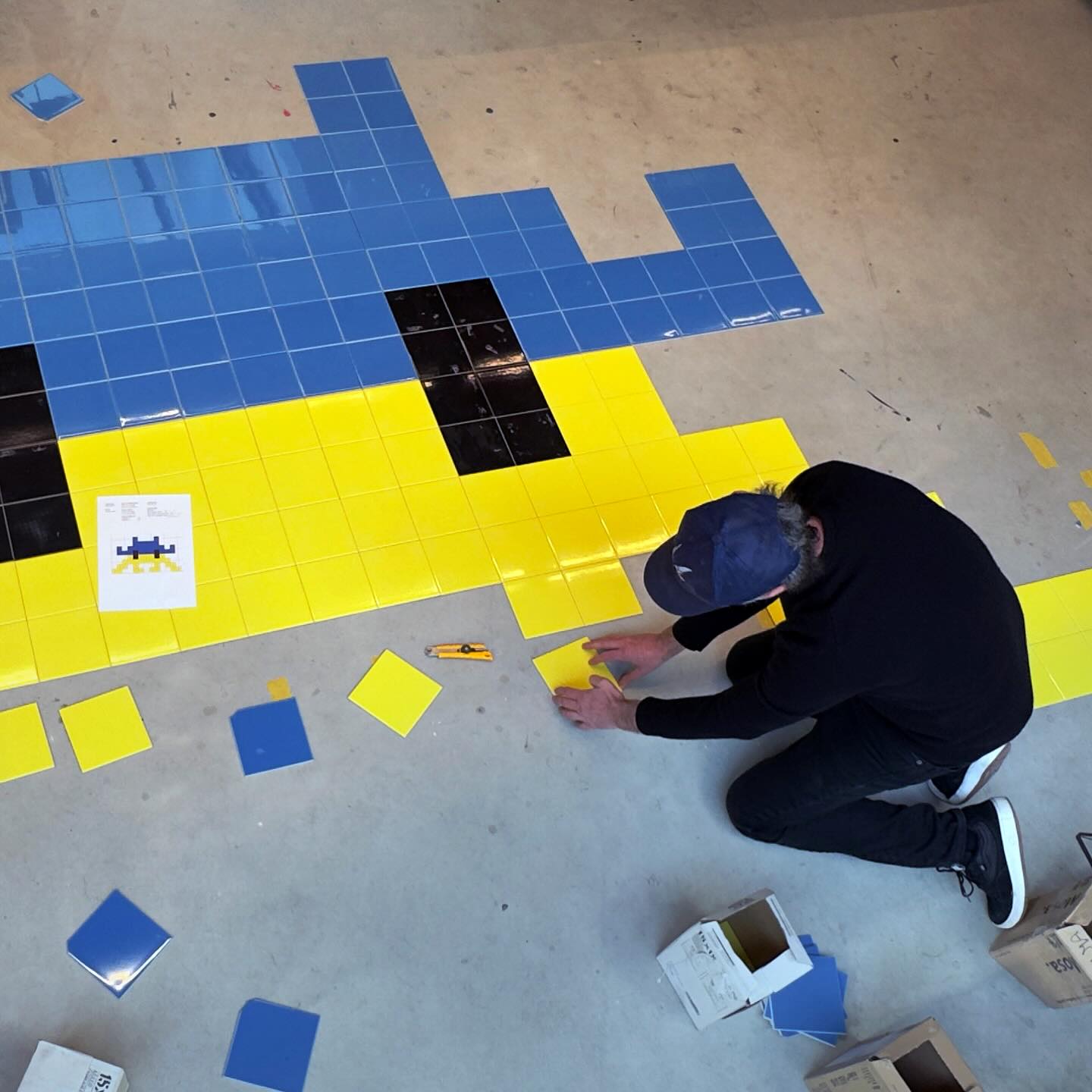
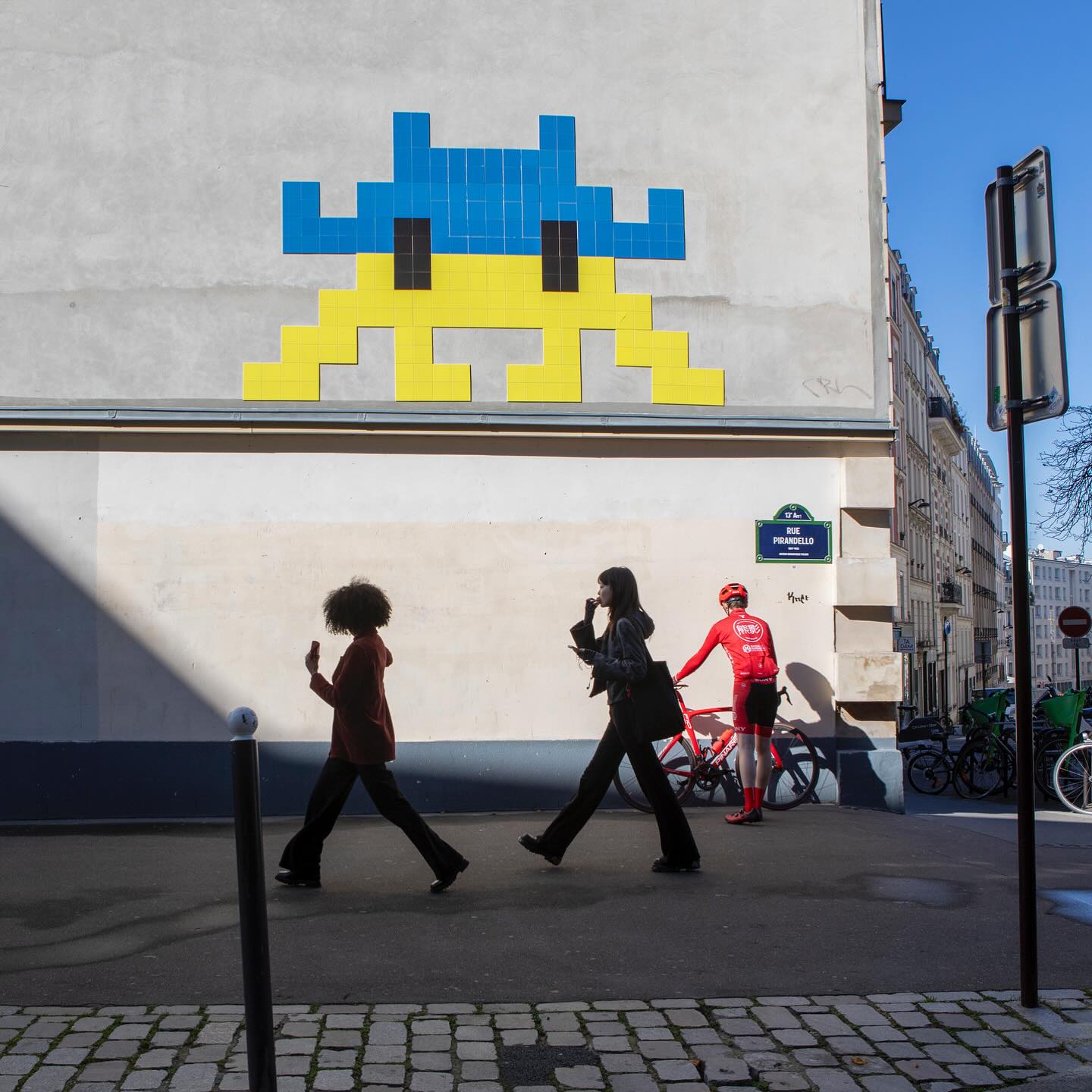
Invader, PA_1535, Ukraine, Invade with Art mosaic. © Invader
How Did Invader Turn Public Space Into a Game?
The most radical part of Invader’s practice lies in the way it changes how public space is experienced. A street is no longer simply a route through the city, and a wall is no longer simply an architectural surface, because each mosaic introduces the possibility of a clue, a coordinate or a point within a larger system of discovery. Once a viewer has noticed one Invader, the city begins to behave differently, inviting a more alert kind of looking in which corners, bridges, façades, rooftops and doorways all seem capable of holding a hidden signal.
This is where Invader’s work feels especially prescient. Long before gamification became a dominant cultural language, he had already created a public artwork that anticipated the behaviours of GPS culture, digital collecting, live mapping and social sharing. His audience does not merely consume the image as a passing street encounter; it moves through the city in response to it, searching, recording, comparing and remembering each discovery as part of a wider experience.
The game may appear light on the surface, yet its conceptual structure is remarkably sophisticated. His mosaics ask people to slow down, look higher, check the overlooked edges of the city and move through familiar streets with renewed curiosity, making the urban environment feel active, intelligent and quietly alive.


Invader, Invasion, Hong Kong 2017. Image copyright Invader
What Is Flash Invaders?
Flash Invaders is the official app connected to Invader’s practice. It allows users to find, scan and score the artist’s mosaics around the world. The app transforms public art into a reality game, where discovery becomes proof and proof becomes participation.
To “flash” an Invader is to confirm presence. It tells the system that the viewer found the work, stood before it and activated one point in the network. The mosaic remains physical, but the encounter becomes digital. It enters a personal archive, a score and a community of players.
This matters because it gives Invader’s public art a second life. The work is on the wall, and it is also in the map, in the app, in the image archive and in the shared behaviour of thousands of players. Invader’s project belongs to the street, and also to the database.
That is why his work feels so contemporary. The mosaic may look like retro gaming, but the experience of searching, scanning and scoring belongs completely to the present. Flash Invaders makes visible what was already embedded in the work: the idea that seeing can become a form of play, and play can become a way of knowing the city.


Invader, Invasion, Potosi. Image copyright Invader
How Many Invader Mosaics Are There?
Invader’s official world map currently records more than 4,400 Invaders across 87 territories, a number that continues to evolve as new invasions appear and existing works are restored, damaged, removed or rediscovered.
The figure is important because scale is central to the project’s structure. A single Invader mosaic can be charming, witty or quietly strange. Thousands of them become something else entirely. They form a distributed artwork, a networked composition that cannot be held in one room, owned by one institution or understood through one image.
This accumulation gives the work its force. Each mosaic extends the project’s geography. Each territory adds another layer to the myth. Each city becomes both a place and a score. Invader’s art is therefore the object on the wall and the relationship between all the objects, all the locations and all the people who search for them.
The project is also unstable in the way all living public art is unstable. Some mosaics remain for decades, while others are attempted to be stolen, are damaged, are restored by the reactivated teams or become part of a city’s unofficial memory. The map continues, but the street always has its own weather, politics and accidents. That tension between permanence and disappearance gives the invasion its emotional charge.
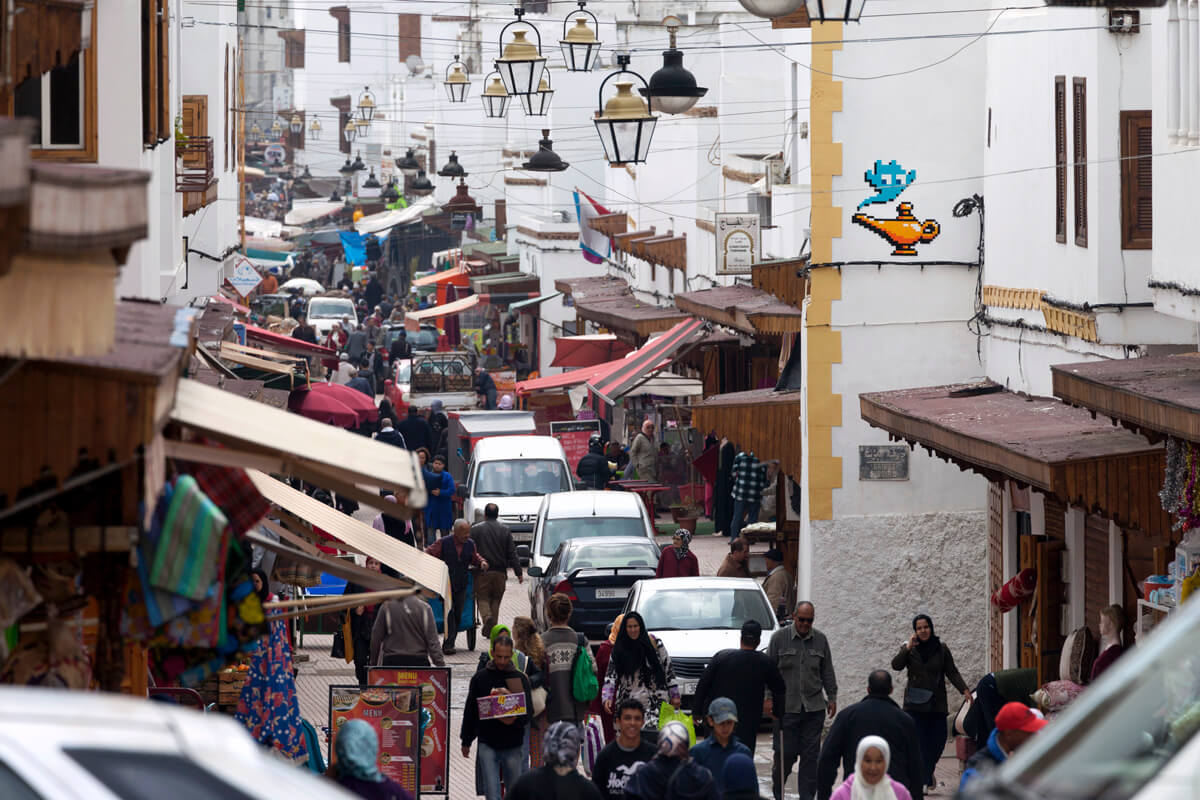
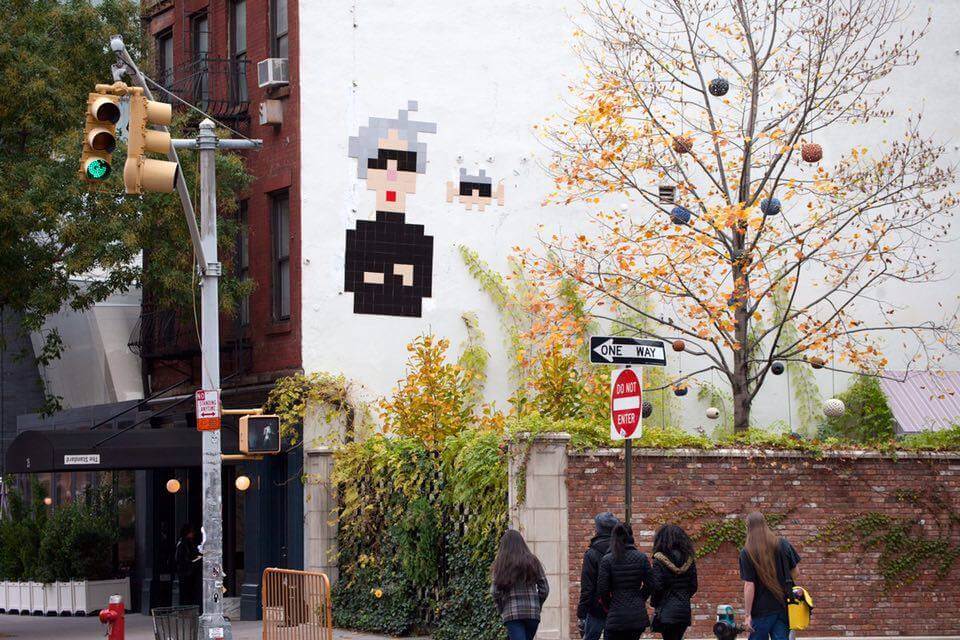
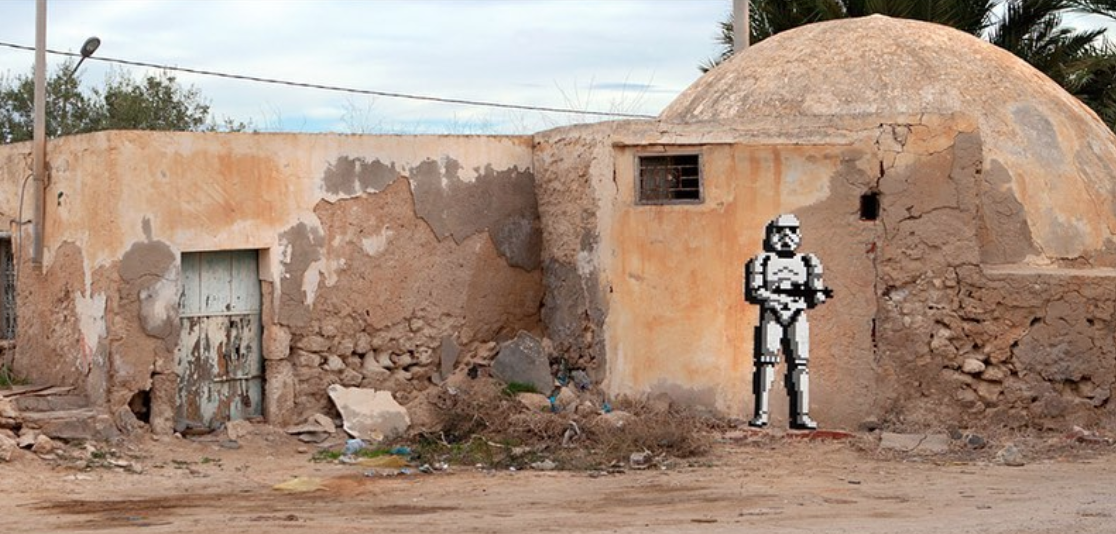
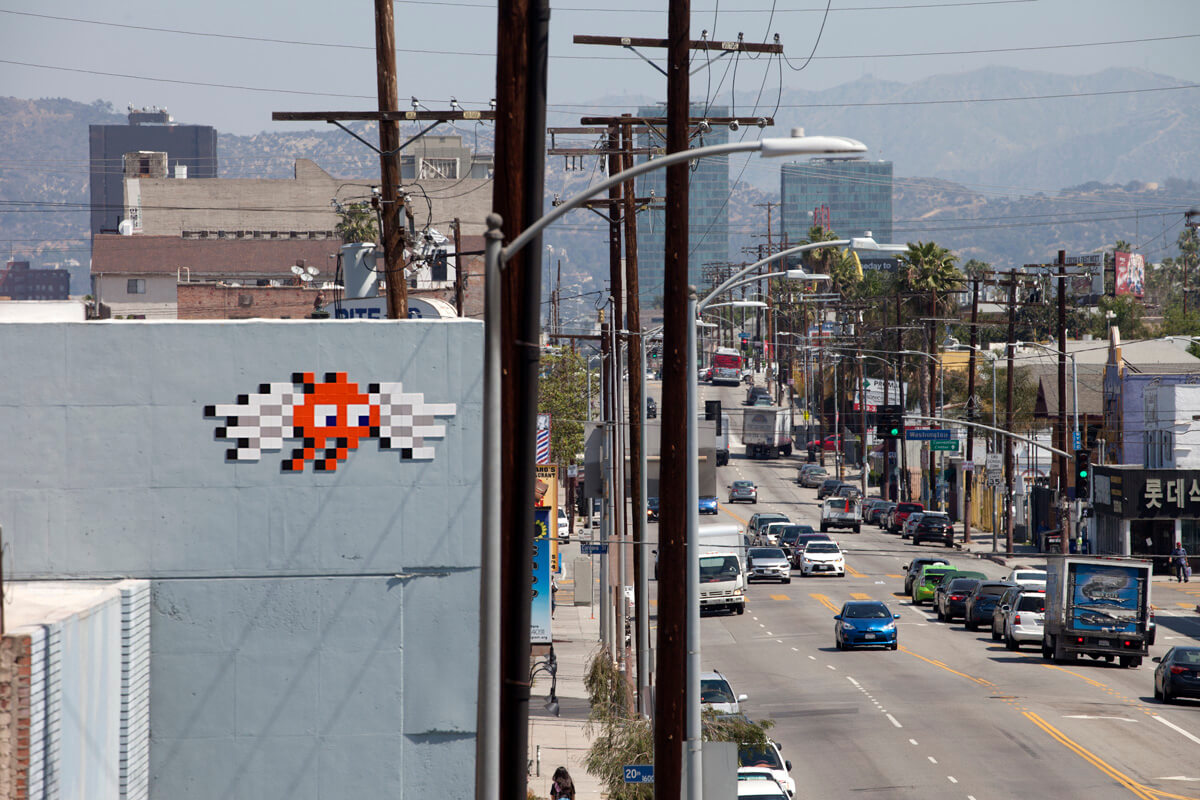
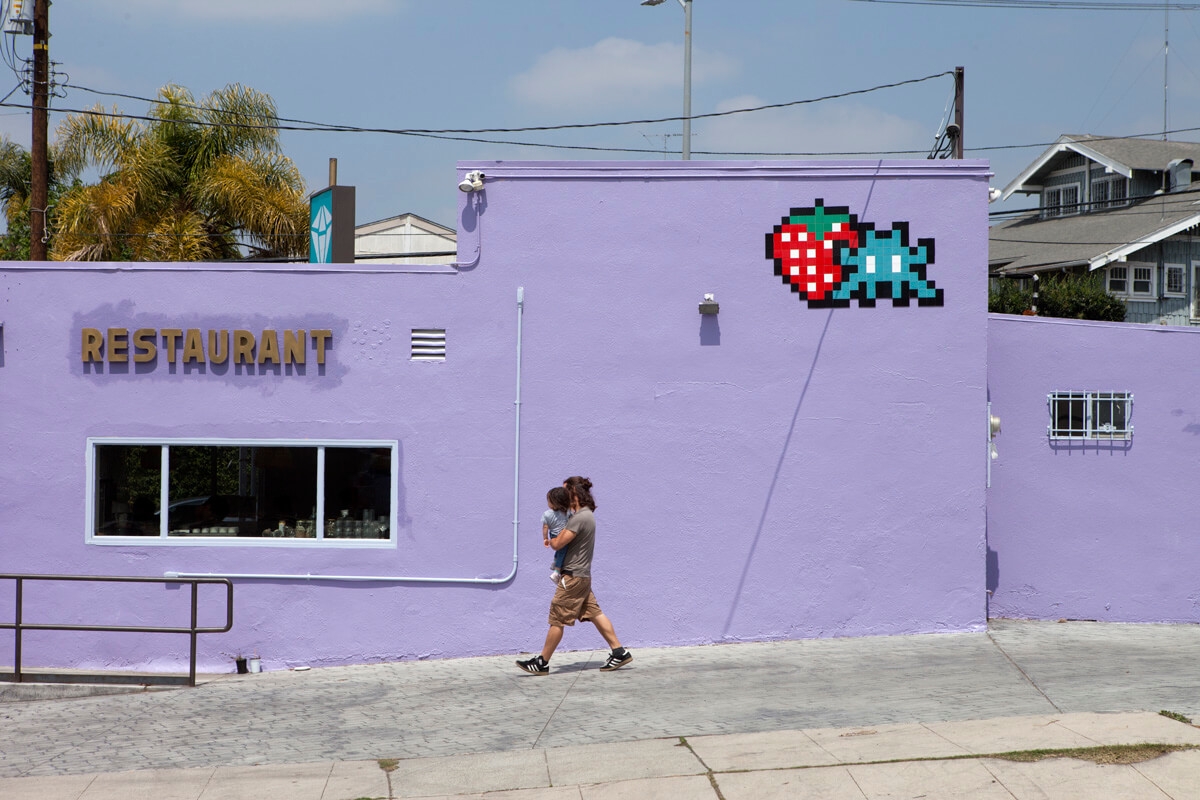
Invader’s global invasions transform streets, walls and unexpected urban corners into part of a vast public art game, inviting viewers to search, map and rediscover the city. Image © Invader
Where Has Invader Installed His Work?
Invader’s global invasion can be followed through the interactive world map on his official website, where each territory becomes part of a larger cartography of public art, travel and discovery. The map currently records more than 4,400 Invaders across 87 territories, making the project one of the most extensive and recognisable public art networks of the contemporary era.
Paris remains the emotional and geographic centre of the invasion. It is Invader’s most densely occupied city, documenting 1,500 mosaics installed in the French capital between 1998 and 2024.
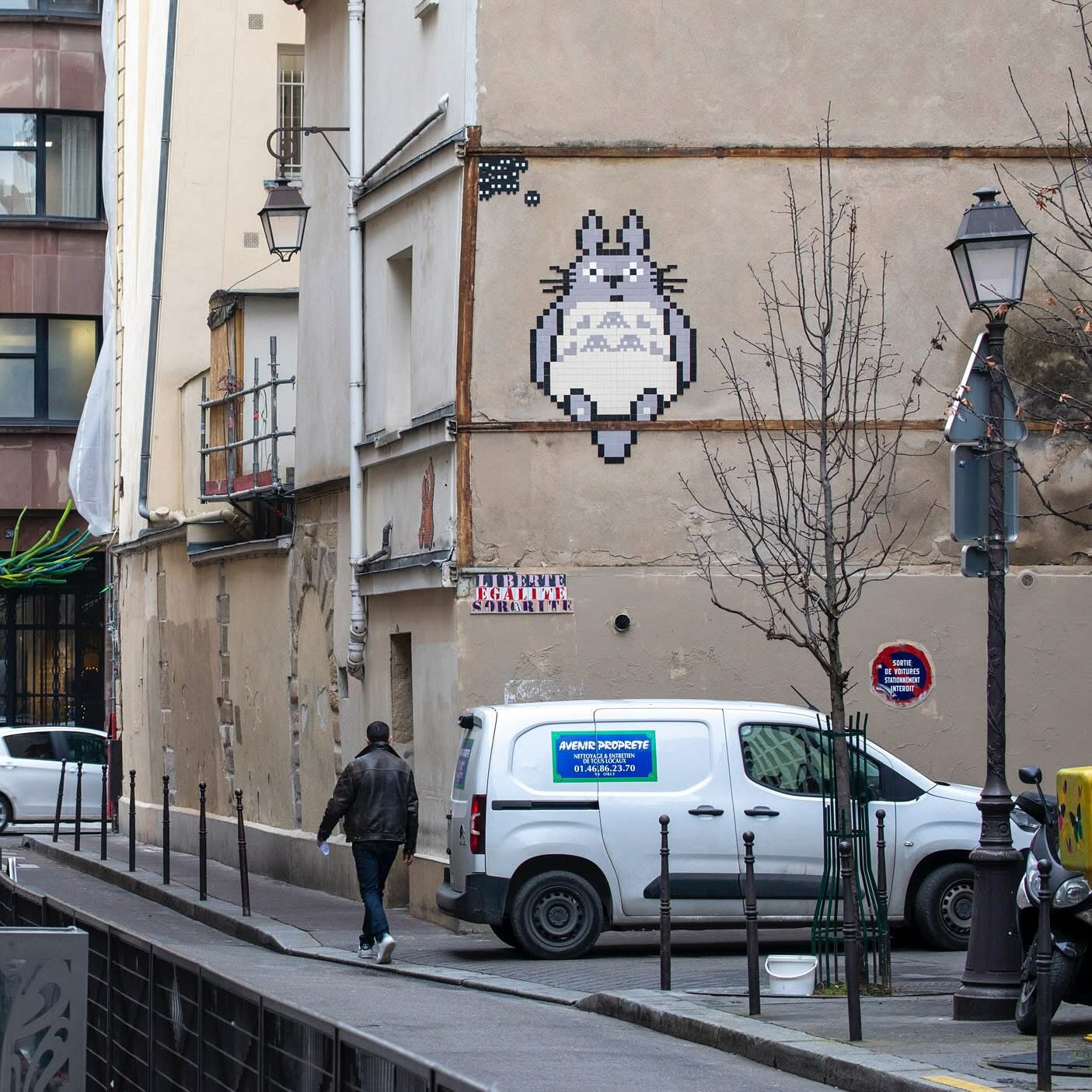

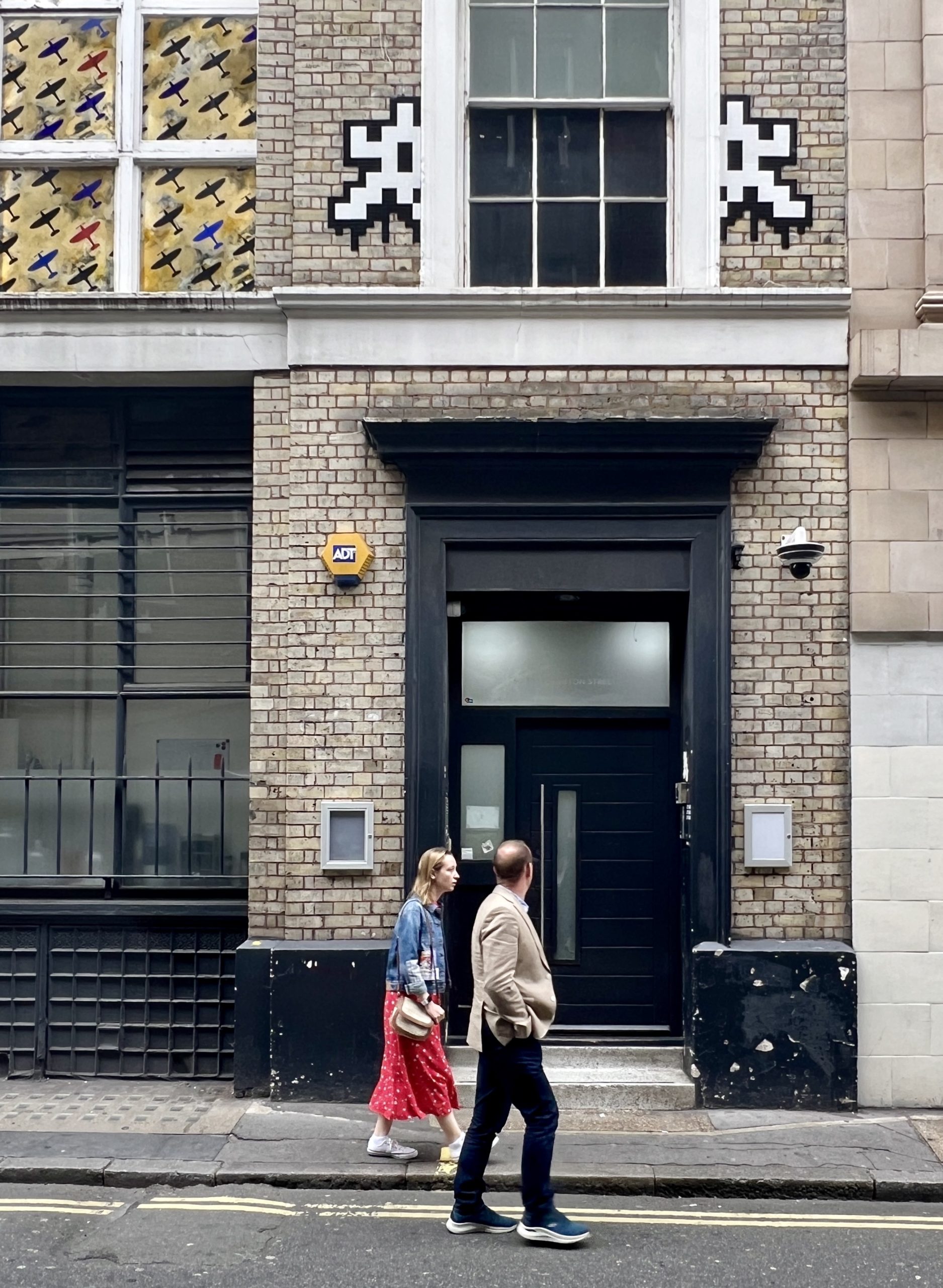
Beyond Paris, Invader’s waves have moved across major European cities including London, Berlin, Rome, Amsterdam, Vienna, Barcelona, Manchester, Brussels and Rotterdam, while North American invasions have reached New York, Los Angeles, Miami, San Diego and Cancun. In Asia and Oceania, his mosaics have appeared in cities including Hong Kong, Tokyo, Bangkok, Seoul, Melbourne and Perth, expanding the project through very different architectural, cultural and urban conditions.
What makes the map so compelling is that Invader’s practice also reaches places that sit outside the usual street art circuit. His invasions have extended to Kathmandu in Nepal, Varanasi in India, Djerba in Tunisia and Mombasa in Kenya, as well as Cancun Bay, where he installed underwater mosaics with the help of Jason deCaires Taylor.
These locations deepen the project because they show that Invader is not only interested in metropolitan visibility. He is interested in territory, movement and the strange poetry of an image appearing where it is least expected.

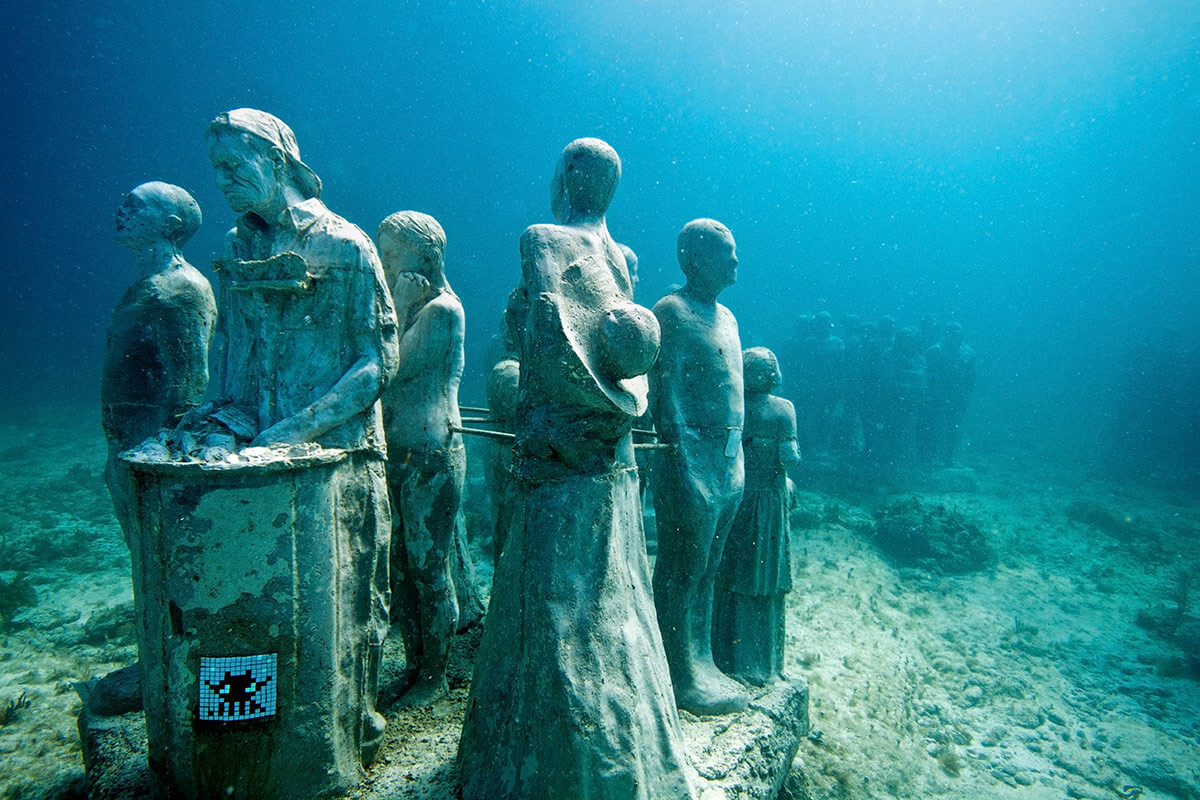
Space Invader- Under the sea. Image copyright Jason Decaires Taylor
The International Space Station takes that logic to its most extraordinary point. Once Invader’s work enters orbit, the idea of invasion is no longer limited to walls, streets or even cities. The map becomes planetary, and the mosaic becomes a signal that can travel from neighbourhood corners to the ocean floor and beyond Earth’s atmosphere.

Invader’s idea of territory also extends beyond geography. His invasions have entered screens, media and popular culture, from television contexts to animated worlds, reinforcing the sense that his project is not only about where a mosaic is placed, but where an image can travel. Because his language begins with the pixel, every new surface carries conceptual weight: the city wall, the app, the cartoon frame, the broadcast image and the space station all become part of the same question about how visual culture moves through the contemporary world.
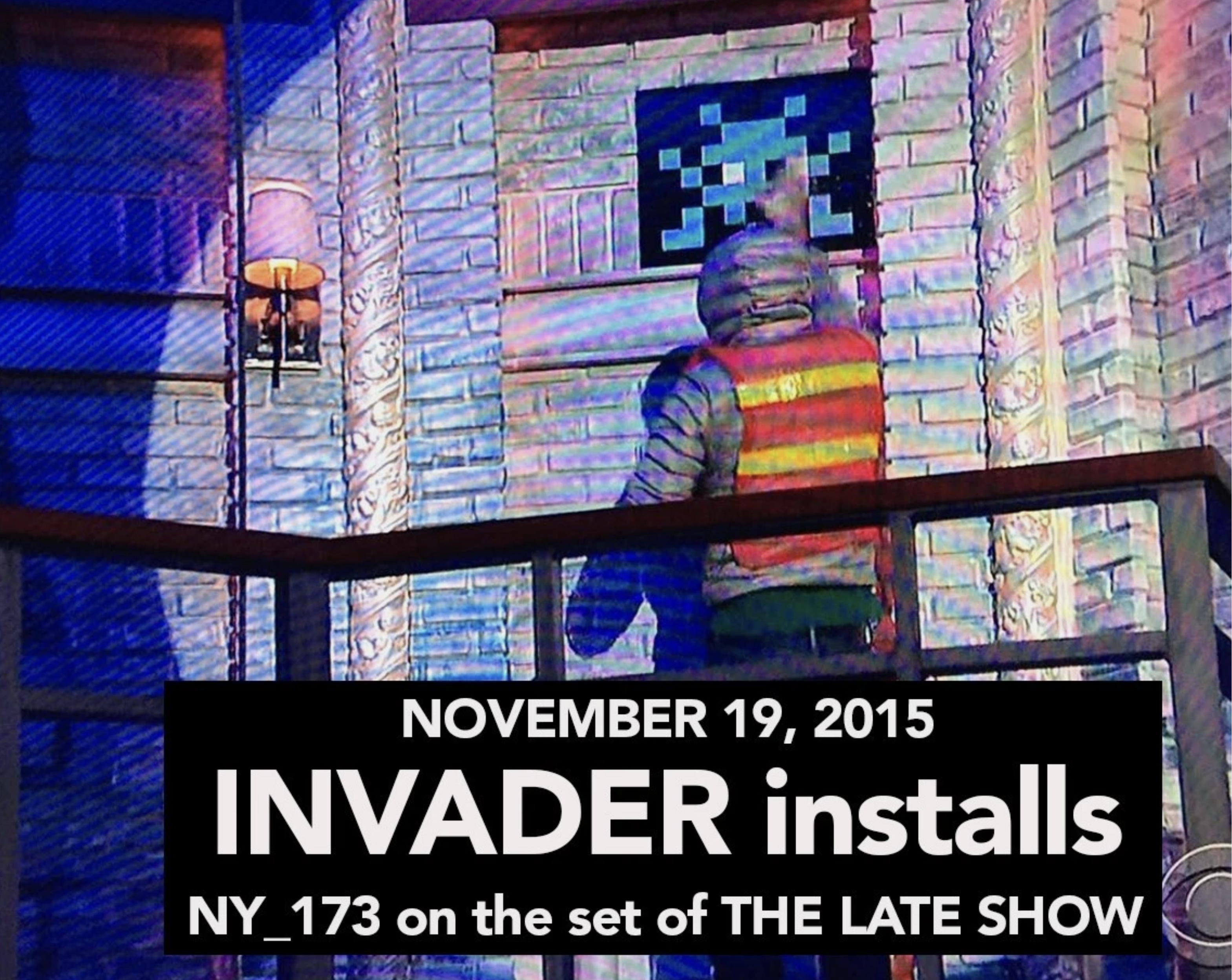

Invader mosaic installation on The Late Show television set and Bender on Futurama. Image copyright Invader
From SpaceOne to the ISS: How Invader Made the Name Literal
Invader’s relationship with space is built into the logic of the project. The artist took his name from Space Invaders, adopted the alien as a recurring form, and then pushed the invasion beyond the limits of the city.
The first major leap came with SpaceOne in 2012, when Invader launched a mosaic into the stratosphere using a helium balloon equipped with a camera. The project, known through Art4Space, transformed the artist’s language into an actual mission. A work that began as a pixelated invader on Earth rose above the planet, carrying the mythology of the street into the atmosphere.
This moment matters because it changes the scale of the project. Space is no longer just an icon inside the image. It becomes a territory to be invaded. Invader’s work does not merely represent alien arrival. It performs it.
The later appearance of an Invader mosaic aboard the International Space Station extended this logic even further. The ISS work gave the project extraordinary conceptual precision: a street artist whose practice depends on walls, coordinates and urban surfaces had placed his work inside one of the most technologically advanced structures ever made, orbiting above Earth.
The reported offer by French astronaut Thomas Pesquet to take an Invader work to the Moon belongs to this same cosmic mythology. Yet its symbolic power is clear. Invader’s practice has always asked how far an image can travel, how many territories it can enter, and whether public art can exceed the street without losing its spirit.
From the wall to the stratosphere, from the ocean floor to the ISS, Invader has expanded the idea of public art into a planetary and extra-planetary game.

SPACE2 in the Columbus module of the ISS : Image copyright – ESA:NASA space invader
Why Is Invader One of the Most Exciting Artists of Our Generation?
Invader is one of the most exciting artists of our generation because his work is instantly accessible and conceptually rigorous. It can be enjoyed as a small surprise on a wall, pursued through an app, studied as a global public art project and understood as a serious meditation on how people now move through cities.
His practice understands something essential about contemporary life. We navigate through screens, coordinates, images, scores, proof and shared discovery. Invader takes those behaviours and gives them artistic form. He reveals that a city can still surprise us, even when everything appears mapped. He shows that public art can be intimate and global at once.
There is also a generosity to the project. His works reward attention. They ask people to notice architecture, corners, routes, heights and surfaces. They give the urban environment back to the viewer as a field of discovery. In a time when public space is often commercialised, surveilled or rushed through, Invader reintroduces wonder through a system of play.
His project endures because it relies on rhythm, repetition, curiosity and the quiet thrill of recognition. A small mosaic glimpsed above a doorway can connect the viewer to thousands of other points across the world. The local encounter opens into a planetary composition.
Few artists have understood so clearly that contemporary art could be local and global at the same time, physical and digital at the same time, playful and rigorous at the same time. Invader’s project is an invasion of walls, attention and behaviour.

Invader on the Eiffel Tower. Image Copyright Invader
GraffitiStreet Perspective
Invader’s work is understood as one of the defining artistic projects of contemporary urban culture. His mosaics are playful, but the structure behind them is deeply serious. Each invasion adds to a living archive of place, movement and discovery, creating a practice that continues to expand across geography, technology and imagination.
At GraffitiStreet, Invader’s work is understood through years of first-hand experience searching for his mosaics on the streets. A new invasion is never only an announcement on a map; it becomes a reason to travel, walk, look closely and slowly build a route through a city. The search often leads to places we may not otherwise have visited, drawing us into side streets, overlooked corners, unexpected viewpoints and neighbourhoods that reveal themselves differently through the act of looking.
“Invader’s strength is that the work operates on several levels at once,” says Rosh, Founder & Director of GraffitiStreet and Invader expert. “You can enjoy the mosaic immediately, but the deeper power sits in the wider system: the city, the coordinates, the game, the app, the maps and the history of each invasion. That is what makes him such an important artist to understand properly.”
That experience is central to Invader’s importance. His mosaics do more than mark a wall. They change the rhythm of a city walk, turning movement into discovery and public art into a shared activity. While hunting for Invaders, we have often met fellow players, families, collectors, travellers and fans following the same trail, each one participating in the larger game that the artist has created across the world.
Frequently Asked Questions About Invader
Invader is an anonymous French street artist known for installing pixelated ceramic mosaics inspired by early arcade games. His works appear in cities and territories around the world as part of his ongoing global invasion project.
Invader’s anonymity protects his identity while strengthening the mythology of the project. It also allows the work, the locations and the wider invasion system to remain at the centre of attention.
Invader is known for ceramic tile mosaics inspired by 8-bit video games, especially Space Invaders. His mosaics appear across cities, territories, underwater sites and even the International Space Station.
Invader uses mosaics because ceramic tiles behave like physical pixels. They allow him to translate the visual language of 8-bit video games into public space.
Flash Invaders is the official app connected to Invader’s practice. It allows users to spot, flash and score the artist’s street mosaics, turning public art into a reality game.
Invader’s official world map currently records more than 4,400 Invaders across 87 territories, although the number continues to change as the project expands.
Yes. Invader launched SpaceOne into the stratosphere in 2012 through Art4Space, and an Invader mosaic has also reached the International Space Station.
Yes. Invader created underwater works in Cancun Bay, Mexico, with the help of artist Jason deCaires Taylor.
Invader is important because he transformed street art into a global, participatory system. His work connects 8-bit gaming, public space, mapping, digital proof, anonymity and urban discovery into one of the most recognisable artistic projects of the contemporary era.
Related Reading
The Adventure to Space: Invader’s First Successful Mission ART4SPACE, 2012
Invader Launches New Mosaic Invasion Across the Philharmonie de Paris
Space Invader Invades Space!!!, 2015
Artist Profile at GraffitiStreet
Exploring the Intersection of Art and Investment: 10 Reasons to Invest in Invader
Flashing Invader’s Latest Paris Invasion: The PA_1500 at the Centre Pompidou Building
Futurama’s Homage to Invader: A Look at Season 7, Episode 4 ‘Proposition Infinity
INVADER to the MOON? French astronaut Thomas Pesquet’s email offer is out of this world!
Space Invader under the sea, Cancun Bay, Mexico
Sources & Further Reading
Invader Official Website
Invader Official World Map
Flash Invaders Official App
Invader Art4Space

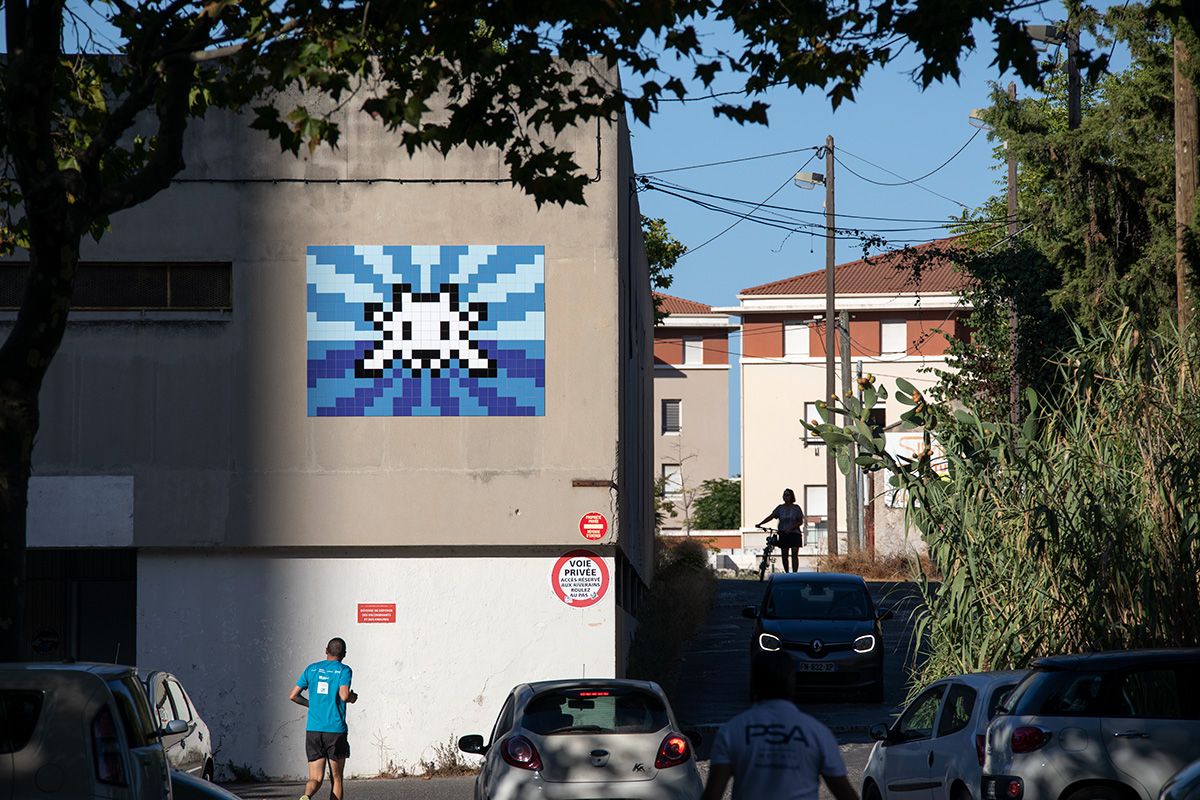
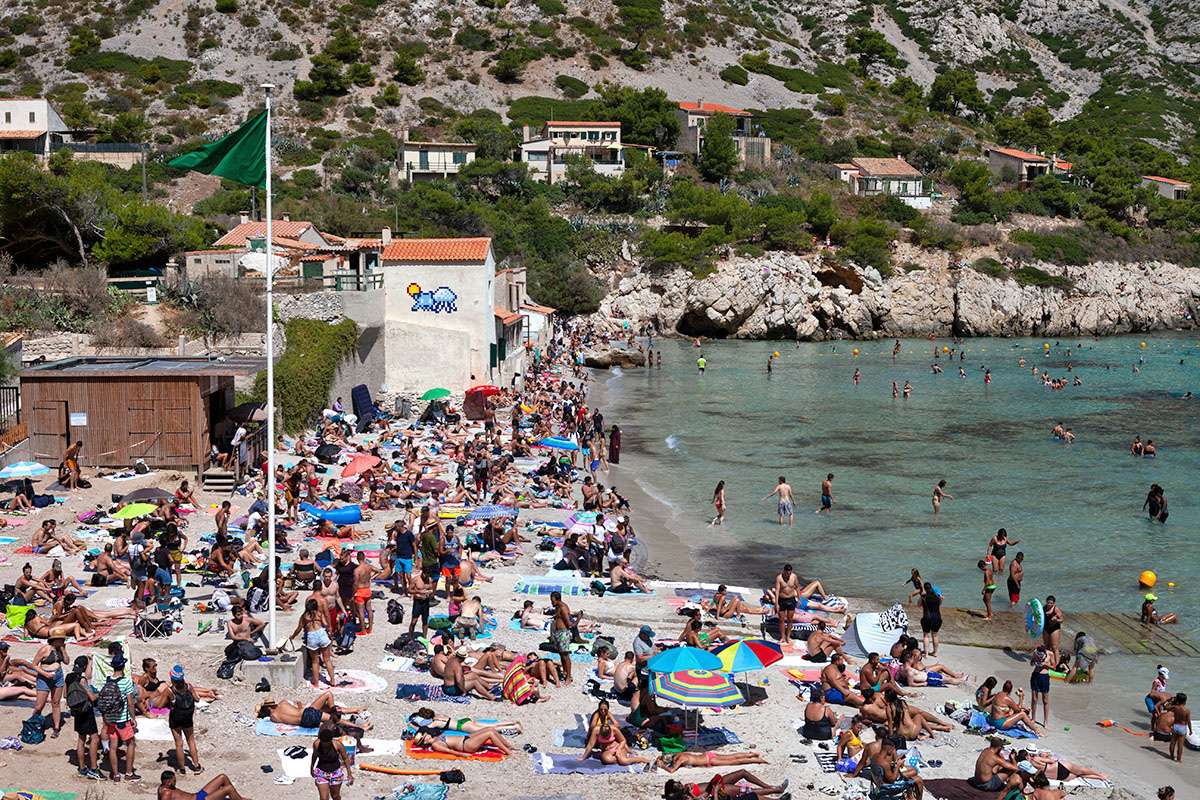
Invader’s global invasions transform streets, walls and unexpected urban corners into part of a vast public art game, inviting viewers to search, map and rediscover the city. Image © Invader
Discover Invader at GraffitiStreet
For more than 13 years, GraffitiStreet has helped collectors discover, acquire and better understand significant works by leading urban contemporary artists, with particular expertise in Banksy, Invader and the evolving street art market.
Through our gallery, editorial platform and collector resources, we provide guidance on provenance, condition, rarity, edition history and market context, helping collectors make informed decisions with clarity and confidence.
If you are considering acquiring an Invader work and would like guidance on provenance, condition, edition details, market context or unique pieces, we invite you to contact Founder & Director Rosh Boroumand, GraffitiStreet’s Banksy specialist and Invader expert, for a confidential conversation.
GraffitiStreet Gallery
25A West Street
Chichester
West Sussex
England PO19 1QW
For Invader availability, acquisitions and private viewings, explore the collection online, contact us directly or visit our gallery in the heart of Chichester, England.
Explore our collection of Invader originals, editions and collectables here.