SMOE Transforms New York’s Doyers Street with a 5,000-Square-Foot River of Colour
Italian artist SMOE has transformed Doyers Street in New York City’s Chinatown with Yangtze: The Ground Mural, a 5,000-square-foot public artwork completed in just three days with artist Mike Makatron, community volunteers and support from the Chinatown Business Improvement District, also known as Explore Chinatown. Flowing across one of the neighbourhood’s most historically charged streets, the mural turns the former “Bloody Angle” into a vivid river of colour shaped by public art, collaboration and cultural renewal.
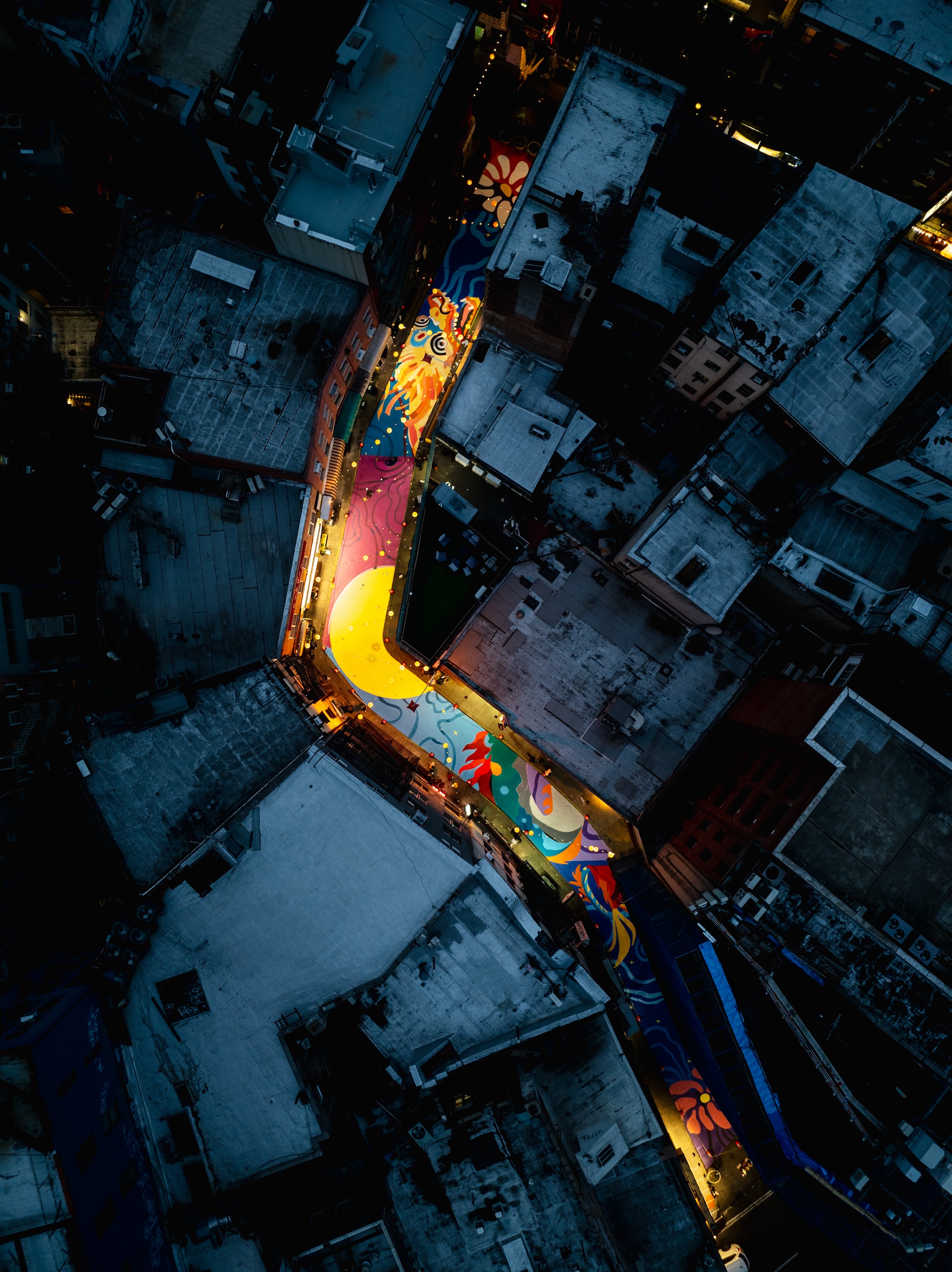
Completed in just three days, the mural was led by Milan-based artist SMOE, with assistance from Australian artist Mike Makatron and a changing team of over thirty community volunteers. The project was facilitated and funded by the Chinatown Business Improvement District, also known as the Chinatown BID or Explore Chinatown.
SMOE Brings the Yangtze River to Chinatown
SMOE conceived the street as a symbolic current moving through the centre of Chinatown. Inspired by the Yangtze, the longest river in Asia, the composition combines the movement of water with imagery associated with the dragon, a powerful presence within Chinese folklore and cultural imagination. Flowers, organic forms and expansive bands of colour stretch around the distinctive curve of Doyers Street, creating the sensation that pedestrians are walking directly across a flowing landscape.
Rather than treating the ground as a passive surface, SMOE turns the street into the artwork itself. Visitors do not simply stand before the mural. They move through it, allowing its scale and shifting perspectives to unfold beneath their feet.
“We had such a great three days of work with my crew, involving many volunteers and associations. It was a 5,000-square-foot ground mural painted in a very short time, but with a satisfying result.” SMOE Studio
The official project description presents the work as a meeting point between cultural tradition and contemporary urban life. Its river imagery feels particularly appropriate for Chinatown, where generations of movement, migration, commerce and community have shaped the neighbourhood’s identity.
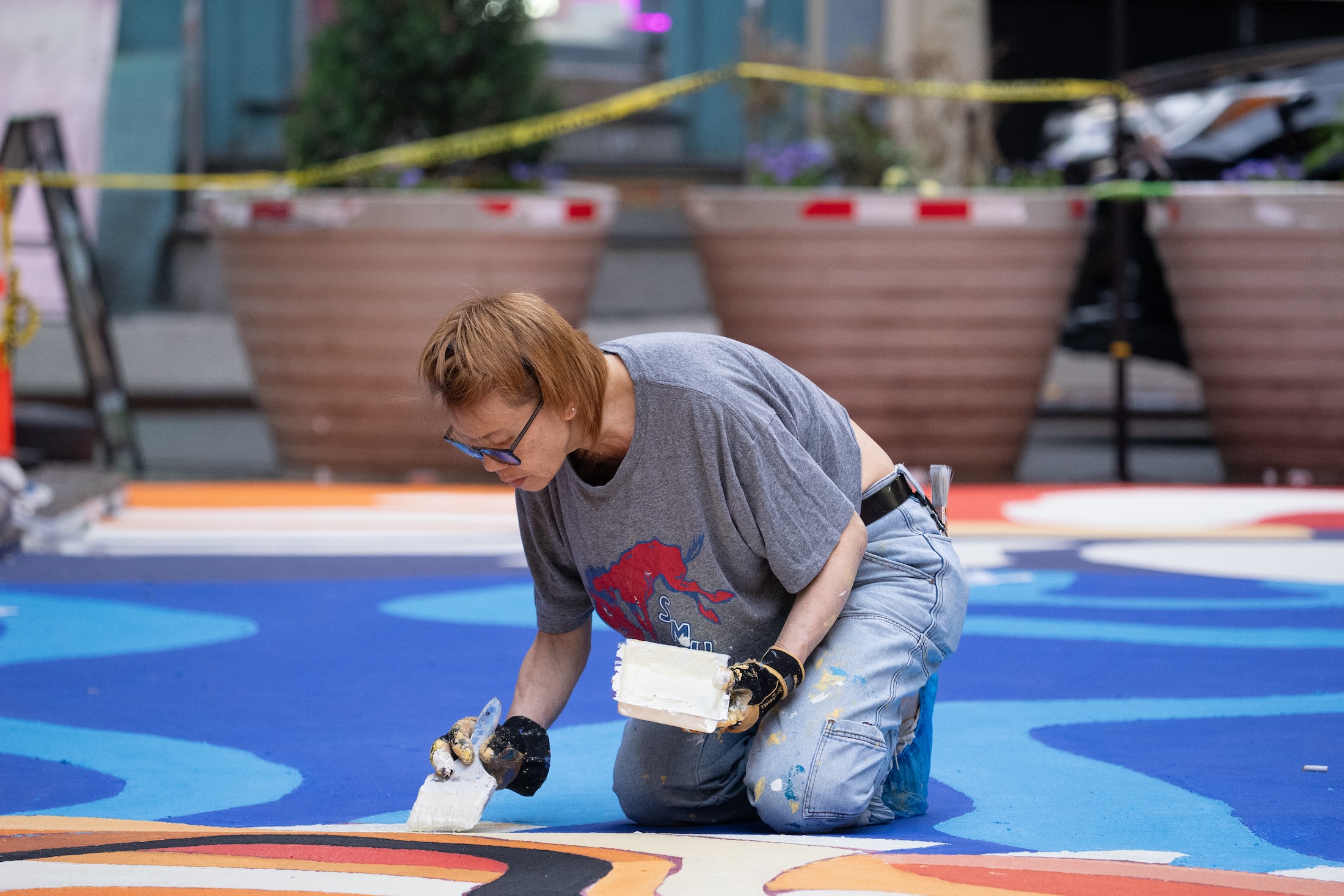
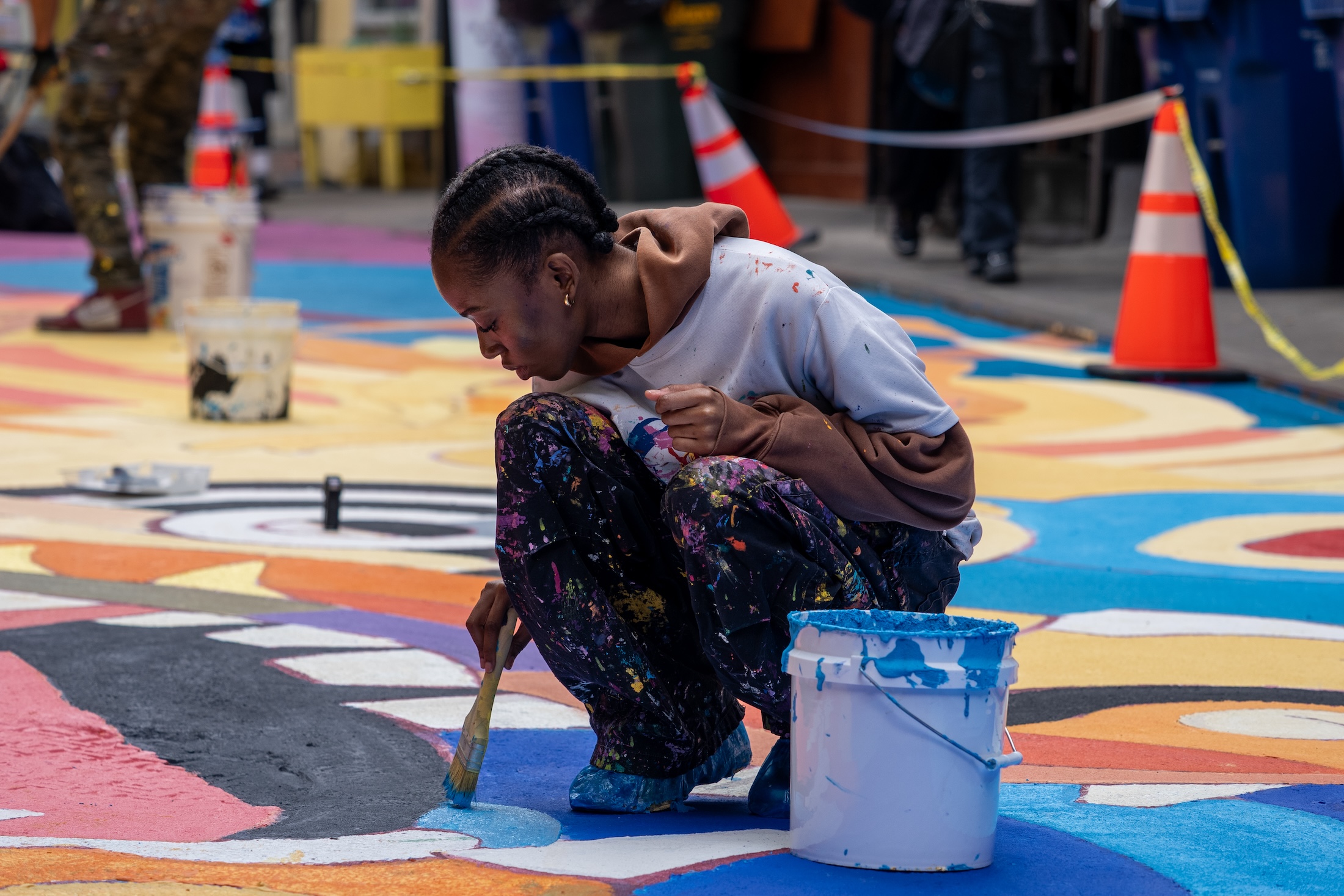
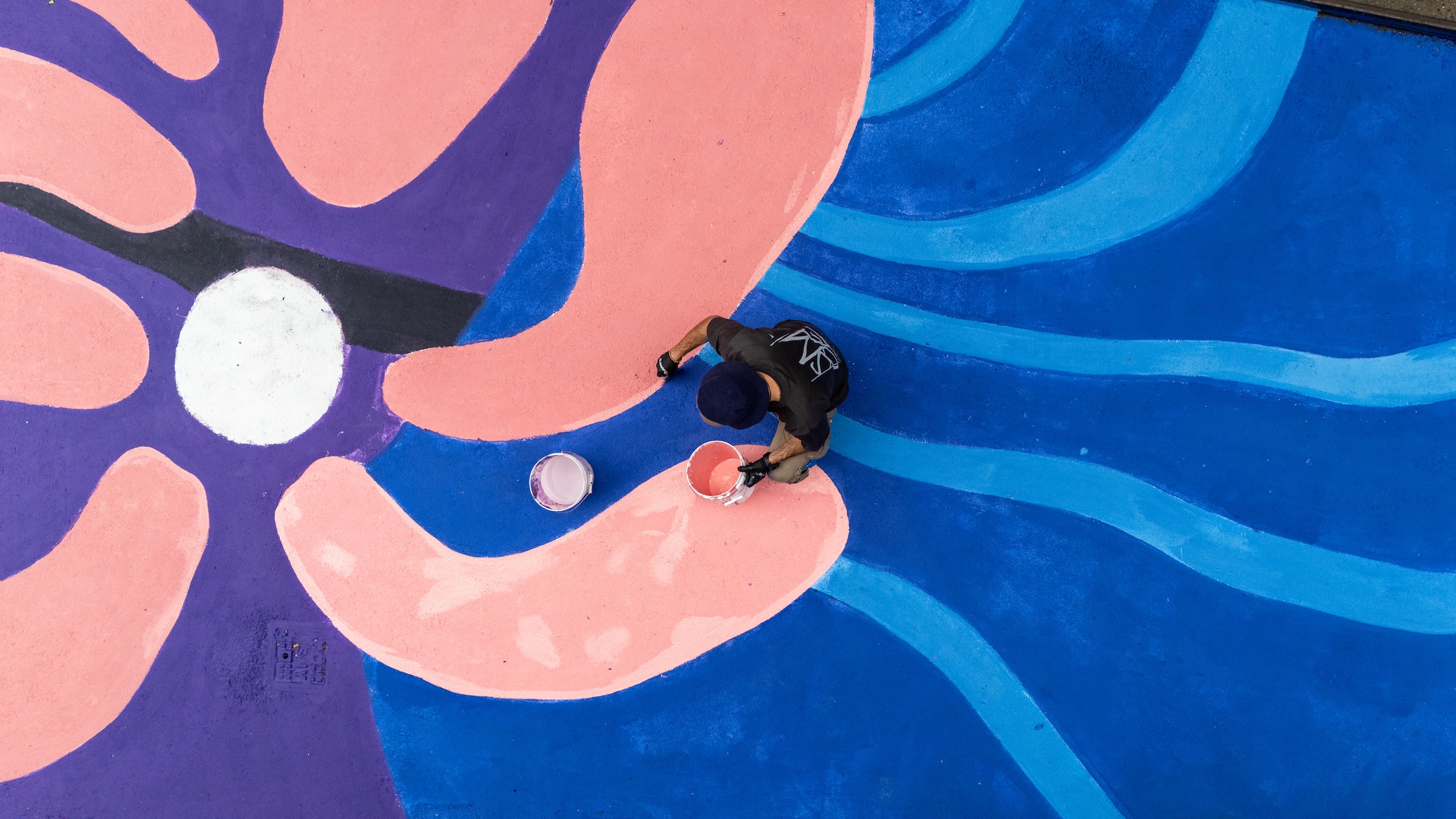
SMOE begins painting Yangtze: The Ground Mural on Doyers Street in New York City’s Chinatown. Photography © Ben L / Just a Spectator.
Three Days to Paint 5,000 Square Feet
The scale of the completed mural becomes even more remarkable when considered against the conditions in which it was produced.
A project of this size would ordinarily require a considerably longer installation period. SMOE and the wider team were given only three days to complete the work while navigating changing weather, access requirements and the needs of surrounding businesses.
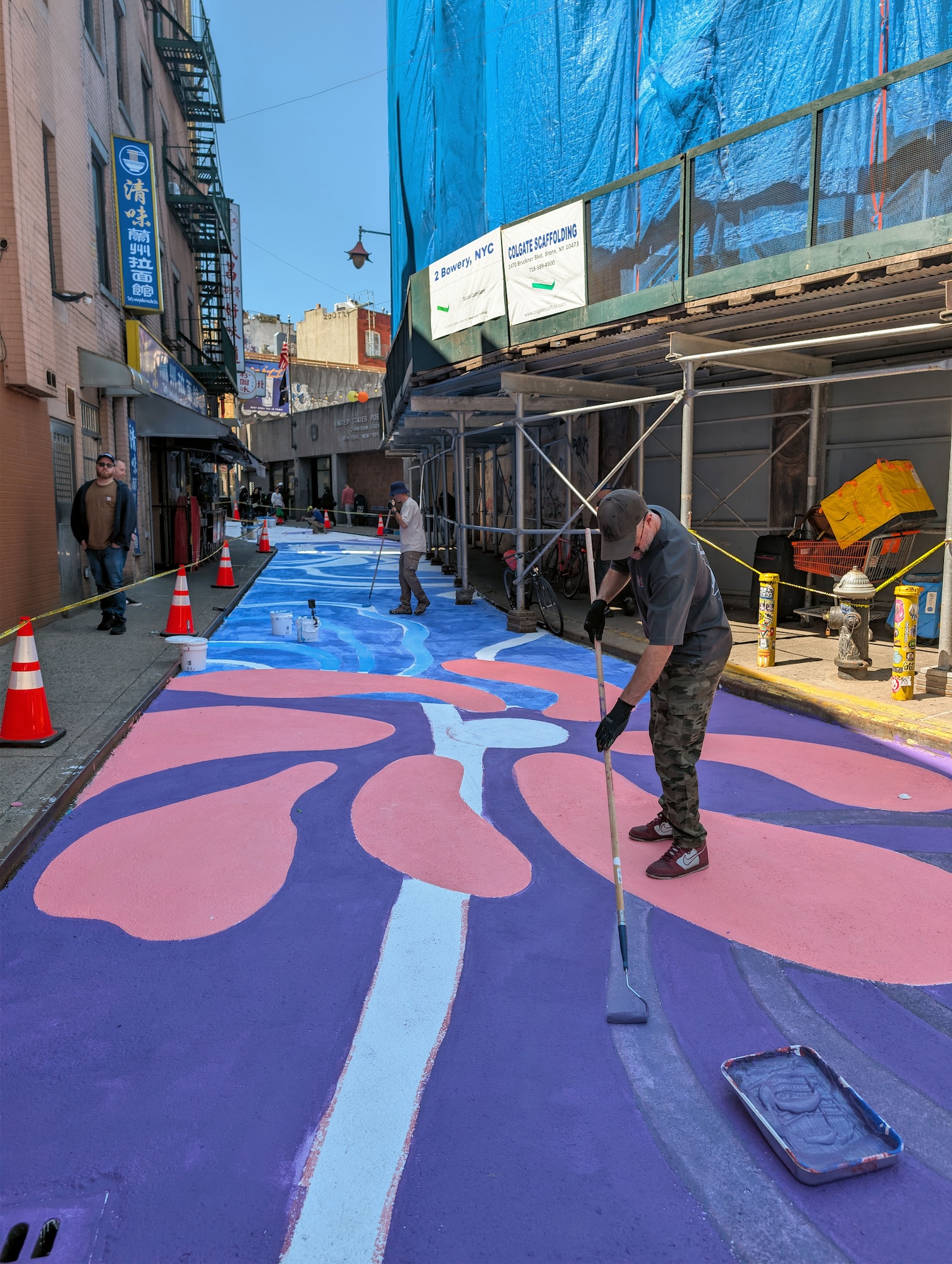
Artists and volunteers worked together across the street, gradually building the composition through large areas of colour and more intricate painted details.
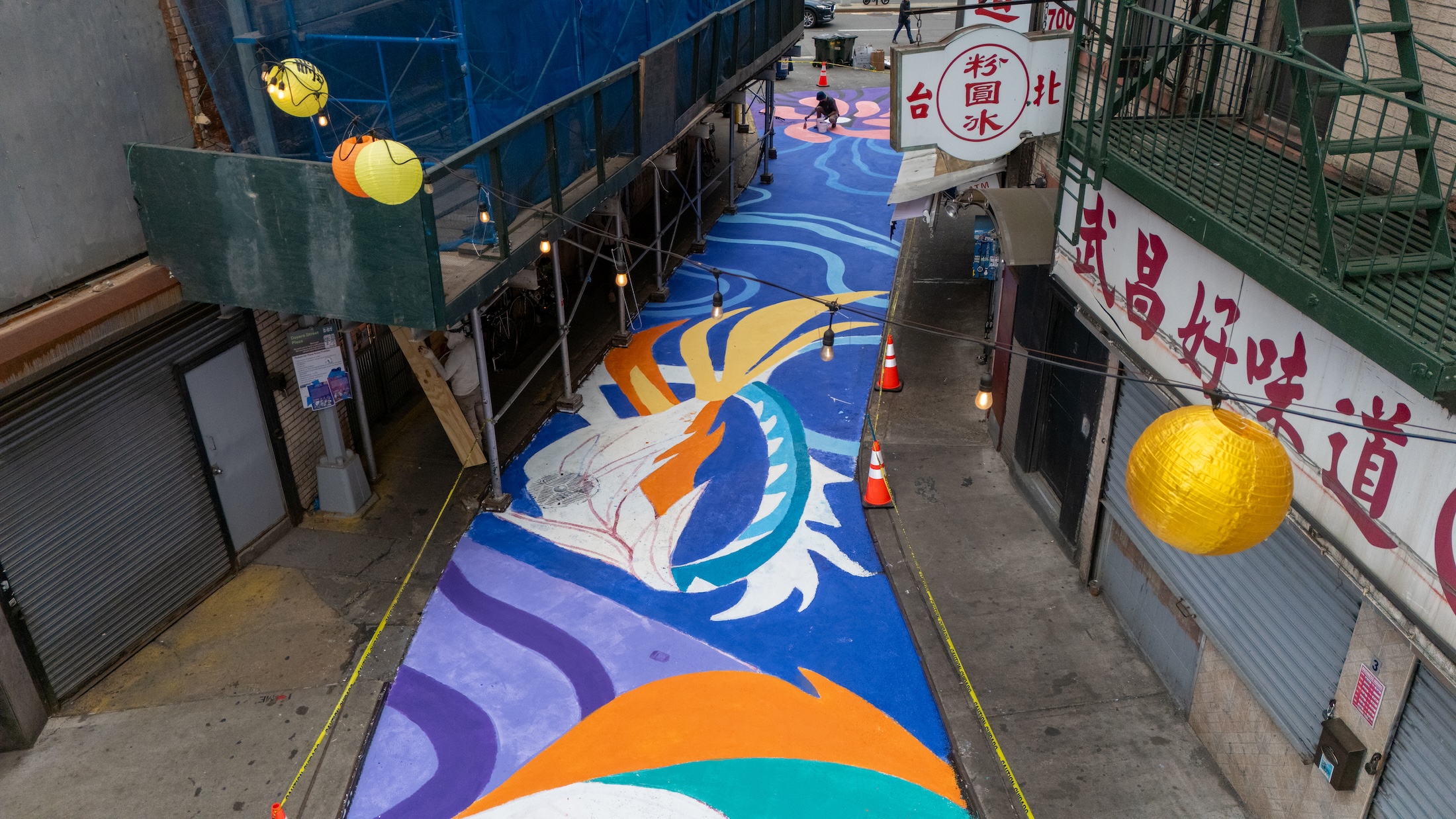
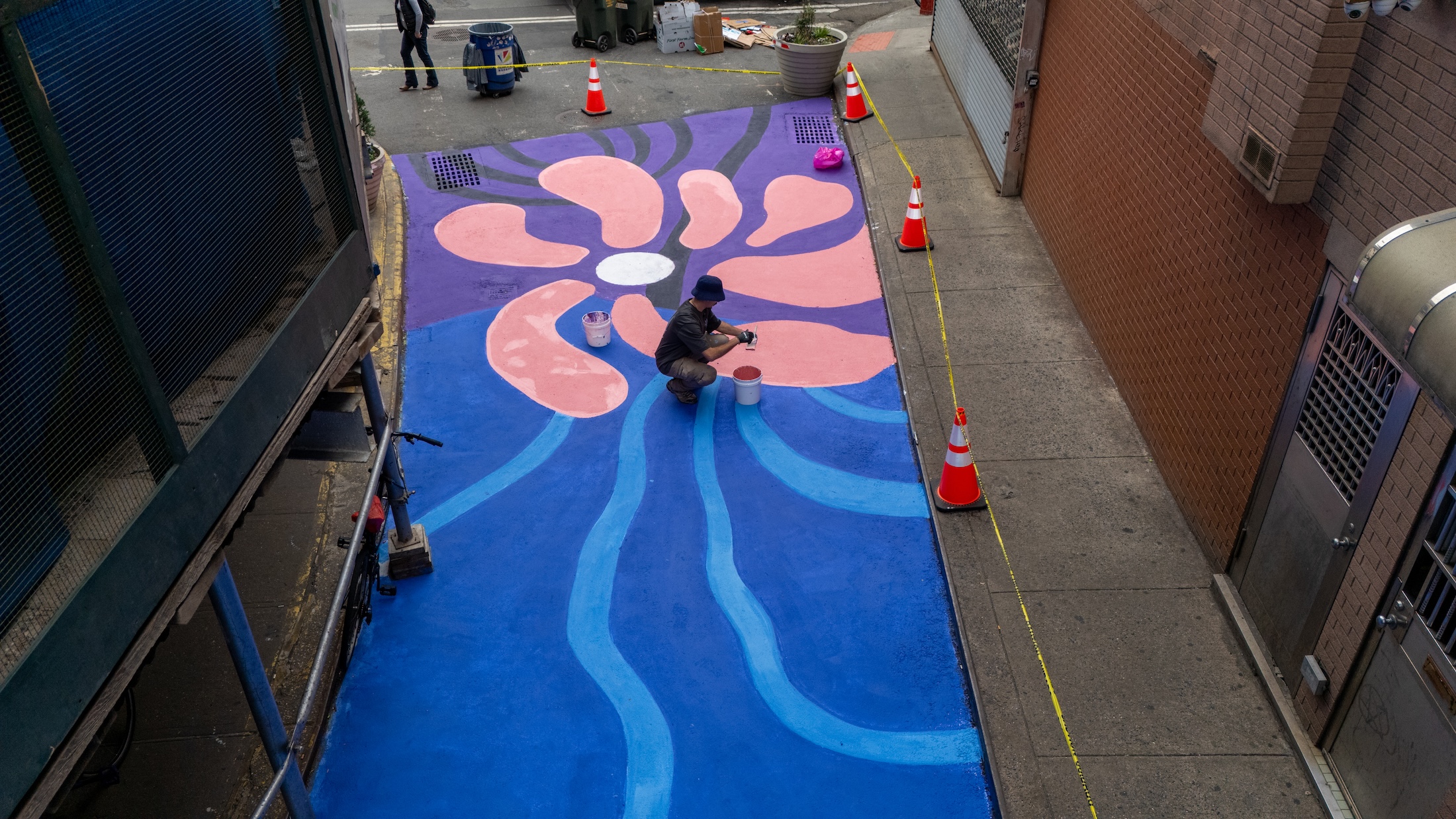
Community participation was central to the process. Volunteers joined the artists throughout the installation, turning the production of the mural into a shared public event rather than a closed artistic commission.
That collective involvement reflects the wider purpose of the Chinatown BID, which works with residents, businesses and local organisations to provide street cleaning, public-space improvements, cultural programming, advocacy and neighbourhood events. Founded in 2012, the nonprofit organisation operates alongside the Chinatown Partnership to support a cleaner, safer and more connected commercial district.
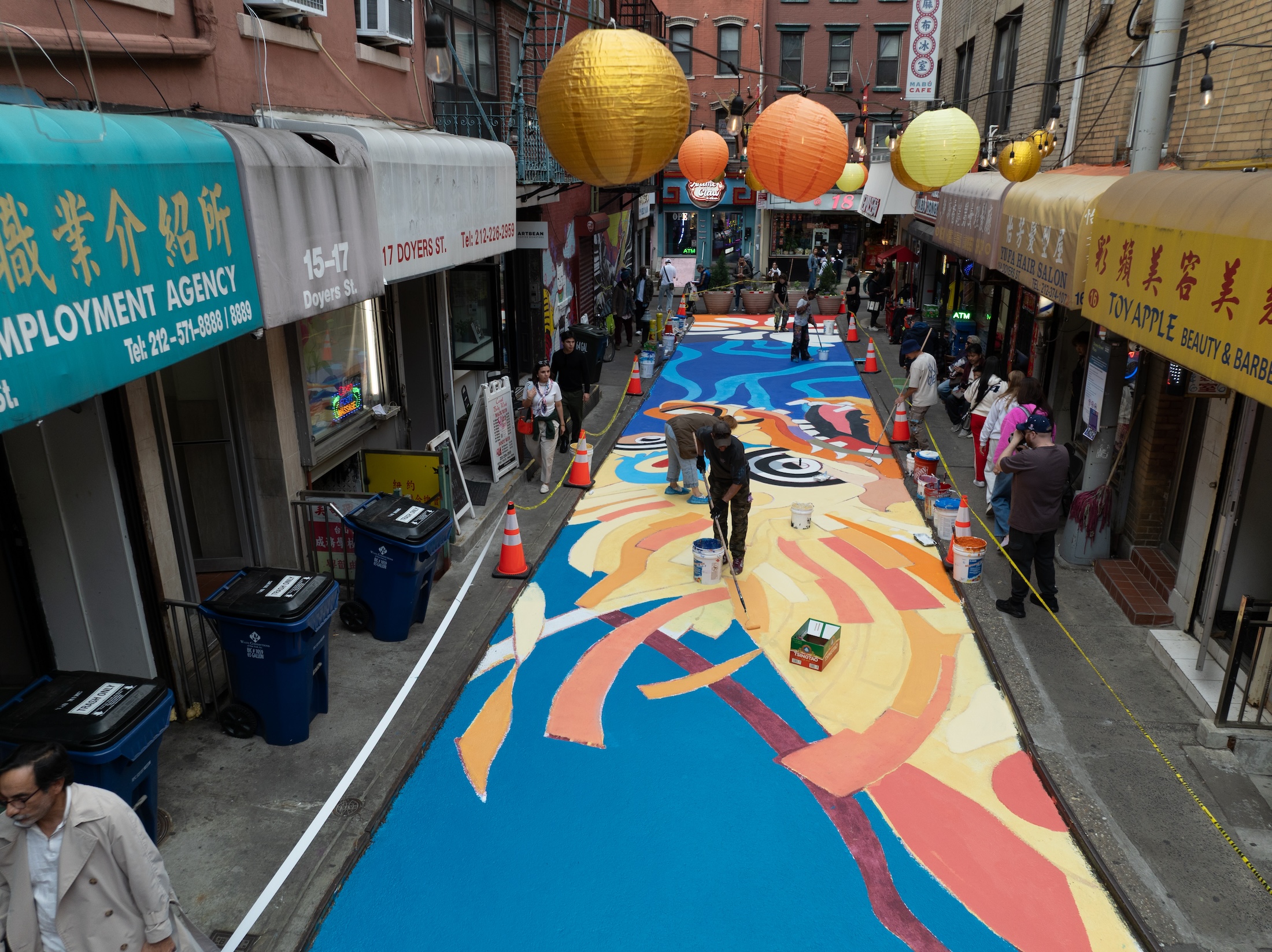
SMOE, Mike Makatron and community volunteers continue work on the 5,000-square-foot Doyers Street mural. Photography © Ben L / Just a Spectator.
From the “Bloody Angle” to a Public Canvas
Doyers Street carries a history that makes SMOE’s flowing imagery especially resonant. The short, sharply curved street was named after Hendrik Doyer, an eighteenth-century immigrant who operated a distillery and tavern near the Bowery. It later became an important centre of New York’s developing Chinatown and was home to the city’s first Chinese-language theatre between 1893 and 1911.
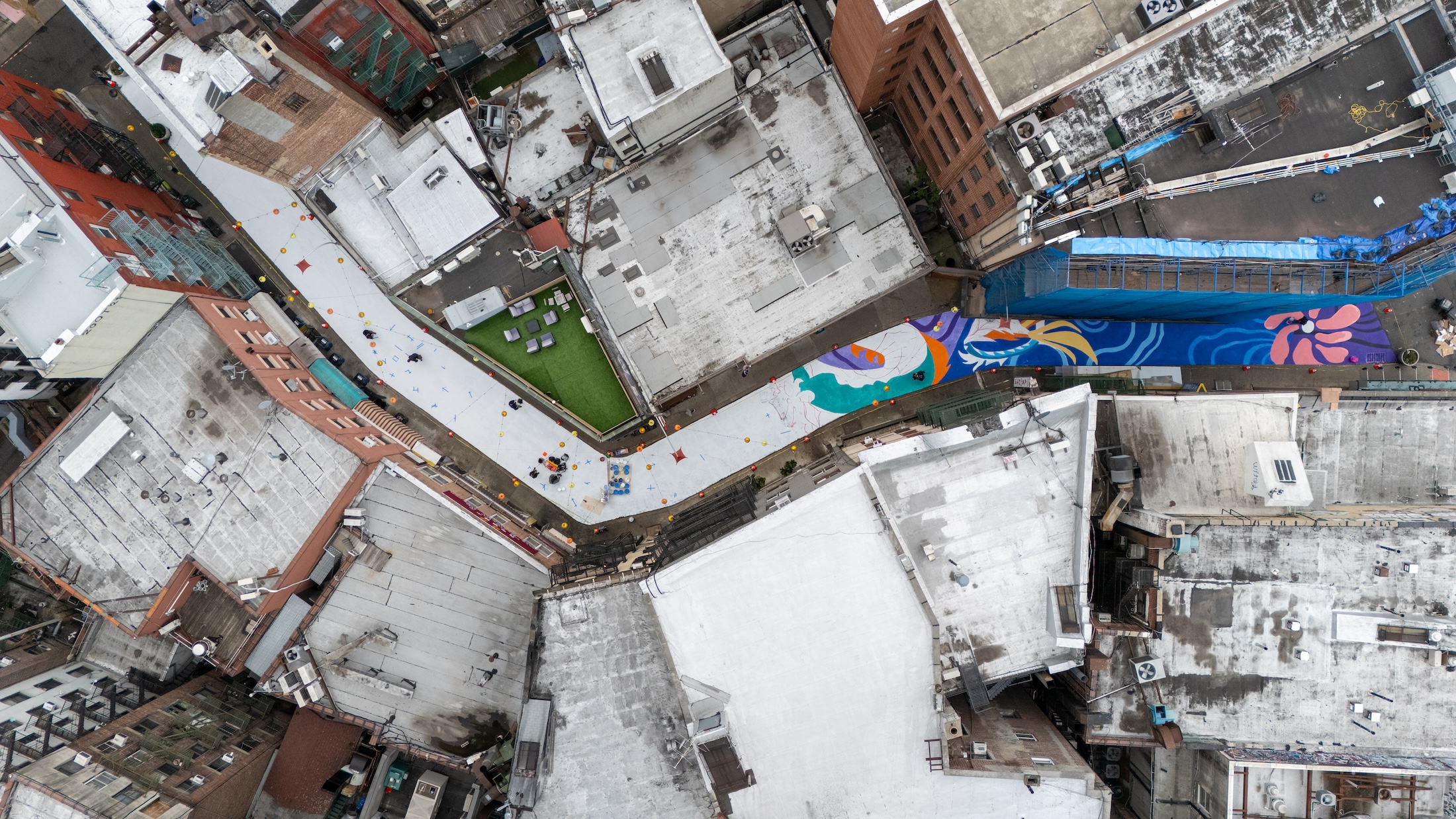
During the violent tong conflicts of the early twentieth century, its concealed bend was reportedly used for ambushes. The street consequently acquired the nickname “the Bloody Angle”, becoming associated with gang disputes, illicit businesses and stories of underground escape routes. The street’s dangerous reputation became embedded within New York folklore.
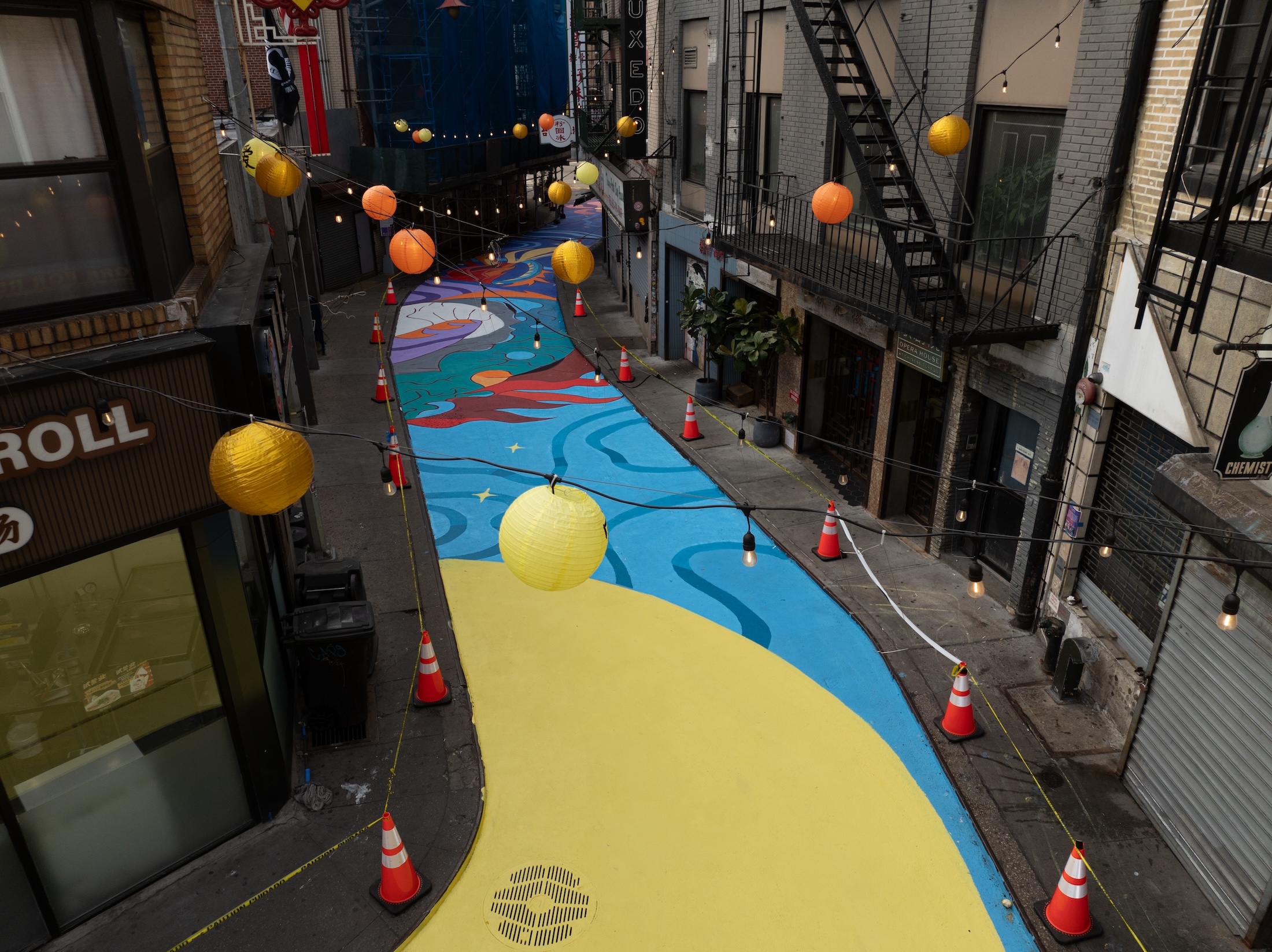
Today, Doyers Street presents a dramatically different image. Restaurants, barbershops, public seating, visitors, photographers and cultural projects now animate the same curve that once inspired fear.
SMOE’s mural does not erase this history. It places another layer over it. The Yangtze becomes a visual metaphor for transformation: a river passing through a street that has repeatedly changed without losing its cultural significance.
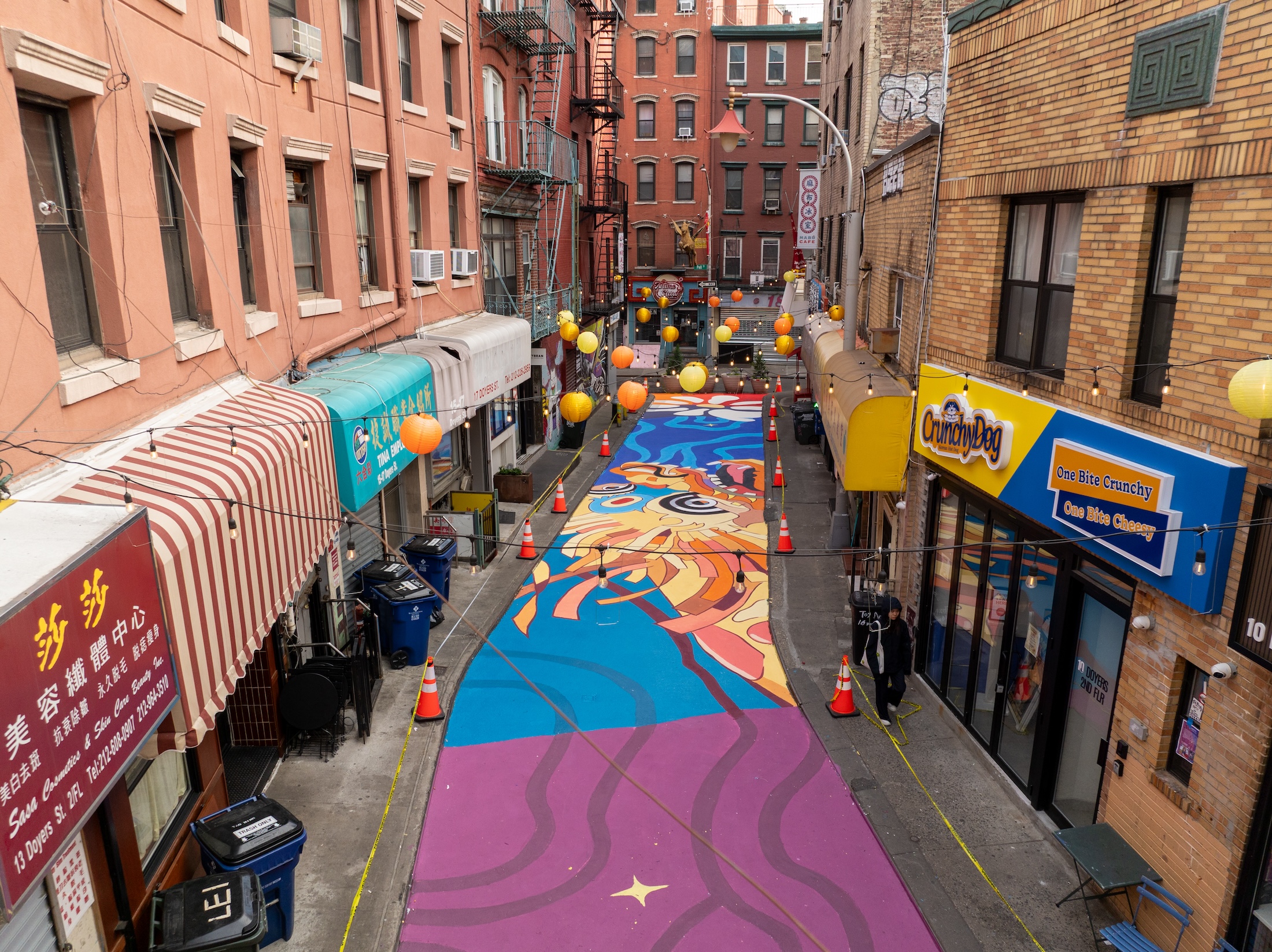
Doyers Street’s Continuing Ground-Mural Tradition
Yangtze: The Ground Mural continues a public-art programme that has periodically transformed Doyers Street for almost a decade. In 2018, Chinese artist Chen Dongfan covered approximately 4,800 square feet of the street with The Song of Dragon and Flowers. In 2021, Chilean artist Dasic Fernández created another large asphalt mural in partnership with the Chinatown BID and the New York City Department of Transportation.
These ground paintings have established Doyers Street as one of New York’s most distinctive outdoor canvases. Now, SMOE Studio brings a fresh layer of colour to its historic curve with Yangtze: The Ground Mural.
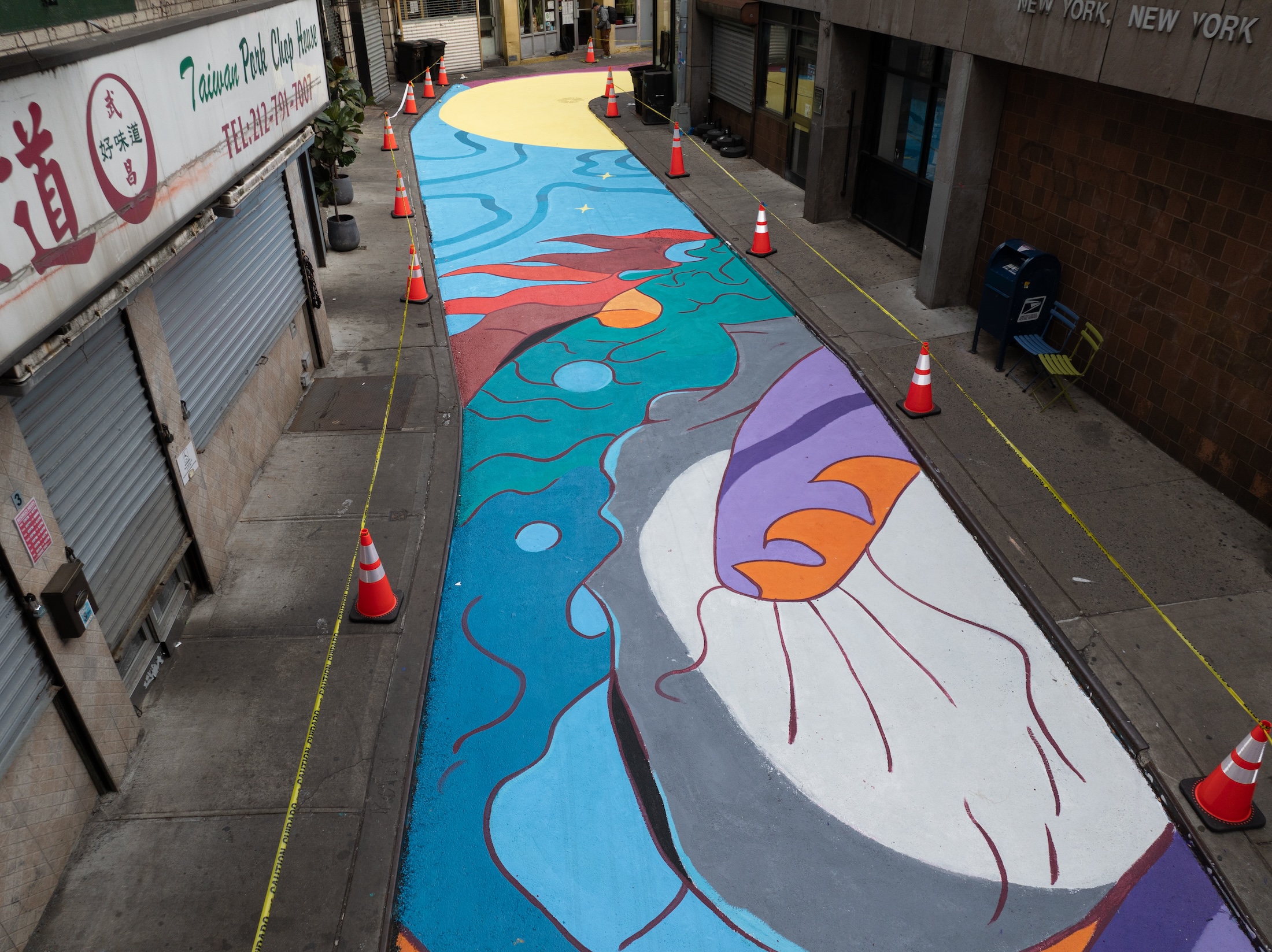
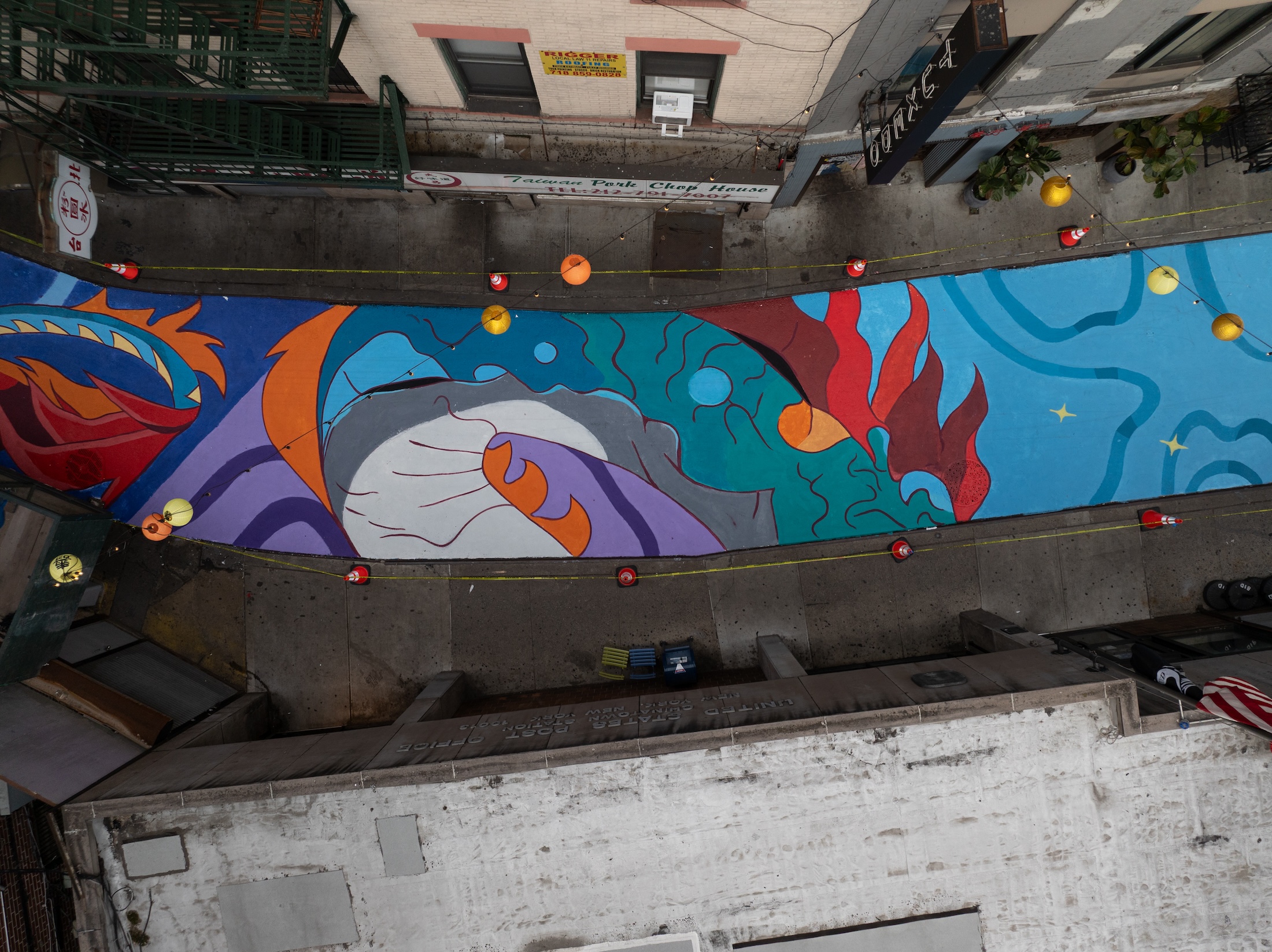
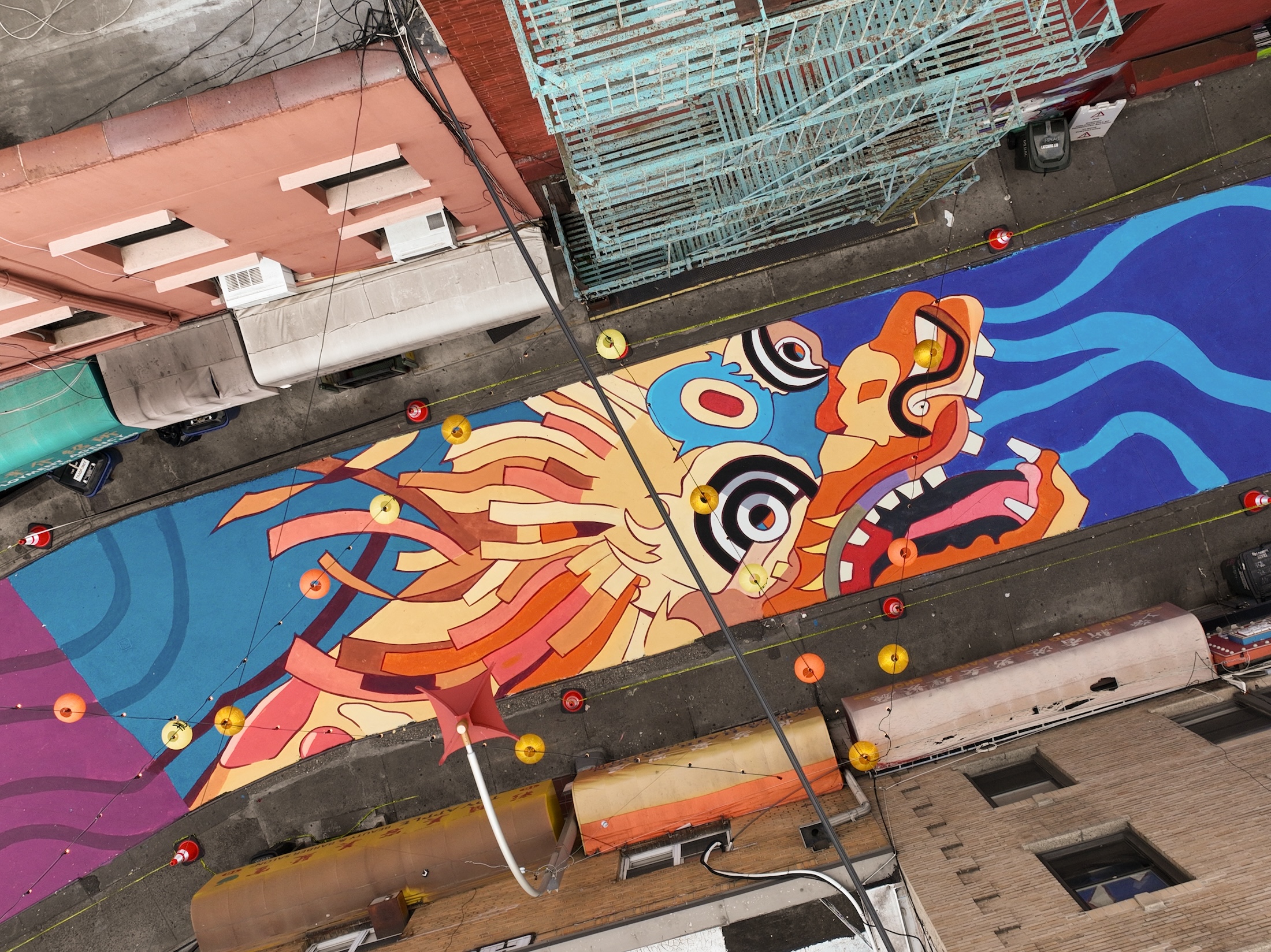
The final sections of Yangtze: The Ground Mural are completed after three intensive days of painting. Photography © Ben L / Just a Spectator
Each commission responds differently to the neighbourhood, yet together they reveal how public art can reshape the experience of a familiar place. The murals create visibility for Chinatown while directing attention towards the businesses, communities and histories surrounding the artwork. The result is more than an attractive setting for photographs. It is cultural placemaking conducted at street level.
Street Art Built Through Community
The strength of Yangtze: The Ground Mural lies in the relationship between its monumental scale and the collaborative process behind it.
Created on Doyers Street in New York City’s Chinatown, the 5,000-square-foot work was led by Milan-based artist SMOE, with assistance from Australian artist Mike Makatron. The project was facilitated and funded by the Chinatown Business Improvement District, also known as Explore Chinatown, as part of its wider commitment to supporting local businesses, strengthening community connections and developing public initiatives across the neighbourhood.
The mural was completed over three intensive days with the help of community volunteers and participating organisations. Ben L, famously known as @just_a_spectator, photo-documented the work as it developed and supported the project through his involvement with the Chinatown BID’s art programme.
Producing an artwork of this scale on an active city street required close coordination with the surrounding businesses, particularly as the team worked within a limited schedule and changing weather conditions. The practical challenges became part of the project’s collective character, with artists, volunteers, organisers and local businesses all contributing to the transformation of the street.
Ben L, known on instagram as @just_a_spectator, shares his favourite final photograph of Yangtze, capturing beautifully the mural’s transformation from day into night.
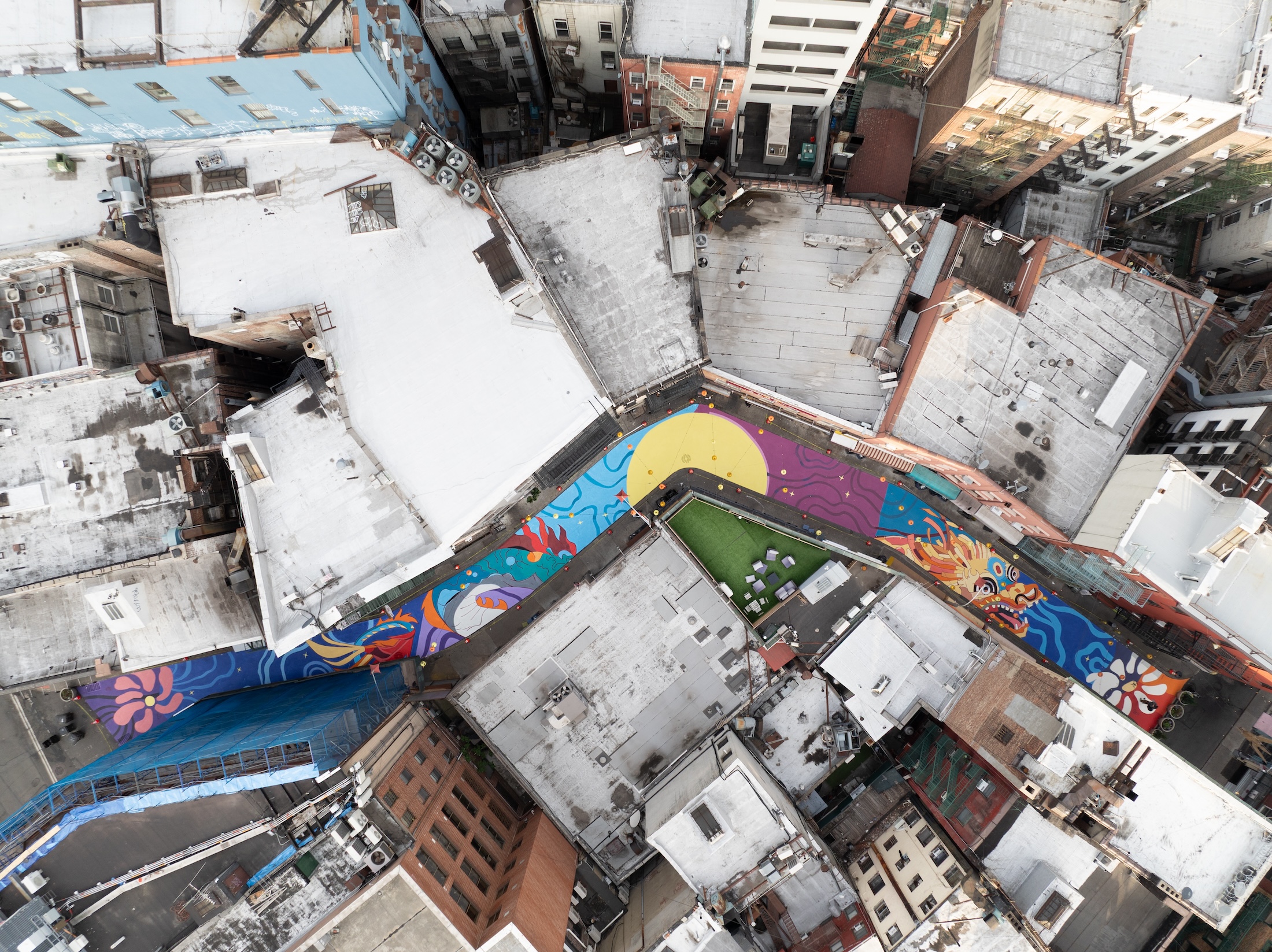
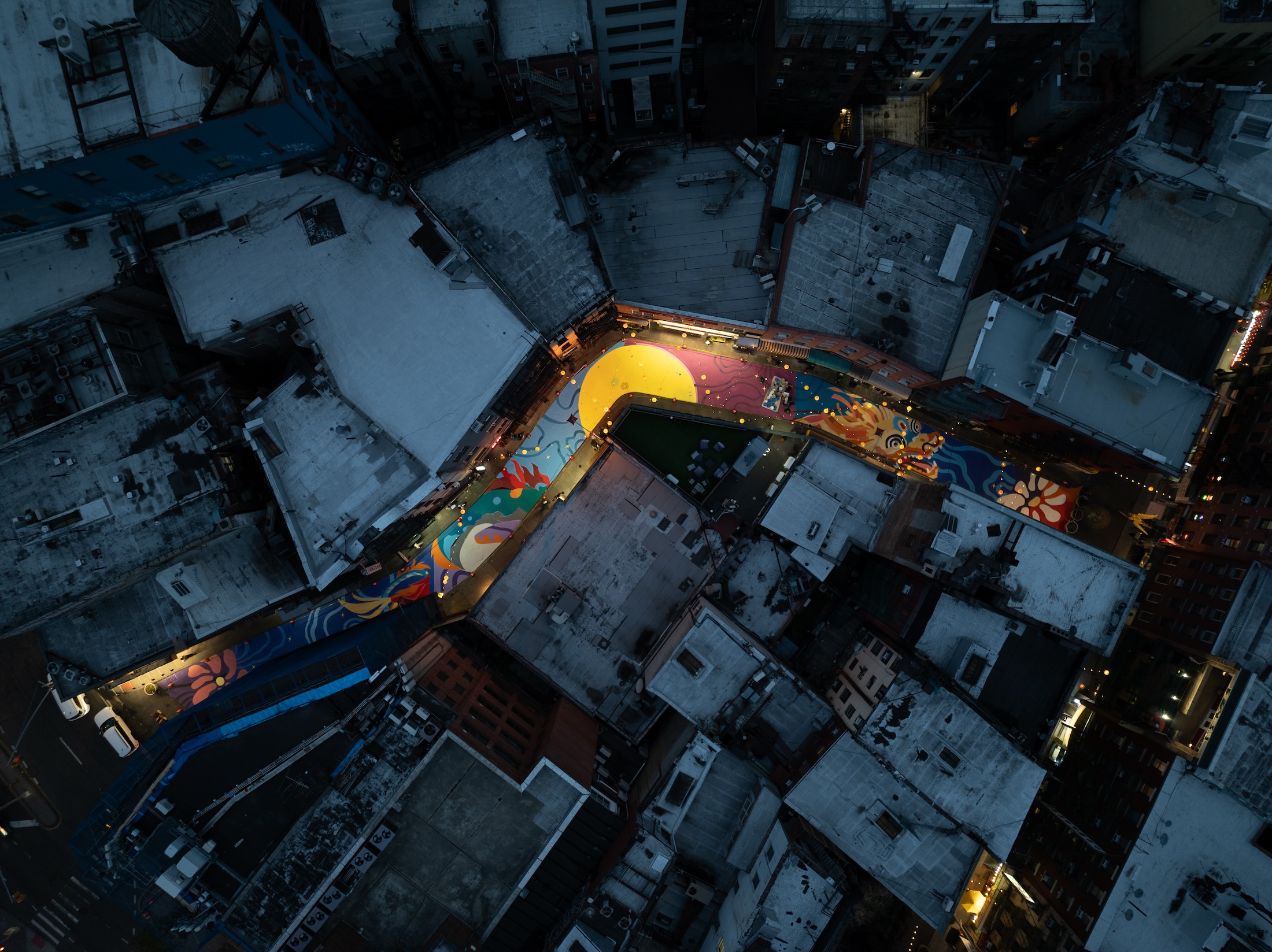
Yangtze: The Ground Mural by SMOE transforms Doyers Street into a flowing public artwork. Photography © Ben L / Just a Spectator.
In a city where public space is often treated primarily as infrastructure, projects such as Yangtze offer another possibility. A road becomes a cultural gathering place. A painted surface carries history, identity and collective effort. A street once associated with the “Bloody Angle” becomes a river of colour.
Frequently Asked Questions
The mural is titled Yangtze: The Ground Mural. It is inspired by the Yangtze River, dragon symbolism, Asian folklore and the movement of water through an urban environment.
The mural was led by Milan-based artist SMOE with assistance from Australian artist Mike Makatron and members of the local community.
The ground mural covers approximately 5,000 square feet of Doyers Street in New York City’s Chinatown.
SMOE Studio, Mike Makatron and the participating volunteers completed the mural in three days.
The project was facilitated and funded by the Chinatown Business Improvement District, operating publicly as Explore Chinatown.
Doyers Street earned the nickname “the Bloody Angle” during the early twentieth century. Its sharp bend reportedly allowed members of rival tongs to conceal themselves and ambush opponents during a period of violent conflict in Chinatown.
The mural is painted directly onto Doyers Street, a curved pedestrianised street connecting Pell Street with the Bowery in Manhattan’s Chinatown.
GraffitiStreet: Documenting Art Where It Happens
GraffitiStreet documents street art, murals and public-art projects that transform the way communities experience their surroundings.
Yangtze captures exactly what makes public art meaningful: the vision of an artist, the character of a location and the energy of the people who bring the two together.
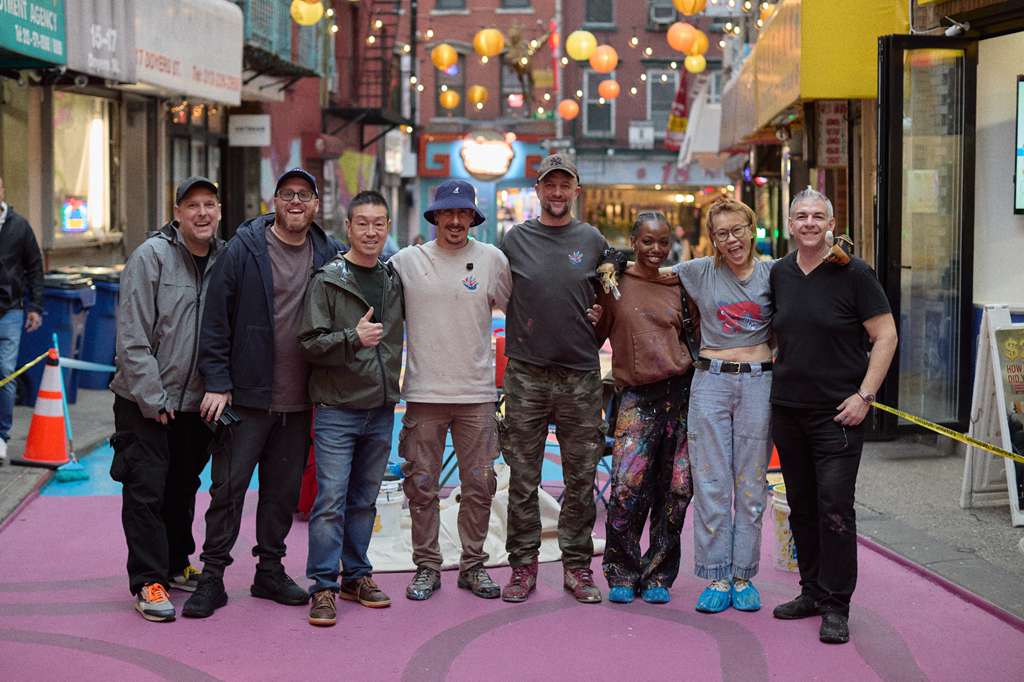
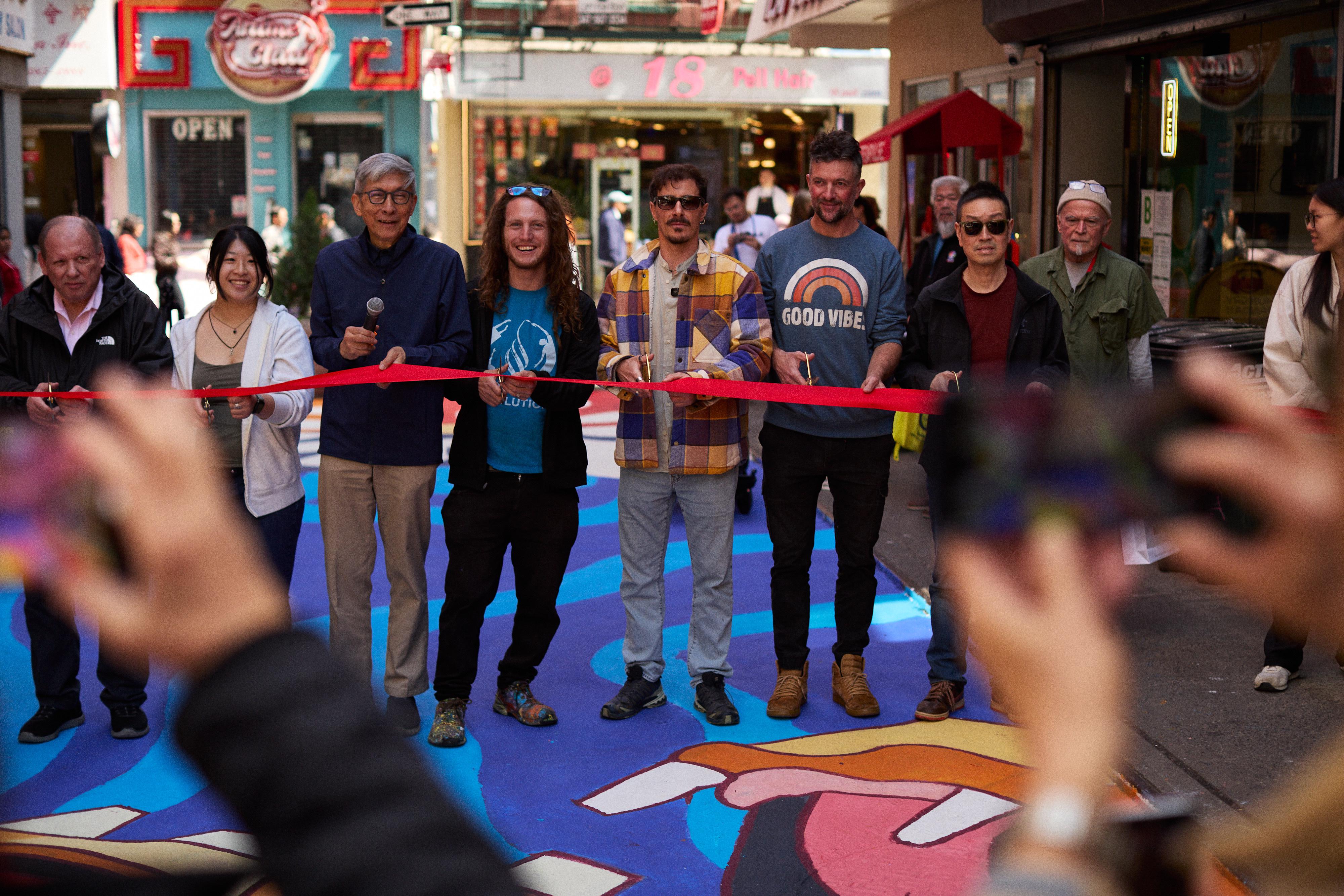
SMOE, Mike Makatron, project partners and community representatives mark the completion of Yangtze: The Ground Mural with a ribbon-cutting ceremony on Doyers Street. Photography © Ben L / Just a Spectator.
Special thanks to our long-time friend Ben L of Just a Spectator for documenting the project and generously sharing his wonderful photographs with GraffitiStreet.
Follow GraffitiStreet News for more stories from the artists, neighbourhoods and communities reshaping public space around the world.