Spok Brillor Pushes Casa Axis’ Tennis Court Into Infinite Depth with Hard Court 2
Spanish artist Spok Brillor has transformed the tennis court at Felipe Pantone’s Casa Axis in Valencia with Hard Court 2, developing the existing 2025 intervention by MRKA into an extraordinary optical construction in which the court appears to repeat, recede and descend beneath the players’ feet. Created during a 12-day residency, the work continues an evolving experiment that brings together painting, architecture, tennis and artistic succession.
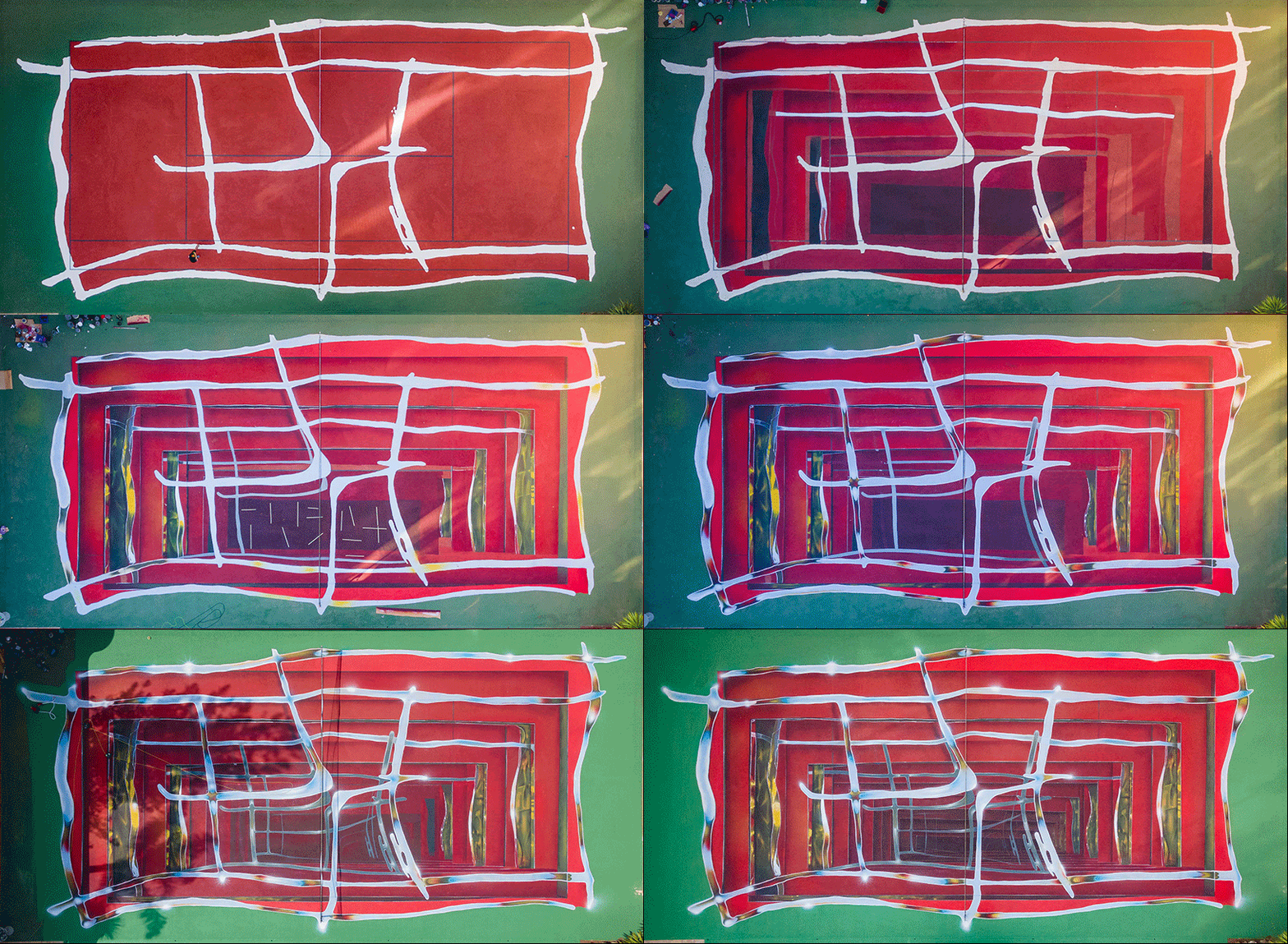
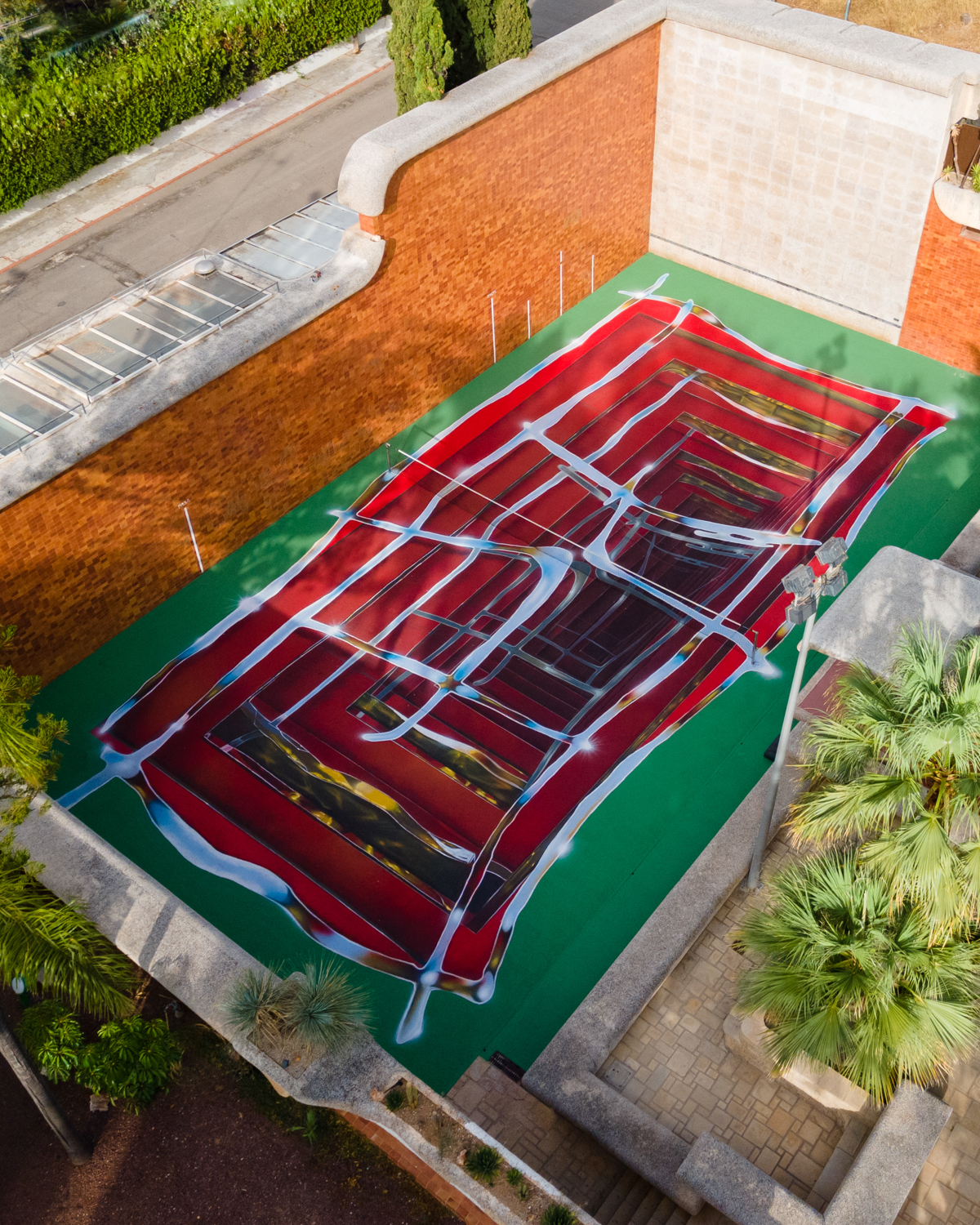
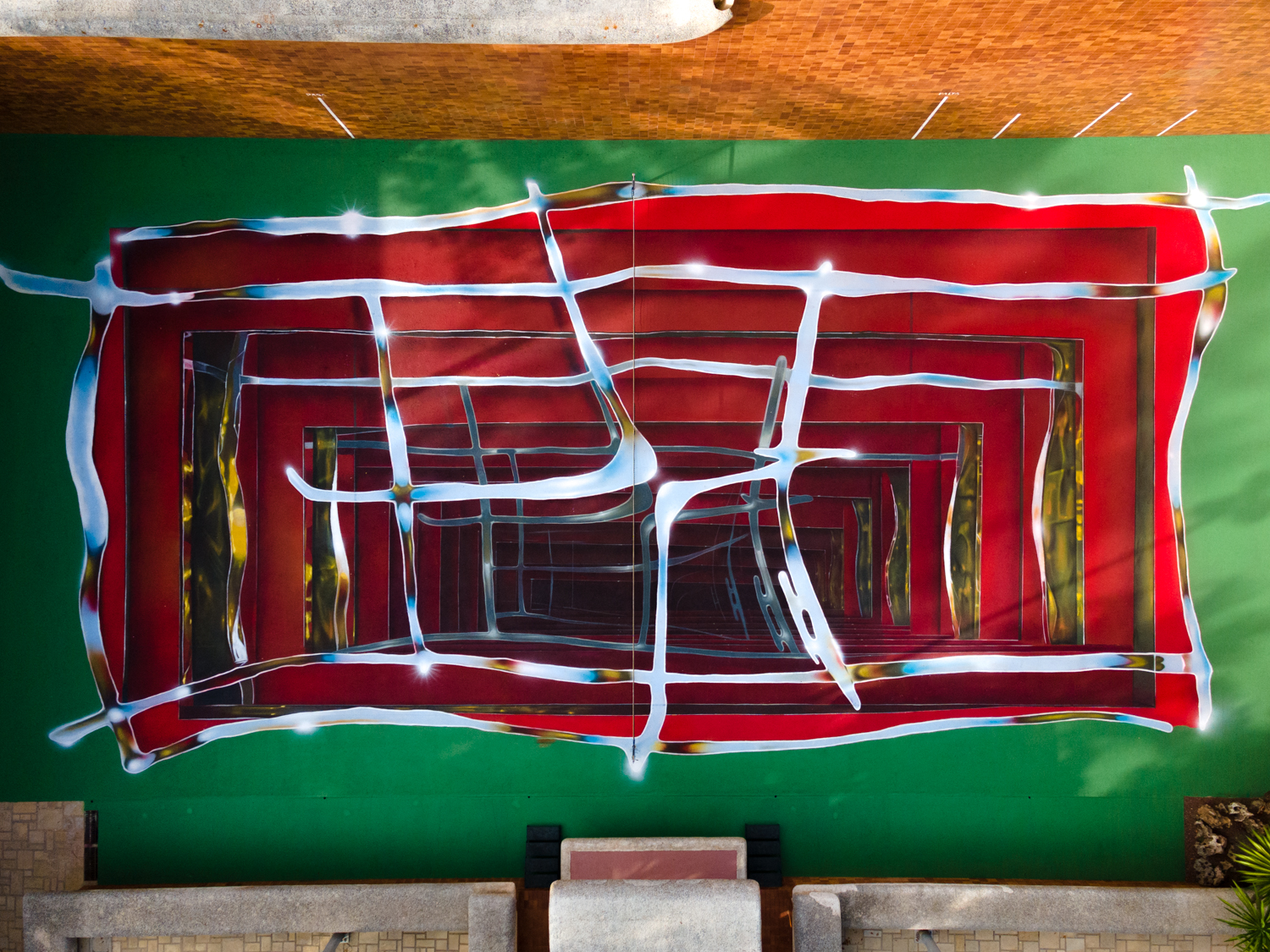
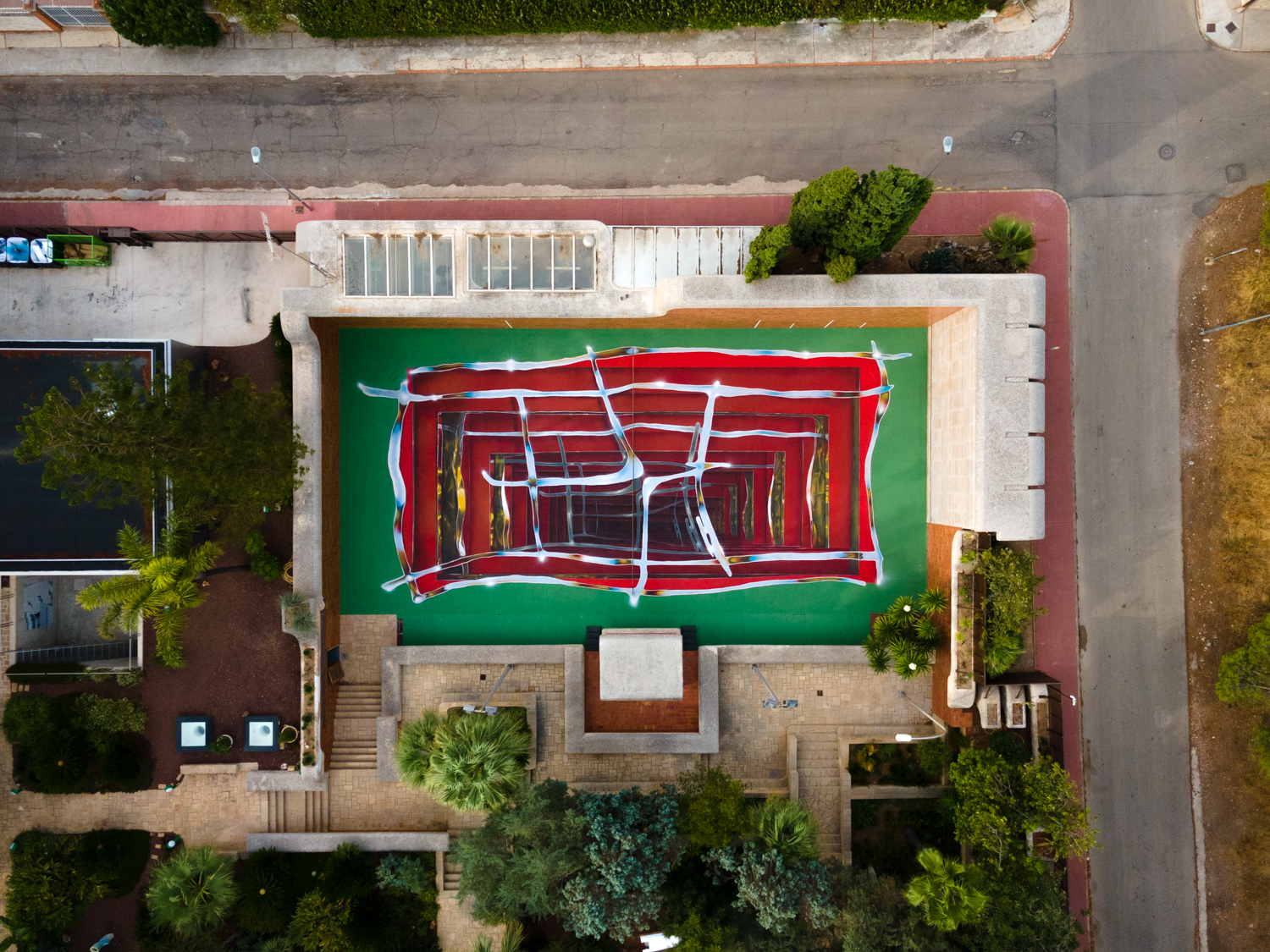
Spok Brillor has transformed the tennis court at Felipe Pantone’s Casa Axis in Valencia with Hard Court 2, overhead aerial view.
Seen from above, Hard Court 2 appears to open the surface of the tennis court into an almost impossible depth. Deep reds and burgundies contract through successive rectangular planes, while pale blue, white, black and yellow lines cross the composition with the appearance of reflected metal, creating a spatial illusion that sits somewhere between an architectural shaft, a digital tunnel and a painted portal.
The transformation becomes more interesting when compared with MRKA’s original Hard Court, created at Casa Axis in May 2025. Its red-and-green field and irregular white geometry remain visible within Spok’s intervention, but the earlier composition has been extended through perspective, shadow and reflected colour so that lines which previously moved across the court now appear to travel through several levels of imagined space.
From Hard Court to Hard Court 2
Created by Madrid-based artist and designer MRKA, the first Hard Court deliberately disrupted the precision normally associated with a tennis surface, introducing an irregular, hand-drawn quality into the rigid architecture of the game.
The court subsequently became the setting for the inaugural C.A.I.O., Casa Axis International Open, held in June 2026 as a tennis tournament for artists in which the winner also assumes responsibility for transforming the court for the following edition.
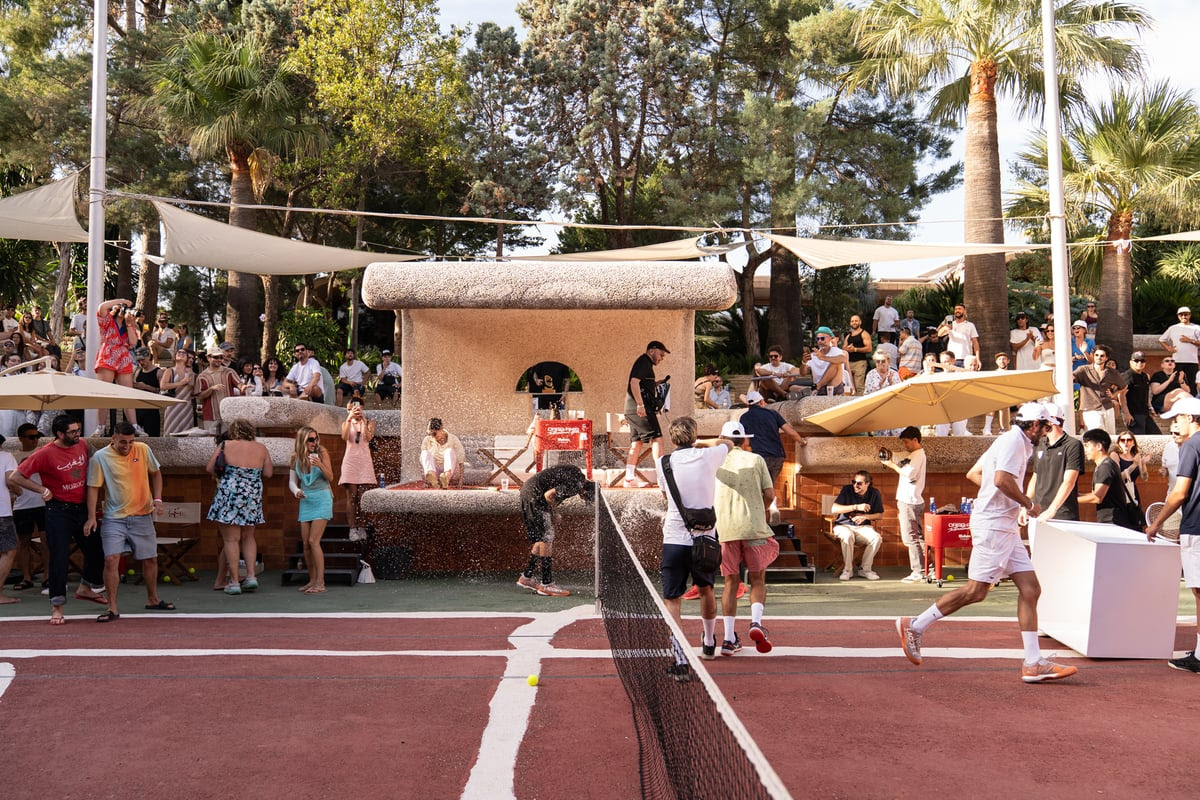
C.A.I.O. being played on MRKA’s Hard Court
MRKA won the first C.A.I.O. tournament, but having already designed and painted Hard Court, he chose to pass the baton to Spok Brillor, who had also competed in the tournament.

That decision led directly to Hard Court 2. Rather than approaching the space independently of what came before, Spok responds to the existing visual language of the court, repeating its geometry inward and allowing its lines to reappear through a new illusion of depth, reflection and recession.
A Court Within a Court
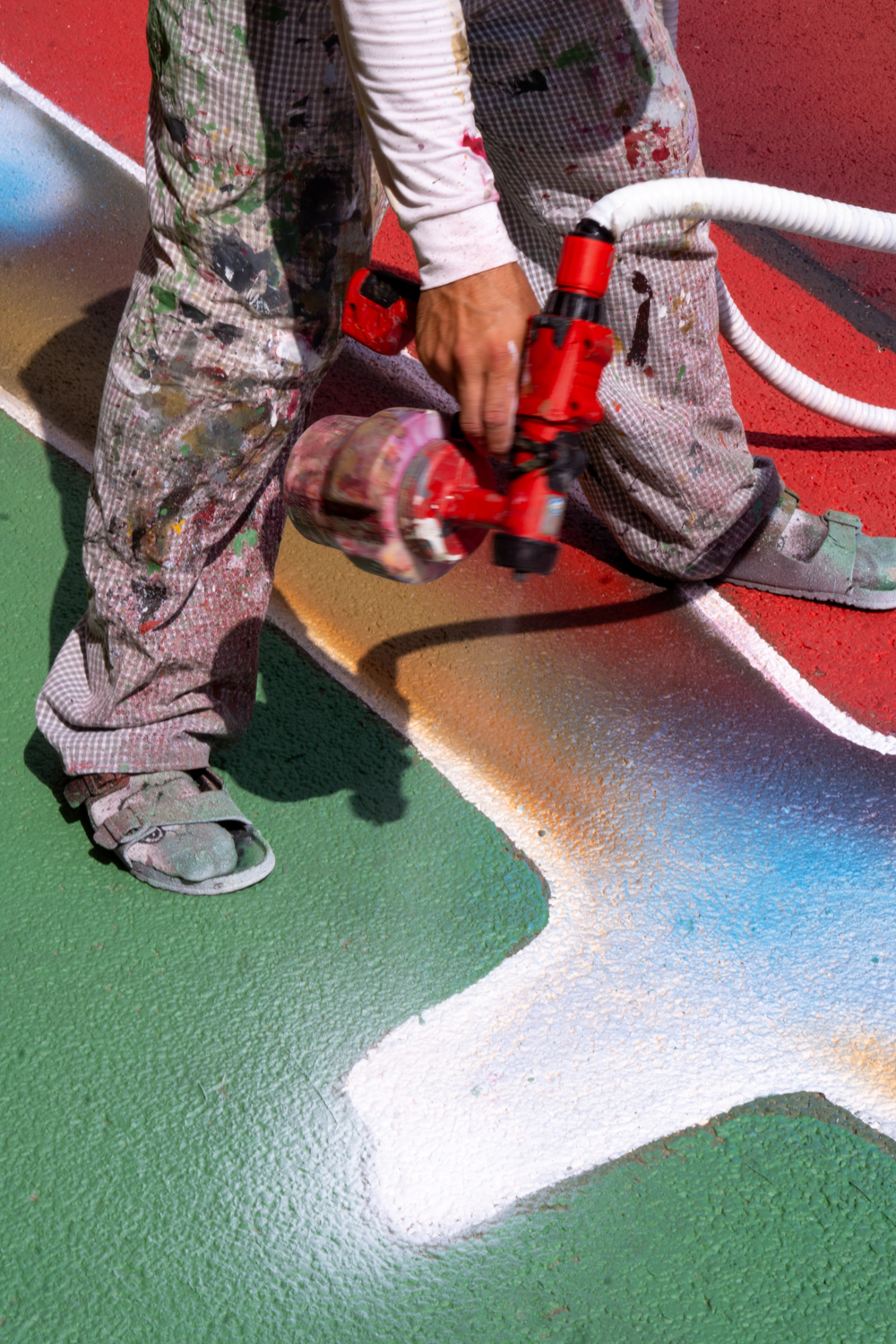
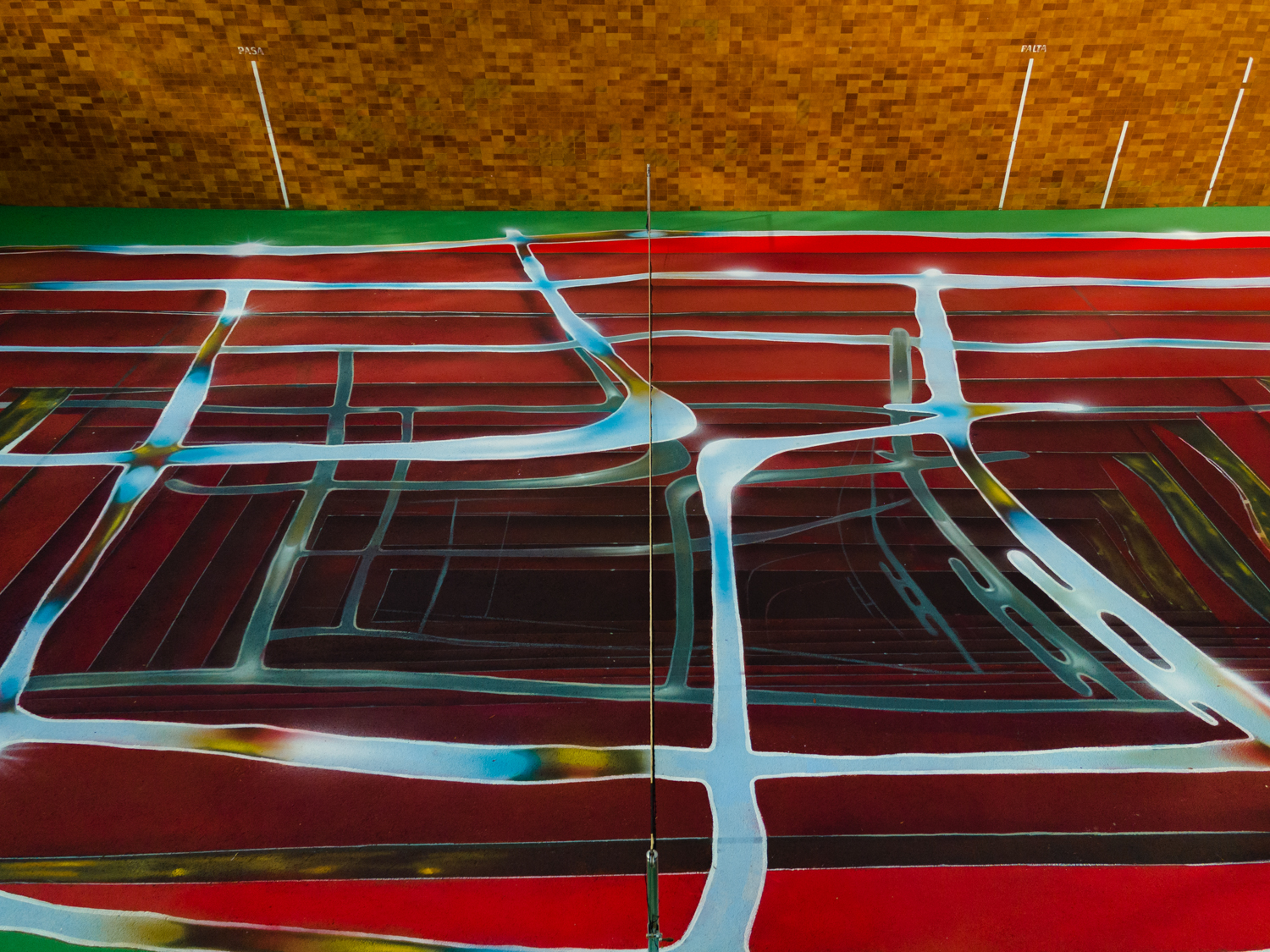
During a 12-day residency at Casa Axis, Spok repeated the architecture of the court inward, progressively compressing its geometry until the surface appears to contain multiple versions of itself. The existing lines acquire shadows, highlights and flashes of reflected colour, while increasingly dark passages towards the centre create the sensation that the ground is dropping away.
The idea connects with Spok’s wider interest in using the place in which he is working as the subject of the work itself. As he explains in the project material:
“Sometimes, I have painted the same scene of the same place so as not to interrupt the aesthetics of the place, to talk about the same place. A meta version of the place itself, like a portal to nowhere.”
At Casa Axis, that concept finds an unusually appropriate setting because the tennis court is simultaneously the physical location, the source image and the surface upon which the illusion is constructed. The result becomes a kind of visual recursion in which the architecture seems to reproduce itself beneath its own footprint.
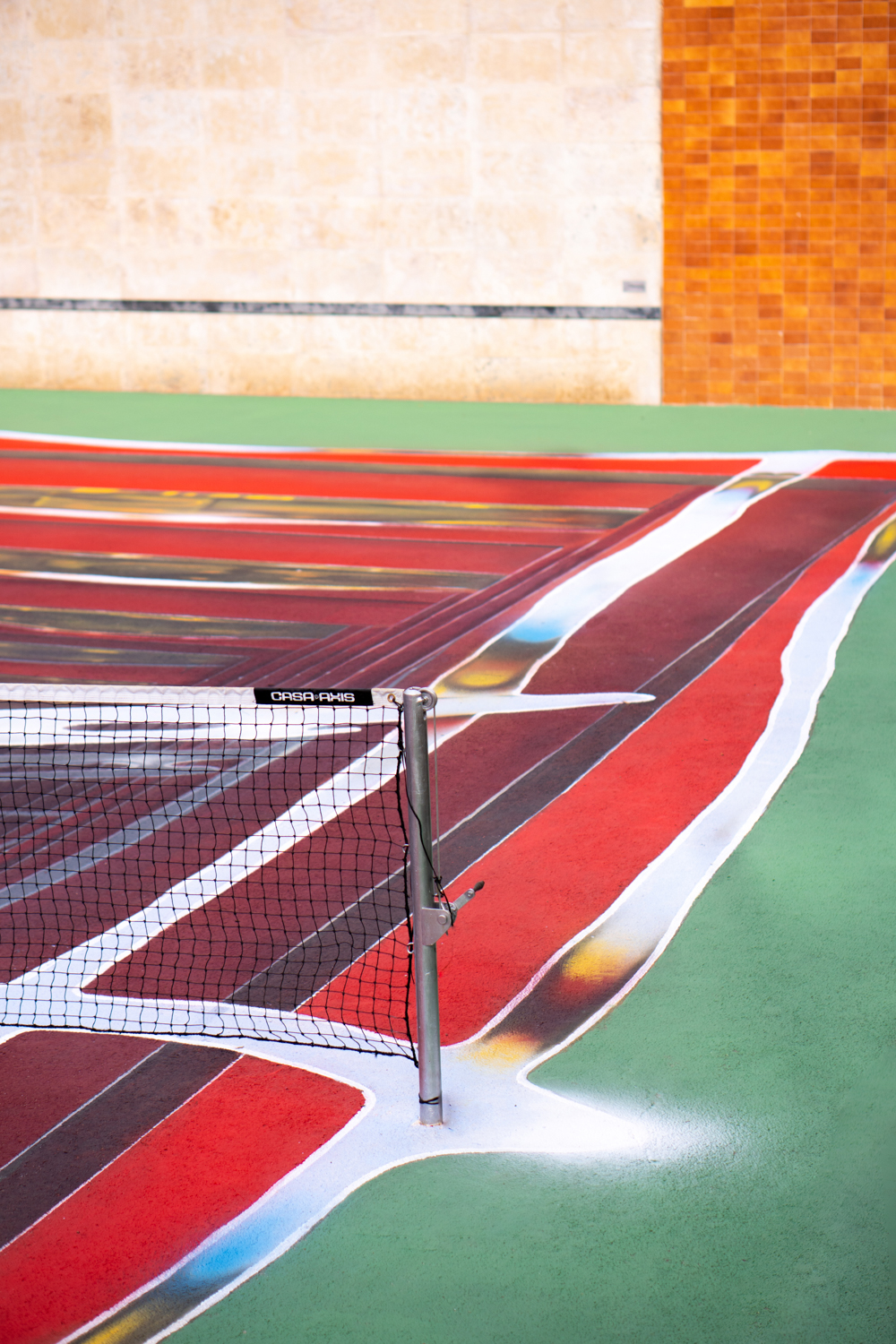
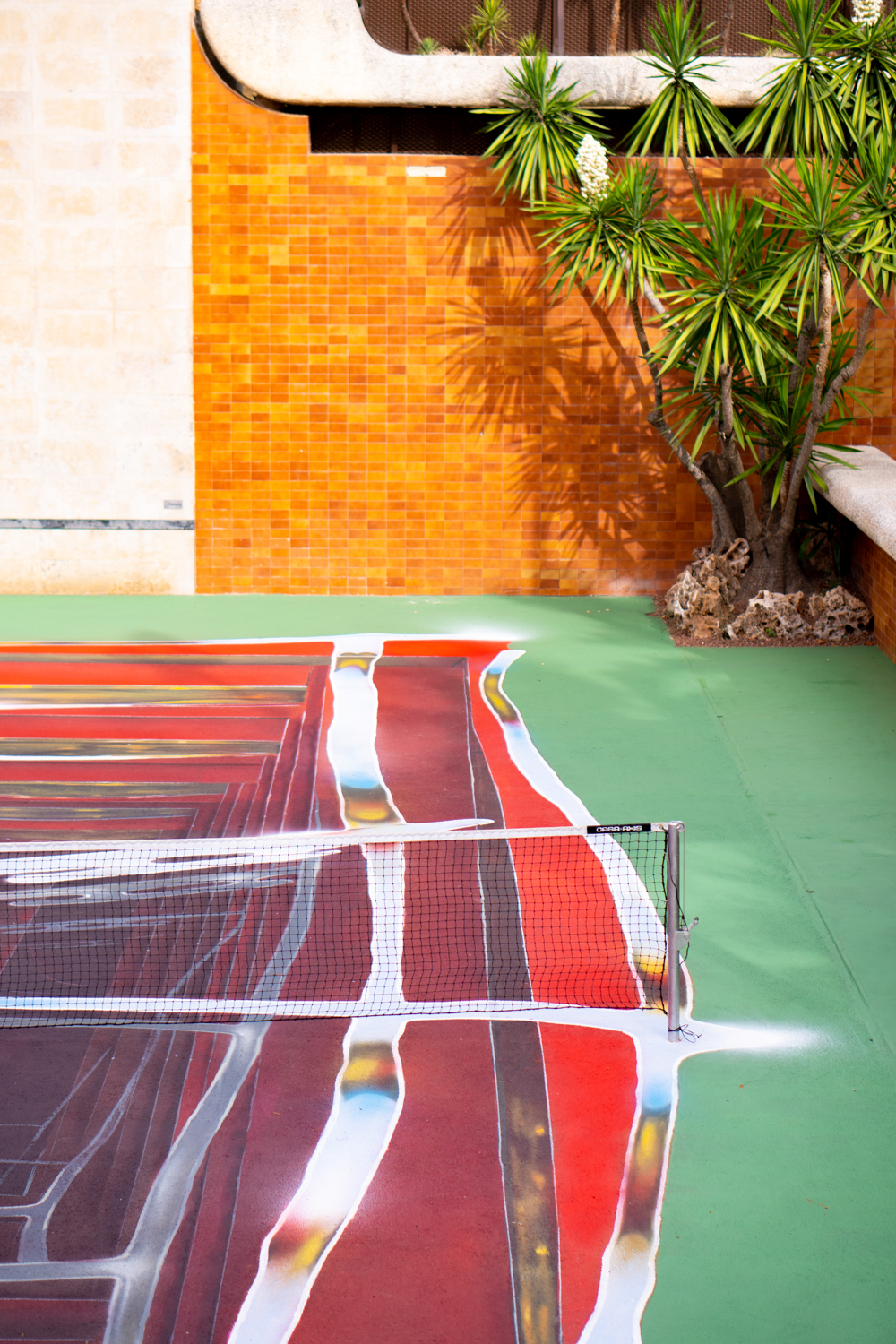
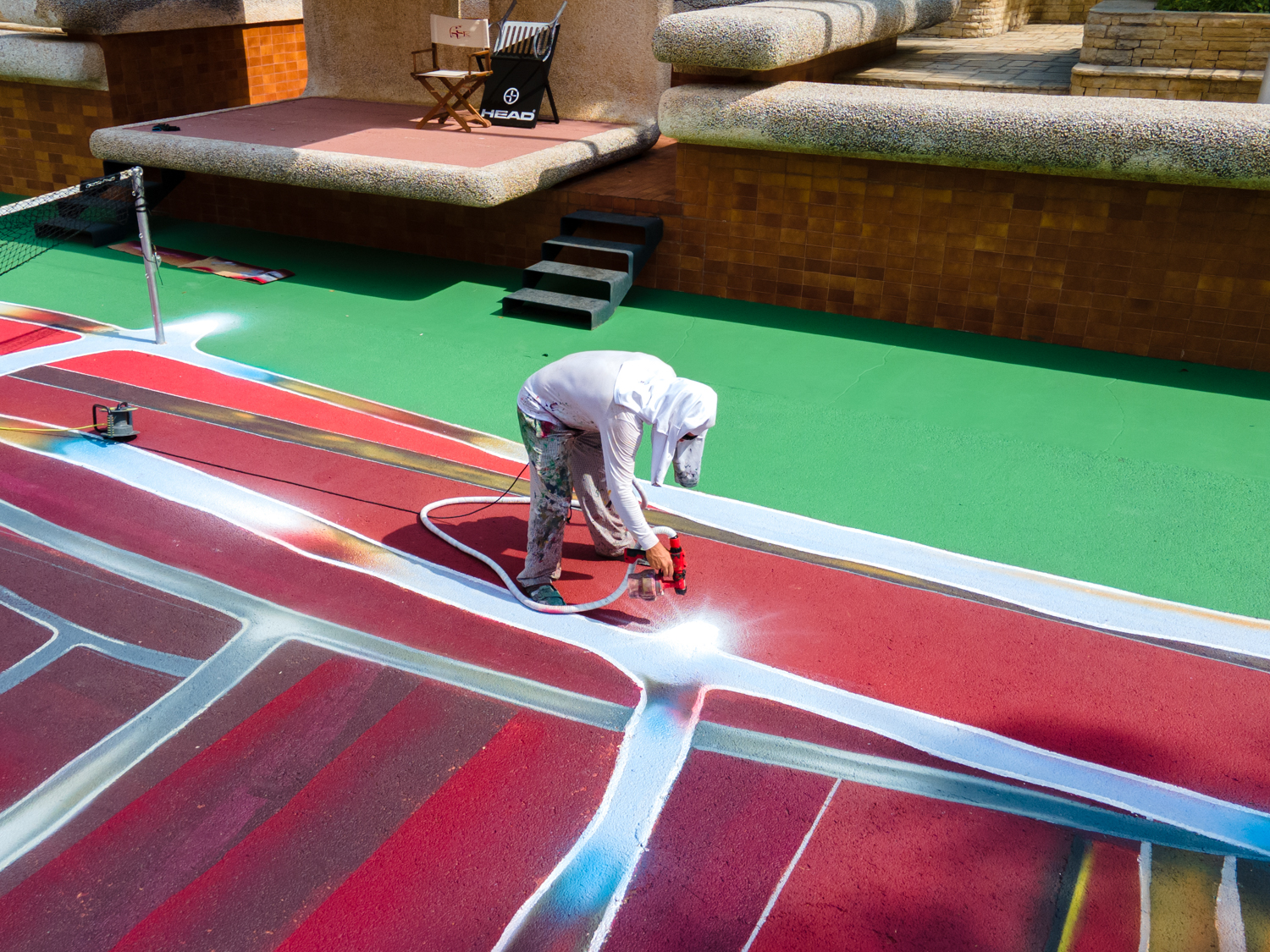
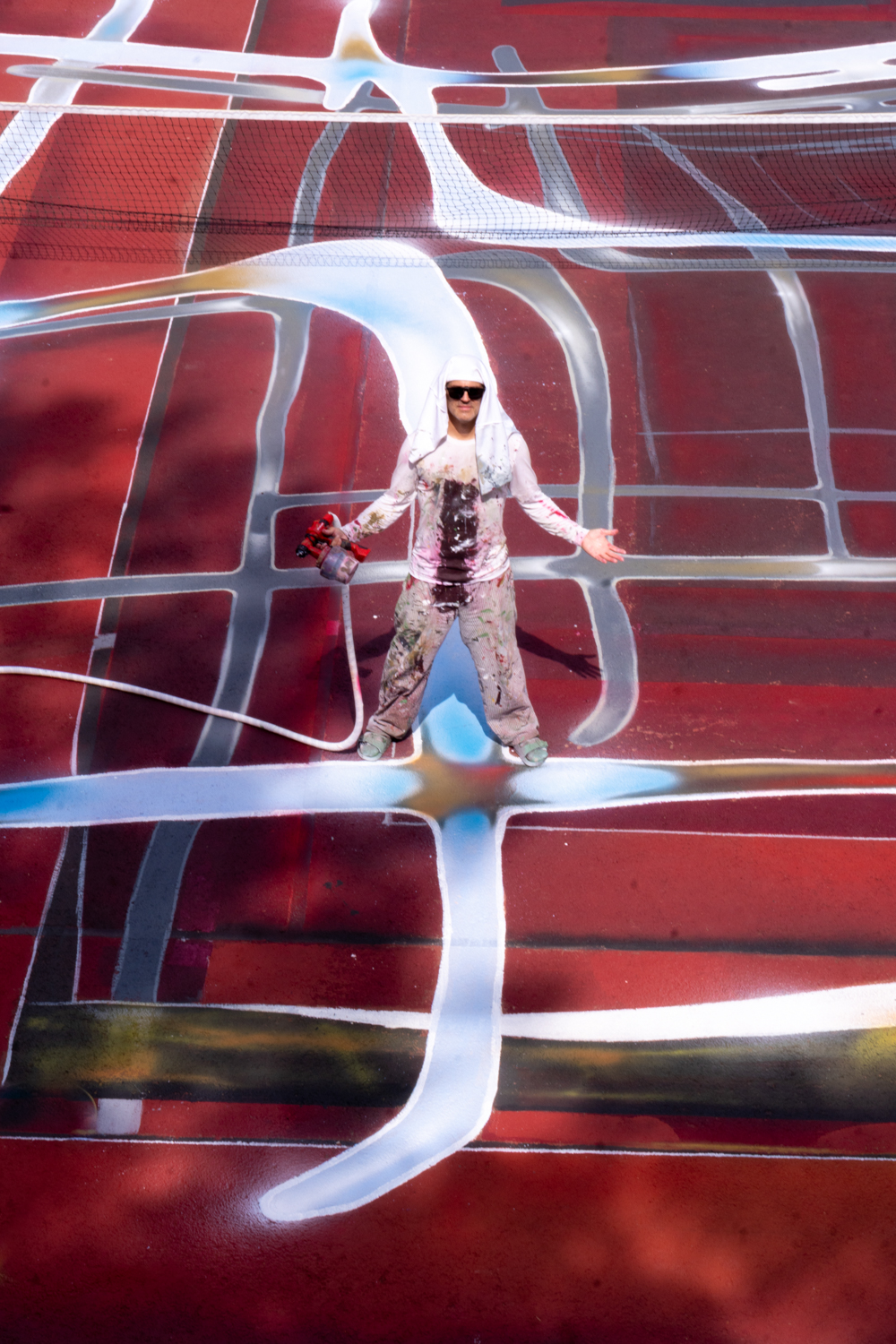
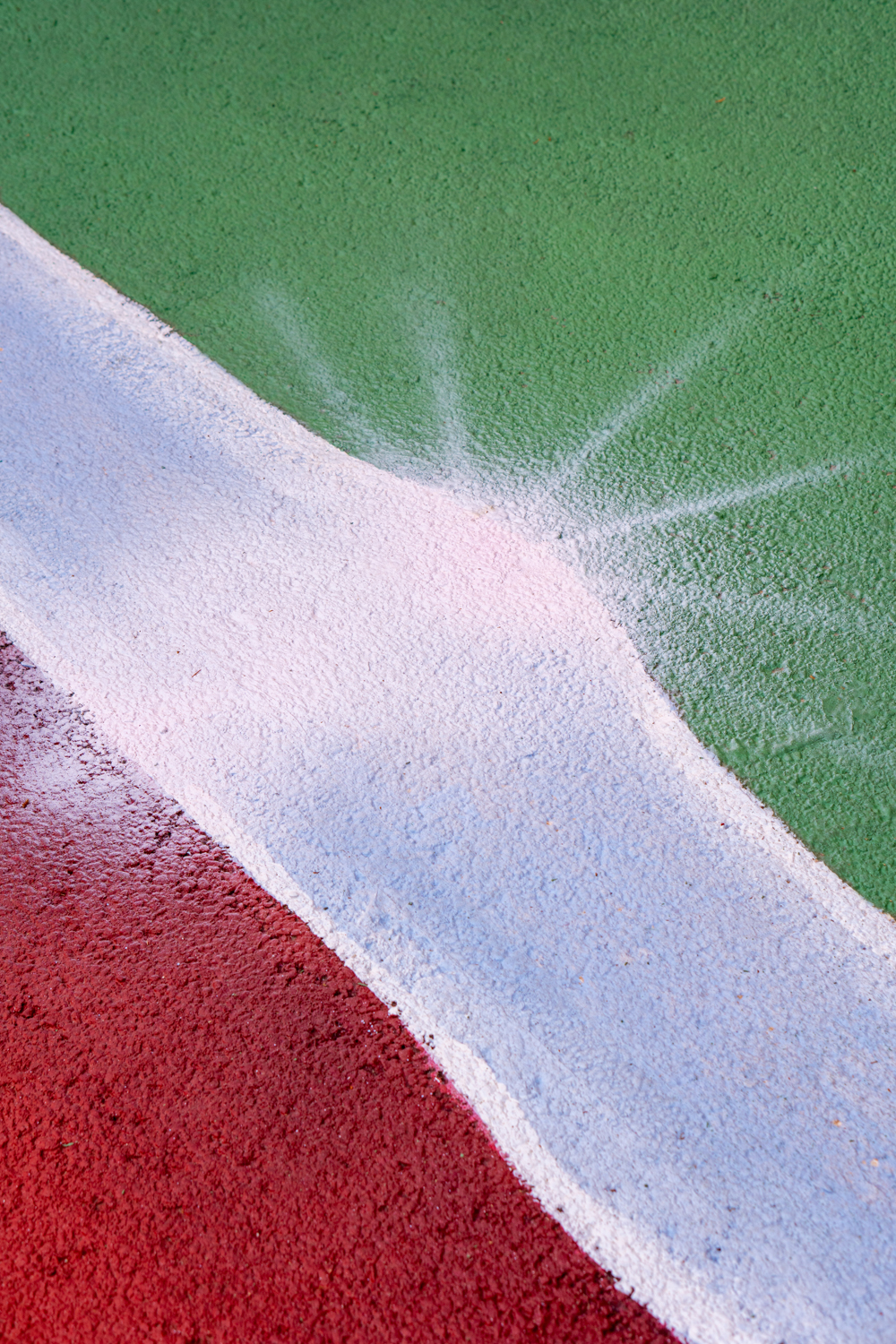
The effect changes considerably at ground level, where the apparently seamless spatial illusion resolves into sprayed colour, textured paint and the granular surface of the court. White and pale blue create highlights, darker tones establish depth, and small passages of yellow suggest reflected light, while the physical tennis net and its shadow continue across the painted perspective.
These closer views are particularly revealing because the work can appear almost digitally generated from the air, whereas its material construction becomes unmistakable when experienced from within the court.

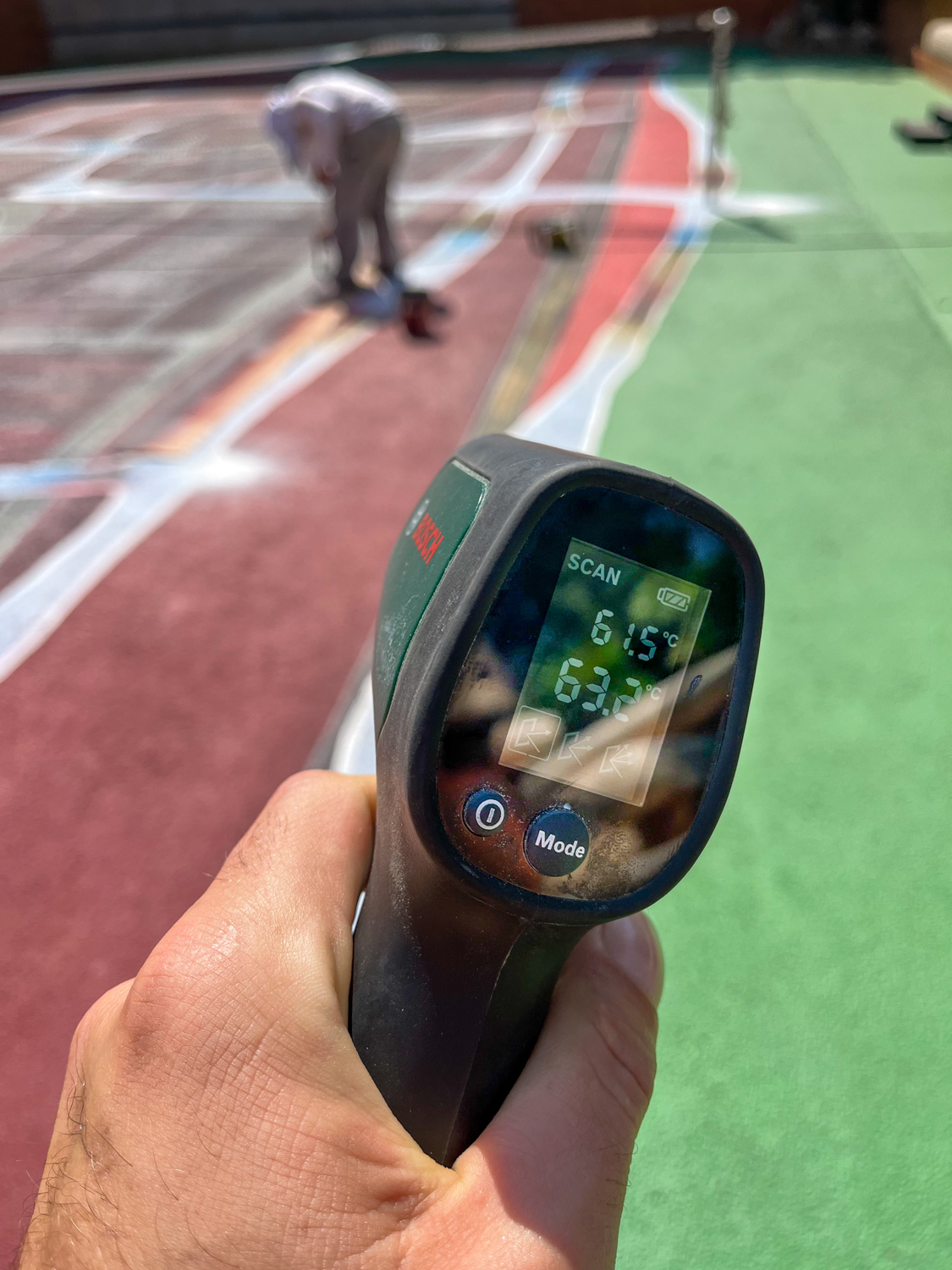
Photographs from the residency also record the physical conditions behind the finished image, including an infrared thermometer registering a court-surface temperature above 60°C while Spok was working!!
Casa Axis and an Artwork Designed to Evolve
Felipe Pantone’s Casa Axis occupies a 1975 house in L’Eliana, Valencia, and operates as an artistic residency and creative environment bringing together art, architecture, design and experimentation. Within that setting, the tennis court has become one of its most distinctive spaces because it remains fully functional while also operating as an artwork, installation and stage for C.A.I.O.
The project becomes particularly compelling through its acceptance of change. MRKA’s Hard Court became the surface on which the first tournament was played, his victory led to Spok’s subsequent intervention, and traces of that original composition remain embedded within Hard Court 2. Each version therefore has the potential to carry something forward from the one before it, allowing the court to accumulate visual histories as successive artists reinterpret the space.
Spok’s response feels especially appropriate within that structure. By painting a court that appears to repeat almost indefinitely, he has created an image of continuation on a surface whose own evolution has intentionally been left open.
With C.A.I.O. returning in 2027, the next artist will inherit more than a tennis court; they will inherit the visual conversation already taking place across it.
Related Reading
GraffitiStreet has followed Felipe Pantone’s exploration of colour, architecture and perception across a number of major projects. Read our interview with Felipe Pantone on the making of OPTICHROMIE for Jersey City, explore the monumental OPTICHROMIE for Jersey City mural, or discover Chromadynamica Dimensional for Hangzhou.