Ricardo Romero Confronts Passive Witnessing in THE WORLD BURNS WHILE WE SCROLL
In THE WORLD BURNS WHILE WE SCROLL, Ricardo Romero reconstructs an archival photograph of Soviet children taken during an attack in the Second World War using painting screens and light, confronting a contemporary paradox in which images of war and human suffering can be witnessed across the world almost instantaneously, yet the act of seeing them does not necessarily produce action.
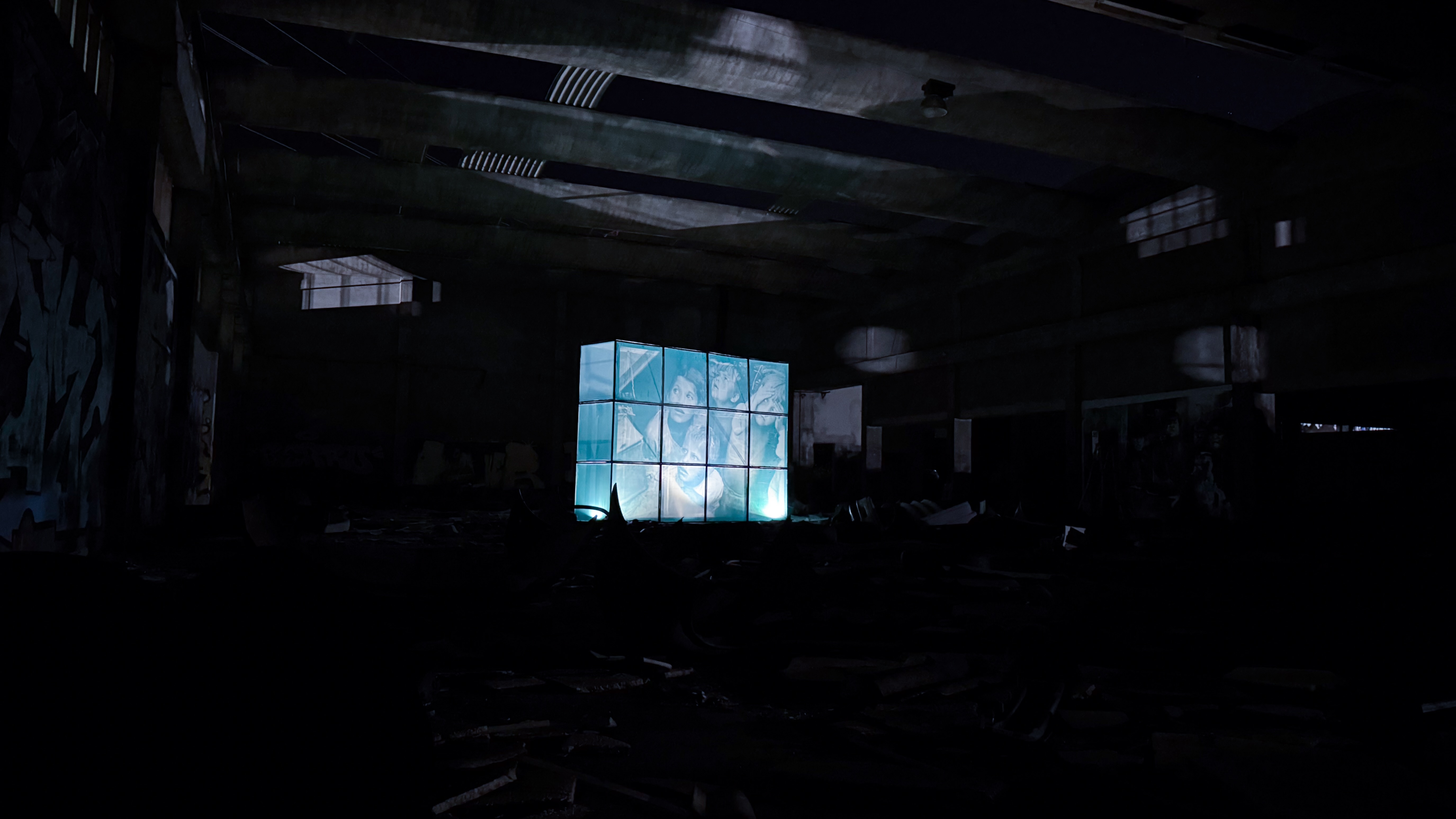
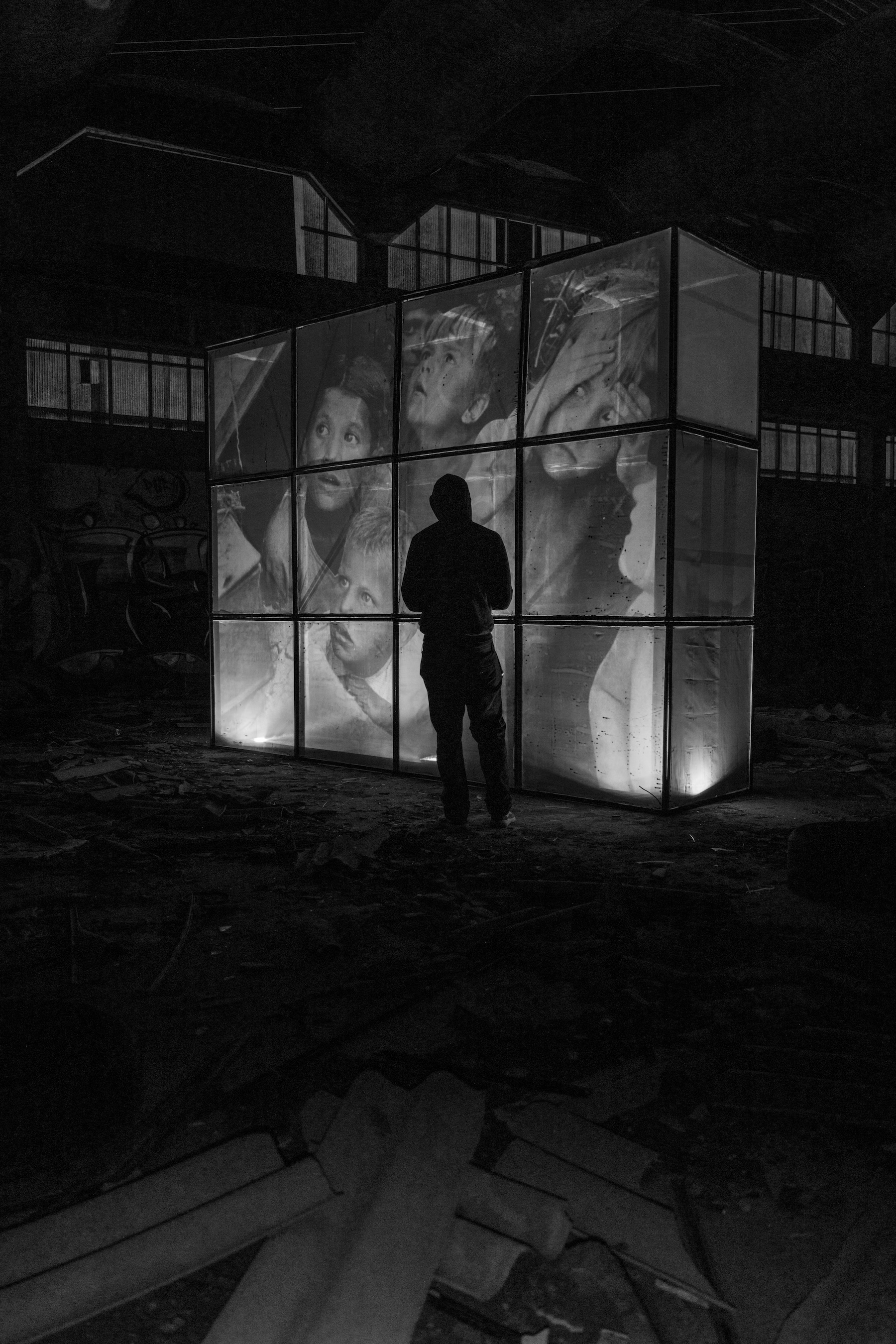
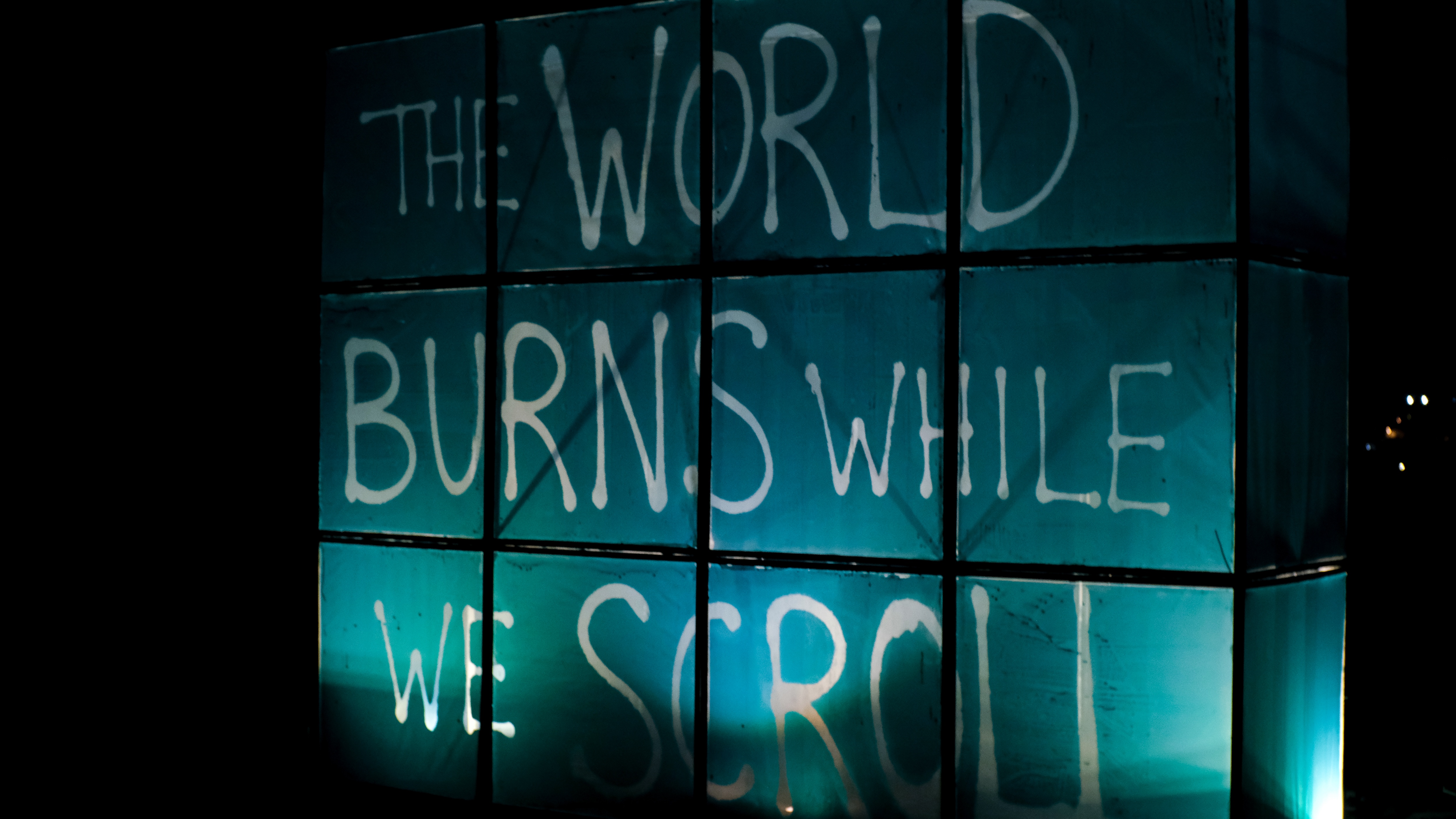
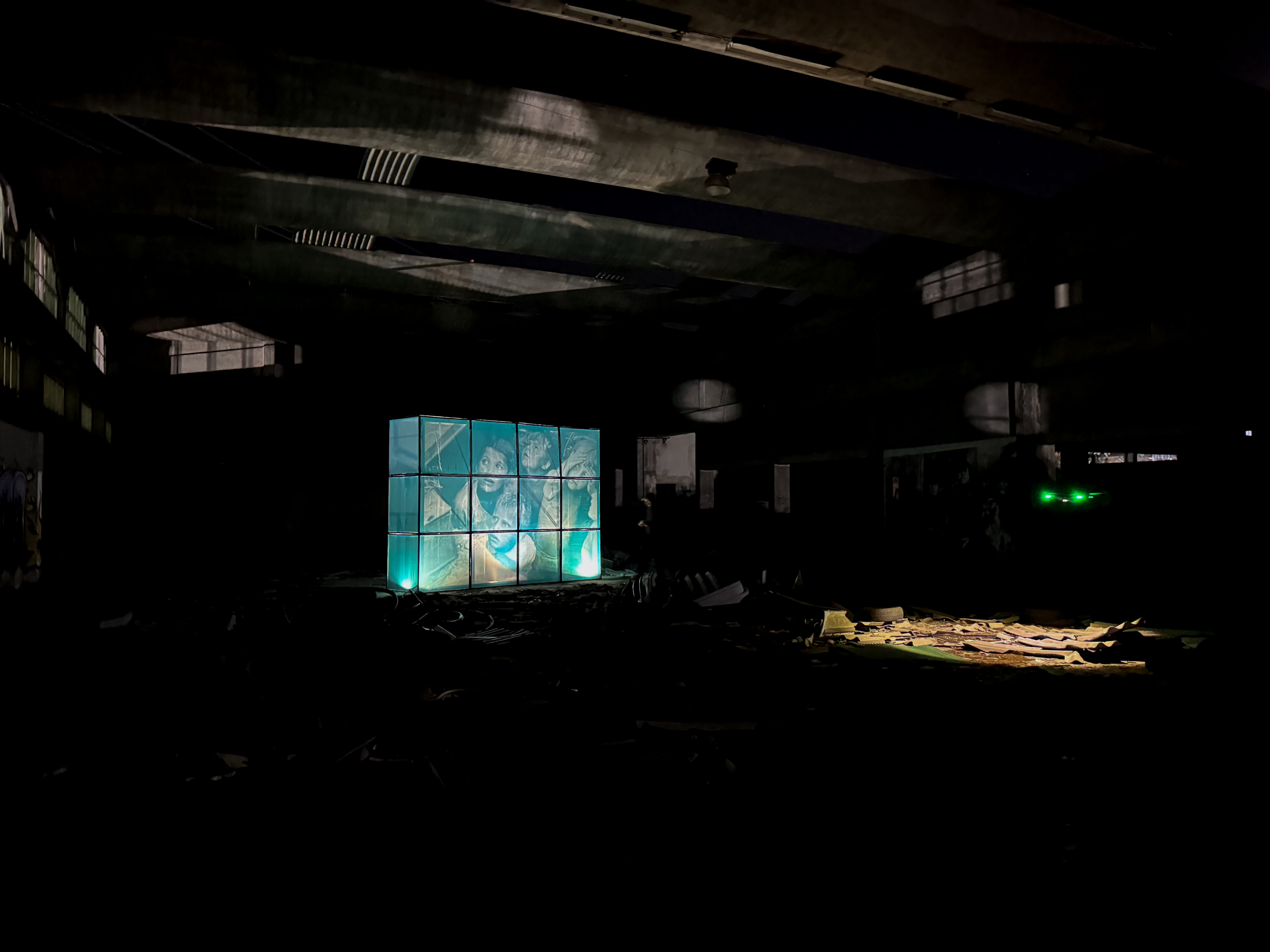
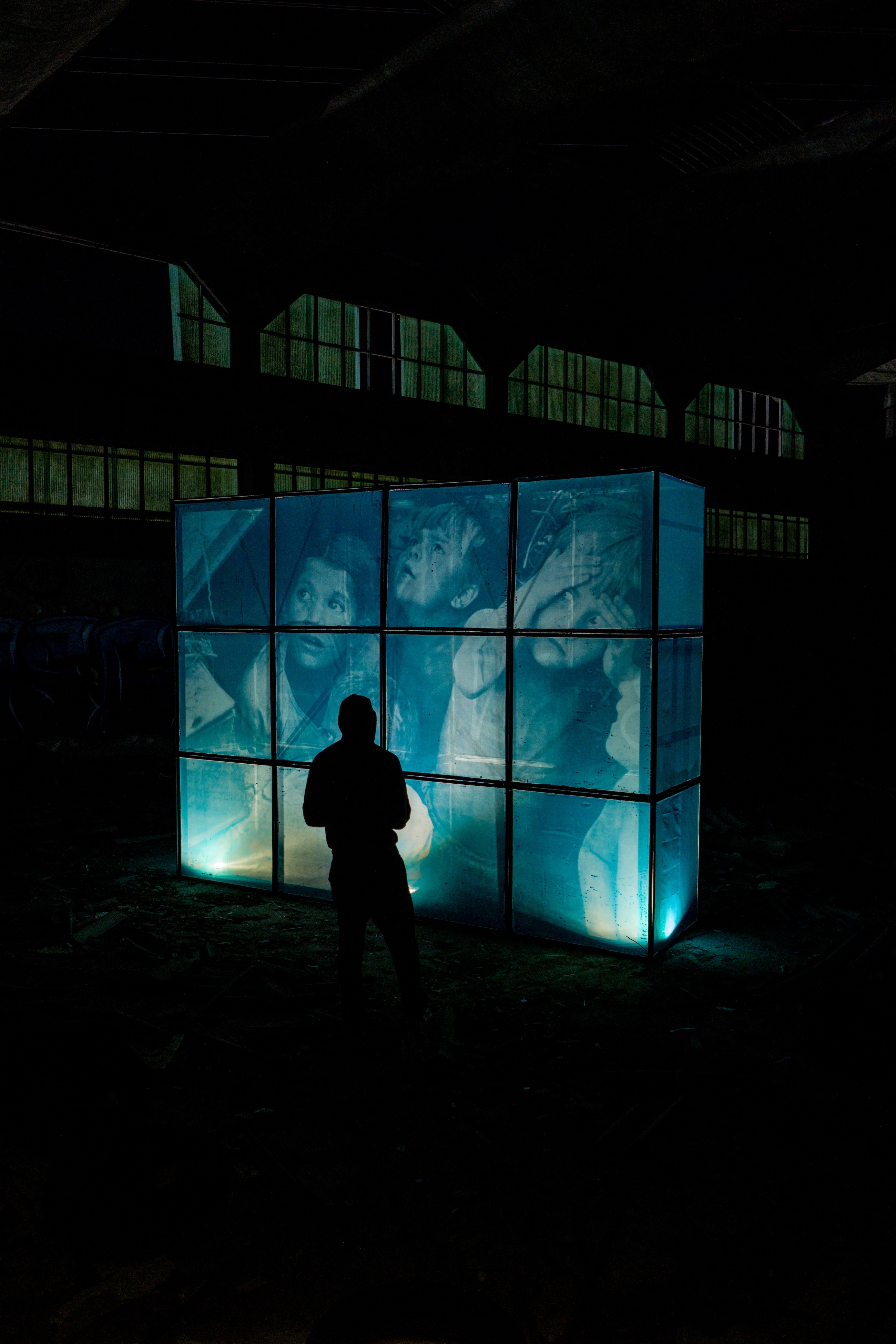
Set within the darkness of a vast industrial interior, Romero’s installation appears as a luminous structure divided into a grid of painting screens. On one side, the faces of children emerge through the surface; on the other, the words that give the installation its title stretch across the same illuminated framework.
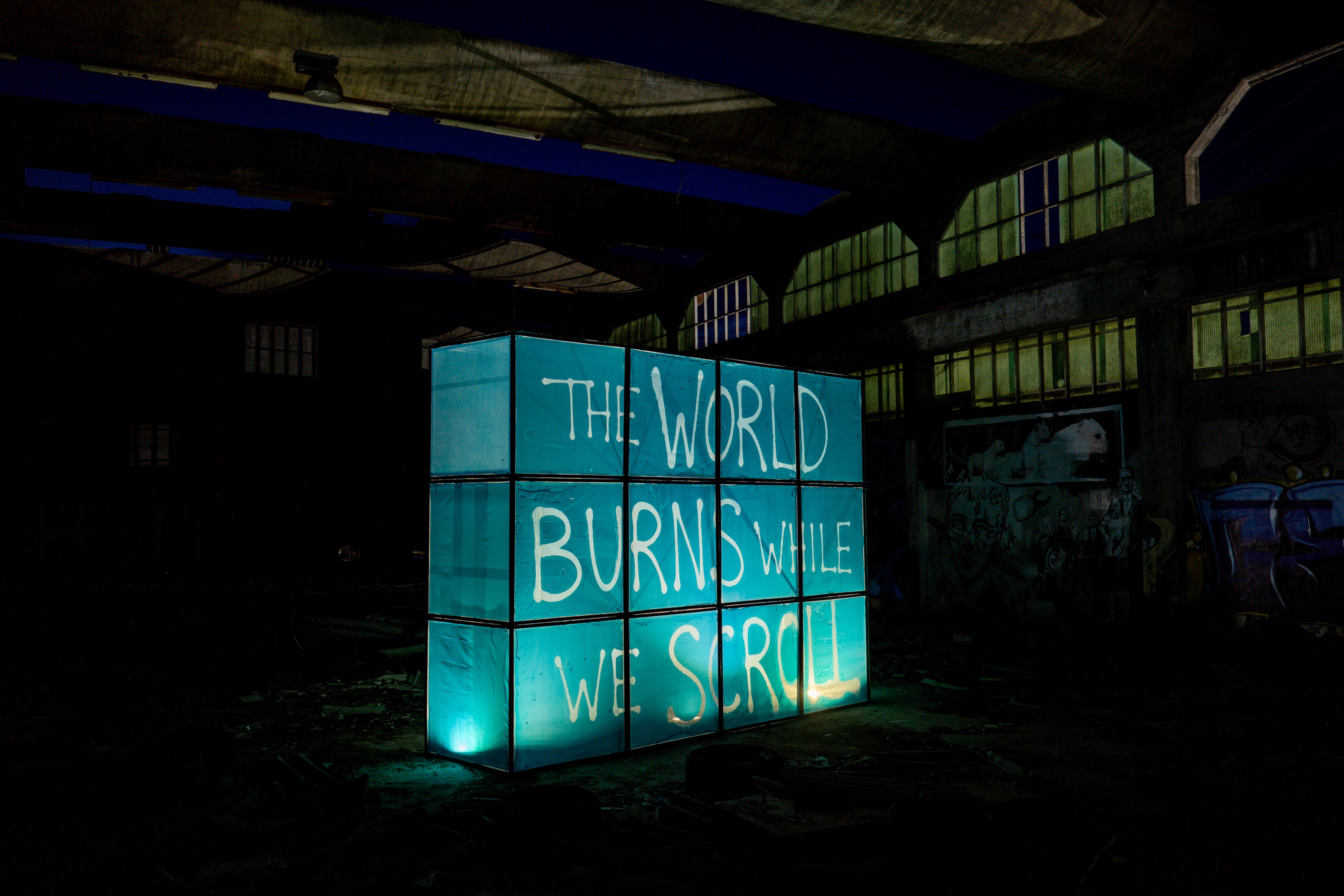
The two sides belong to one object, bringing an image preserved as historical testimony into direct contact with the relentless circulation of images that characterises the present.
Romero’s starting point is an archival photograph of Soviet children taken during a German air raid near Minsk in 1941, yet within the installation the image reaches beyond that specific historical moment. The children come to represent the vulnerability of civilians caught within conflicts they did not create, and particularly the recurring presence of children in images of war across generations, borders and political circumstances.

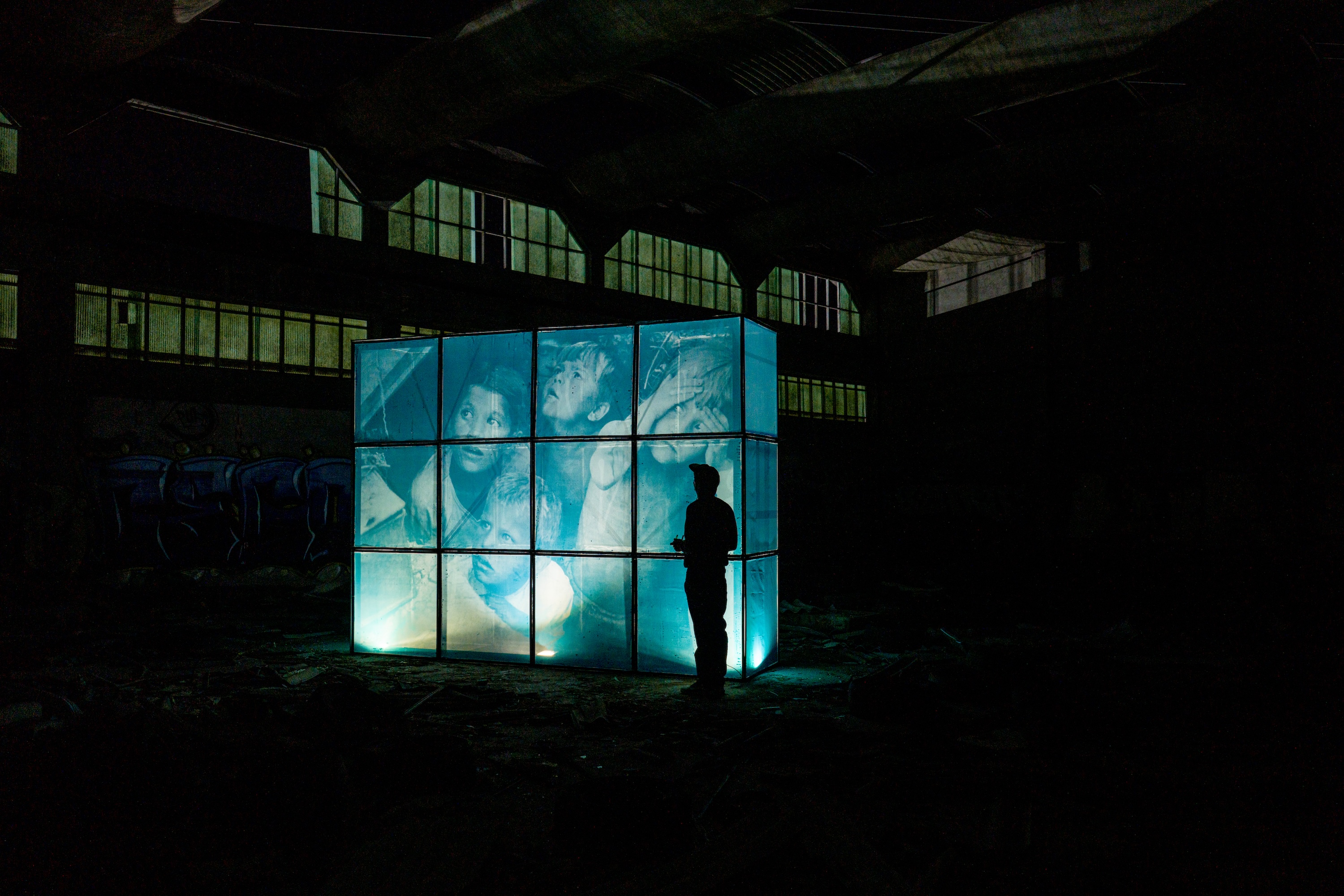
Rather than reproducing the photograph conventionally, Romero reconstructs it across painting screens, materials ordinarily used as stencils through which spray paint passes to create an image on another surface. Here, that familiar process is suspended: paint is replaced by light, which travels through the screens and makes the photograph visible.
Between Memory and the Feed
There is an unsettling feeling in the way the children appear through Romero’s illuminated screens. Their faces belong to a documented moment in 1941, yet within the installation they seem suspended inside it, looking outward from the past towards a future that has failed to escape the violence they experienced.
More than eighty years later, children are still sheltering from bombs, families are still caught inside wars they did not create, and images of their fear continue to reach audiences across the world. What has changed most dramatically is not the existence of conflict, but our ability to witness it.
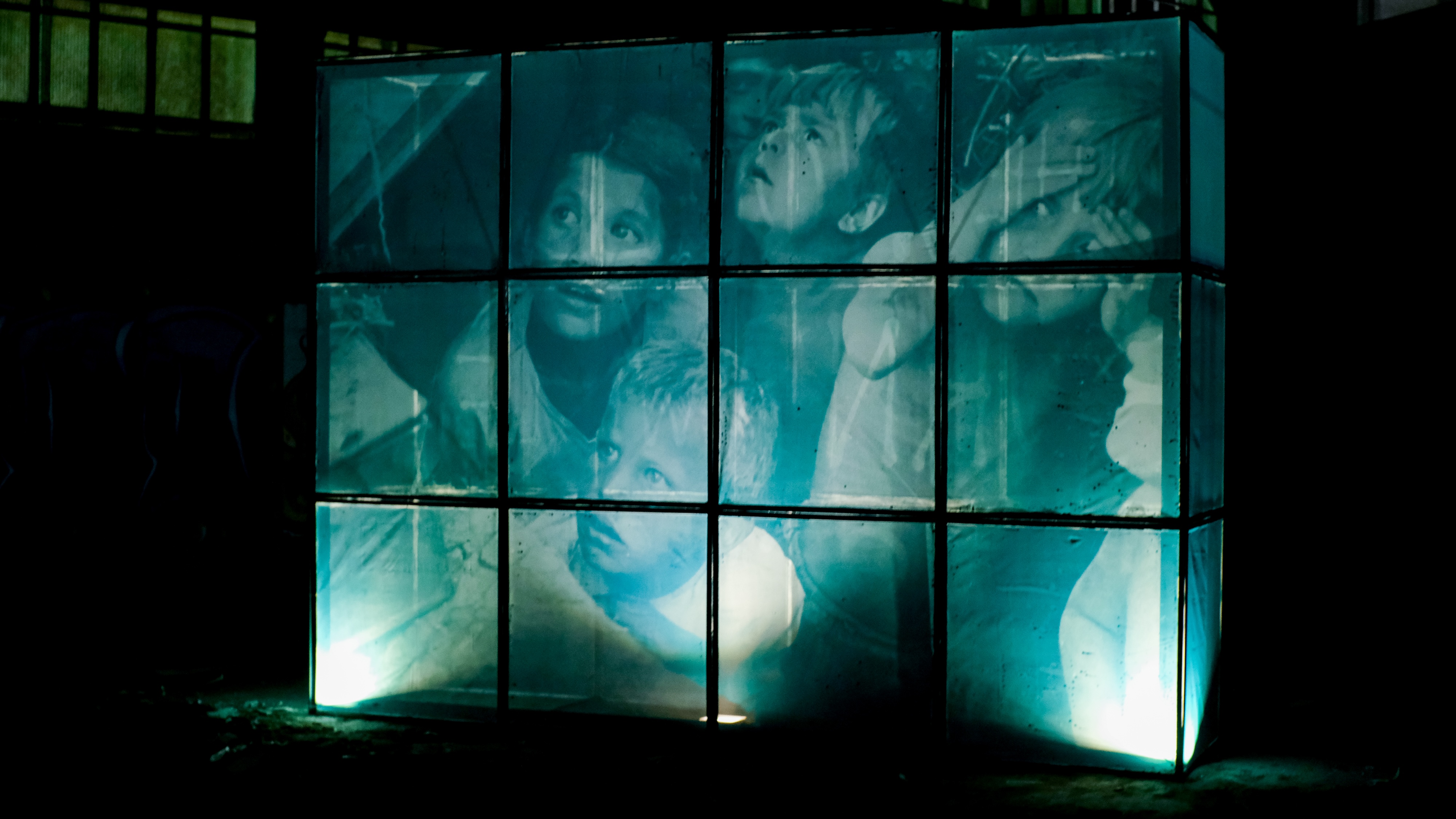
The historical photograph stops functioning only as evidence of what once happened and becomes a mirror for what continues to happen.
On the opposite side, the words THE WORLD BURNS WHILE WE SCROLL turn that continuity into a contemporary accusation: the world is no longer unaware of what is happening. Photographs, videos and testimony circulate globally within moments.
When Everyone Can Become a Witness
For earlier generations, photographs of war were often encountered after the event, mediated through newspapers, magazines, archives and television. Today, a photograph or video recorded during a conflict can cross continents within seconds, reaching millions of people through the same devices they use for conversation, entertainment and everyday life.
That visibility leaves far fewer places for ignorance to hide, yet Romero’s installation points to the more troubling question that follows: what happens when everyone can see, but seeing alone changes nothing?
The issue is not simply indifference. People may be horrified, angry, compassionate or politically engaged, yet the structure of the feed continues regardless. Another photograph appears, another catastrophe enters view, and the scrolling moves almost instinctively to whatever comes next.
Light, Memory and the Architecture of the Image
Romero leaves the painting screens exposed rather than disguising them as a seamless photographic surface, letting the viewer see how the image has been divided, transmitted and rebuilt. Illumination rises through the structure, passing across marks and imperfections, so the photograph appears simultaneously present and fragile. From a distance, the children resolve into a recognisable scene; closer to the work, the image breaks into individual panels, material and light.
The surrounding industrial architecture sharpens that effect. Broken material covers the floor, graffiti occupies the walls, and much of the building remains submerged in darkness, leaving Romero’s structure to glow like an enormous screen displaced from the digital world into physical space.
What Happens After We Look?
The strongest aspect of THE WORLD BURNS WHILE WE SCROLL is not a simple argument that people have stopped caring. It’s something more uncomfortable about the limits of spectatorship itself: we can know what is happening, see evidence of it repeatedly, even watch events unfold in real time, while remaining physically removed from their consequences.
Romero leaves the viewer inside that gap, confronting an uncomfortable possibility: that history may no longer be able to say we did not know what was happening.
We saw it. The question is what we did after looking.
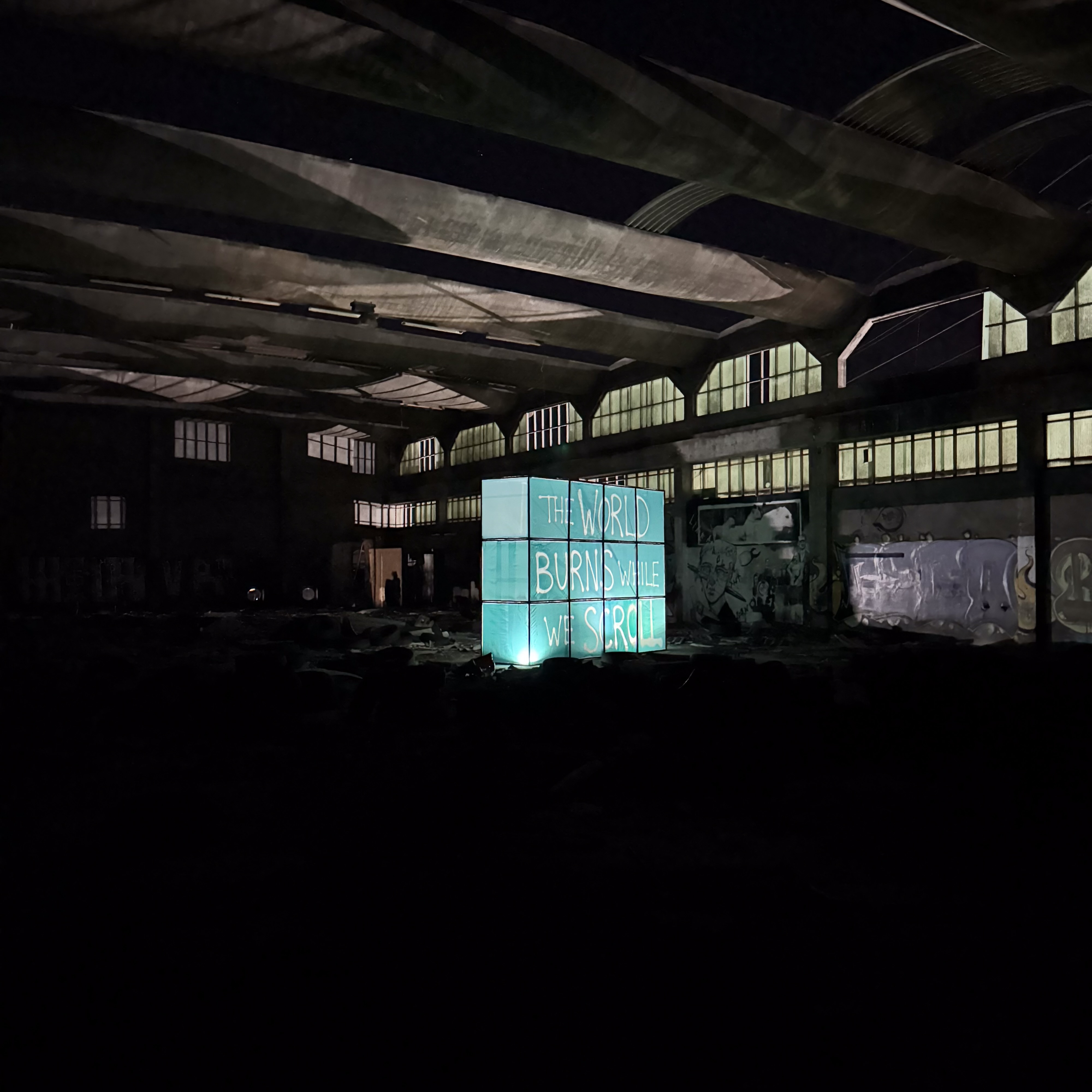
Ricardo Romero, THE WORLD BURNS WHILE WE SCROLL, 2026. Photography © Ricardo Romero.
Archival Image ©: Boris Yaroslavtsev, Children during air raid, near Minsk, Belorussia, 24 June 1941. RIA Novosti archive, image #137811. CC BY-SA 3.0.