Bordalo II Opens the Doors to ATTERO Exhibition in Lisbon
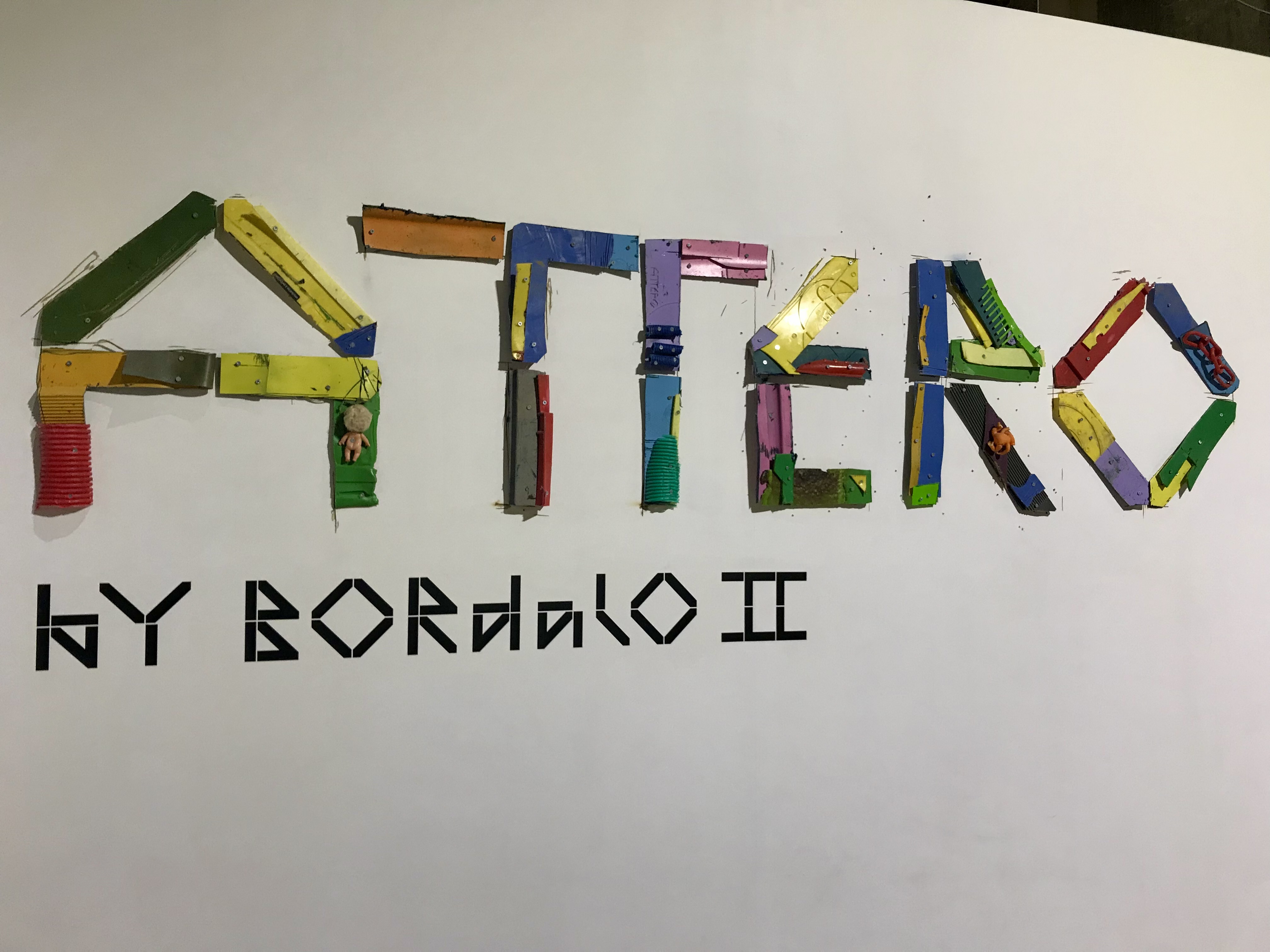
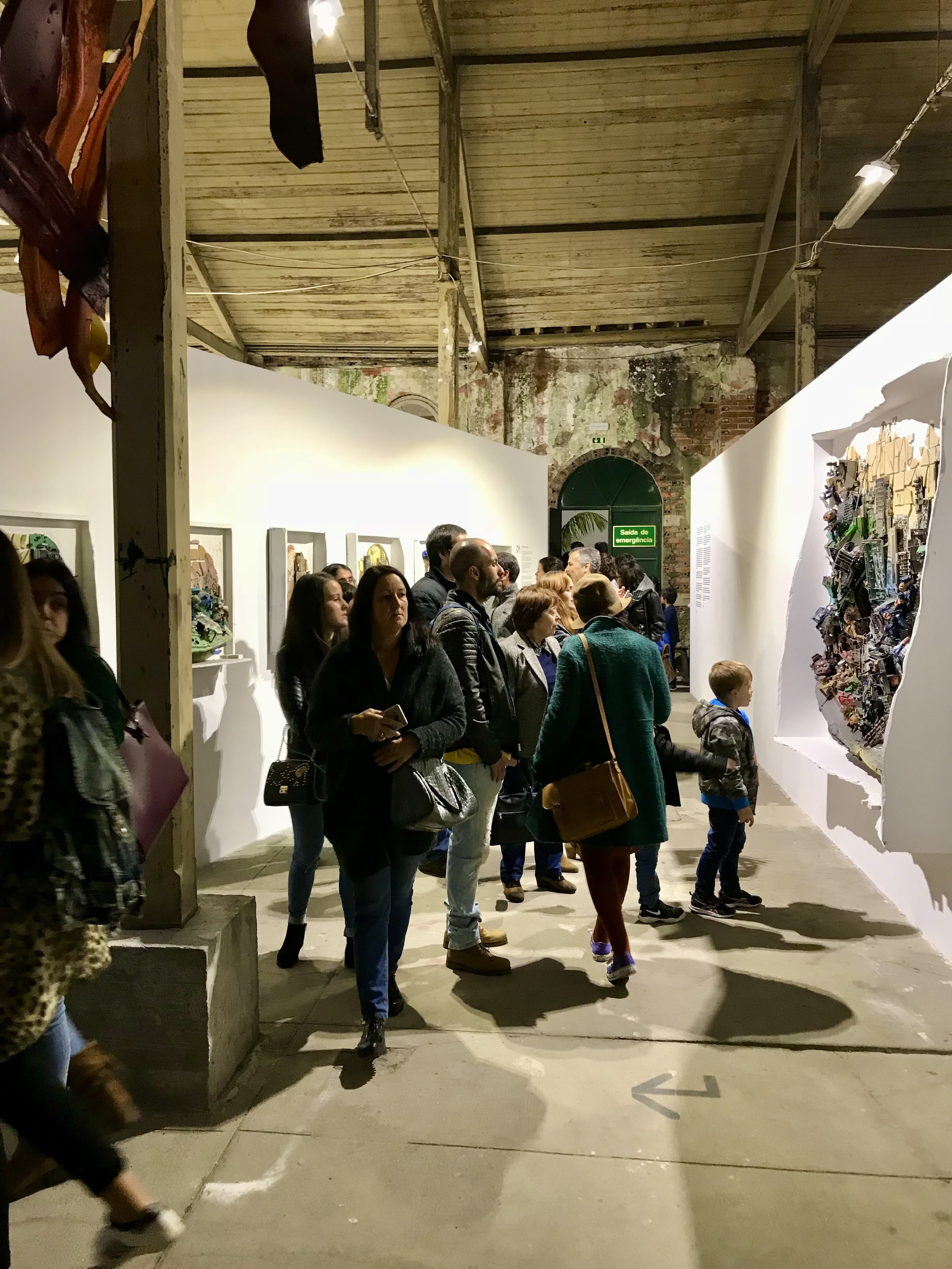
Portuguese artist Bordalo II opened the doors to his Lisbon workspace for ATTERO, an immersive exhibition that brought visitors directly into the wonderful, colourful and often unsettling world he had been constructing from society’s discarded objects. Opening on 4 November 2017 at Rua de Xabregas 49, the exhibition brought together 41 works spanning different scales, materials and approaches, including examples from his increasingly recognisable Big Trash Animals series.
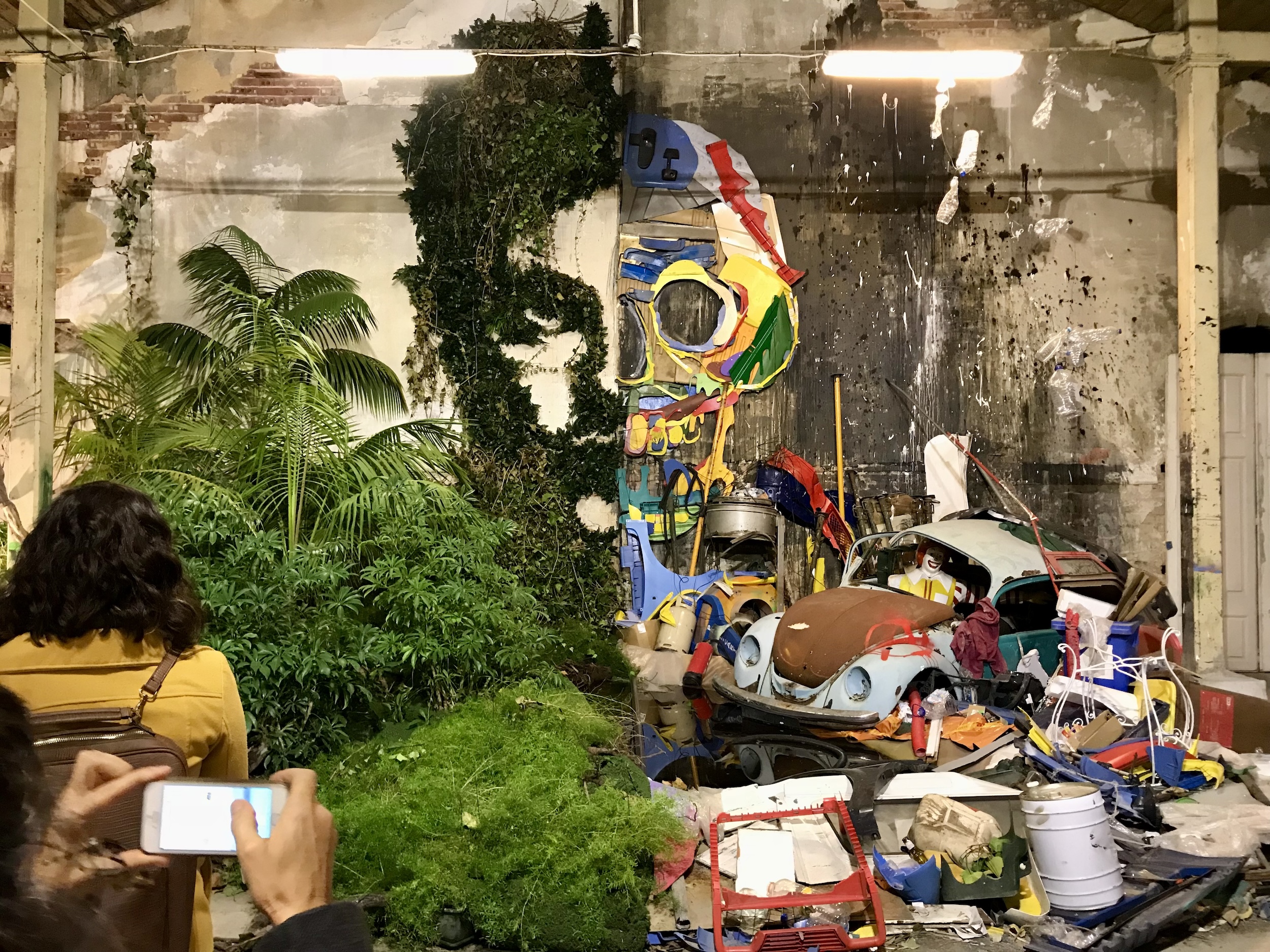
The title ATTERO referred to the Latin idea of wasting, destroying or wearing away, an appropriate starting point for an exhibition in which rubbish became both subject and material. Broken car parts, discarded plastics, electrical components, toys, timber, metal, pipes and fragments of everyday life were pulled from their former existence and reconstructed into animals, environments and densely layered sculptural scenes.
Inside Bordalo II’s ATTERO
GraffitiStreet visited ATTERO in Lisbon, and what struck us immediately was how much more expansive Bordalo II’s world felt when experienced in person.
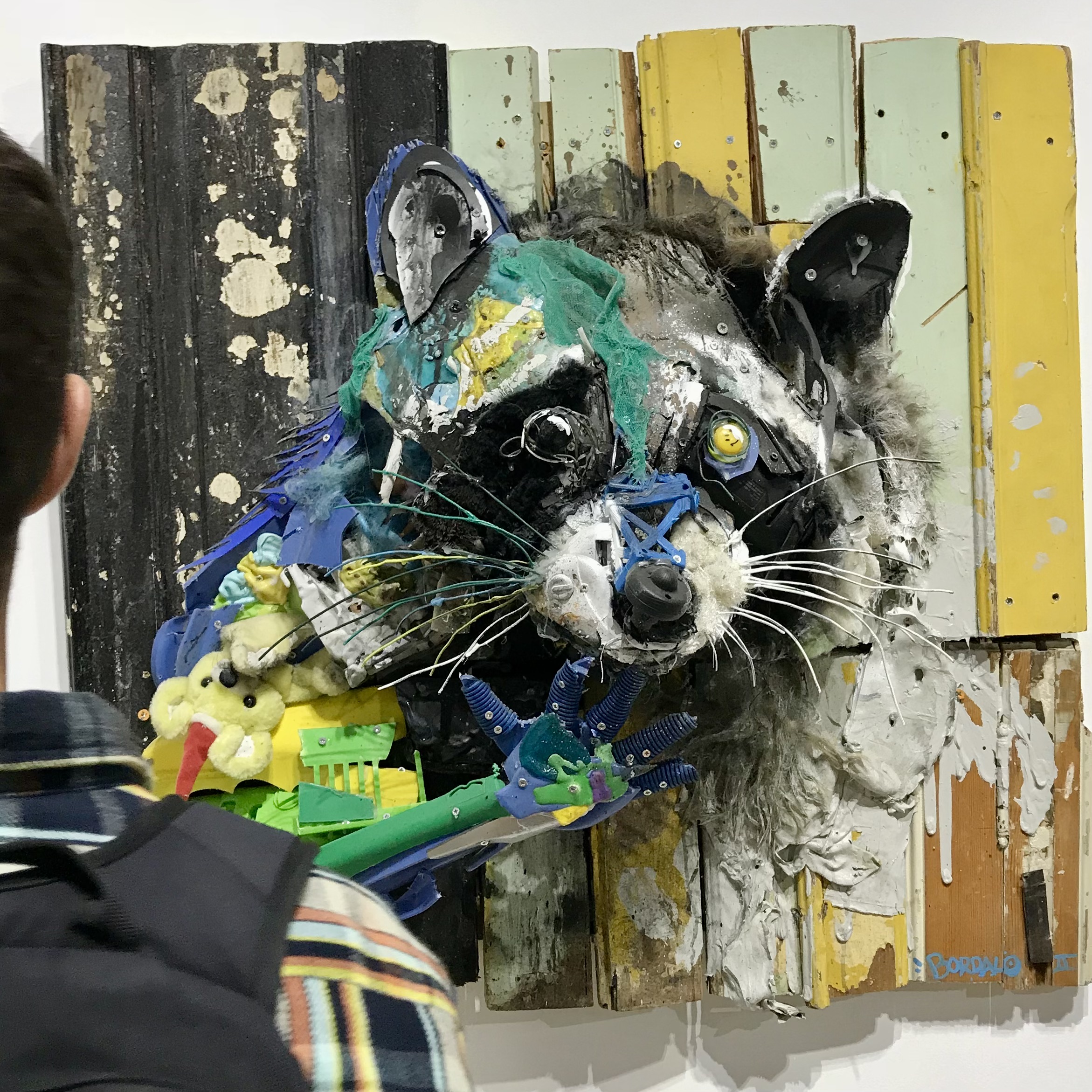
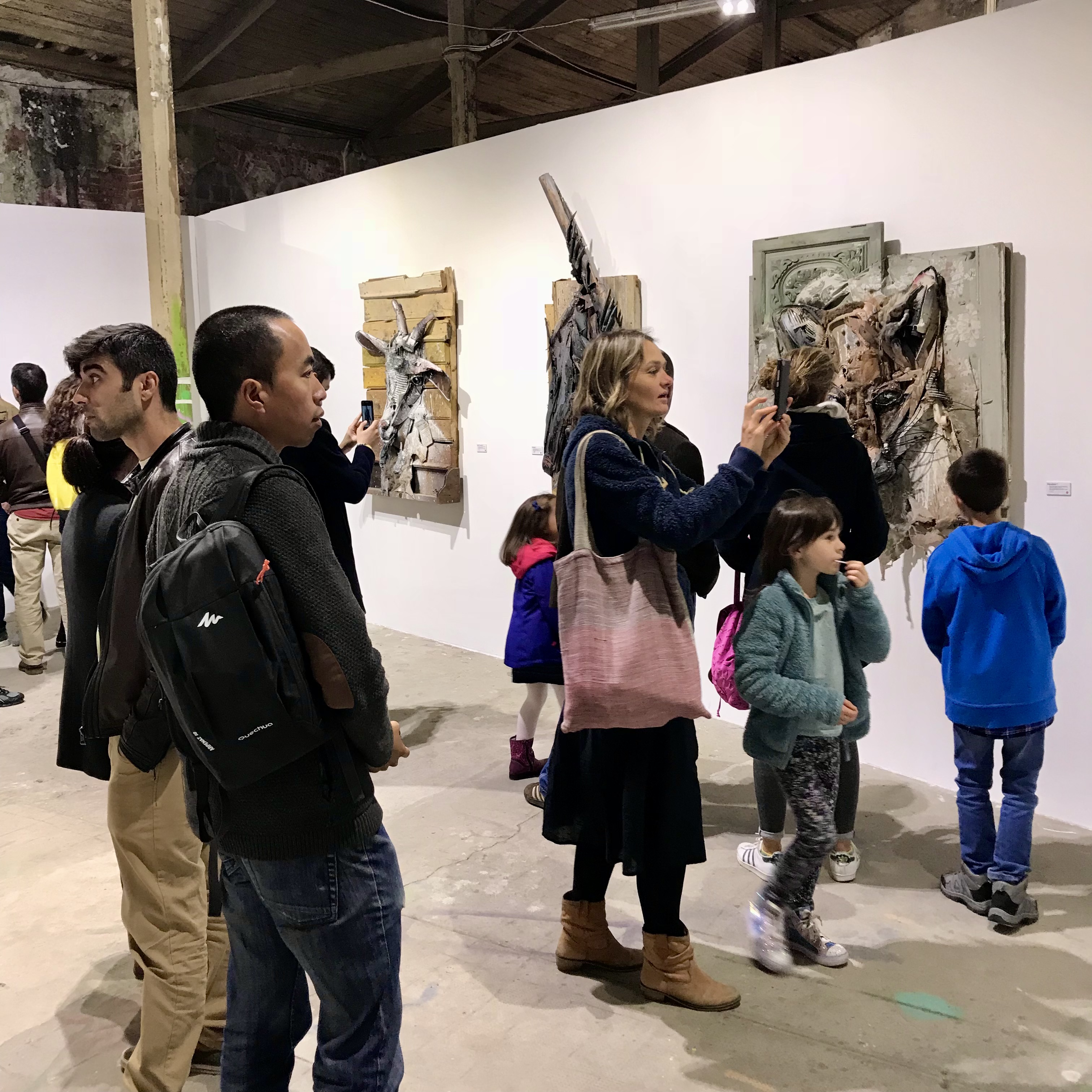
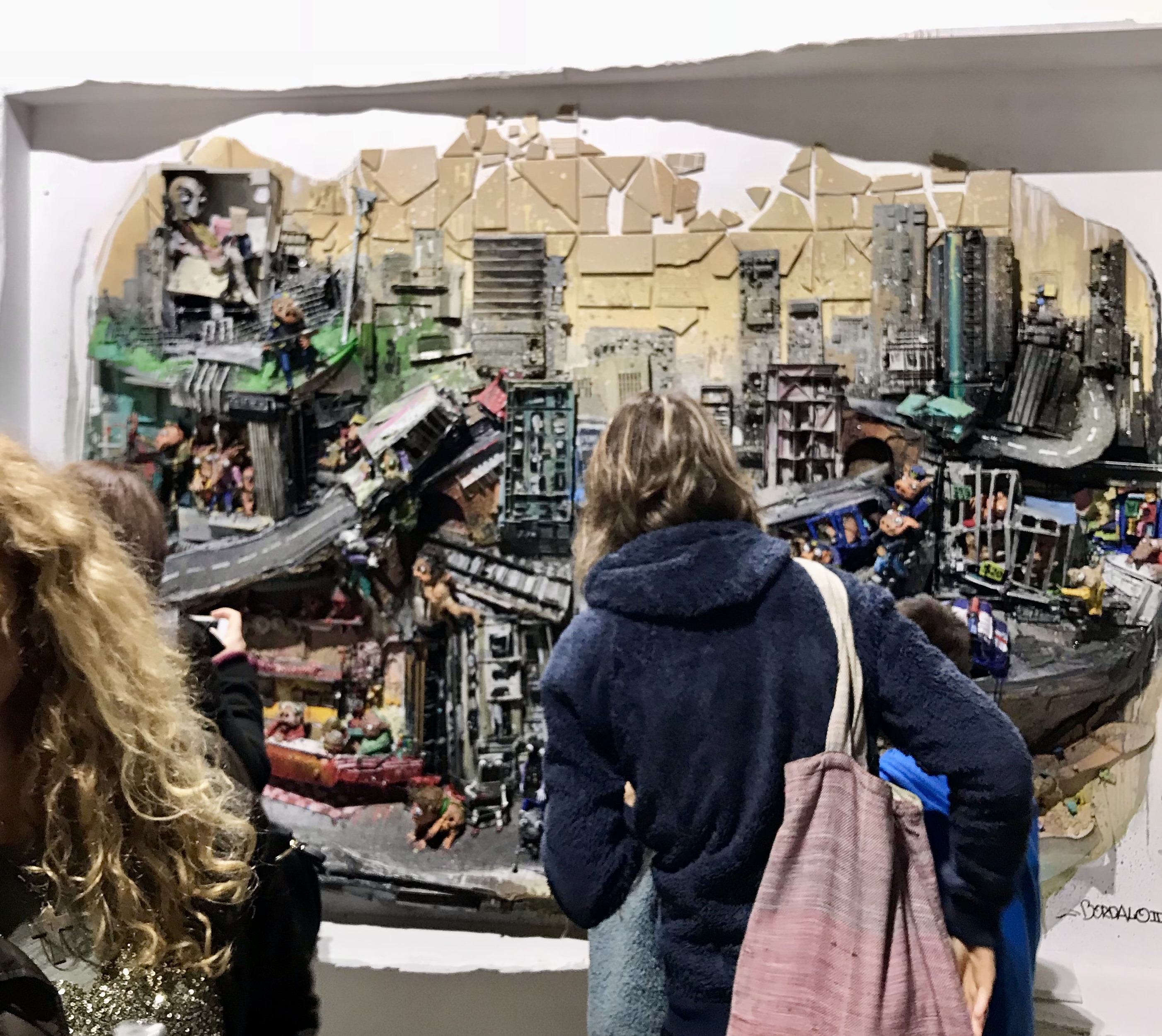
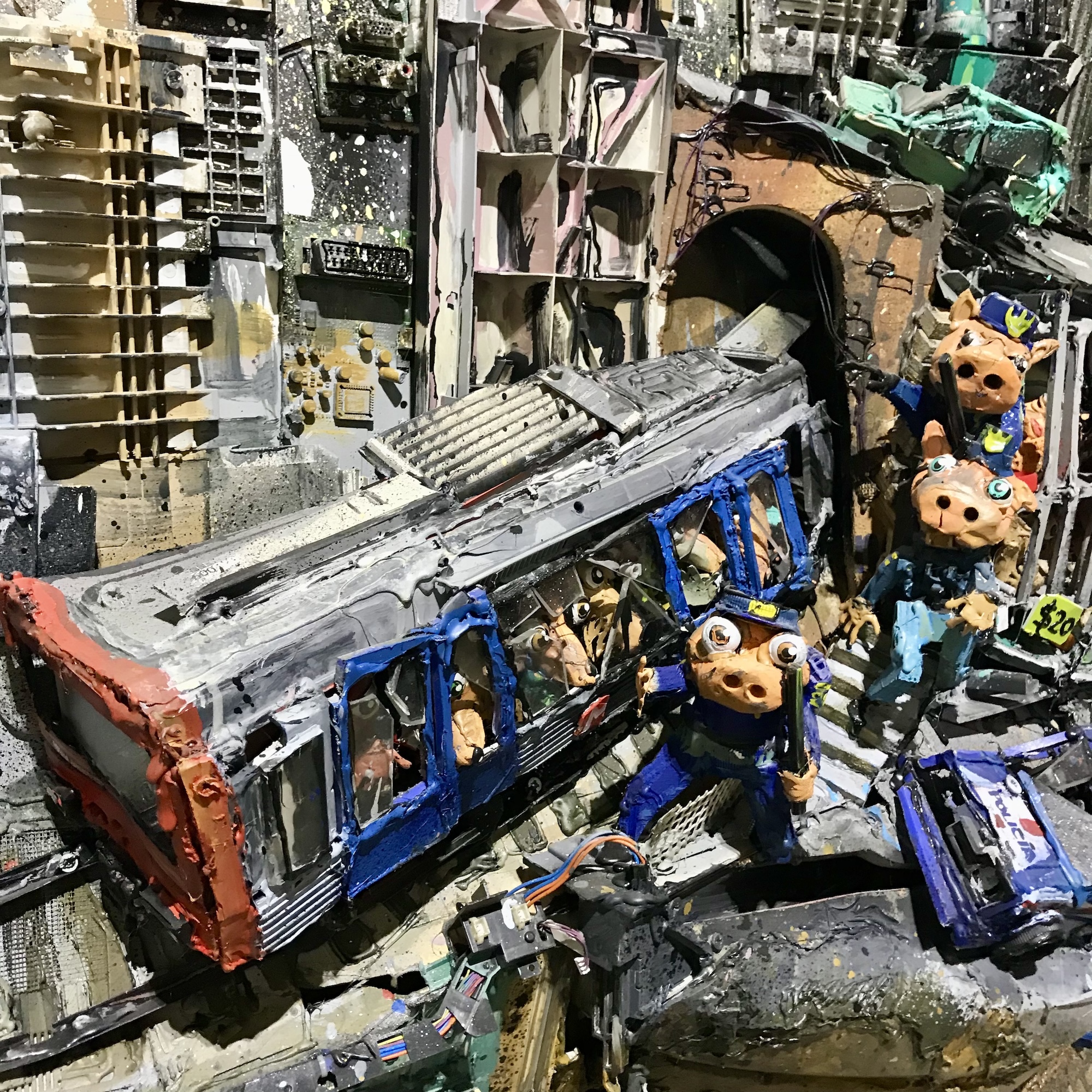
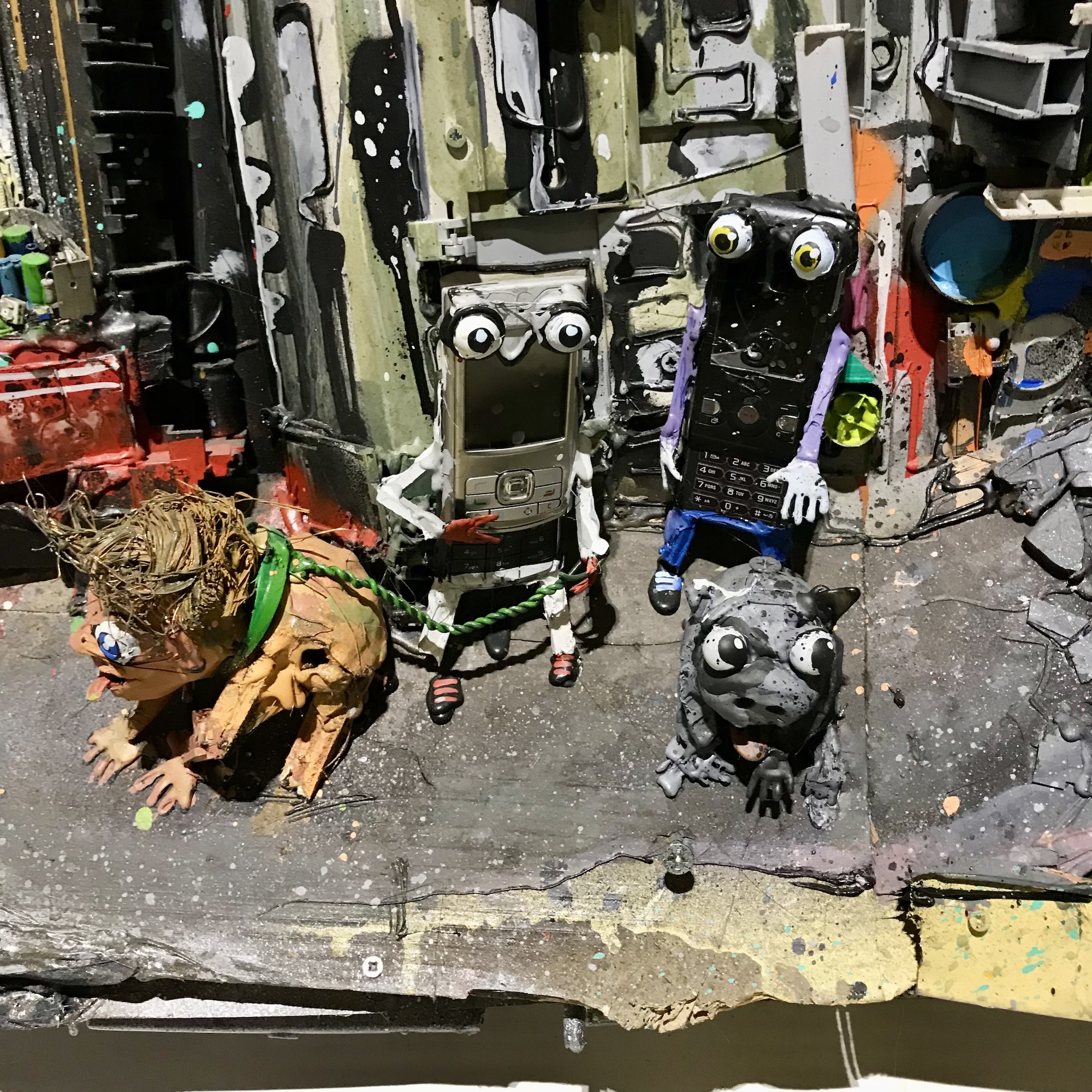
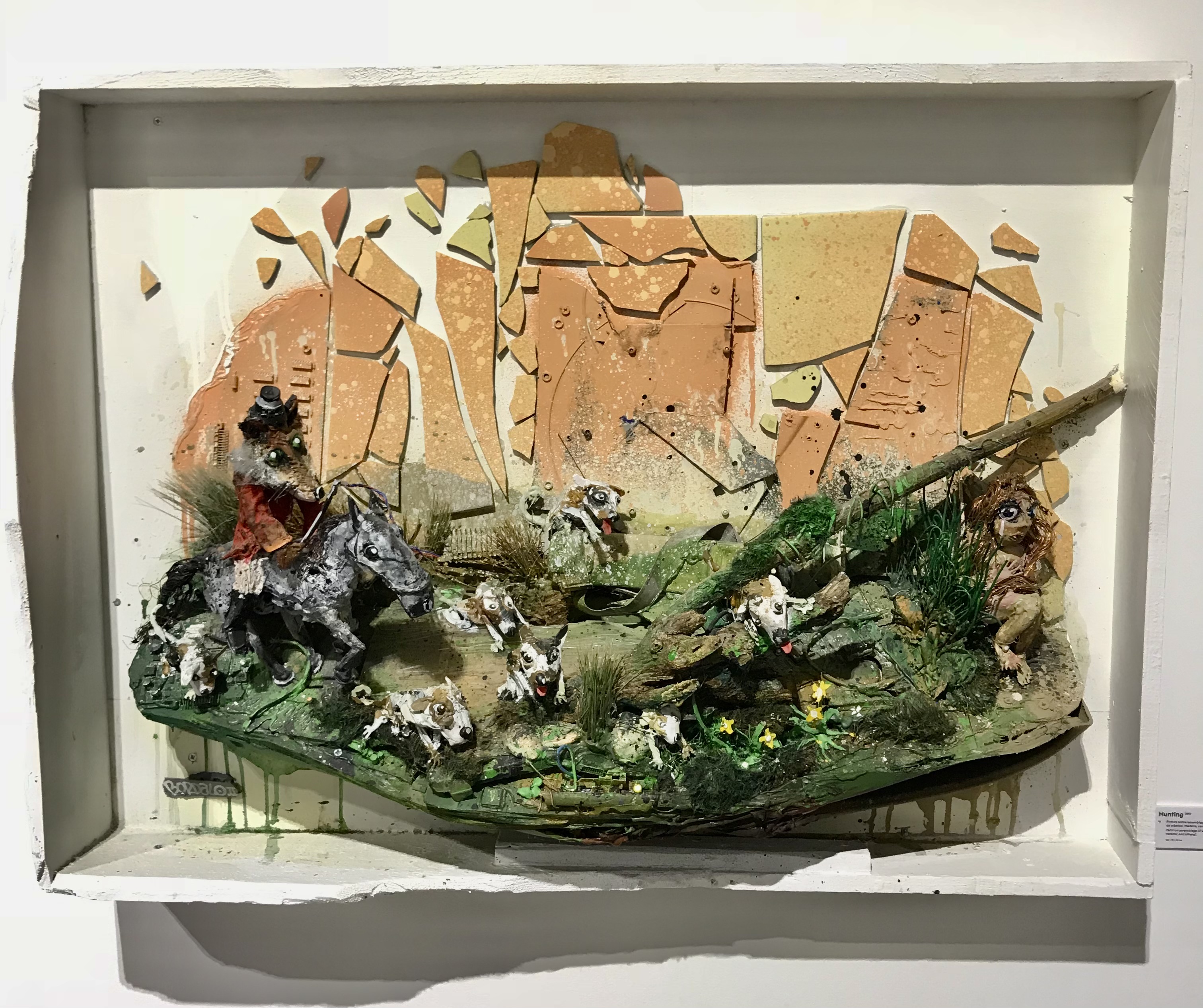
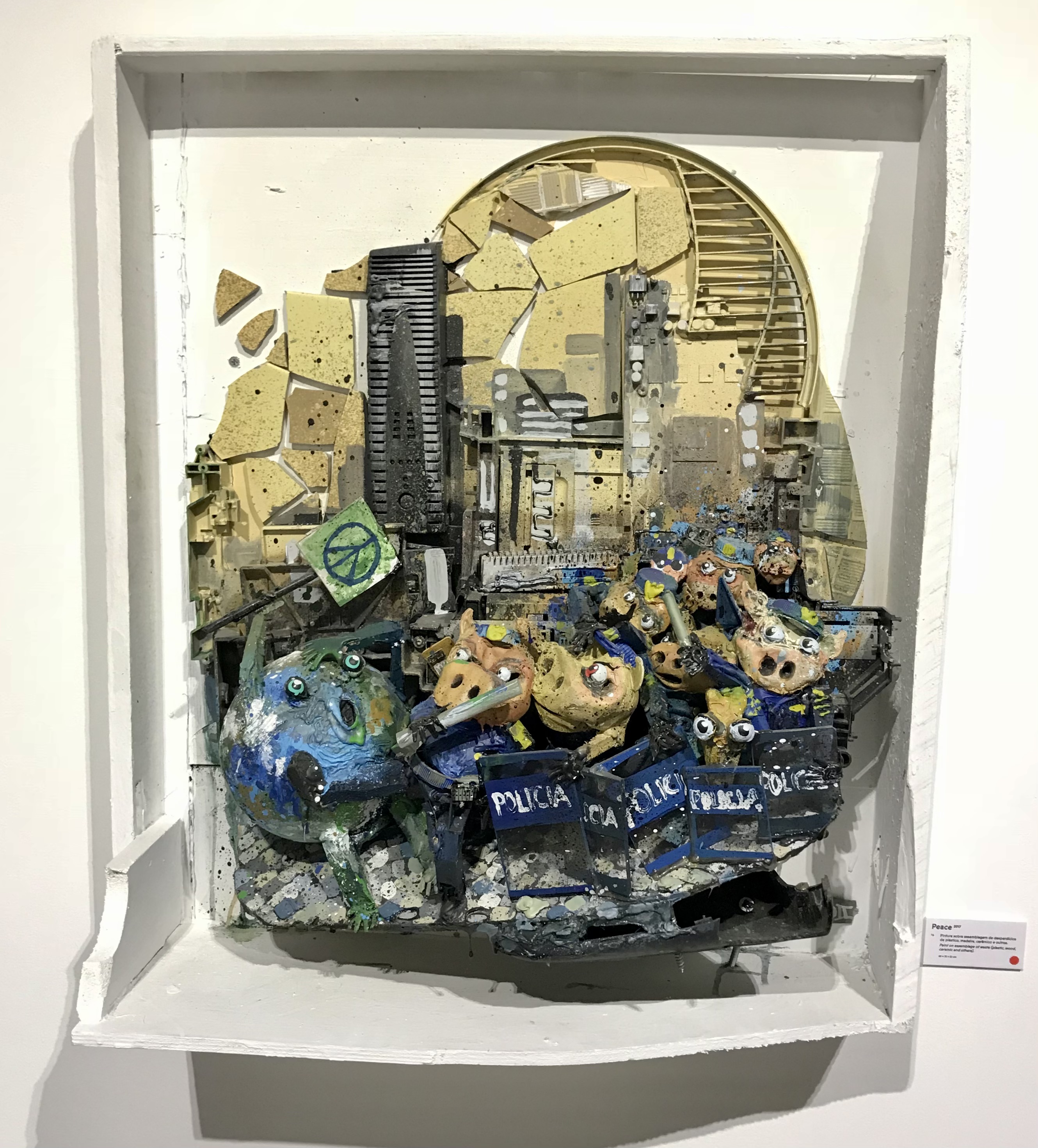
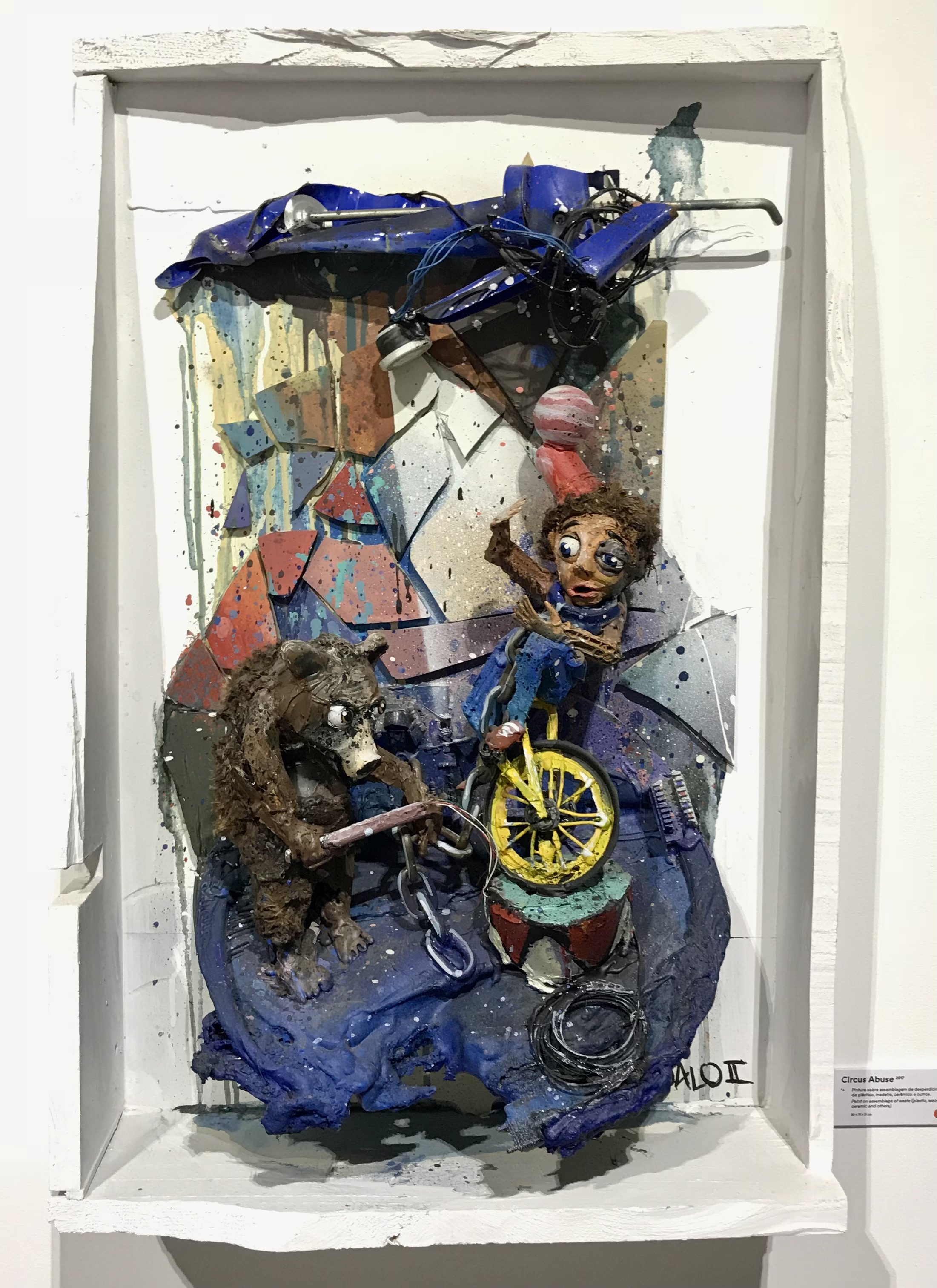
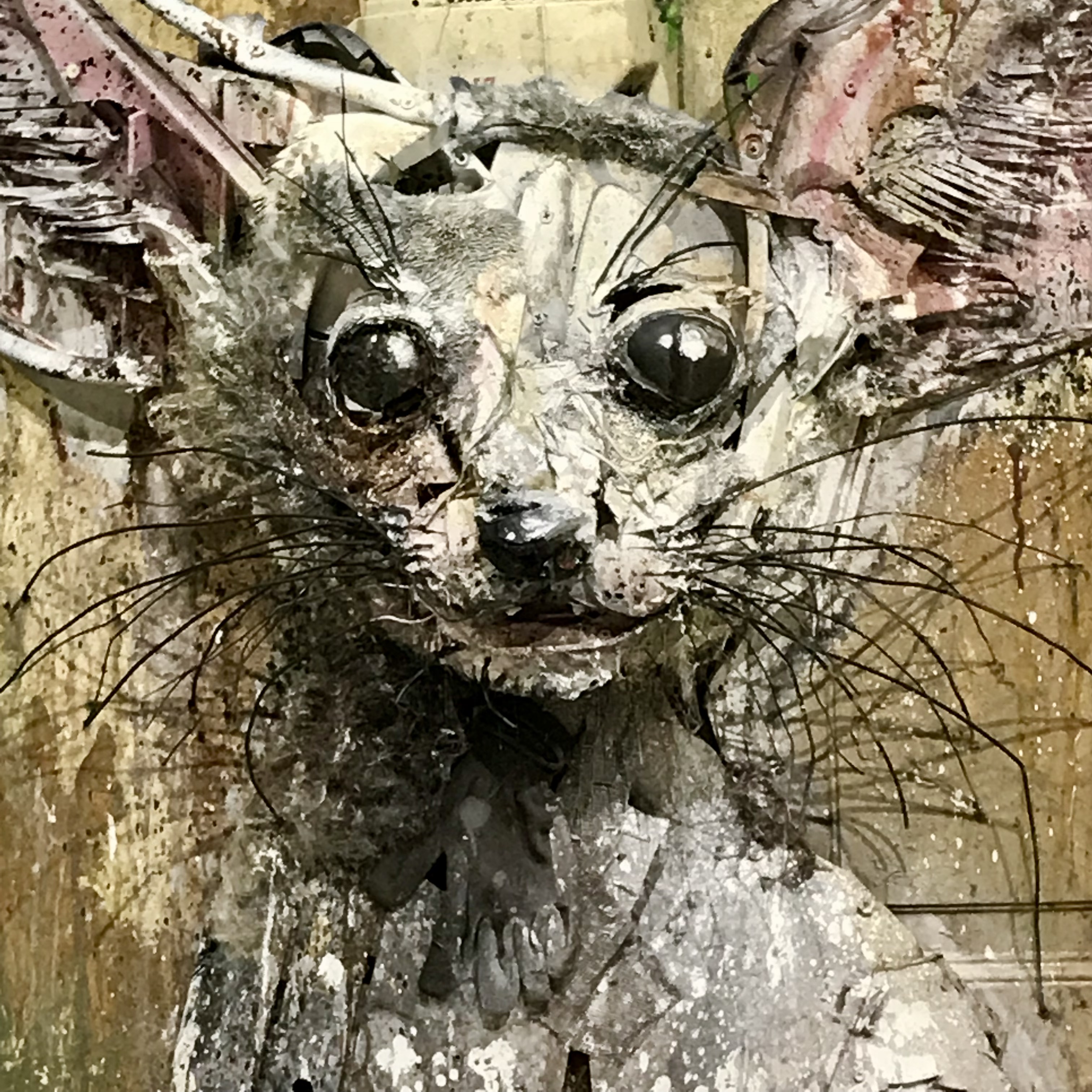
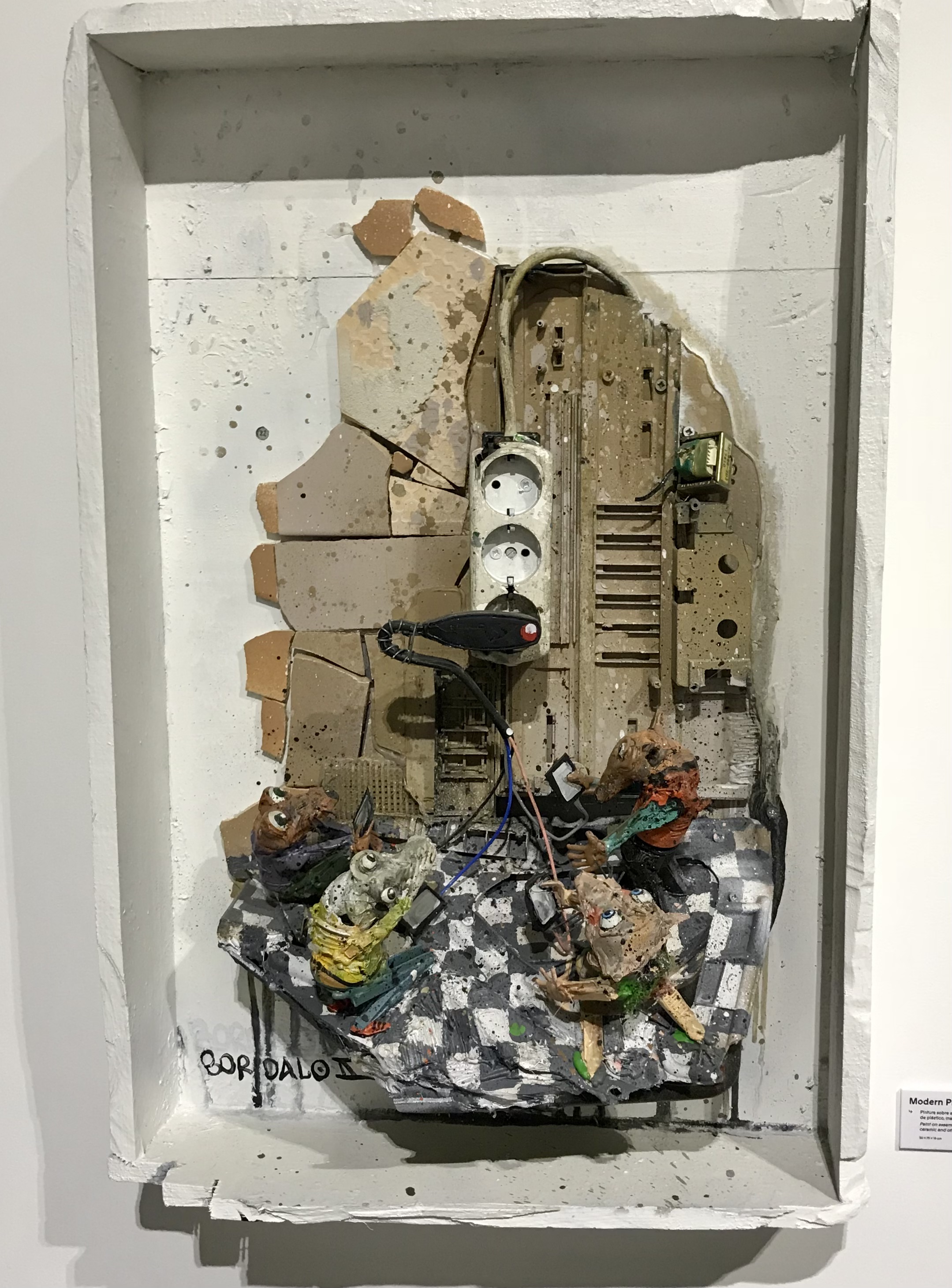
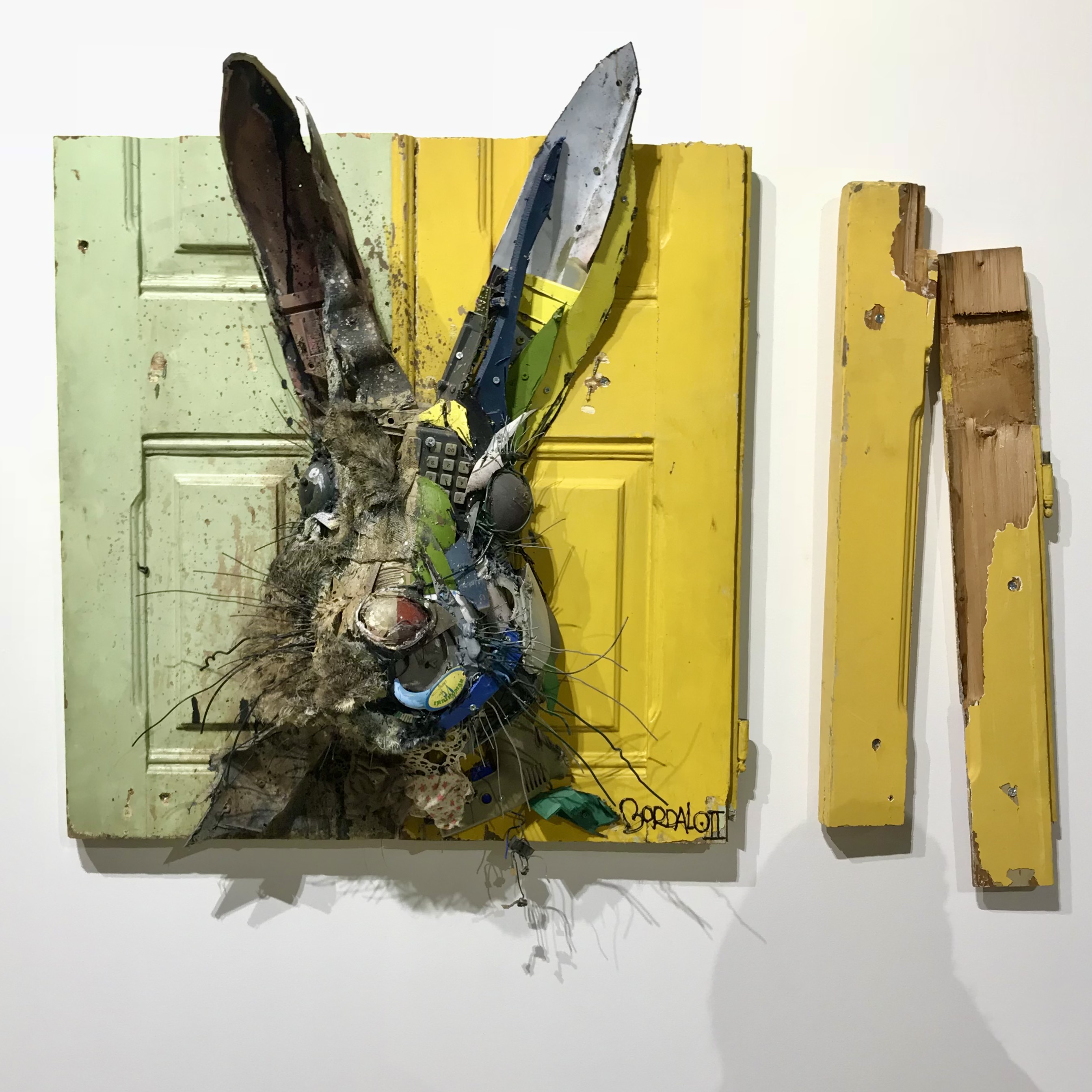
The familiar animals were there, their bodies assembled from the debris of contemporary consumption, but around them Bordalo II had created an entire visual ecosystem. Monumental creatures occupied walls and architectural spaces, while smaller works appeared on old doors, window frames and salvaged timber. Elsewhere, extraordinarily detailed miniature scenes transformed pieces of discarded technology and industrial material into collapsing streets, vehicles, buildings and characters.
Seen closely, the sculptures revealed an almost obsessive level of detail. A piece of plastic became an eyelid, cable became whiskers, sections of car bodywork formed muscle and bone, and forgotten toys reappeared as unexpected characters within the compositions. The attraction of the animals and the abundance of colour repeatedly drew us closer before the materials revealed what we were actually looking at: the physical remains of excessive consumption.
A World Built From What We Throw Away
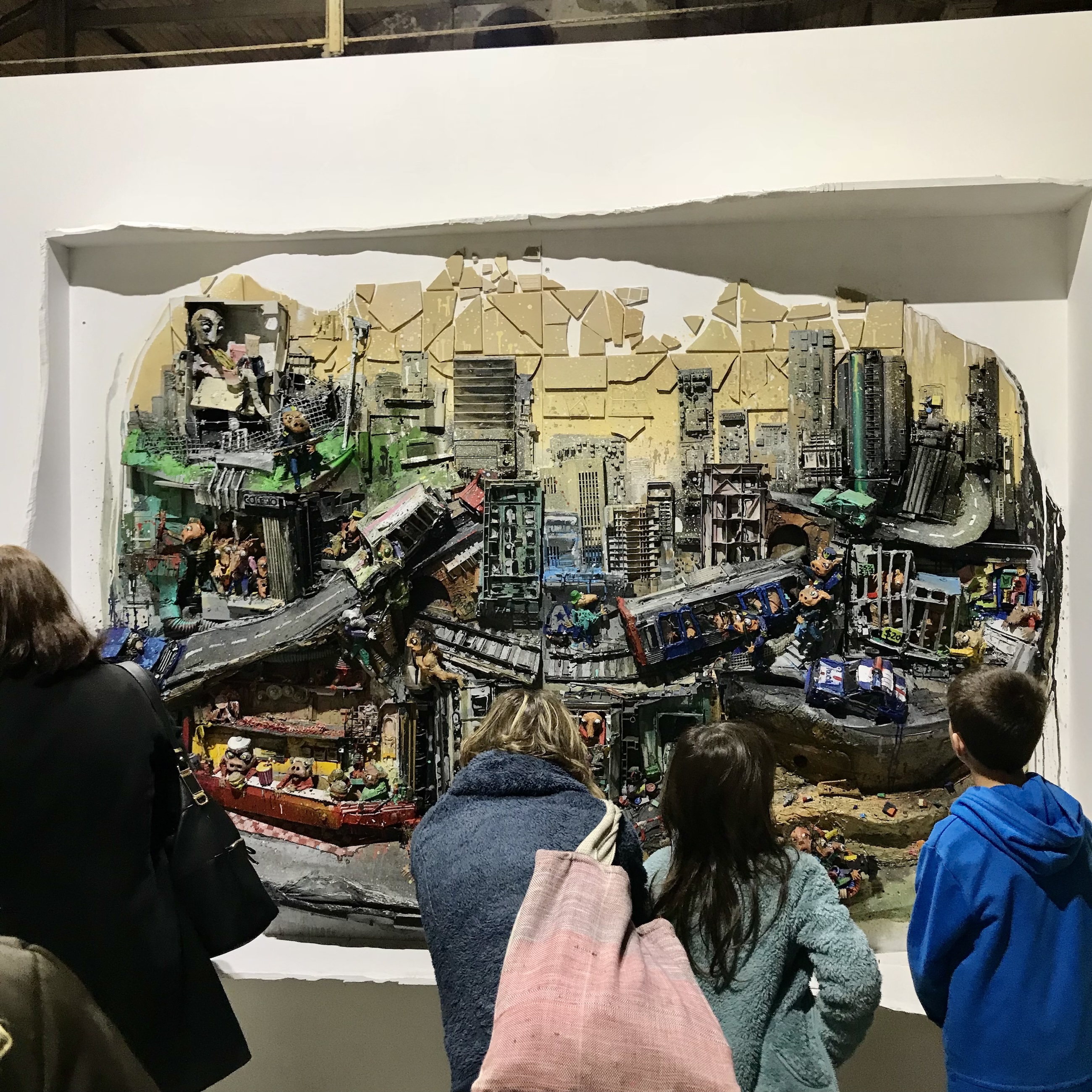
One of the most absorbing works was a vast urban assemblage in which broken vehicles, architecture, police figures, cages and miniature characters appeared to spill across a fractured city.
It was the kind of work that demanded time. From a distance the composition read almost like a landscape; closer inspection revealed dozens of individual narratives hidden within its streets and structures. The discarded material was no longer simply raw matter for sculpture. Bordalo was using it to construct an entire society from the physical evidence that society had left behind.
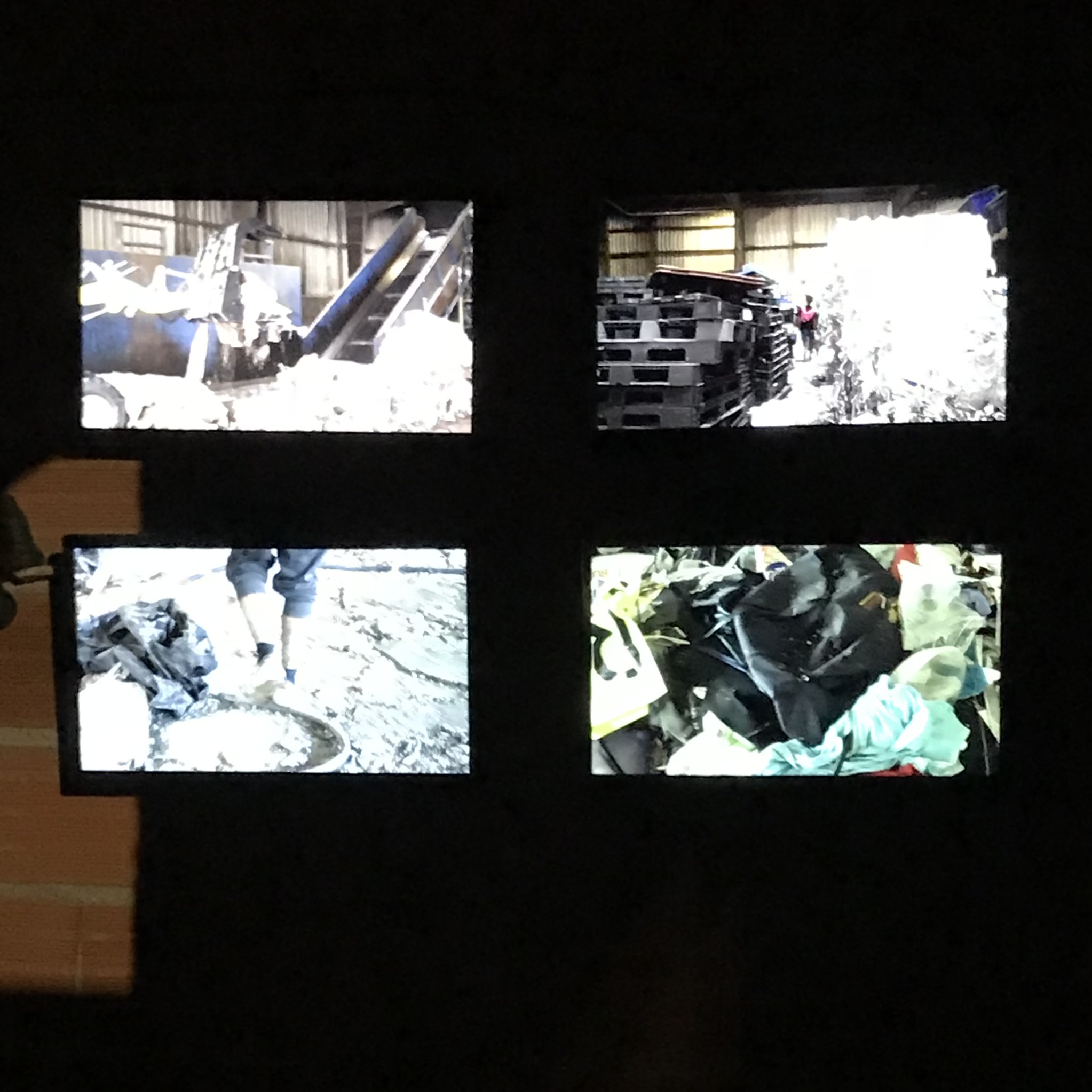
The exhibition’s curatorial text described his practice within a wider discussion of consumerism, environmental responsibility and the circular economy, asking visitors to reconsider their own role in a culture built around excessive production and disposal.
For us, this was where ATTERO became particularly powerful. Bordalo II did not hide the previous lives of his materials. Scratches, damage, dirt, faded paint and broken edges remained visible, giving every sculpture a history that existed before it became art.
Plastic Rhino Trash Animal at Attero
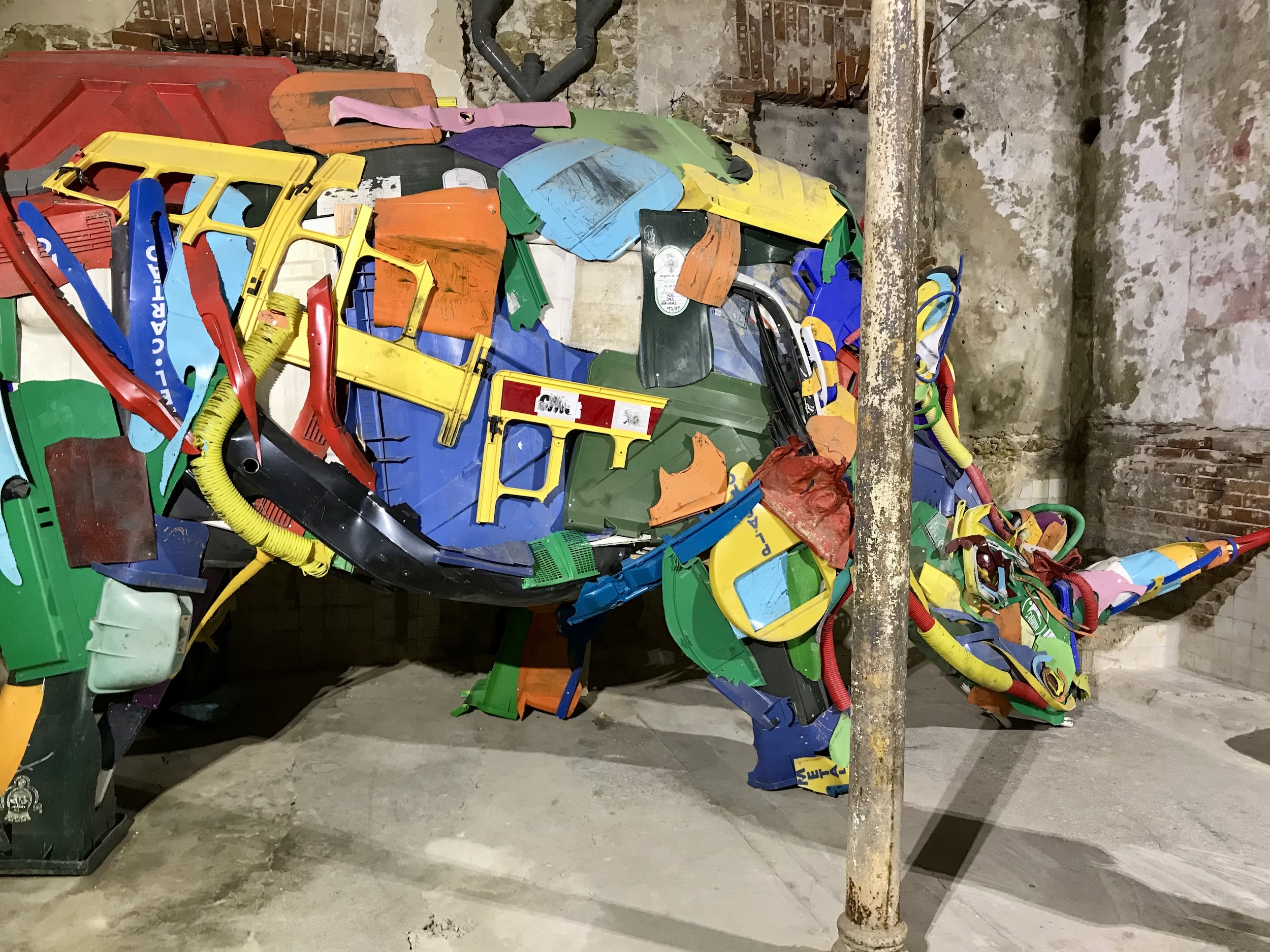
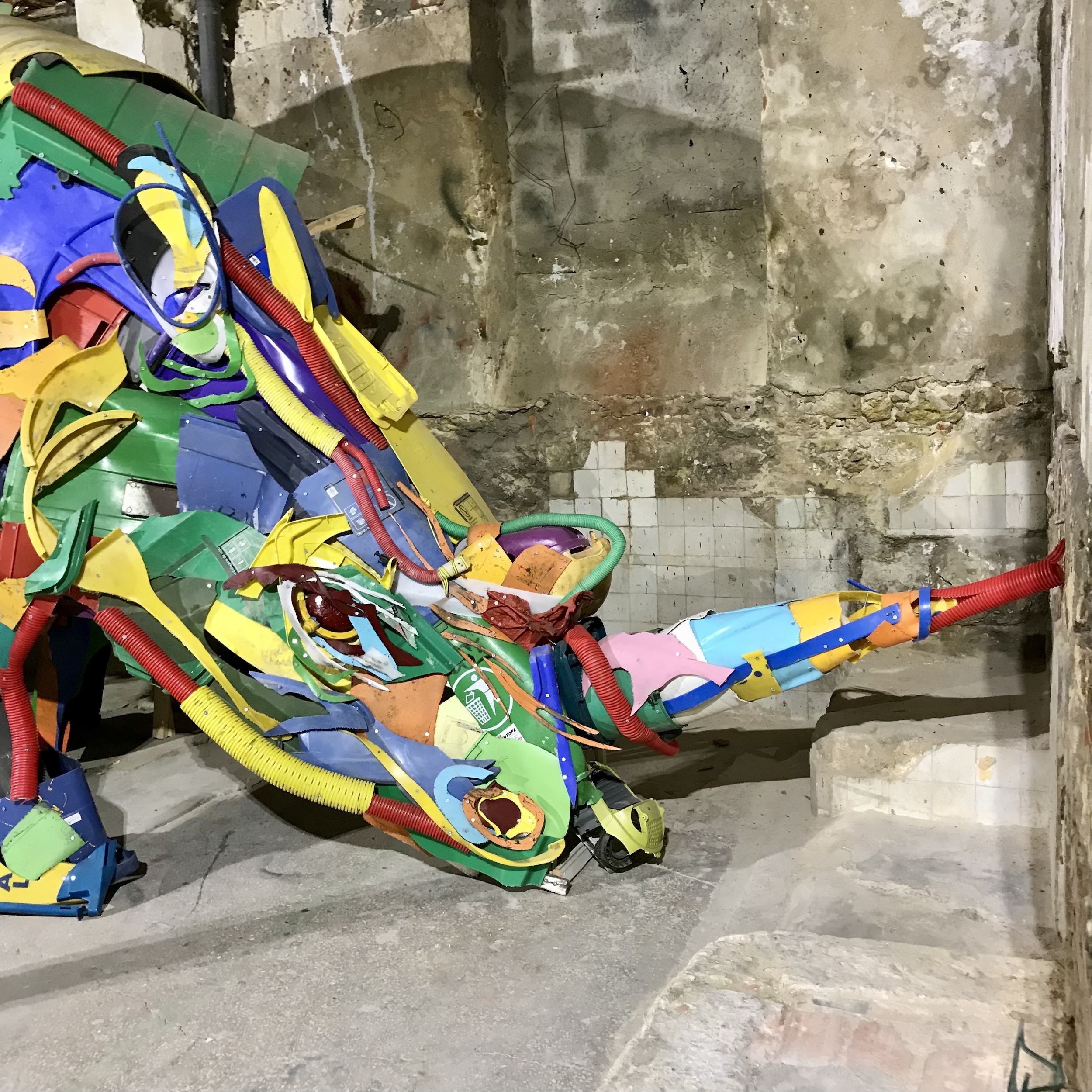
The Rhino came as a wonderful surprise at the end of the guided walk and provided one of the exhibition’s most memorable final moments. Emerging inside the vast industrial setting, the monumental sculpture immediately commanded the space, its enormous body constructed from brightly coloured fragments of discarded plastic and urban waste.
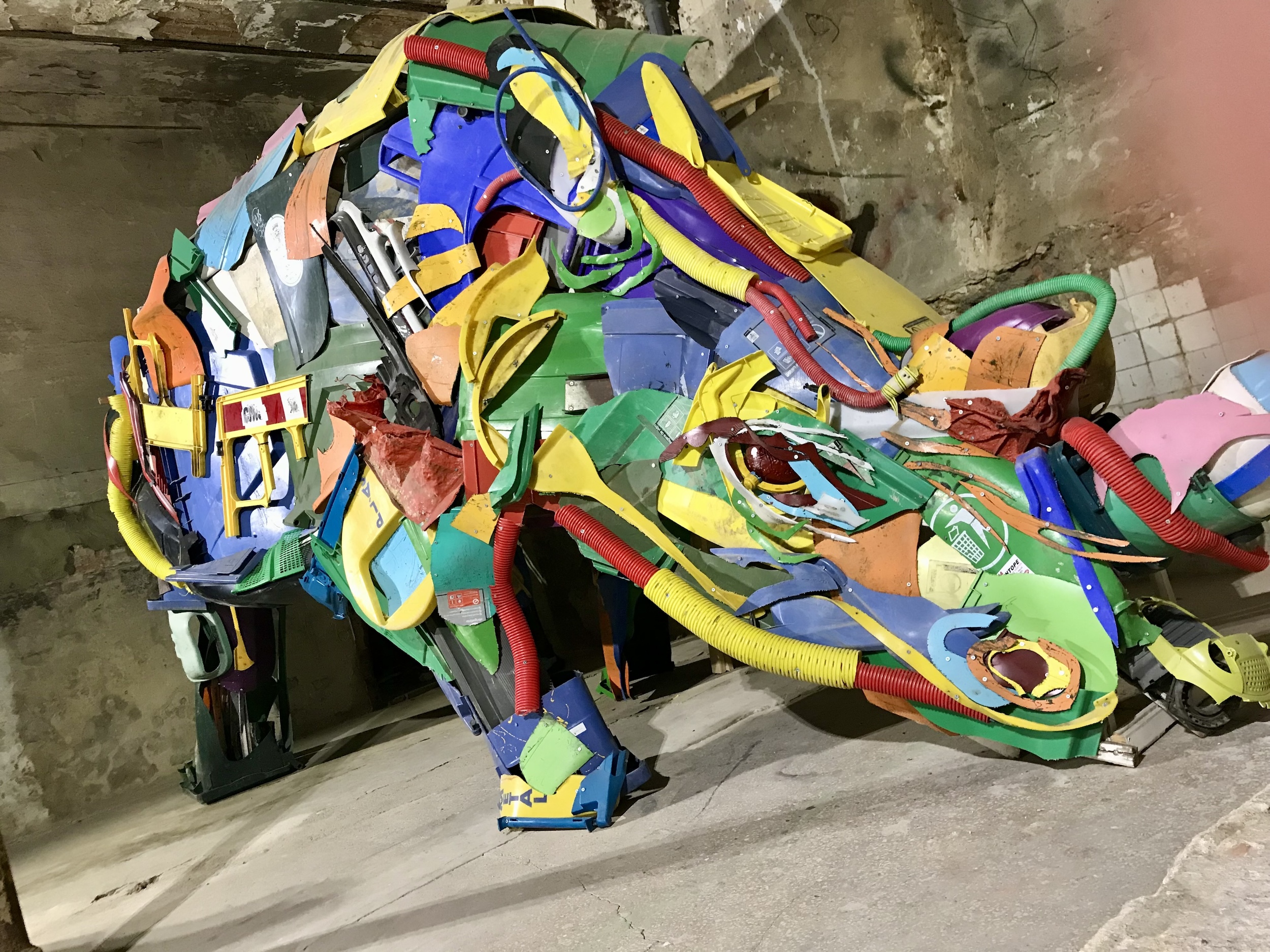
The sheer scale was extraordinary, but so too was the detail, with each salvaged component carefully layered to give the animal weight, movement and character. After moving through the many smaller works and intricate installations of ATTERO, encountering the Rhino felt like a dramatic finale. It was a genuine showstopper and a powerful reminder of Bordalo II’s ability to transform society’s unwanted materials into something monumental, surprising and impossible to overlook.
ATTERO in Lisbon
Walking through the exhibition, surrounded by animals made from the remnants of human consumption, it was difficult to separate the beauty of the sculptures from the uncomfortable reality of their materials. That tension sat at the heart of ATTERO: the things we discard had returned, transformed, enlarged and impossible to ignore.
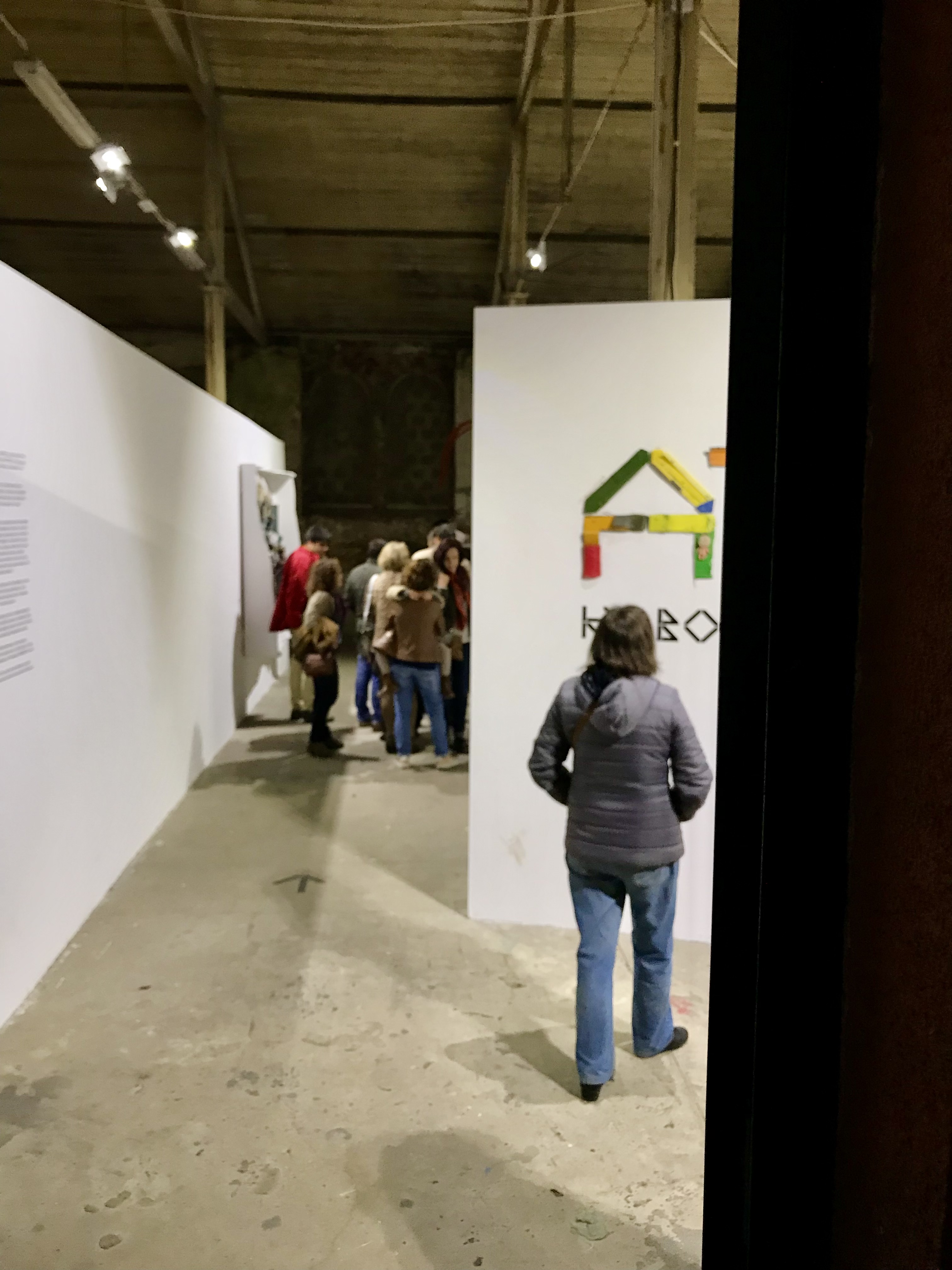
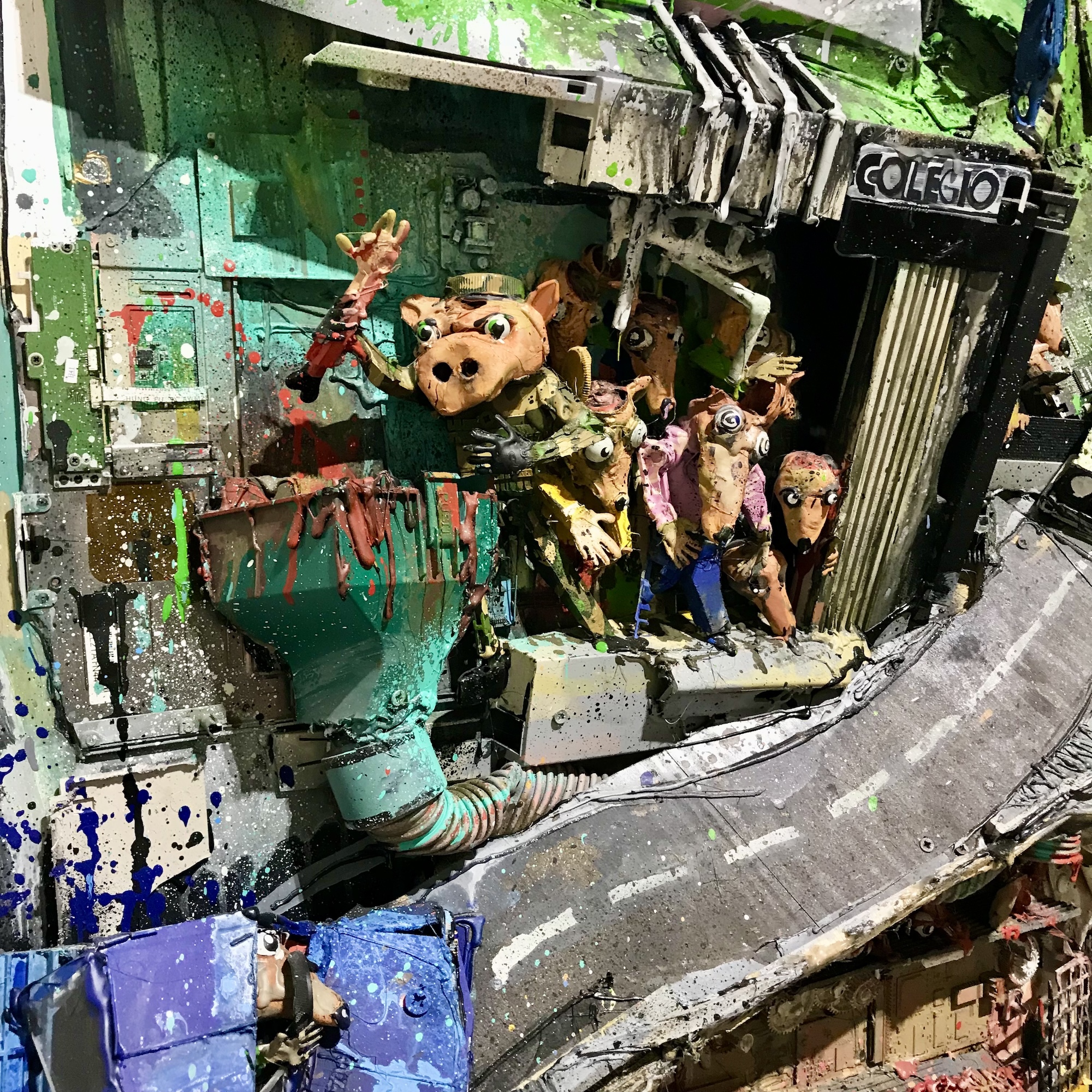
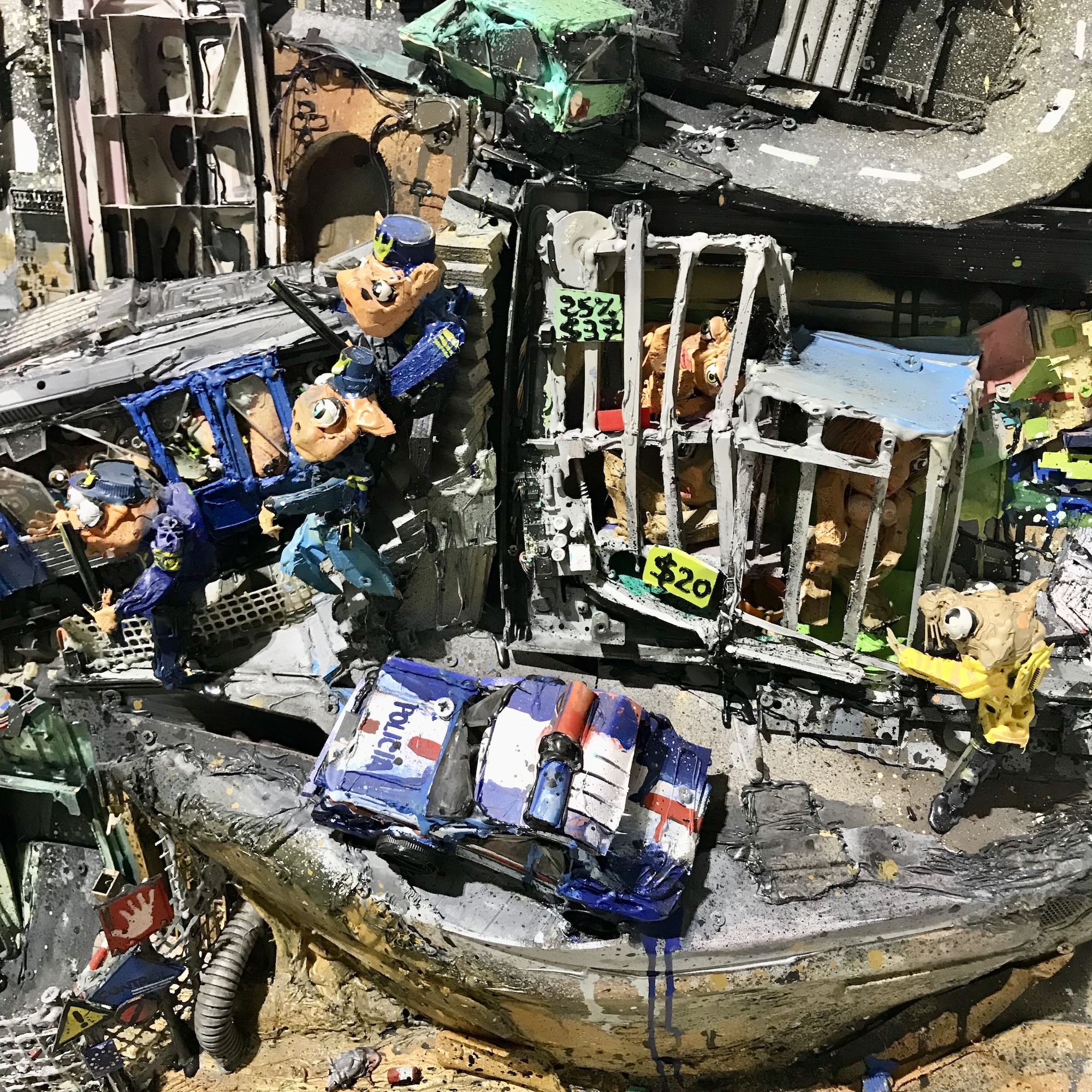
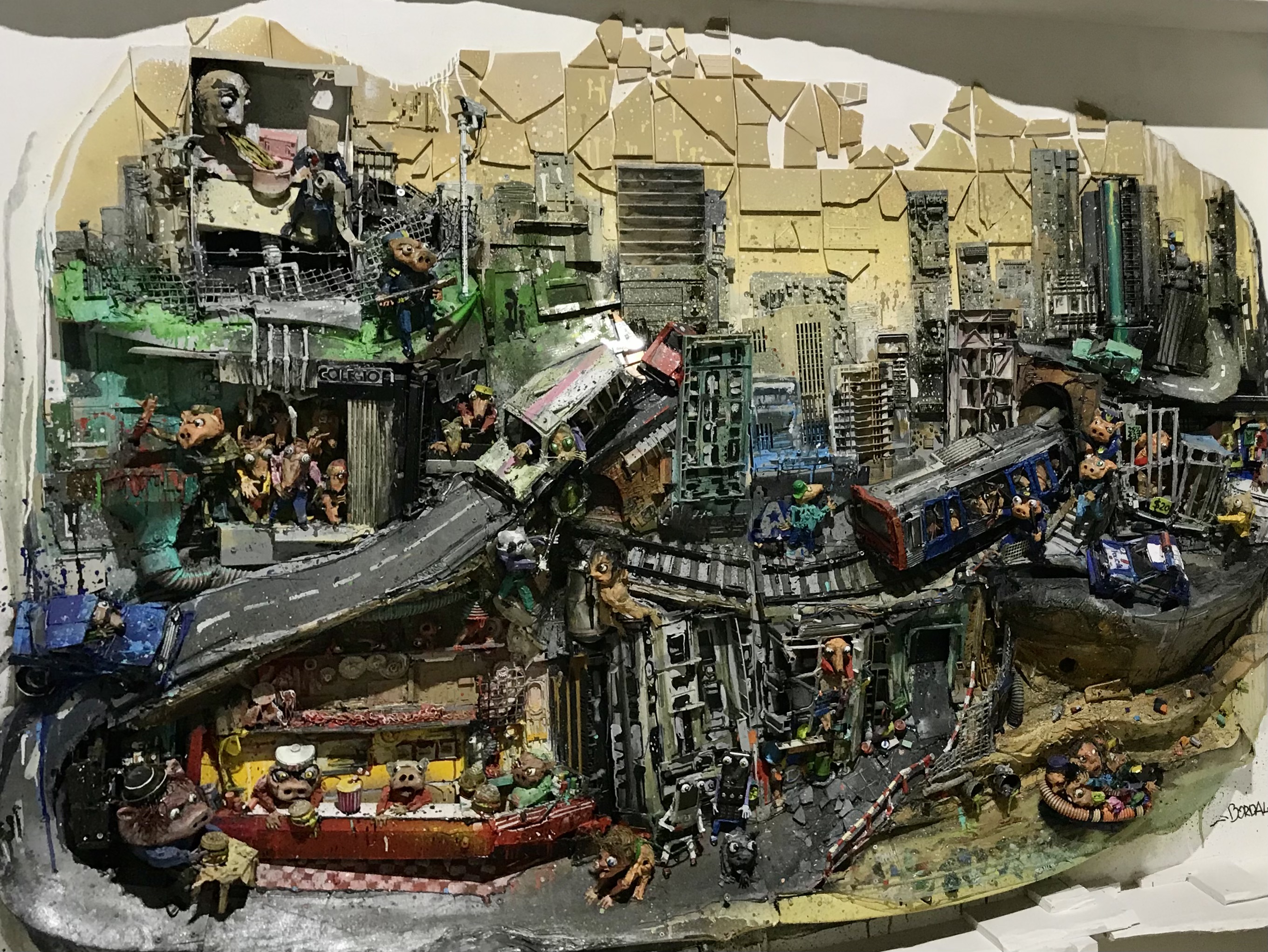
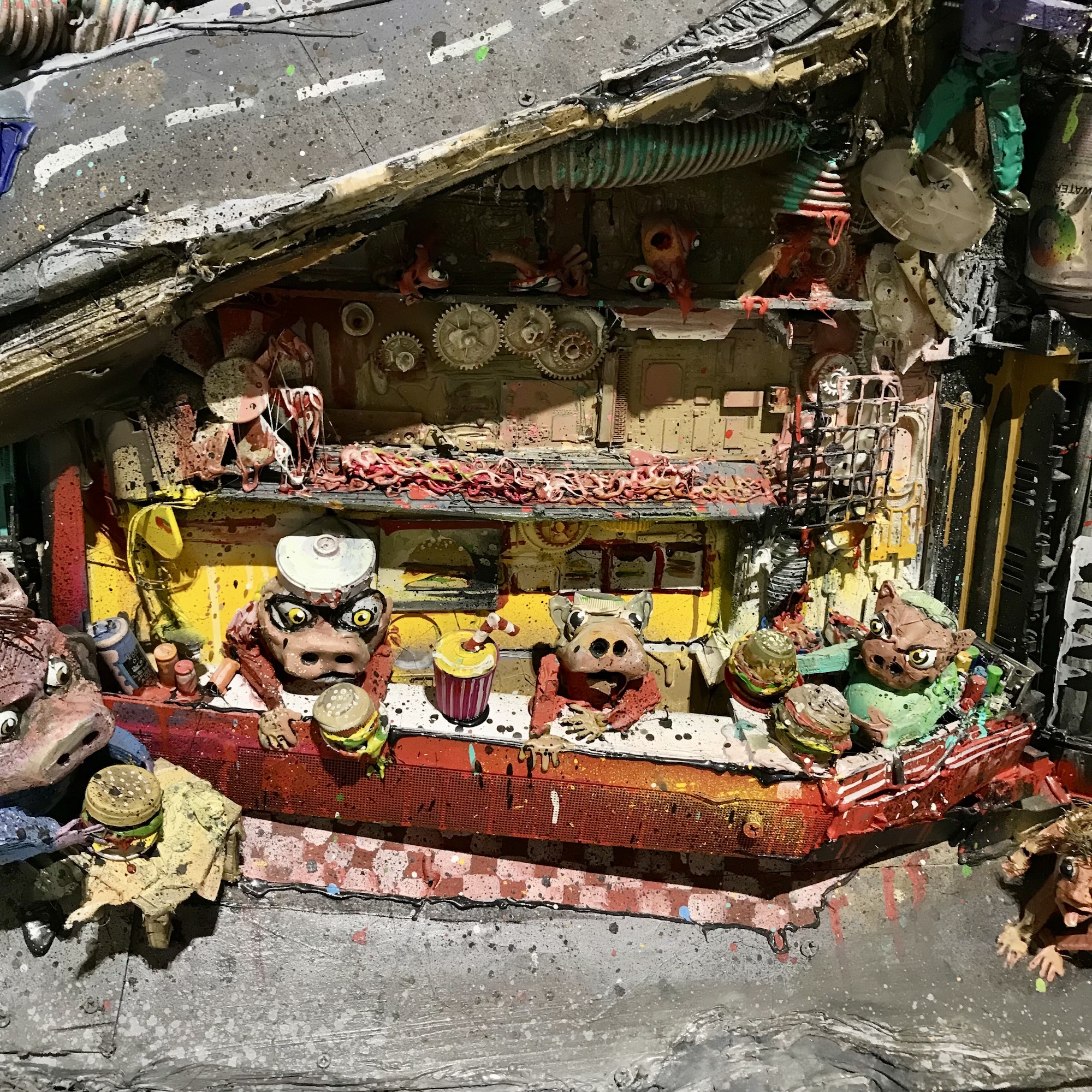
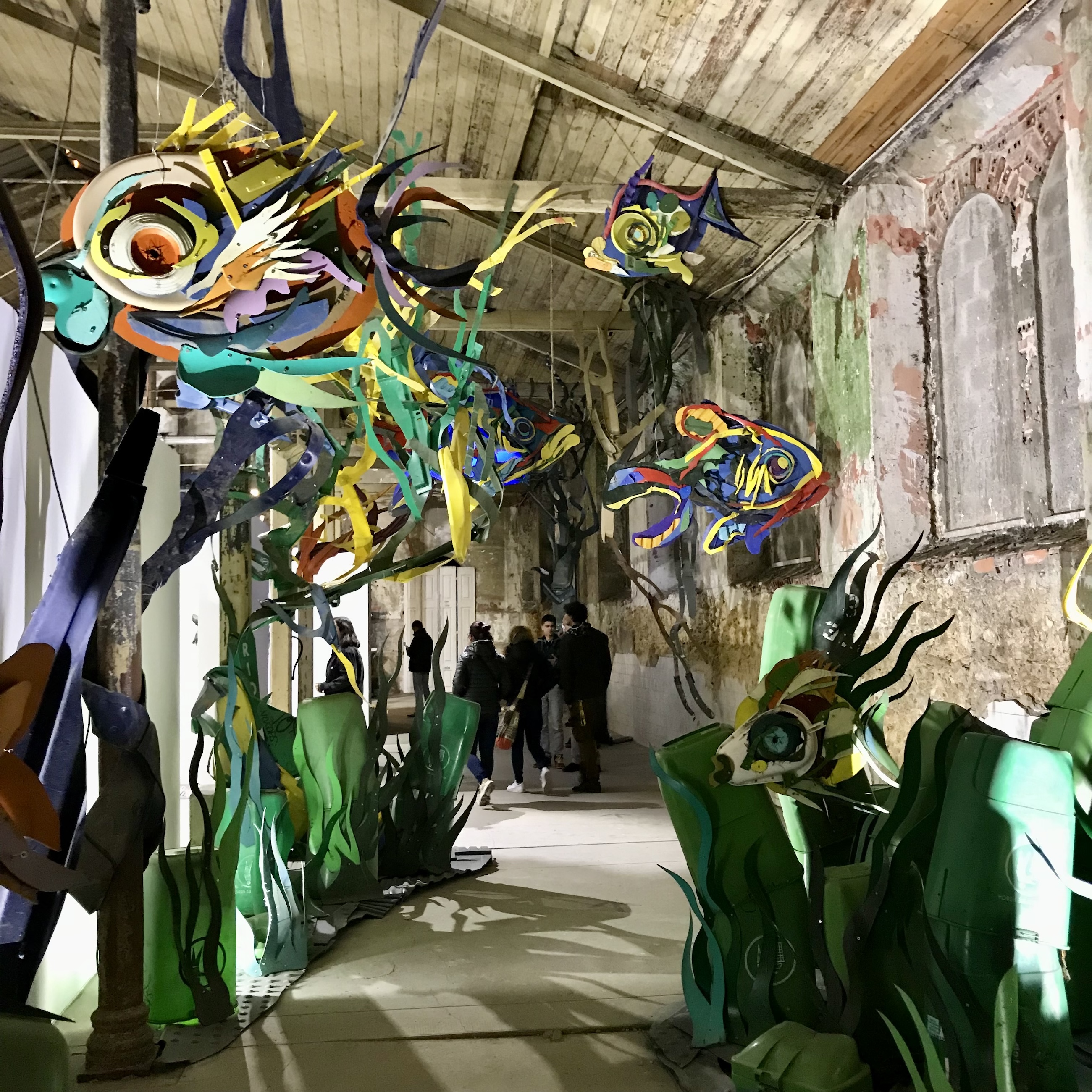
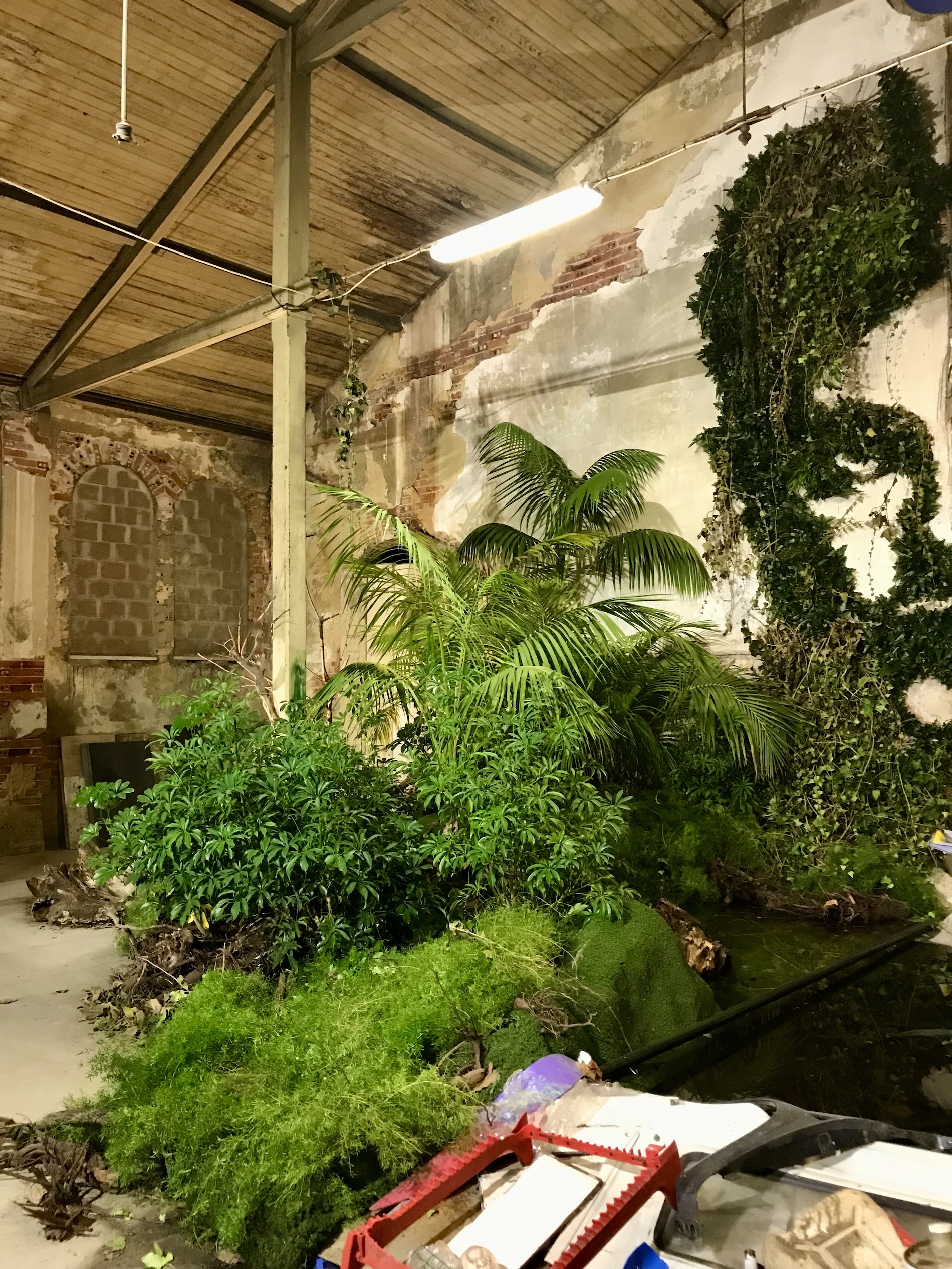
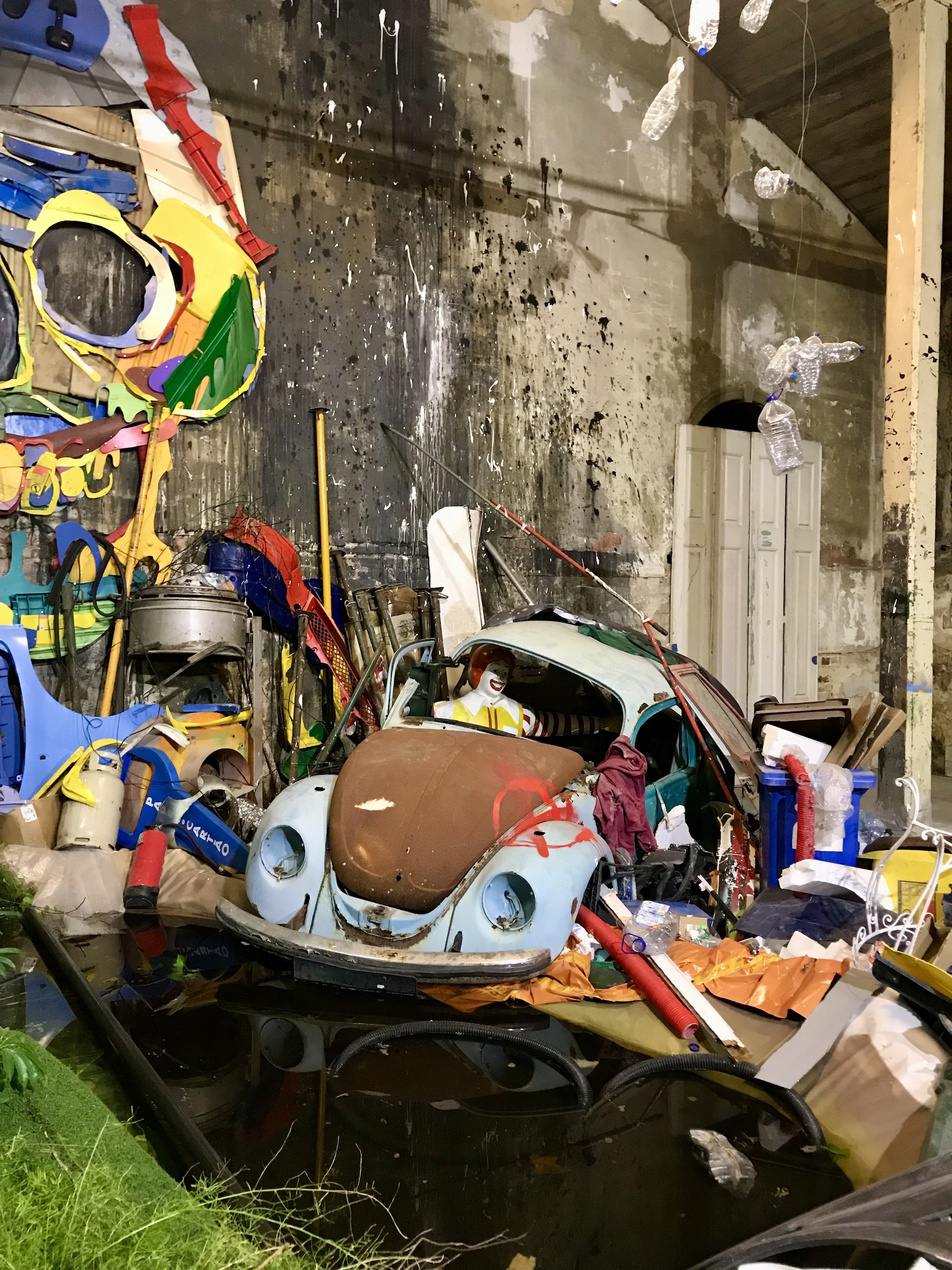
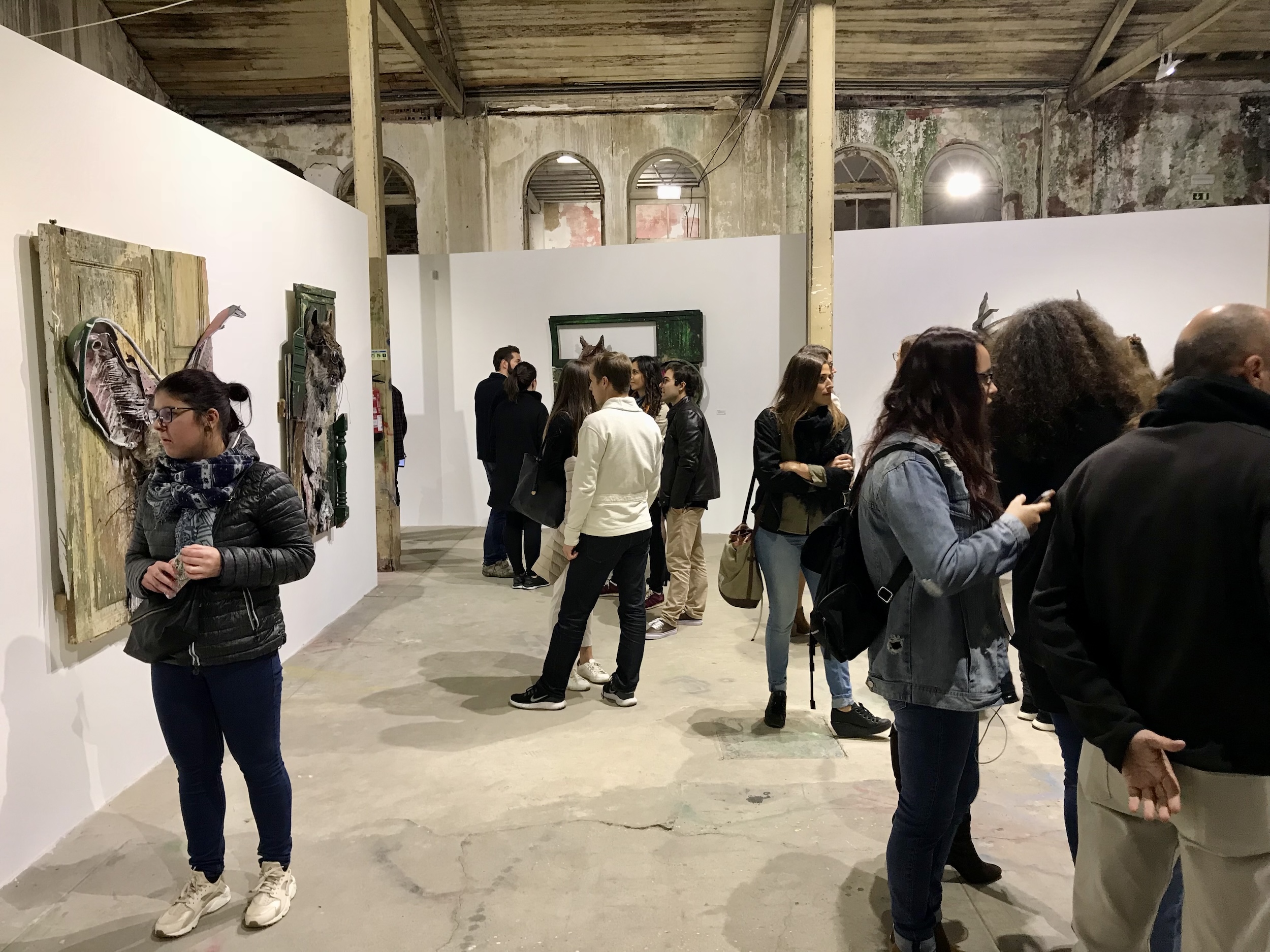
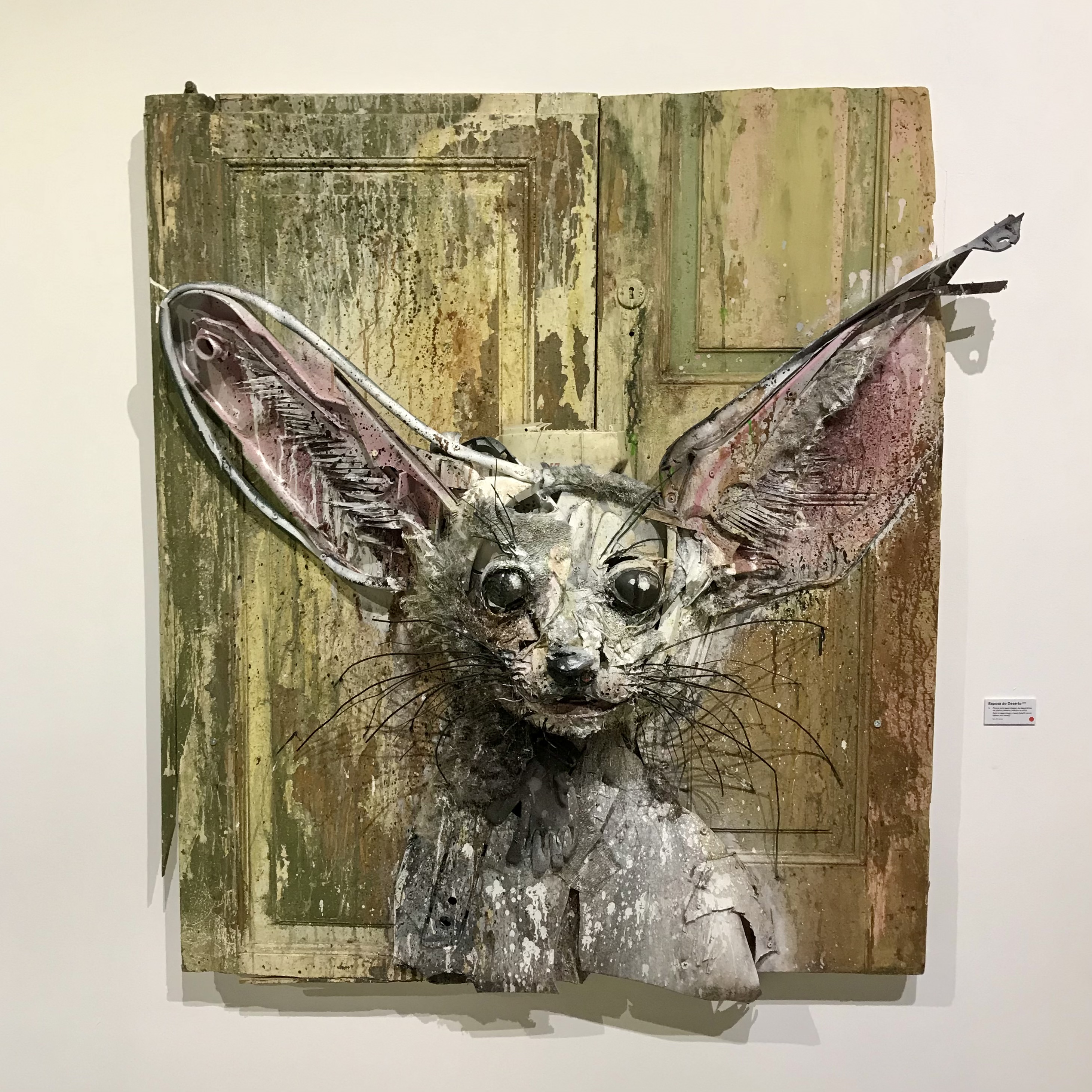
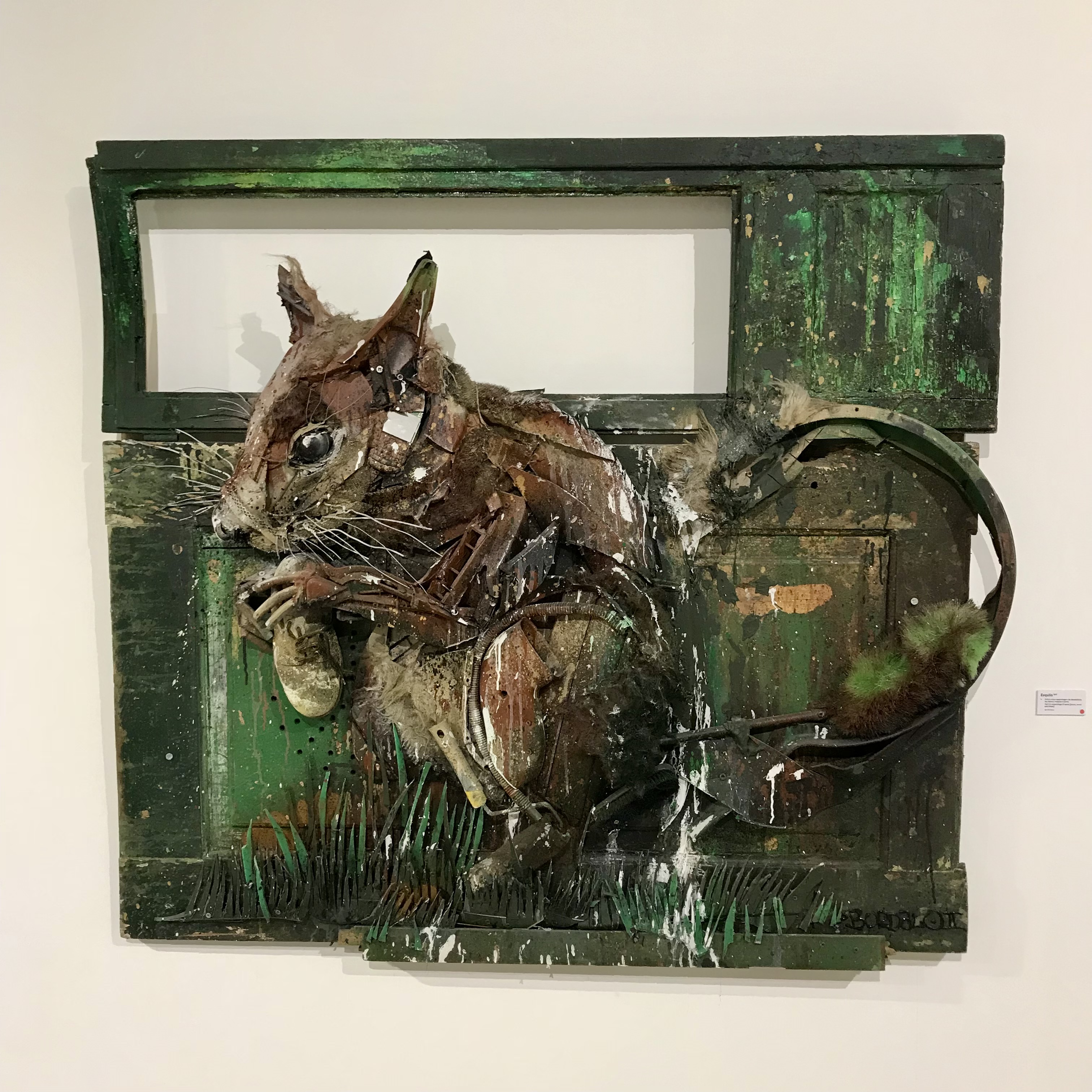
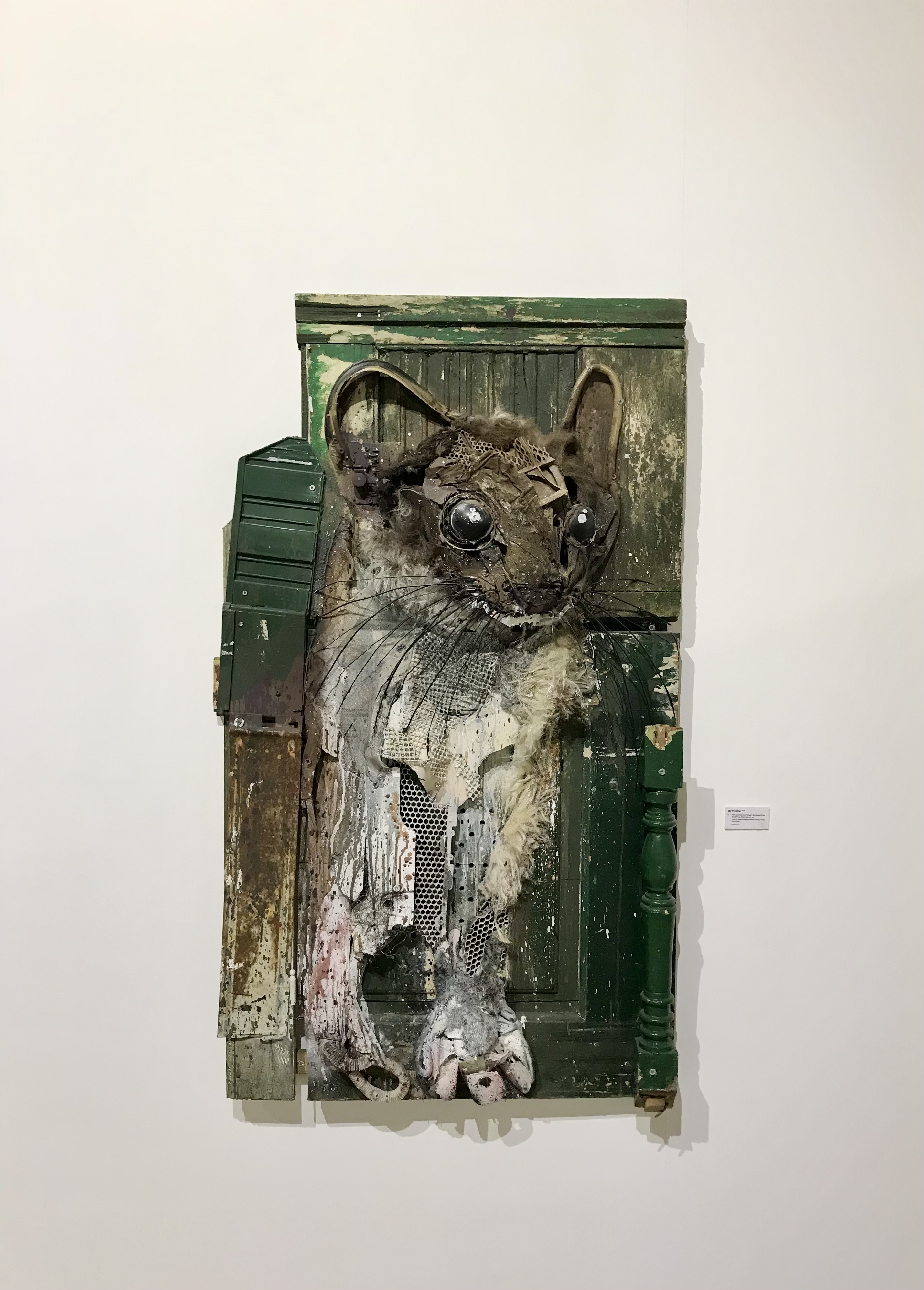
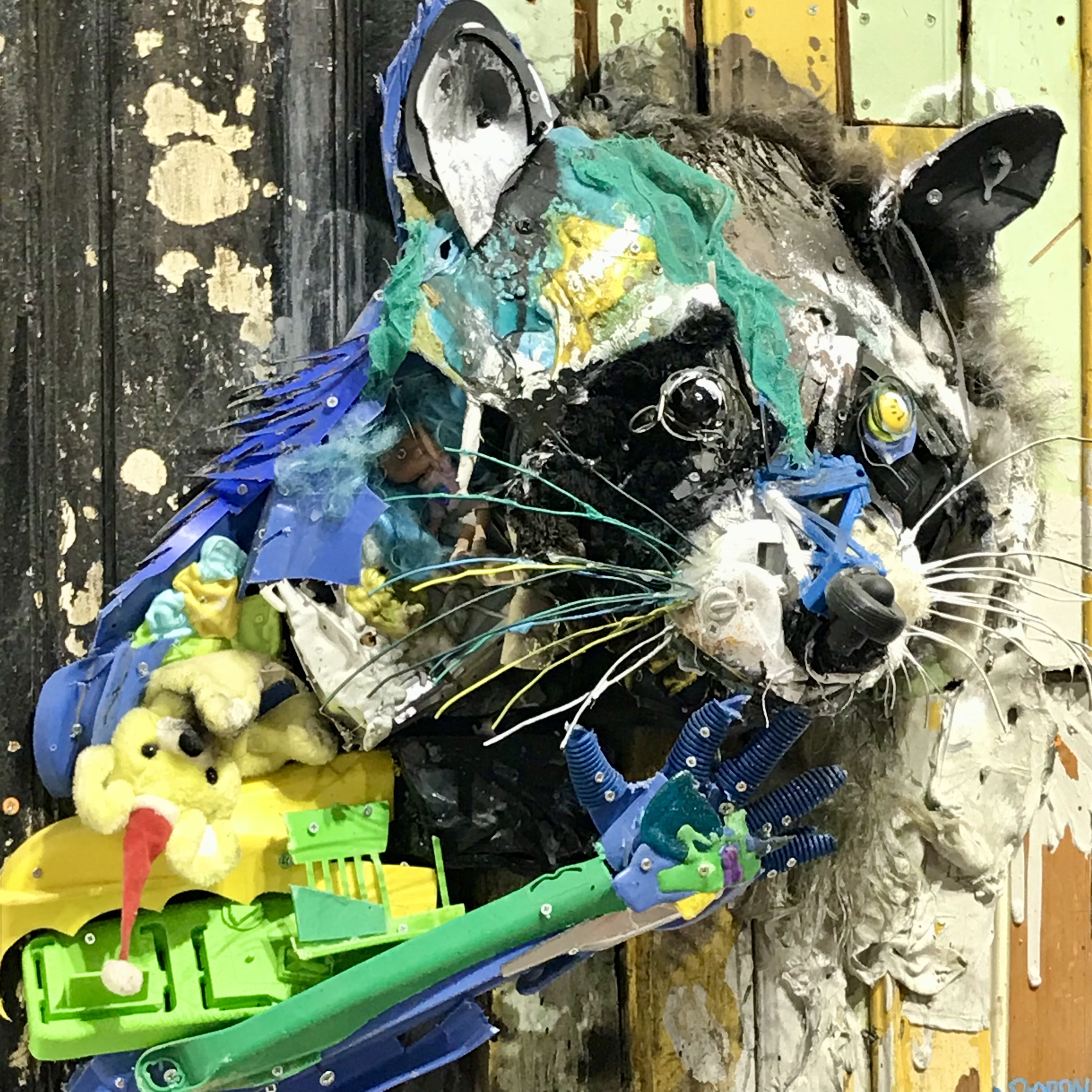
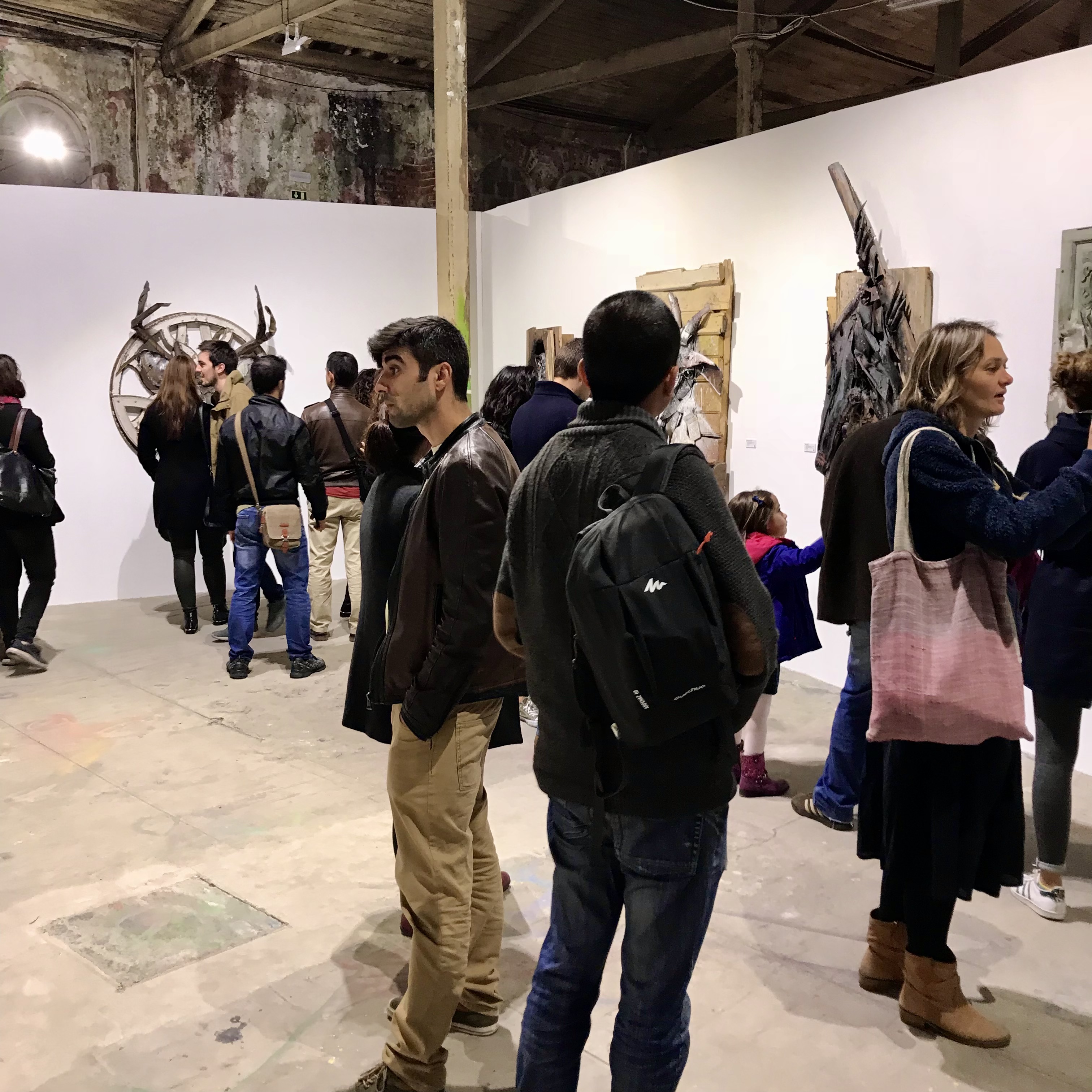
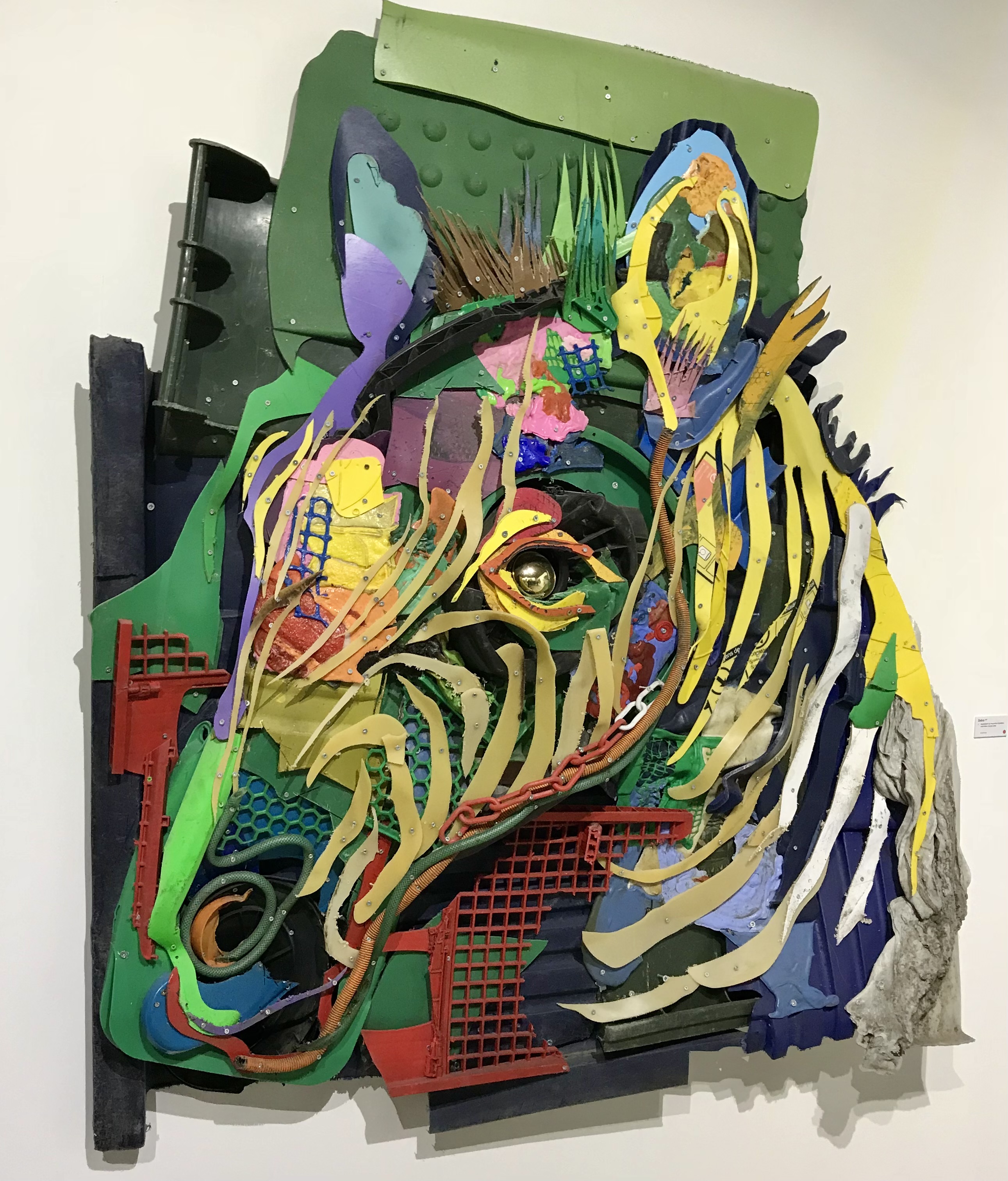
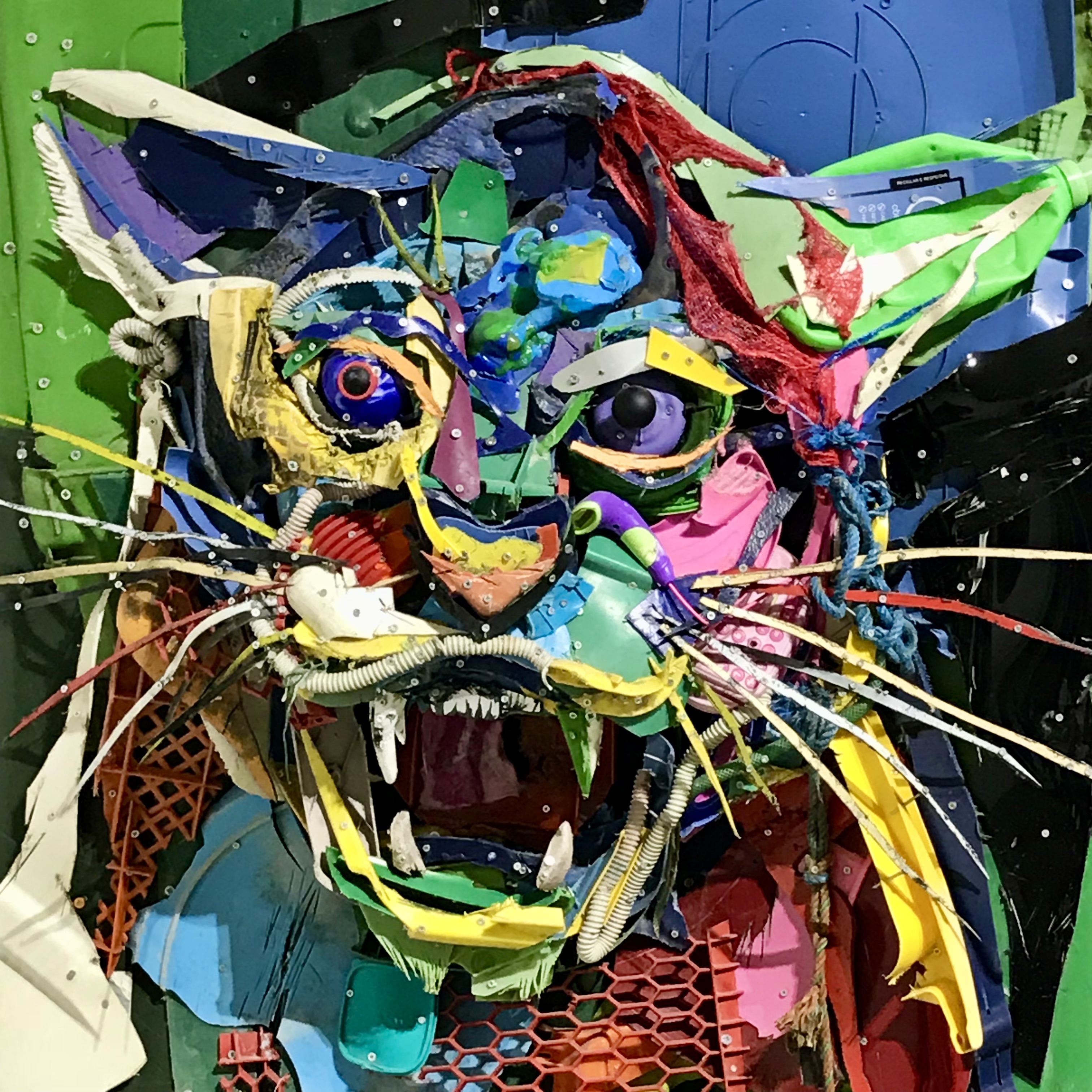
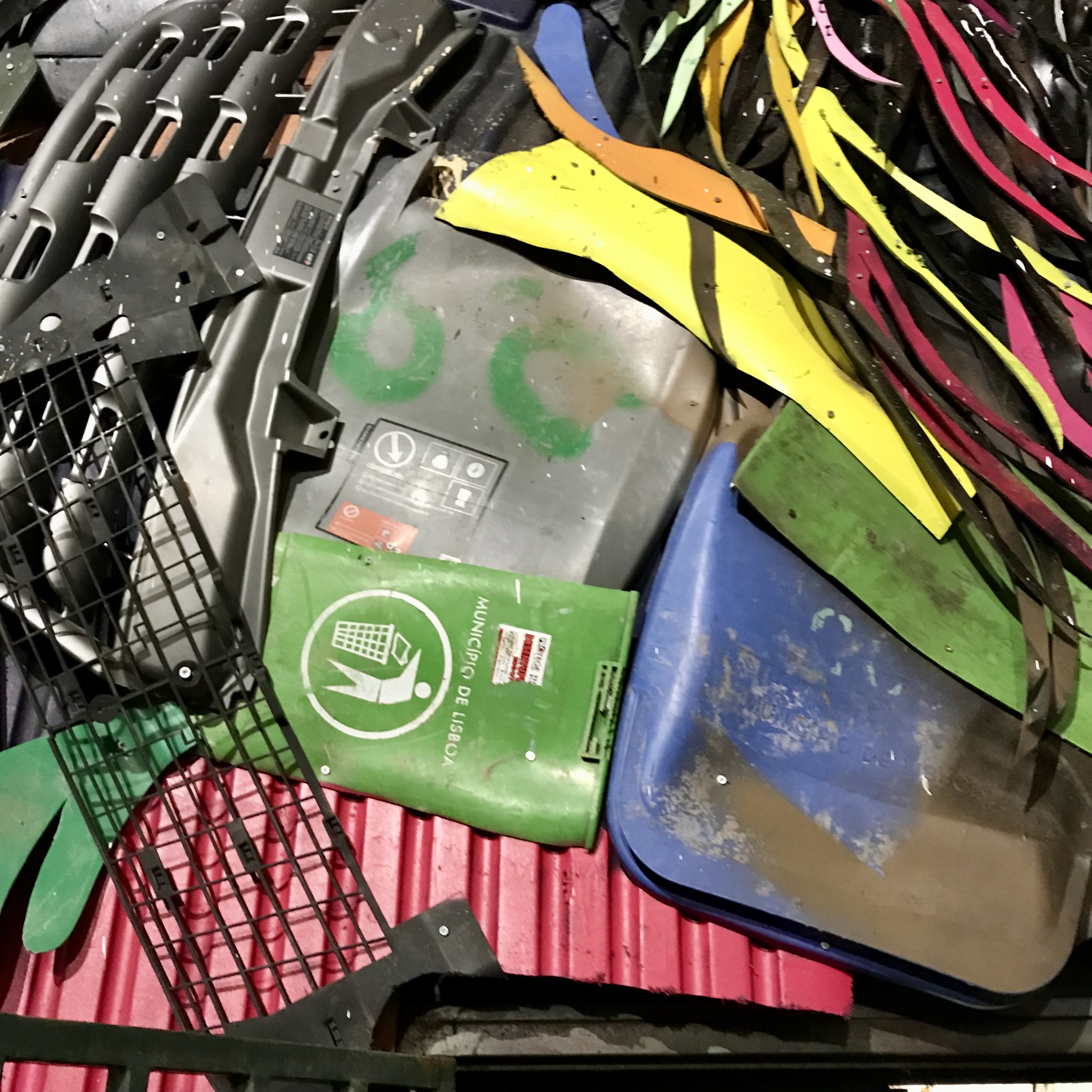
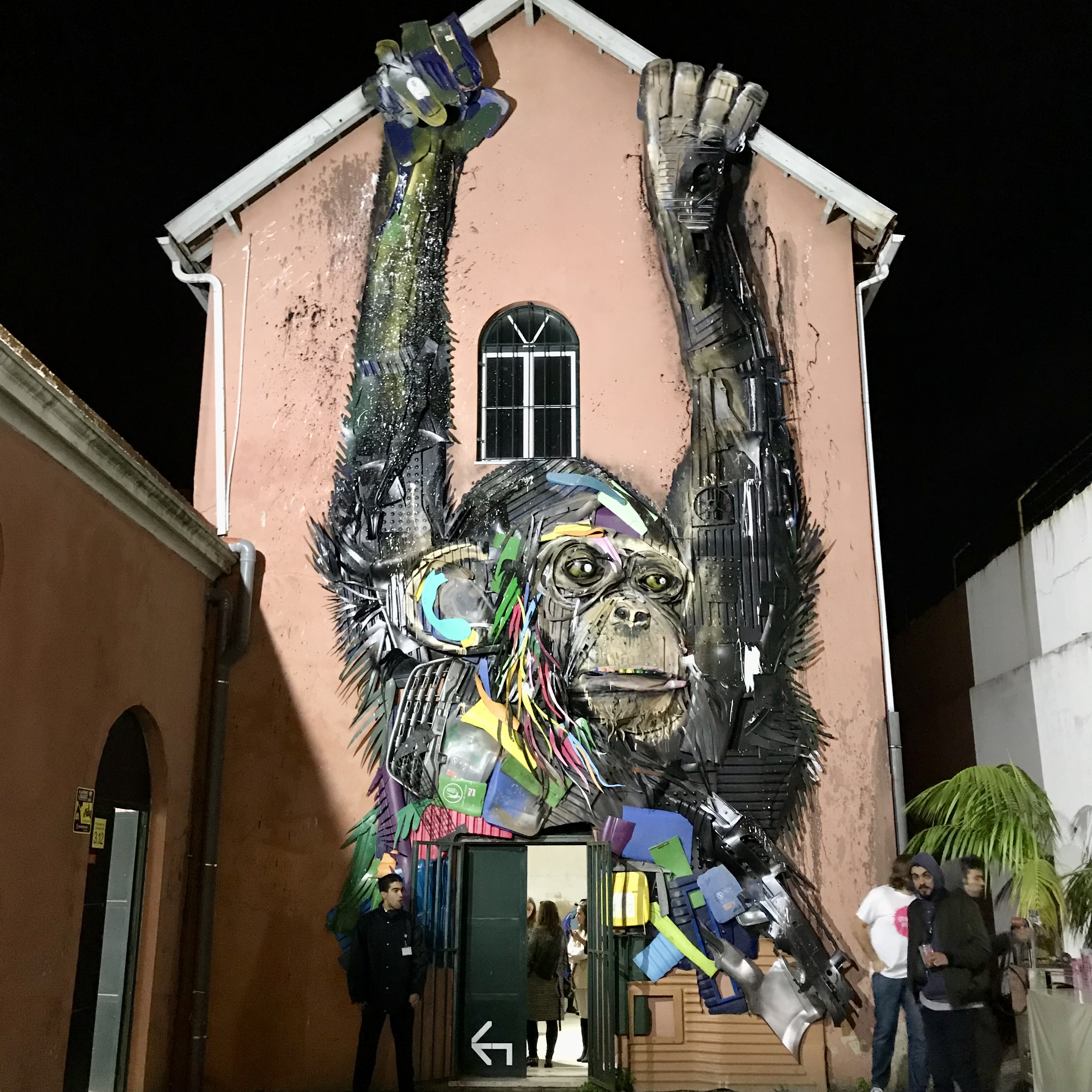
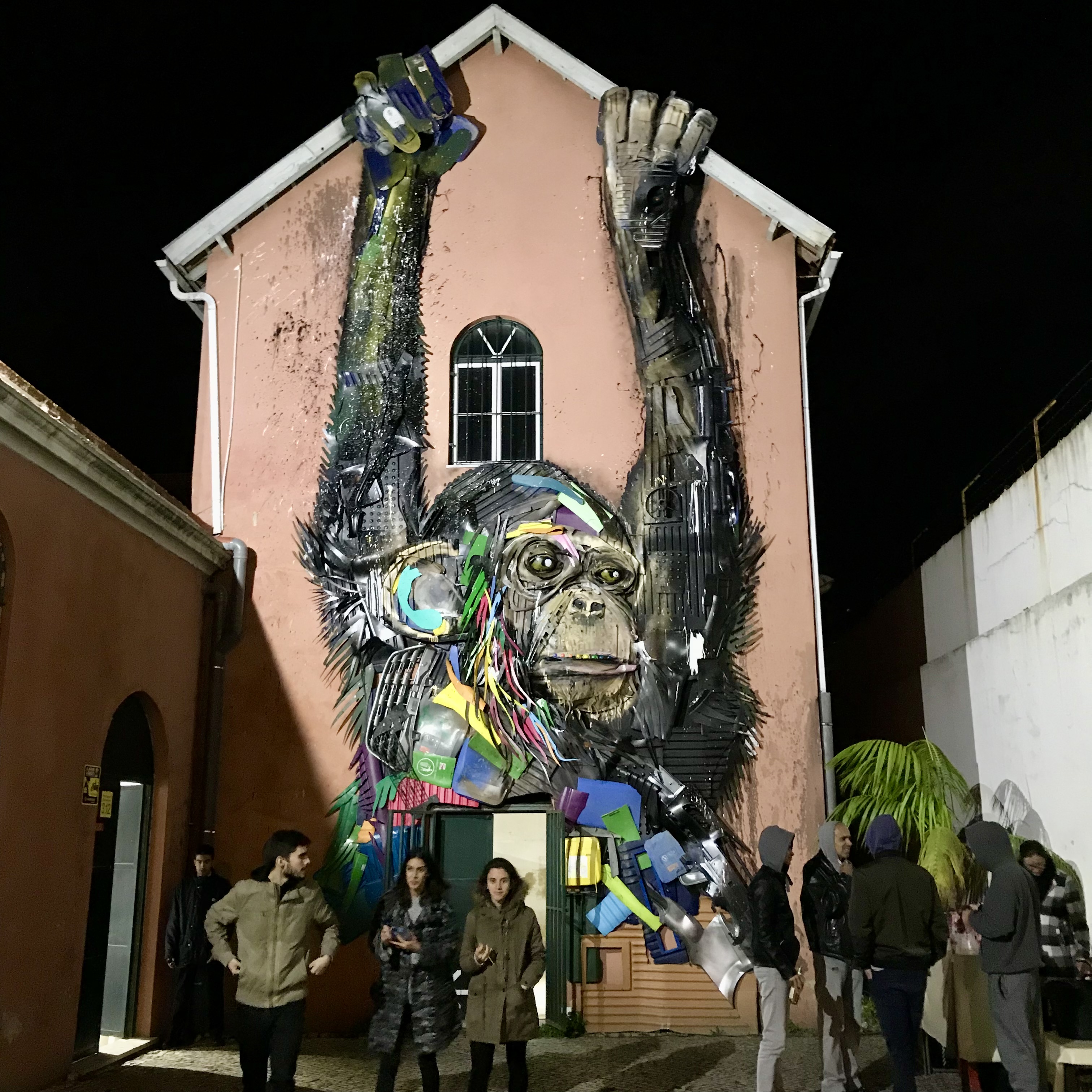
GraffitiStreet visited Bordalo II’s ATTERO exhibition in Lisbon in November 2017. All photographs accompanying this article were taken by GraffitiStreet during the exhibition.
ATTERO was originally scheduled to run from 4 to 26 November 2017 before being extended until 3 December. Presented with Mistaker Maker and curated by Lara Seixo Rodrigues, the exhibition ultimately attracted more than 27,000 visitors.
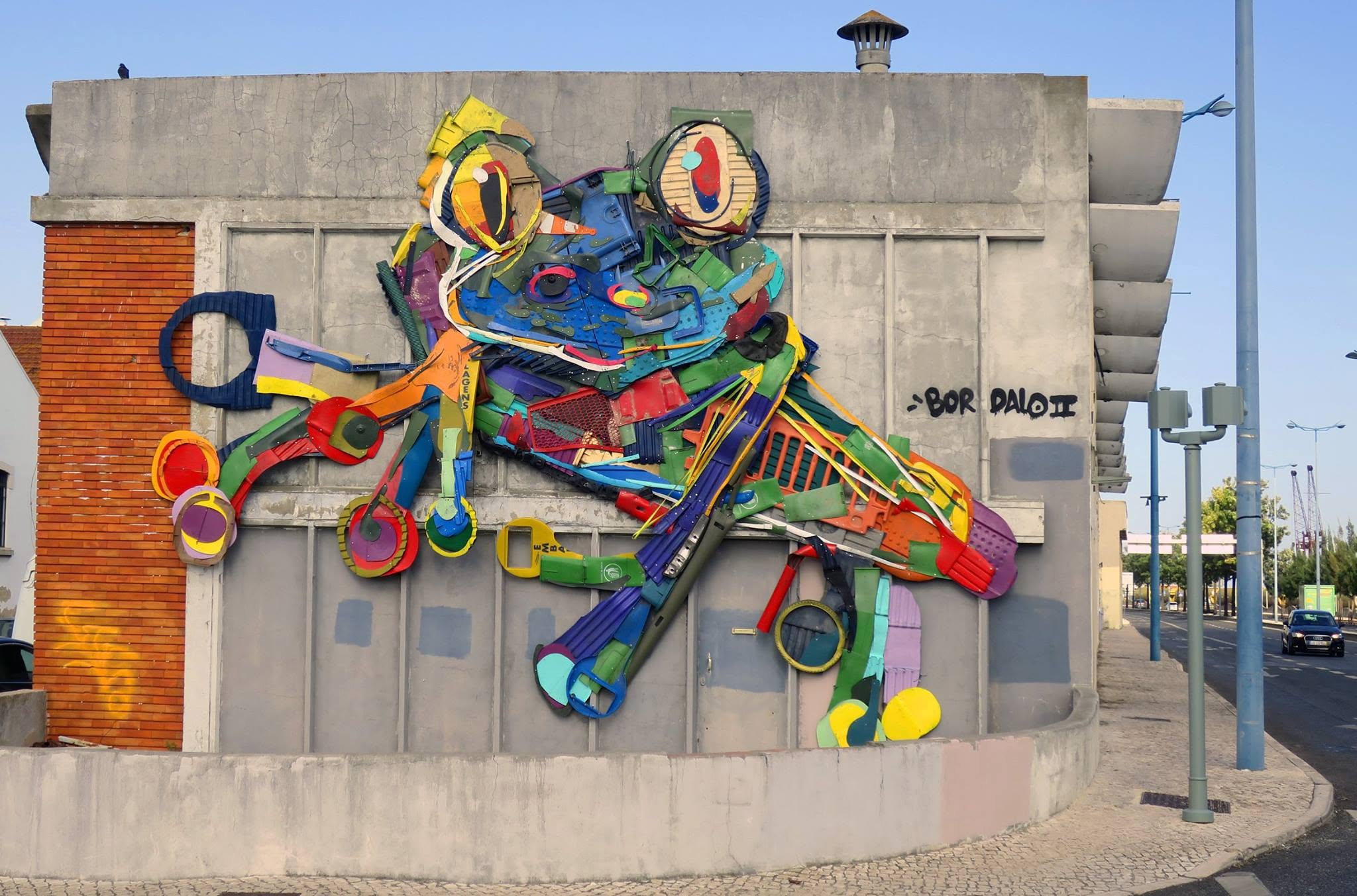
Bordalo II’s Plastic Frog
Bordalo II also created the nearby Plastic Frog, the first work in the Plastic sub-series of his Big Trash Animals.
UPDATE AUGUST 2026
ATTERO marked a decisive stage in the expansion of Bordalo II’s Big Trash Animals, with this more experimental material language later developed through EVILUTION in 2022 and revisited on the same Xabregas wall when the 2017 Plastic Frog was replaced by the Half-Half Koala in 2026.