Faith47: A Study of Warwick Triangle at Rush Hour, Durban, 2014
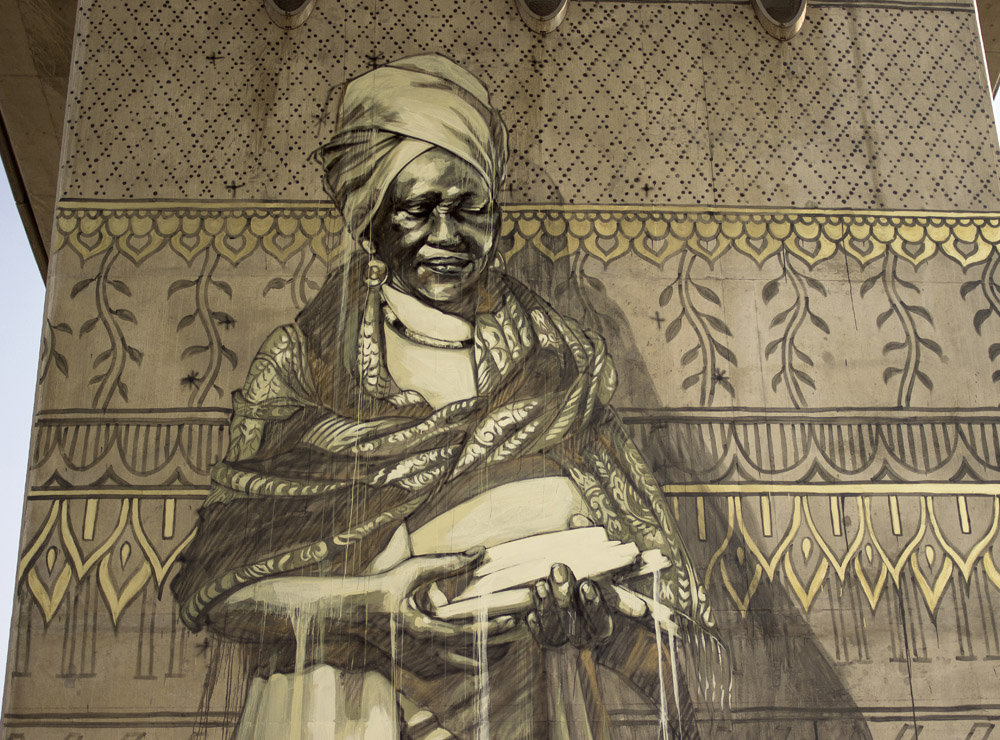
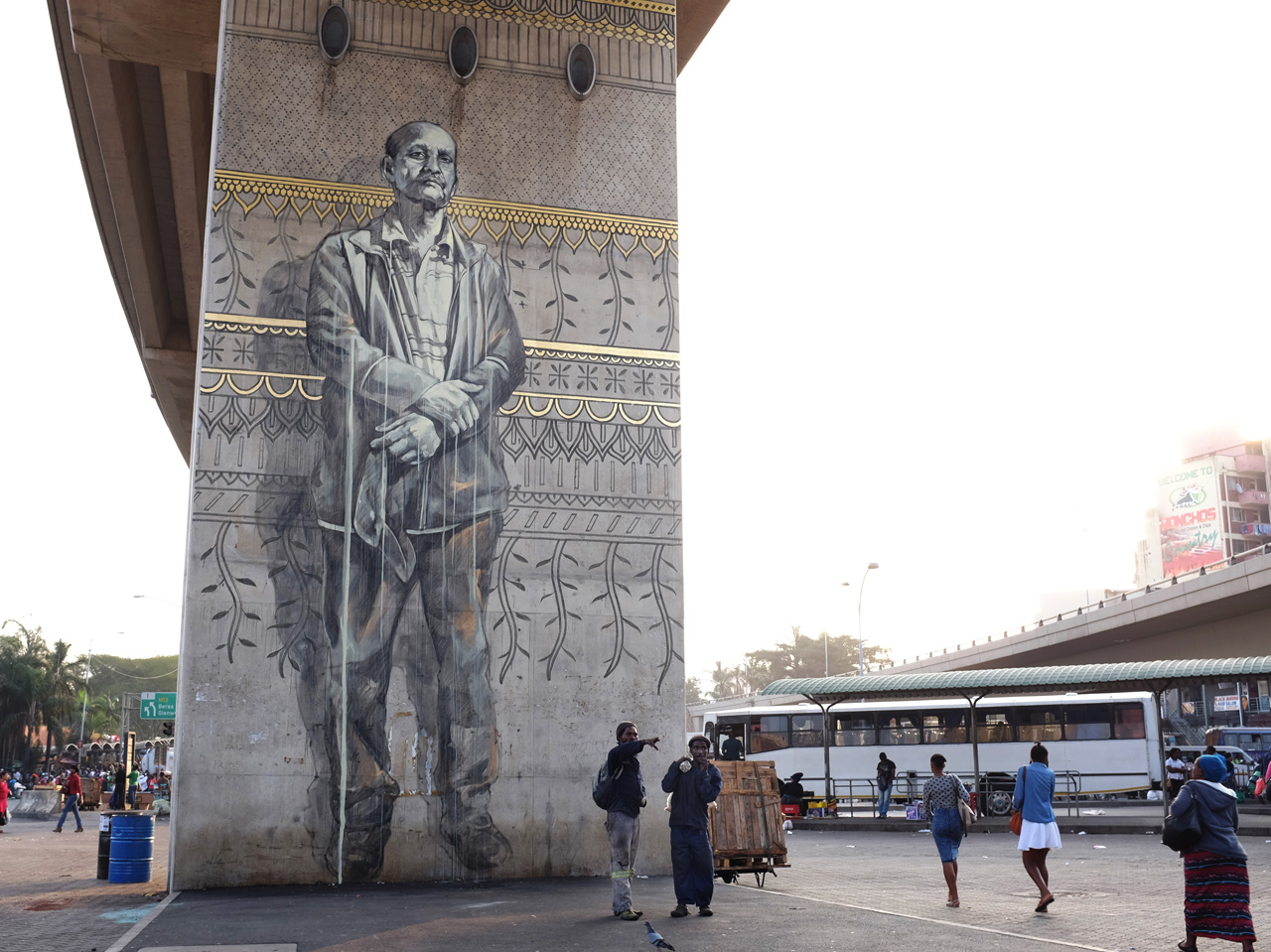
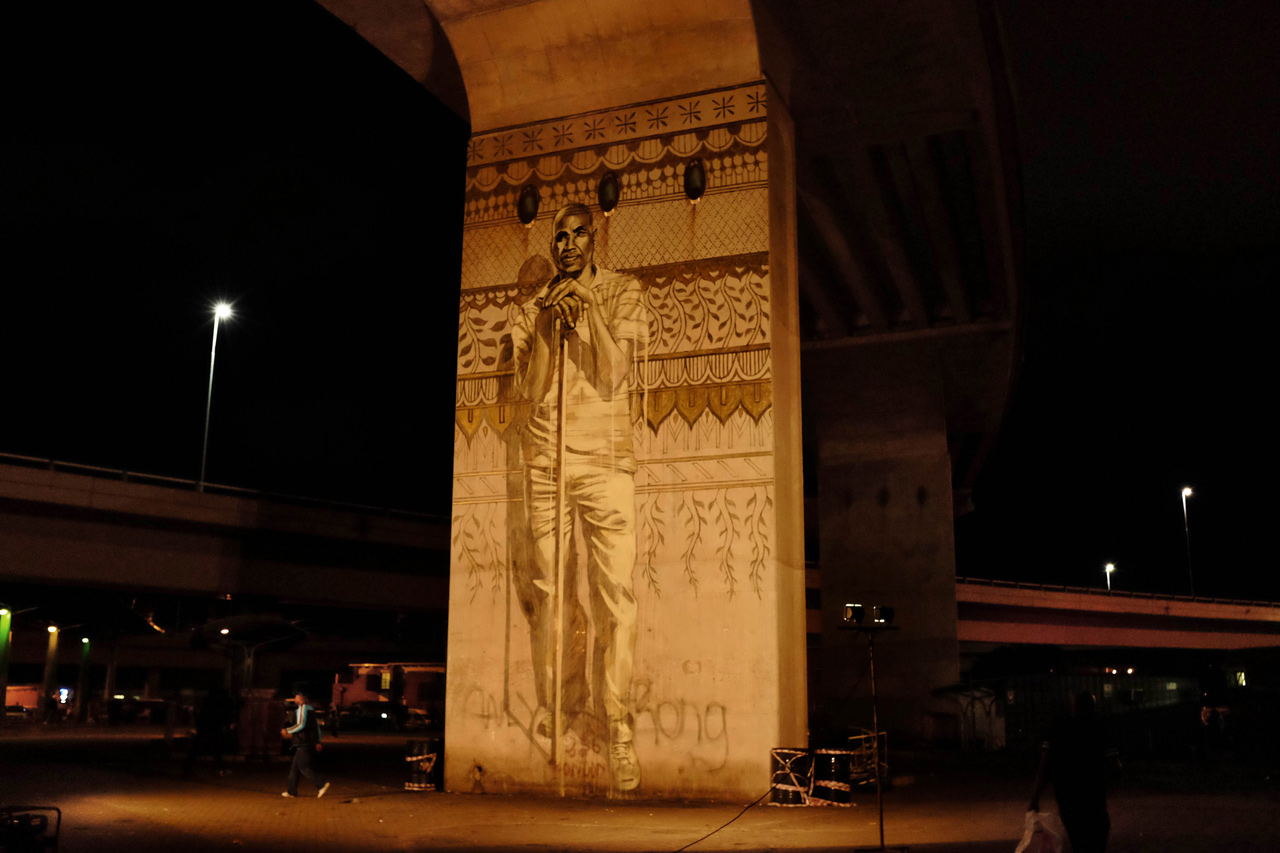
Faith 47’s A Study of Warwick Triangle at Rush Hour is a series of six large-scale street art murals painted on four supporting columns of the N3 viaduct beside the Early Morning Market in Warwick, Durban, South Africa. Created as one of the Fringe Projects for the 25th World Congress on Architecture, UIA 2014 Durban, the project transformed the concrete infrastructure of one of the city’s most active transport and trading hubs into a tribute to the traders, workers and everyday people whose lives give Warwick Triangle its extraordinary public energy.
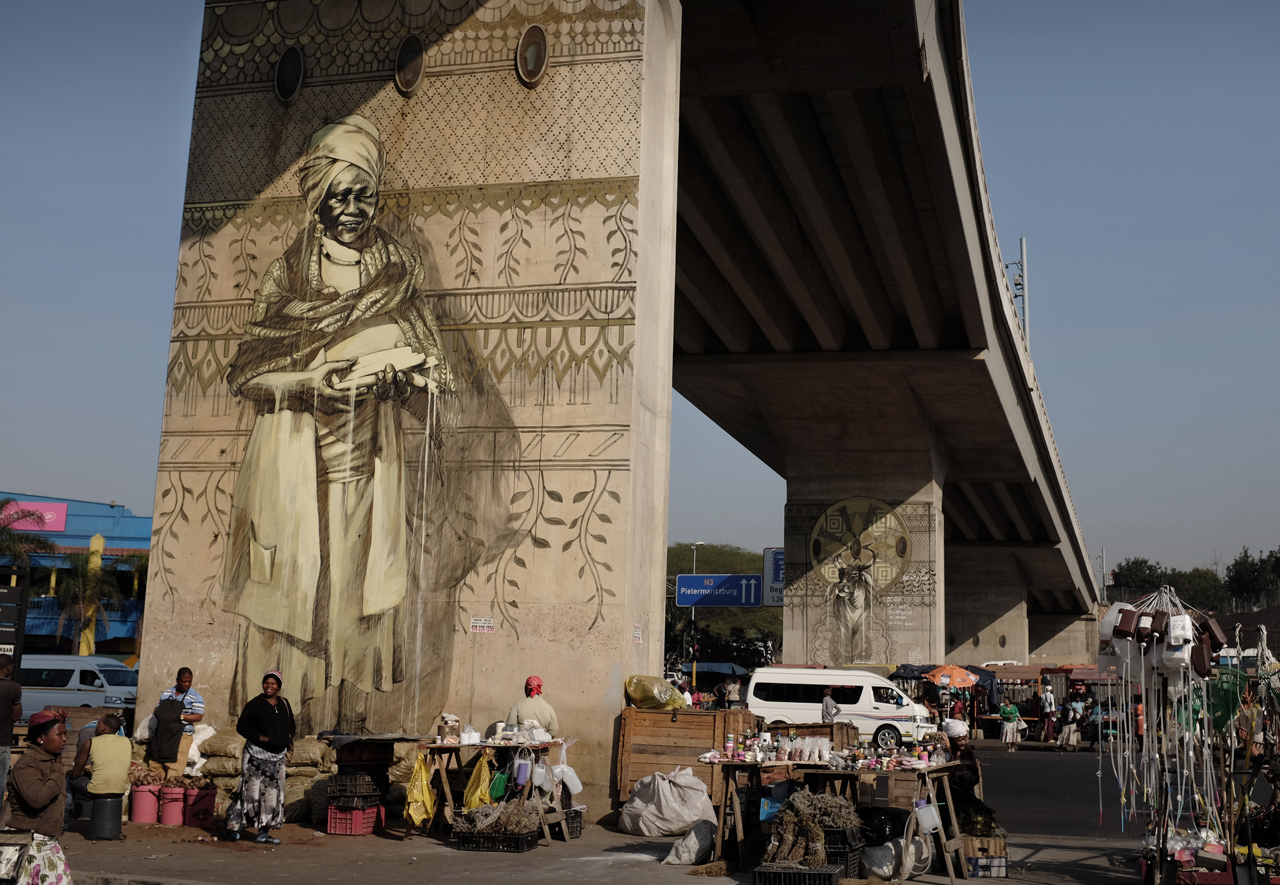
Faith47 and Warwick Triangle, Durban
Warwick Triangle, also known as Warwick Junction, is one of Durban’s most important transport and trading zones, a place shaped by taxi ranks, buses, markets, commuters, informal trade and the dense choreography of daily survival. The area is widely recognised as a major transport interchange and market district, with thousands of traders and hundreds of thousands of daily users moving through its streets, bridges and markets.
For Faith 47, this was not a place to be used as a blank canvas. It was a living system. She has spoken about being struck by the potent energy of Warwick Triangle, and by the way the area, which can first appear chaotic and intense, reveals its own internal order once you spend time there. Cigarette sellers, traders, commuters, market workers and people sleeping beneath bridges all form part of a complex urban ecology that is too often misunderstood from the outside.
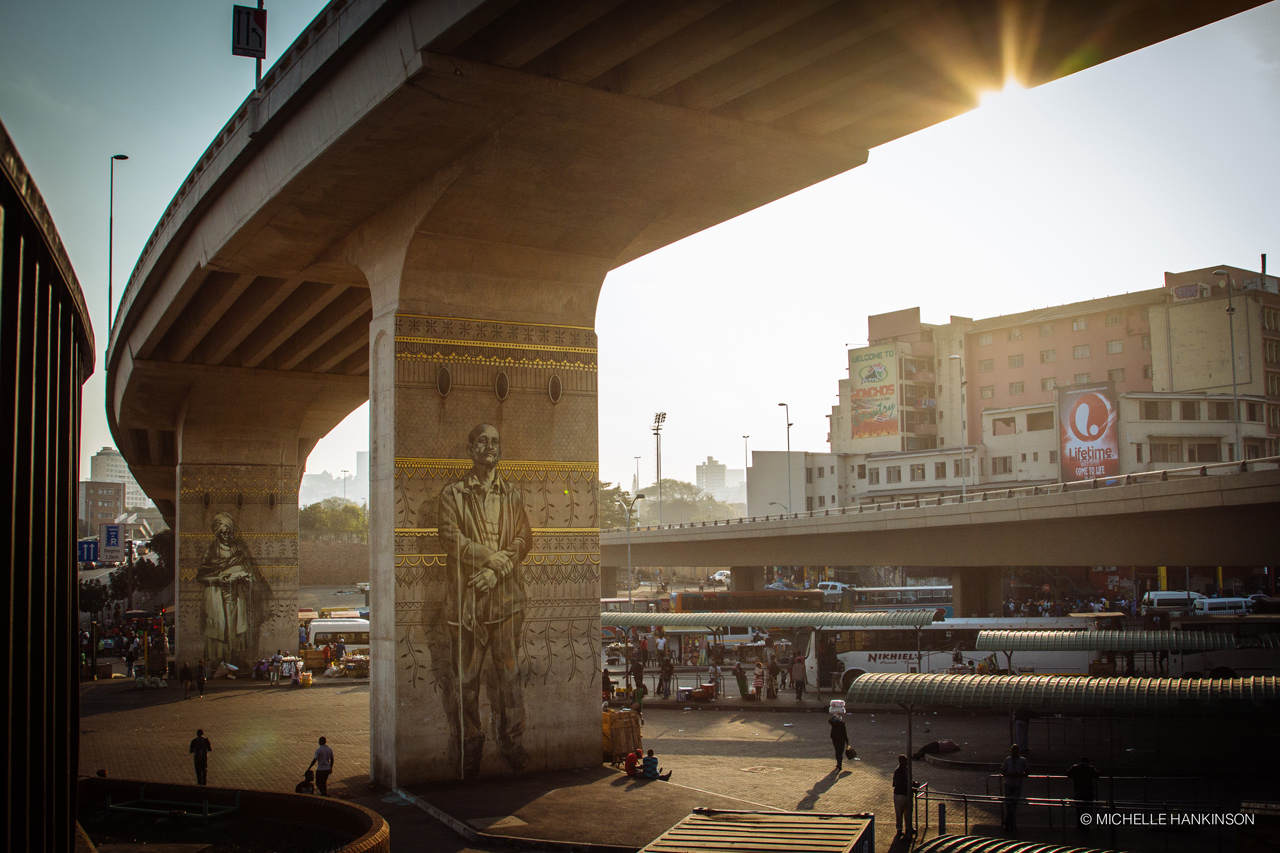
The meaning behind A Study of Warwick Triangle at Rush Hour
The murals are portraits of traders and people working in the area, created as a tribute to the everyday man and woman on the street. Faith 47 has described her interest in the informal economy and the need to honour the people who keep this part of Durban alive, making the project less an intervention imposed onto Warwick Triangle than a response to the people already holding the place together.
That distinction matters. Faith47 understood that she could not arrive with her own fantasy and paint something detached from the community, because Warwick Triangle already belonged to the people living and working there. The murals therefore become an act of attention, recognising figures who are often seen quickly, passed daily, or absorbed into the noise of the city without being fully looked at.
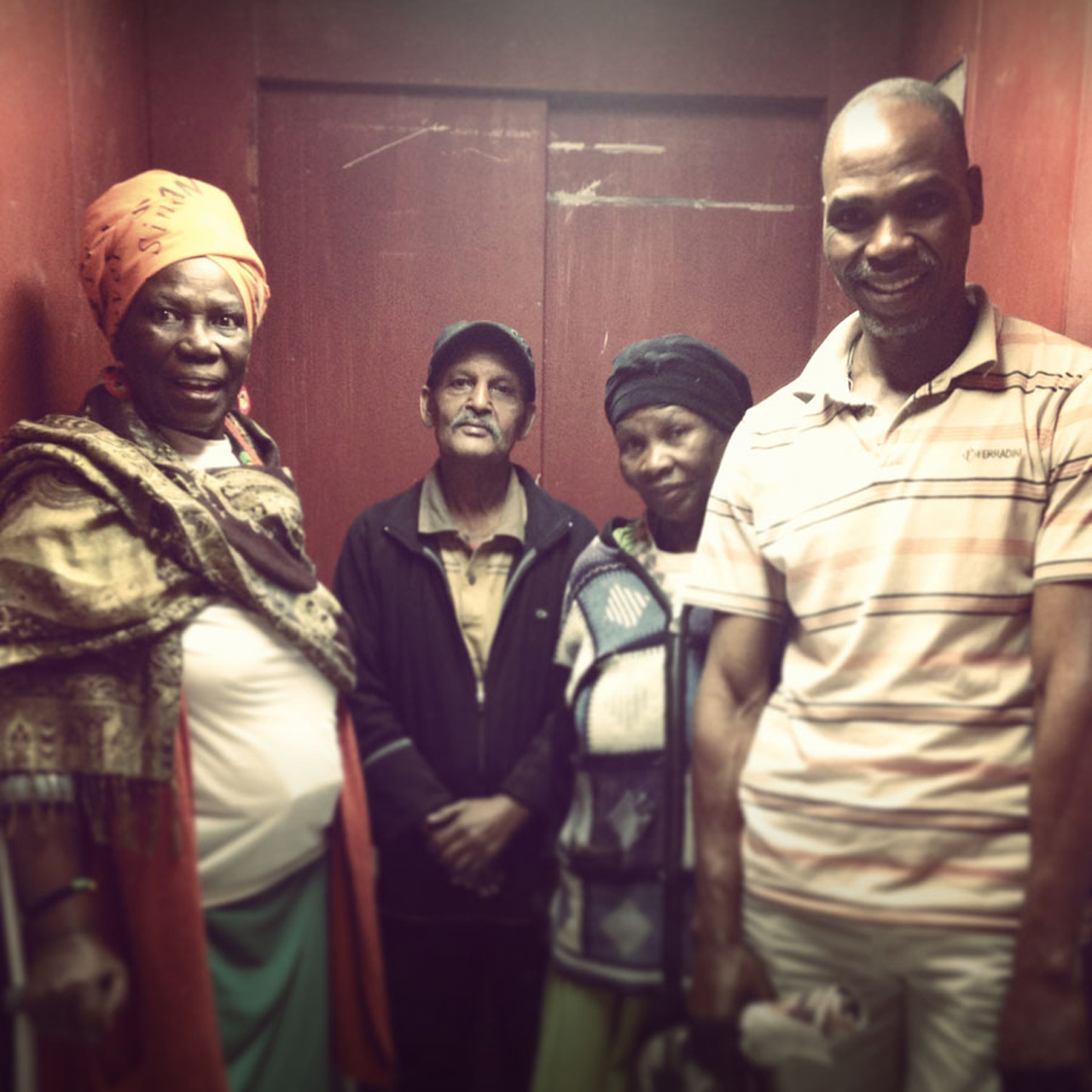
Portraits of traders, workers and the informal economy
In the film documentation around the project, Faith47 speaks about specific individuals who shaped the work, including Madlamini, described as outspoken and deeply connected to the market, Tolani working near the disused freeways, Mr Singh with his quieter and gentler presence, and Muto, who worked in the lime and pepper market and slept under the bridge at night. These details give the project its emotional weight, because the portraits are not symbolic stand-ins for “the public”; they emerge from real encounters, real routines and real lives.
This is where A Study of Warwick Triangle at Rush Hour becomes one of Faith 47’s most important South African public works. It does not romanticise poverty or informal labour, nor does it treat the traders as picturesque urban material. Instead, it allows dignity to become visible at architectural scale, placing individual human presence onto the very columns that hold up the city’s traffic above.
Public art, architecture and the right to breathe
Faith 47 has said that art in public space creates “a visual gap to breathe,” because nothing is being sold or advertised, and because the work allows a direct communication from artist to passer-by. In Warwick Triangle, this idea becomes especially powerful, because the murals sit inside a public environment already saturated with movement, exchange, survival, advertising, infrastructure and economic pressure.
The columns of the N3 viaduct were never neutral surfaces. They were part of an architecture that could easily feel alienating to the individual, yet Faith 47’s portraits shift their role. The concrete supports become witnesses. The freeway no longer only carries vehicles over the market; it also carries the faces and stories of those who make the market possible.
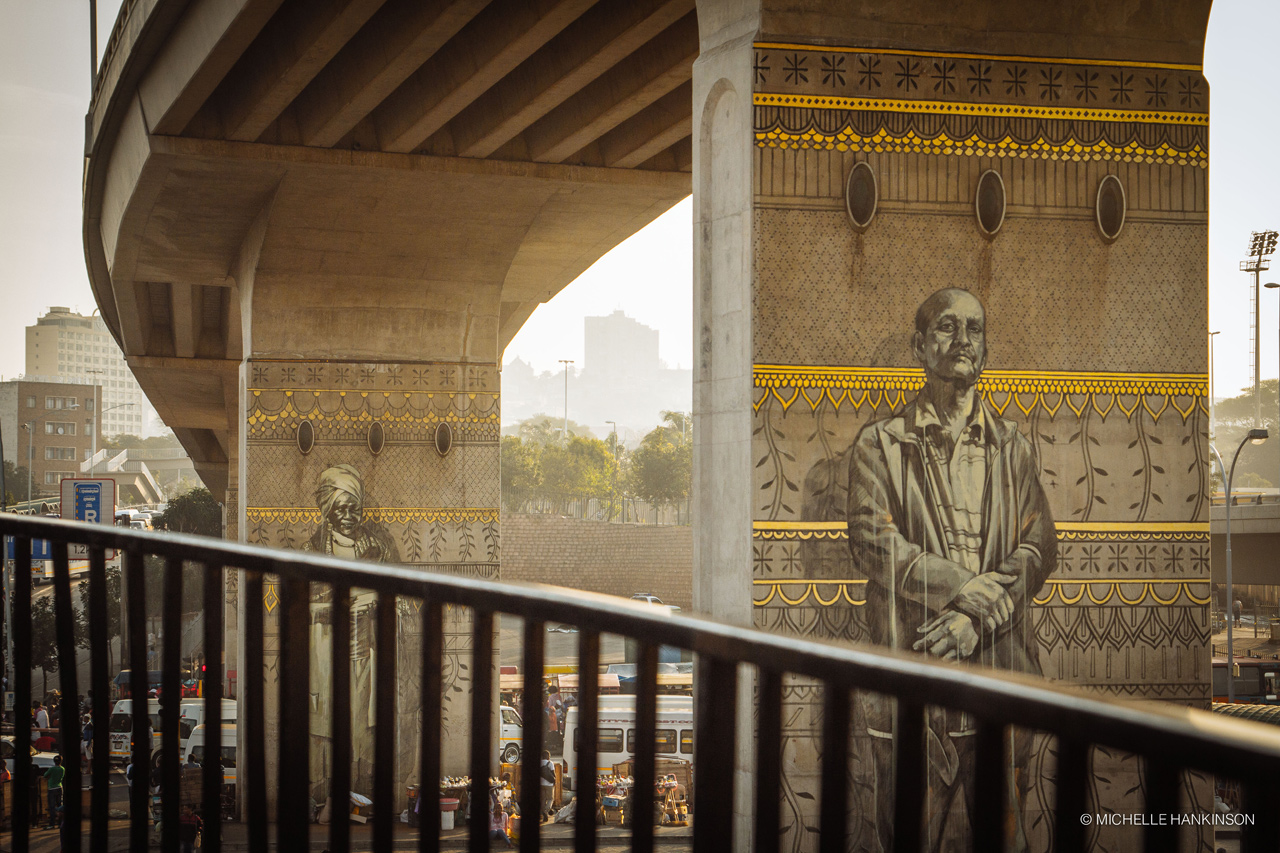
Faith 47’s visual language of dignity and urban witness
Across Faith 47’s practice, walls are never only walls. They are social, political and spiritual surfaces, capable of carrying memory, grief, beauty and resistance. In A Study of Warwick Triangle at Rush Hour, her visual language becomes grounded in the everyday architecture of labour, using portraiture to hold space for people whose work is central to the city but often pushed to its margins.
The result is not public art as decoration, but public art as recognition. Faith47 brings soul back to the city not by softening its grit, but by listening to it closely enough to understand who the space already belongs to.
Enquire about available artworks by Faith 47
Faith 47’s A Study of Warwick Triangle at Rush Hour sits within a wider practice shaped by public space, spiritual symbolism, social consciousness and the dignity of those too often overlooked. At GraffitiStreet, we work with collectors seeking meaningful editions, originals and secondary-market works by leading international artists whose practice moves between the street, and the studio.
To discuss available artworks, private sourcing or collecting with GraffitiStreet, please get in touch with the gallery.