Faith47: The Long Wait, Johannesburg, 2012
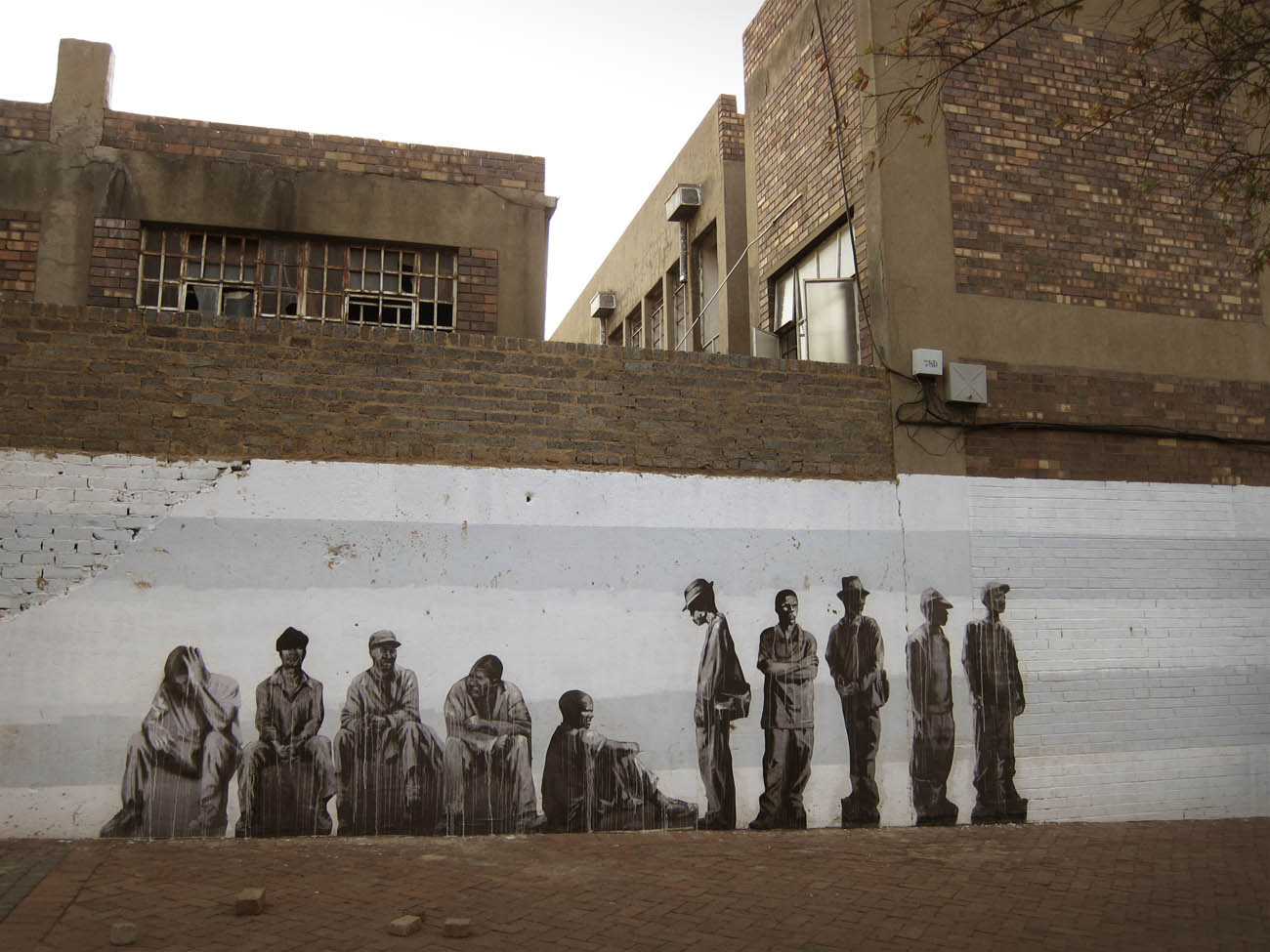
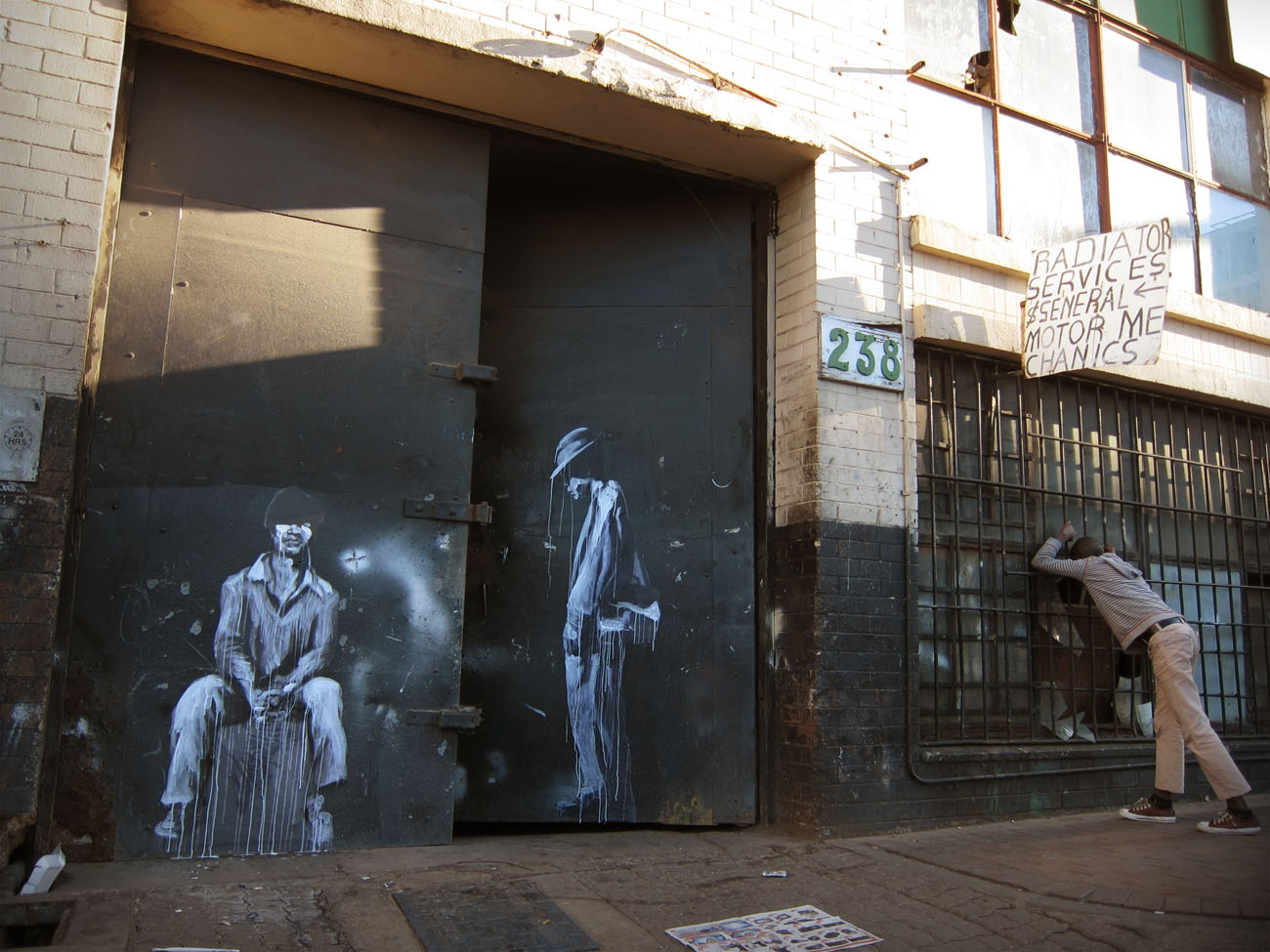
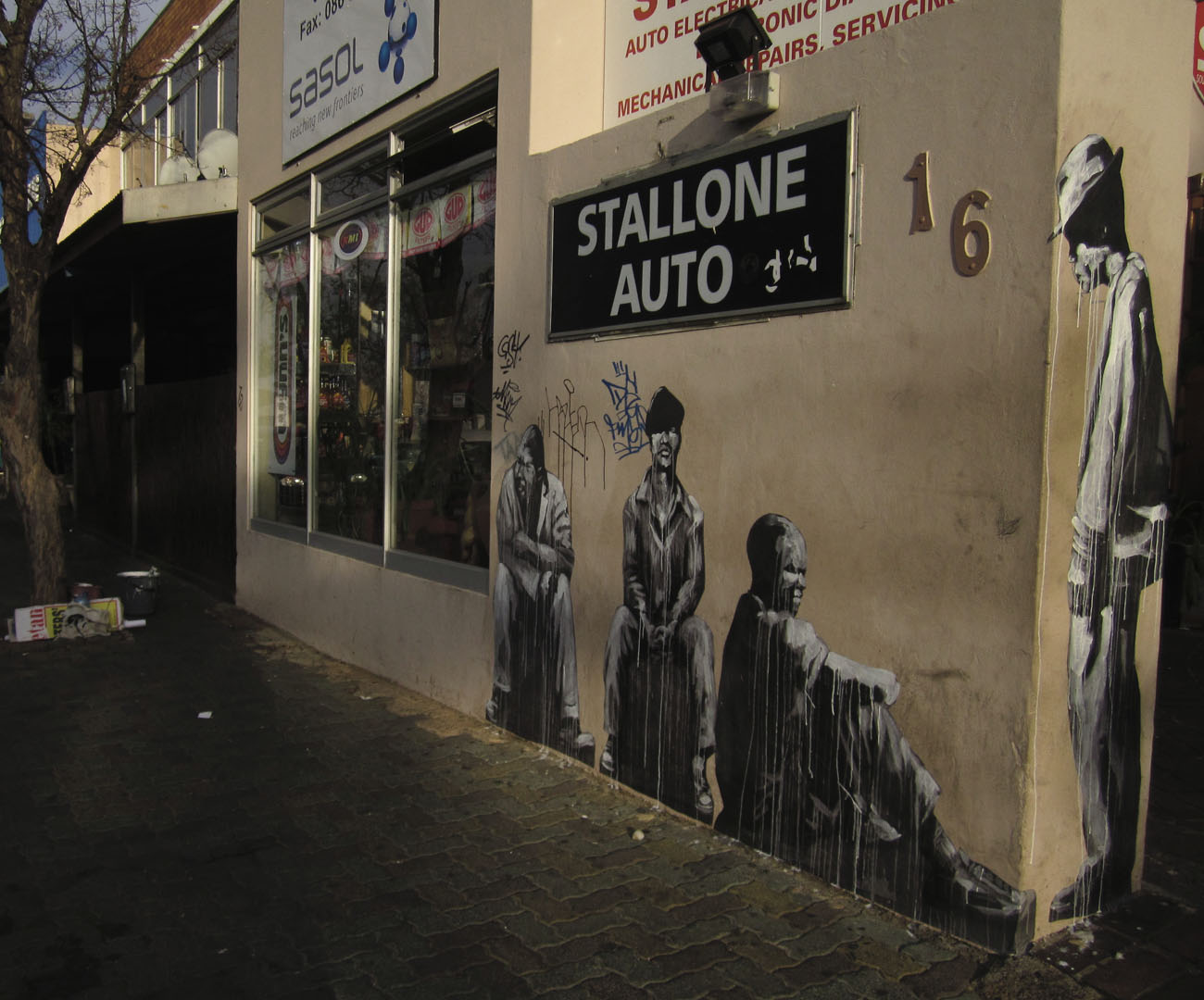
Faith47’s The Long Wait is a series of street artworks created across Johannesburg as the first instalment of her exhibition Fragments of a Burnt History, shown at David Krut Projects in Parkwood from 8 November to 19 January 2013. The works depict groups of men in different postures of waiting, drawing from Alexia Webster’s photographic series Waiting for Work, and place the condition of waiting directly into the streets of a city shaped by labour, migration, political promise and social delay.
Faith47 and Johannesburg’s unfinished promises
Created on the streets of Johannesburg towards the end of September, The Long Wait speaks to a specifically South African condition, where waiting is not passive, but political. Faith 47’s figures do not appear as anonymous bodies placed into the city for visual effect; they carry the weight of miners waiting for justice, workers waiting for a living wage, refugees waiting for assistance, men waiting for jobs, communities waiting for service delivery, and a country waiting for honest leadership.
Faith 47’s own words give the series its force: there has been so much waiting in South Africa that much time has been lost. In that sentence, waiting becomes more than a social condition. It becomes a national wound, measured not only in hours, queues or unemployment figures, but in deferred dignity, delayed repair and the slow exhaustion of hope.
The meaning behind The Long Wait
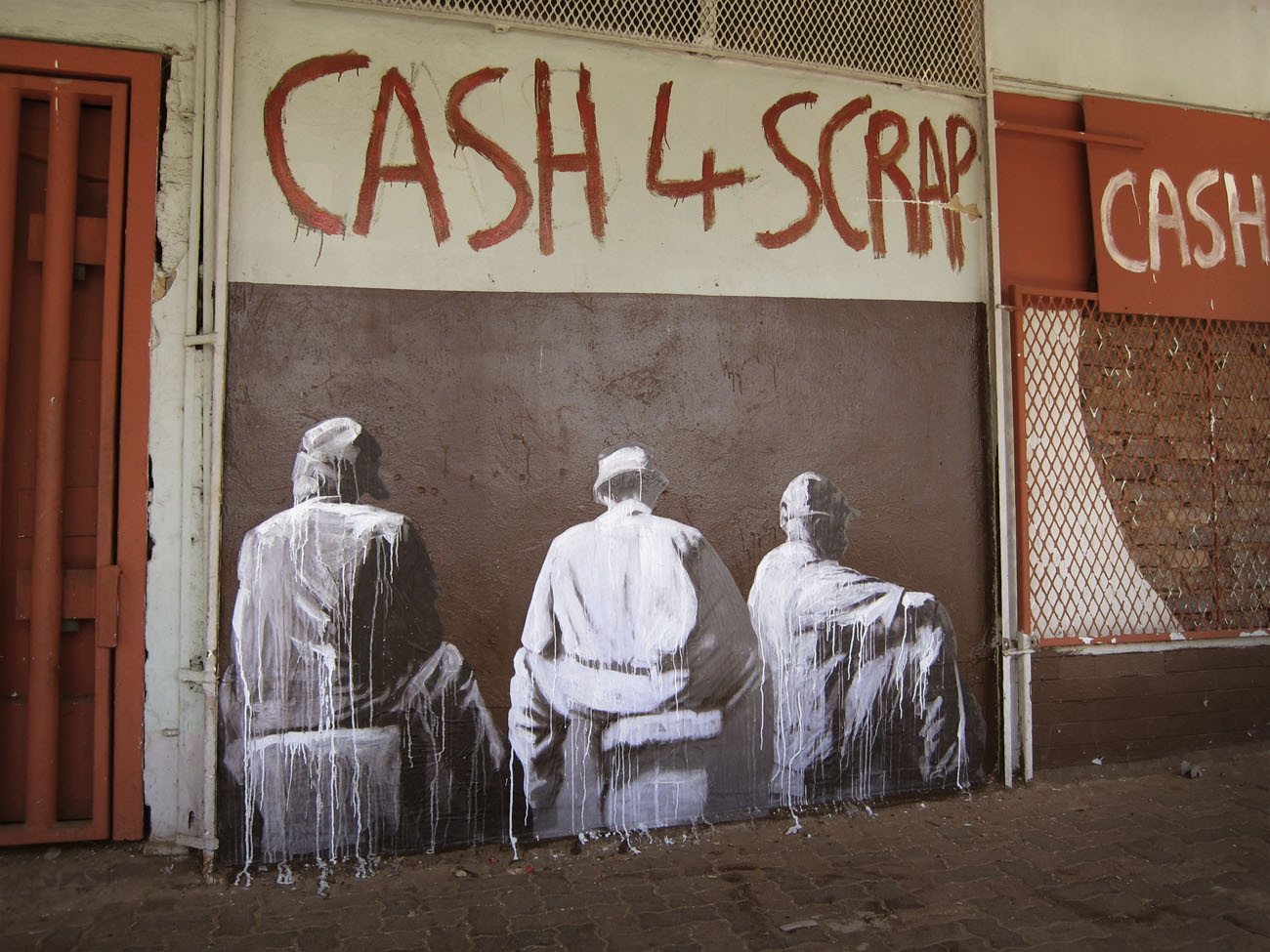
The power of The Long Wait lies in its restraint. The men do not shout, confront or perform anger for the viewer. They sit, stand, lean, gather and endure, their bodies held in the familiar choreography of uncertainty. Faith 47 gives this everyday posture monumental significance, placing the quiet human fact of waiting onto Johannesburg’s walls and allowing the city itself to become part of the testimony.
The reference to Alexia Webster’s Waiting for Work is central, because the source imagery connects Faith 47’s public interventions to a documentary language of labour and unemployment. Yet in the street, the figures shift again. They are no longer contained by the frame of the photograph. They become part of the city’s own skin, appearing in places where the social reality they describe is already unfolding.
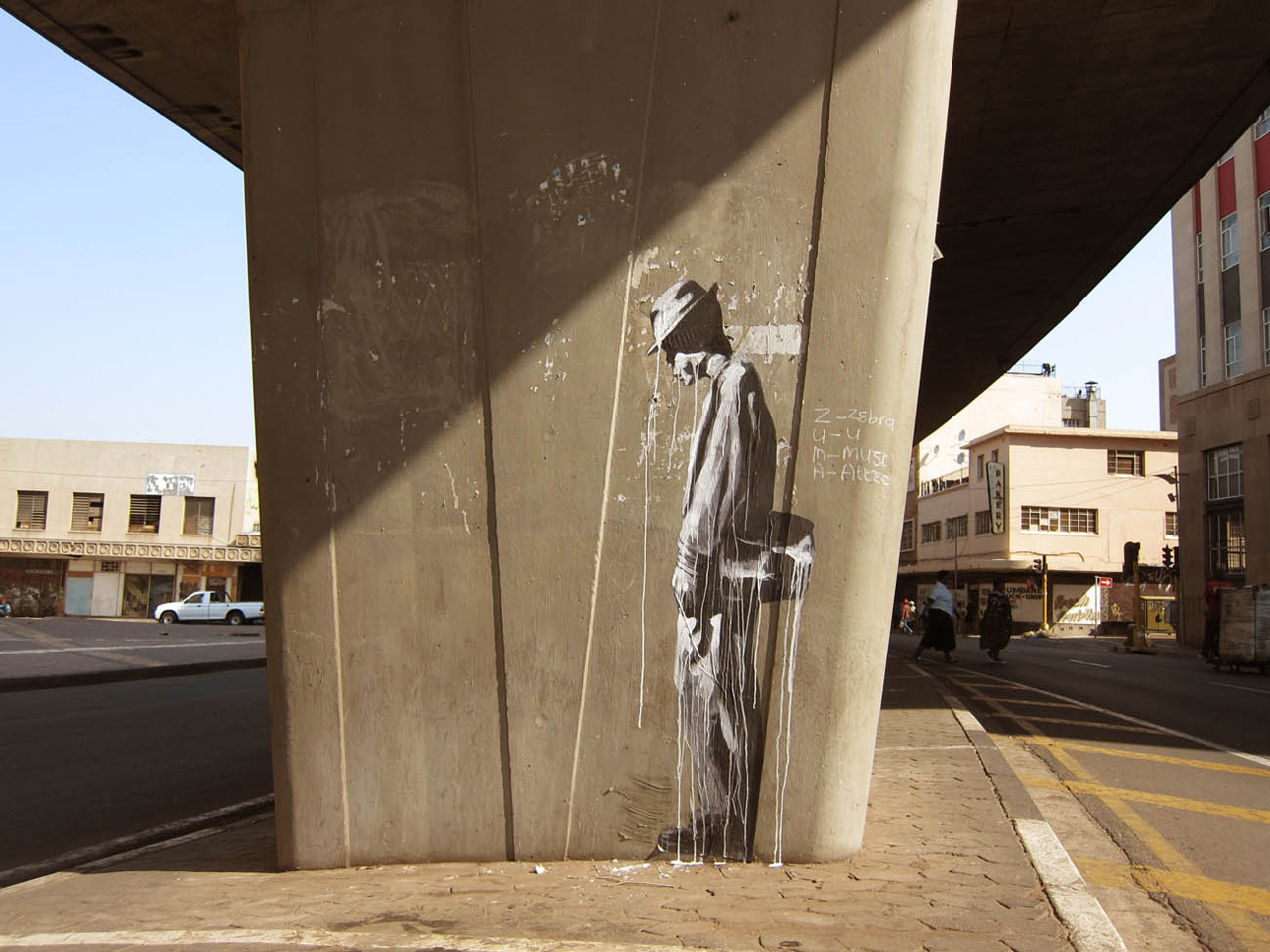
Within Faith 47 The Long Wait, waiting becomes more than a social condition; it becomes a national wound, measured in deferred dignity, delayed repair and the slow exhaustion of hope.
Where were The Long Wait artworks located?
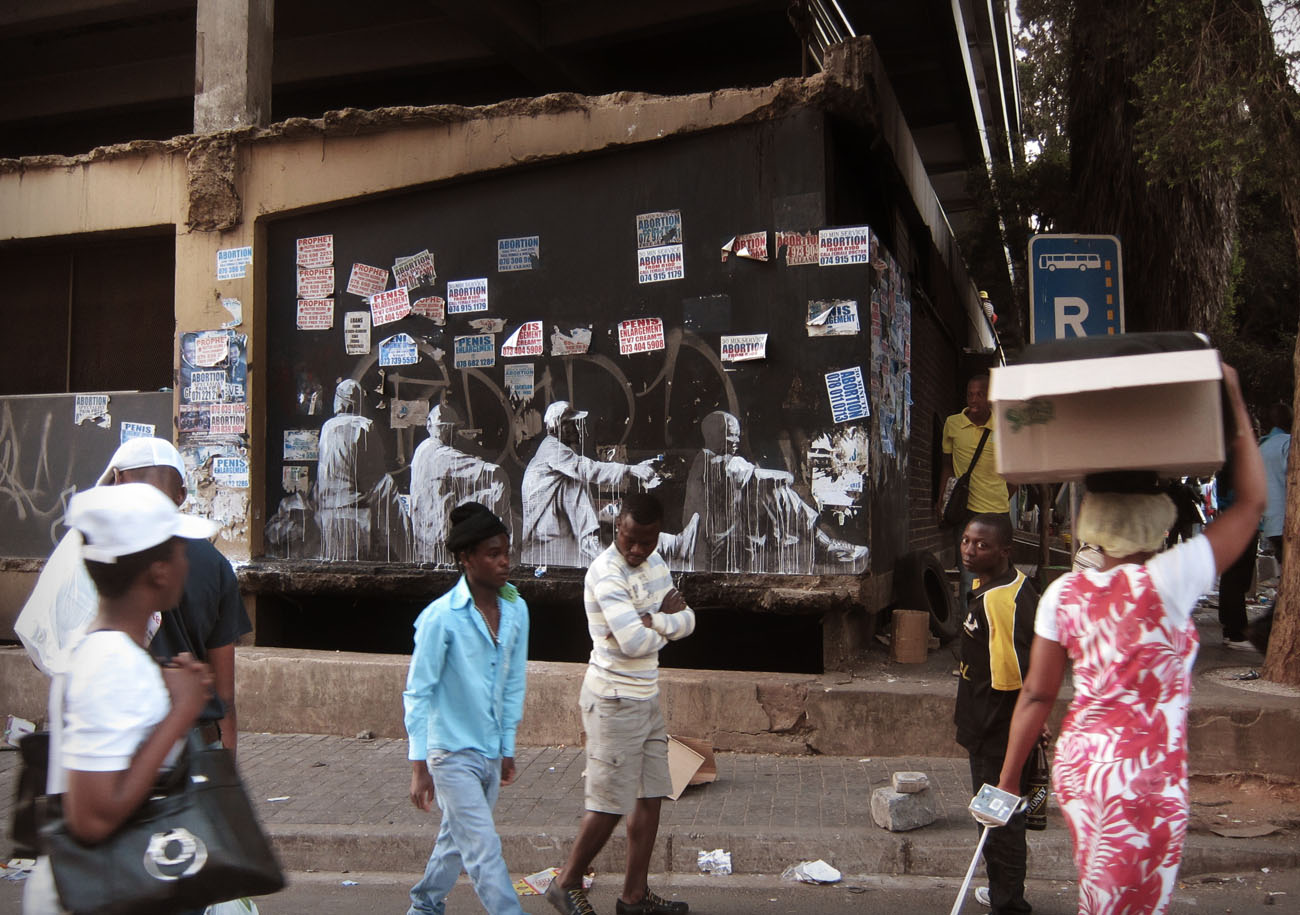
Works from The Long Wait appeared across Johannesburg, including Soweto, Newtown, Maboneng Precinct, Commissioner Street, Jan Smuts Avenue, Oxford Street, Louis Botha Avenue, Braamfontein, Yeoville and Rosebank. This spread across the city matters, because the series was not confined to one gallery district or one symbolic wall; it moved through different urban registers, from areas associated with commerce and cultural renewal to places marked by movement, inequality and daily survival.
Fragments of a Burnt History
The Long Wait formed the first instalment of Fragments of a Burnt History, Faith 47’s Johannesburg exhibition with David Krut Projects, a body of work concerned with the psychic and physical residues of the city. In the exhibition context, the street works became part of a larger meditation on Johannesburg as a place of inherited tension, where history is not sealed in the past, but continues to press against walls, bodies, language and public space.
Faith47’s visual language of labour, dignity and witness
Faith47’s practice often moves between the sacred and the broken, finding spiritual charge in neglected walls, damaged structures and human figures caught between vulnerability and endurance. In The Long Wait, that language becomes unmistakably political, but never blunt. The figures are tenderly rendered, almost ghost-like, as if the city has absorbed them and is slowly allowing them to reappear.
This is what makes the series still feel urgent. It does not turn poverty, unemployment or social frustration into spectacle. It shows waiting as a lived state, a posture of suspended agency, and a quiet accusation against systems that ask people to remain patient while their lives are held in delay.
In Johannesburg, Faith47 did not simply paint men waiting. She painted a country waiting with them. And that is why The Long Wait remains so powerful.
Enquire about available artworks
Faith47’s The Long Wait sits within a wider practice shaped by social consciousness, spiritual symbolism, public space and the dignity of those too often overlooked. At GraffitiStreet, we work with collectors seeking meaningful editions, originals and secondary-market works by leading international artists whose practice moves between the street and the studio.
To discuss available artworks, private sourcing or collecting with GraffitiStreet, please get in touch with the gallery, or view available works by Faith 47 online.
Image copyright Faith 47