Steve Lazarides and Banksy: Inside the Photographic Archive That Captured Street Art History
Steve Lazarides was Banksy’s photographer, agent and gallerist during the artist’s formative rise between 1997 and 2008. After meeting Banksy in Bristol through a 1997 assignment for Sleazenation, Steve Lazarides created an extraordinary film archive documenting the street works, exhibitions and interventions that helped transform an anonymous stencil artist into a global cultural phenomenon.
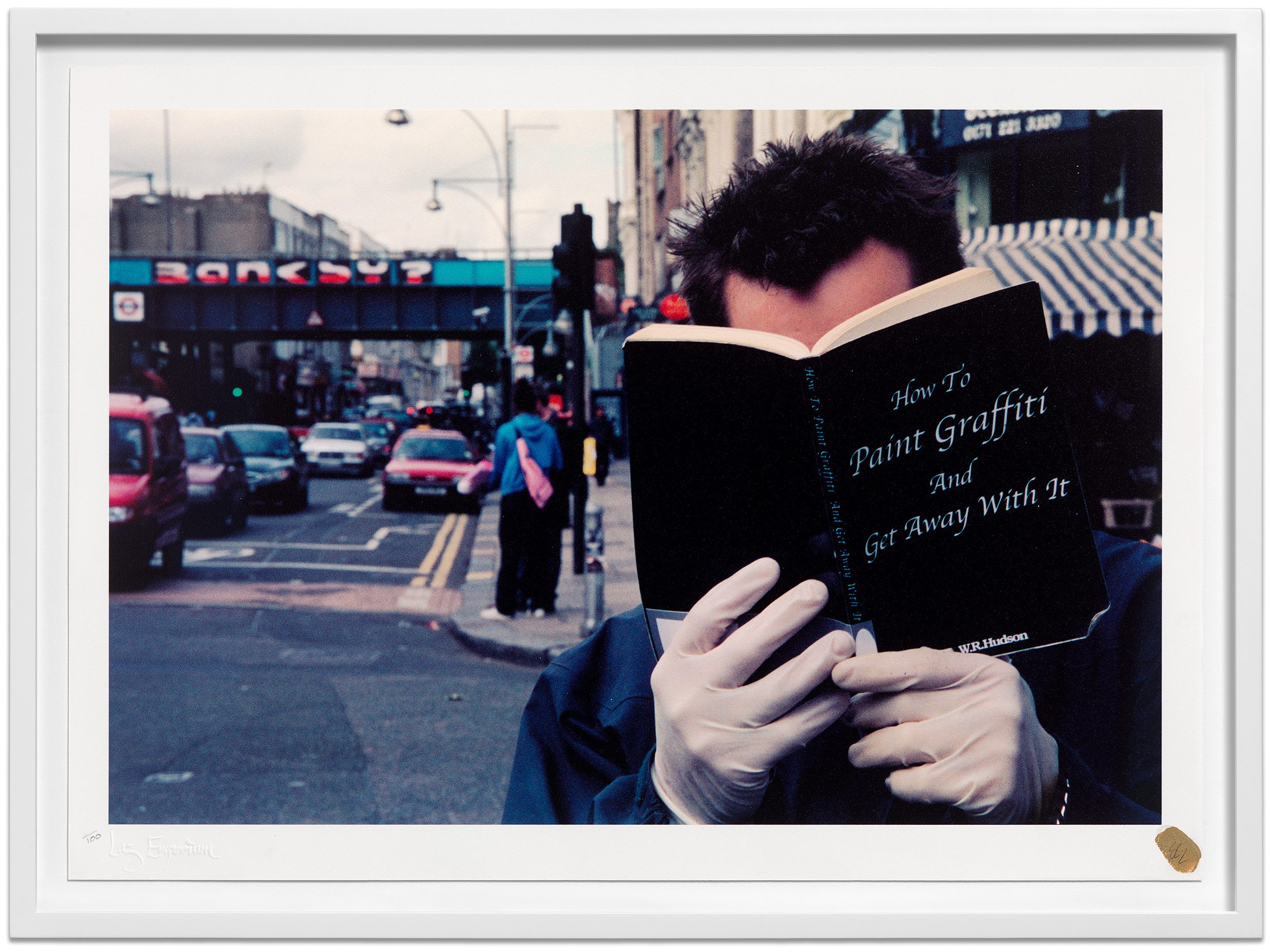
Steve Lazarides – How To Paint Graffiti & Get Away With It – available framed / unframed..
View details via GraffitiStreet
- Photographing Banksy
- How Did Steve Lazarides Meet Banksy?
- Steve Lazarides: Photographer, Agent and Co-Conspirator
- Inside the Steve Lazarides Banksy Archive
- Why Steve Lazarides’ Banksy Photographs Matter
- Banksy Captured: Preserving the Early Years
- Steve Lazarides, Banksy and the Rise of Street Art
- Why Did Steve Lazarides and Banksy Separate?
- Will Steve Lazarides Ever Reveal Banksy’s Identity?
- The GraffitiStreet Perspective
- Frequently Asked Questions About Steve Lazarides
- Collect Steve Lazarides Photography at GraffitiStreet
Photographing Banksy
Every significant artistic movement produces its witnesses: those close enough to recognise history before it has acquired the certainty of hindsight. For Banksy, that witness was Steve Lazarides, a photographer whose camera followed the artist through nocturnal painting missions, improvised exhibitions and increasingly audacious acts of cultural disruption.
The photographs do not provide the portrait the world has spent decades trying to find. Instead, they reveal how Banksy worked: the preparation, physical labour, secrecy and risk behind images that often appeared to have materialised overnight.
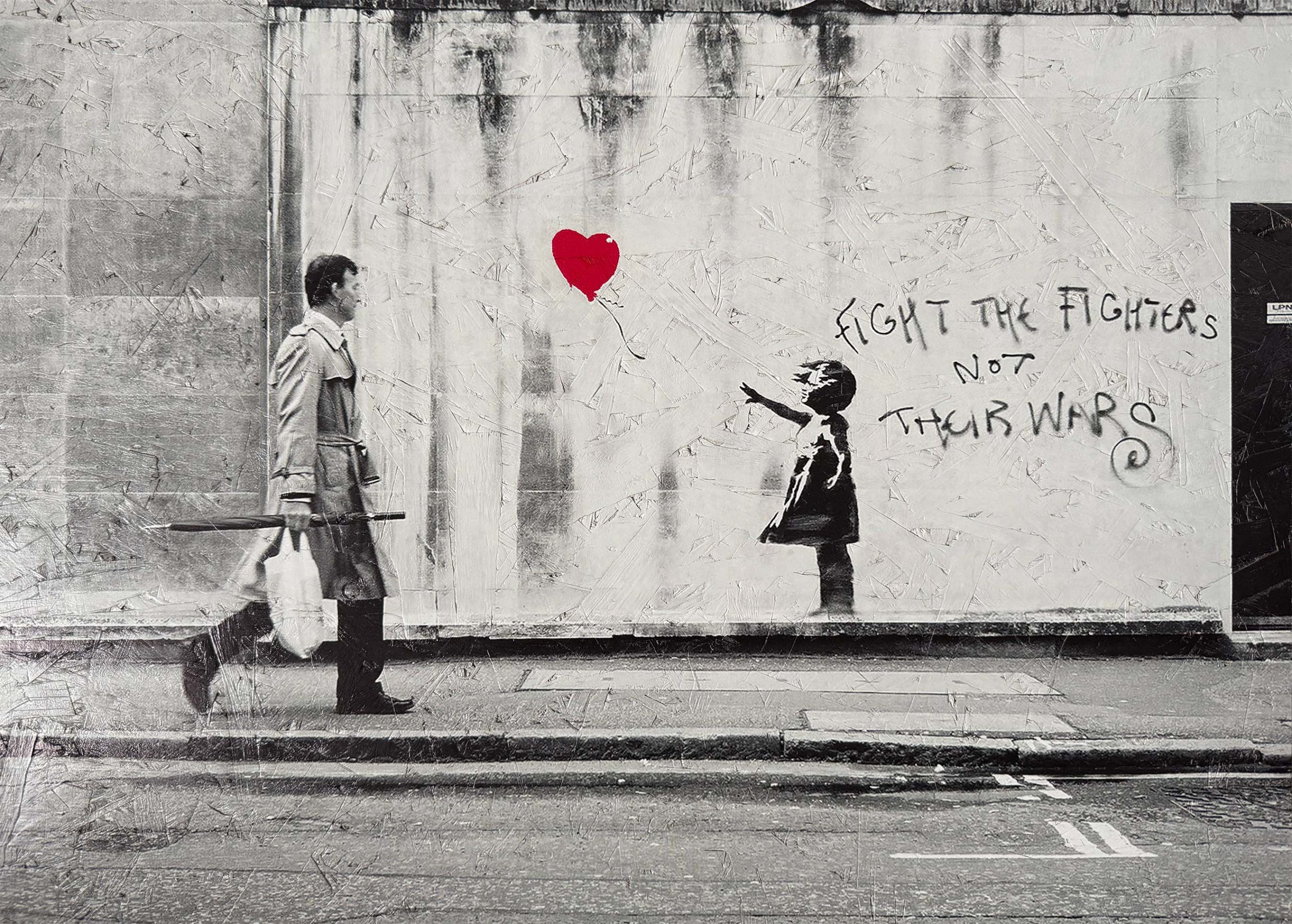
Steve Lazarides- Balloon Fight on Wood Edition (Girl With Balloon)
How Did Steve Lazarides Meet Banksy?
Steve Lazarides first met Banksy in Bristol in 1997, after the countercultural magazine Sleazenation commissioned him to photograph and interview the emerging artist. Lazarides has recalled encountering a stencil practice that felt markedly different from the graffiti surrounding it: political, mischievous and capable of appearing in locations that would have been difficult to reach with a more elaborate painted piece.
Banksy was not yet an international auction name or the subject of institutional exhibitions. He was developing his visual language within Bristol’s graffiti culture, using stencils to compress complex ideas about power, conflict, surveillance and inequality into images that could be understood at a glance.
What began as a magazine assignment developed into an eleven-year professional relationship. Lazarides initially photographed Banksy, but soon became his agent, manager and gallerist, handling the growing practical demands surrounding an artist whose work was becoming increasingly visible while its author remained deliberately absent.
He was there before the mythology became self-sustaining, when Banksy’s reputation still depended upon physical encounters, independent publications, word of mouth and the uncertain survival of works painted without permission.
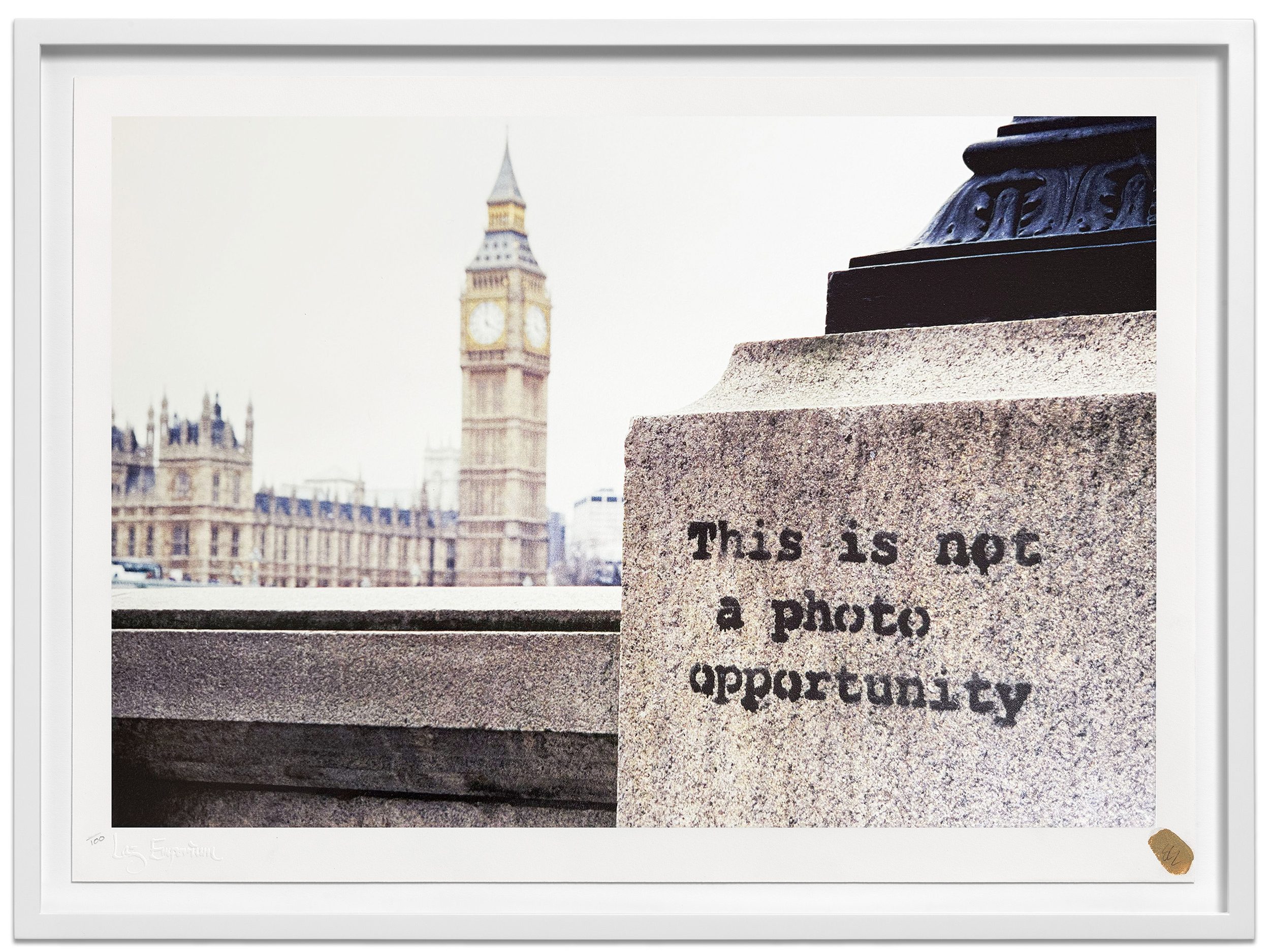
Steve Lazarides – Photo Op – available framed / unframed.
View details via GraffitiStreet
Steve Lazarides: Photographer, Agent and Co-Conspirator
To describe Lazarides solely as Banksy’s photographer would understate his position within the artist’s early career.
Banksy’s anonymity created an unusual professional problem. The artist could not participate in the familiar machinery through which reputations are traditionally built: studio portraits, public appearances, interviews, exhibition openings and direct relationships with collectors. The work needed to circulate while its author remained outside the frame.
Lazarides helped manage that contradiction. He photographed the art, controlled access, handled communications and helped negotiate the logistics surrounding exhibitions and interventions. In a 2007 profile, The New Yorker described him as Banksy’s fixer, gatekeeper and agent, placing him between an increasingly curious public and an artist determined to remain unseen.
This was not a passive role. Street interventions required timing, transport and discretion; exhibitions needed to be installed and promoted; journalists and collectors had to be managed without compromising the identity at the centre of the phenomenon.
Lazarides became part archivist, part facilitator and part stage manager. If Banksy was the unseen author, Lazarides helped construct the conditions in which the work could be encountered.
Their relationship also depended upon exceptional trust. Lazarides repeatedly photographed Banksy at close range, yet the released images never convert that proximity into exposure. They bring the viewer closer to the artist while preserving the boundary that made such access possible.
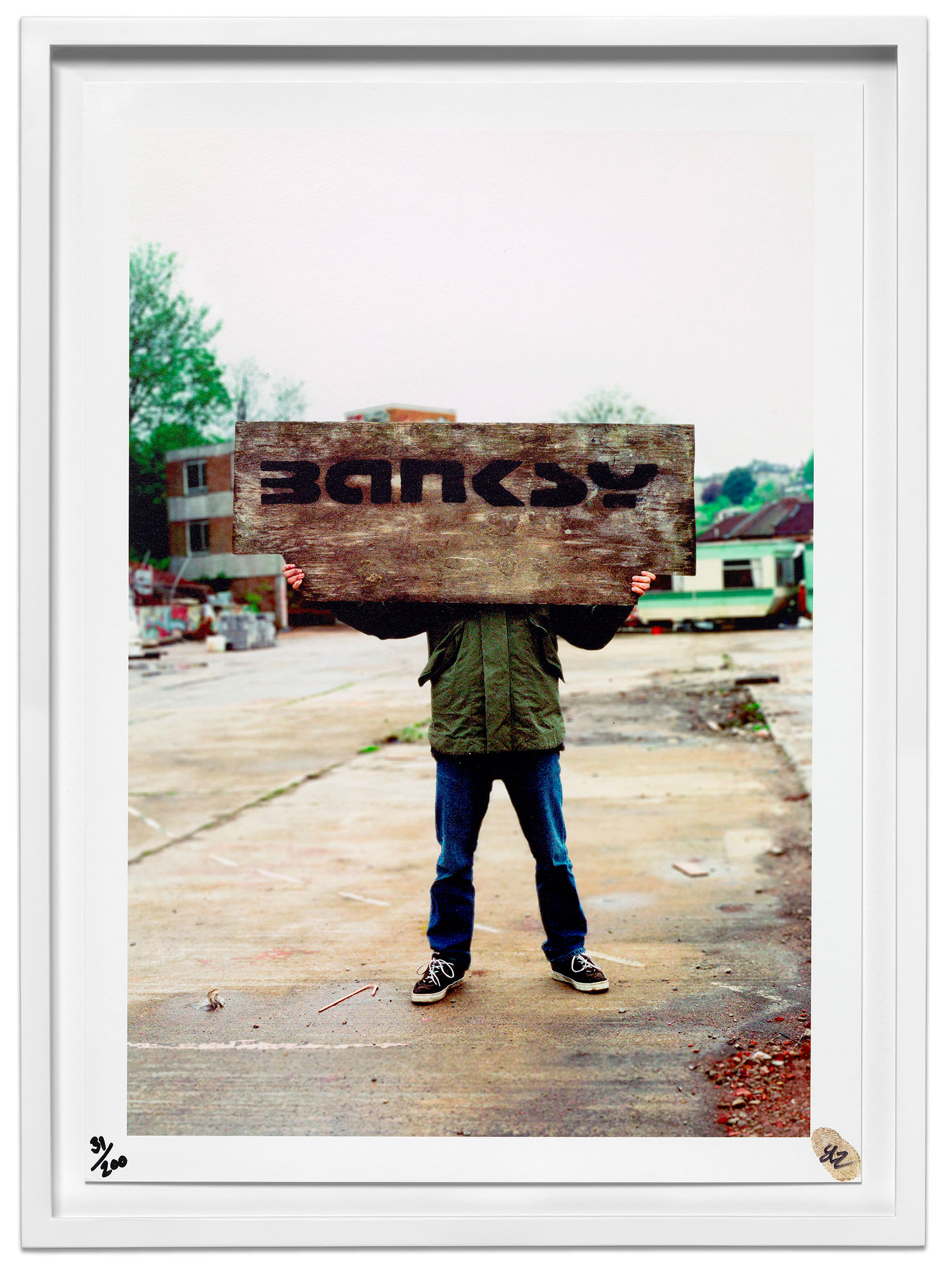
Steve Lazarides – St. Werburgh- available framed / unframed.
View details via GraffitiStreet
Inside the Steve Lazarides Banksy Archive
The official Banksy Captured archive contains more than 12,000 photographs taken between 1997 and 2008. Shot on film across eleven years, the images document Banksy at work during the period in which his practice moved from Bristol’s streets towards international recognition.
Lazarides worked with a Nikon camera, often late at night or before dawn, when the streets were quiet enough for Banksy to operate without attracting attention. There was no lighting rig, assistant or formal production set-up; the equipment needed to remain compact and unobtrusive because anything more conspicuous would have endangered the access being documented.
The resulting photographs retain the atmosphere of those conditions. They show stencils positioned against brickwork, spray suspended in darkness and figures moving through streets that were never intended to become studios.
Banksy appears only in fragments: a hand, a hooded figure, a body leaning towards a wall or a silhouette turned away from the camera. These are intimate images, but they are not conventional portraits. Lazarides records the artist’s presence without allowing personality to overwhelm the work.
That restraint is fundamental to their power. The photographs offer evidence rather than disclosure, documenting the physical reality behind an artist whose public identity has been constructed through absence.
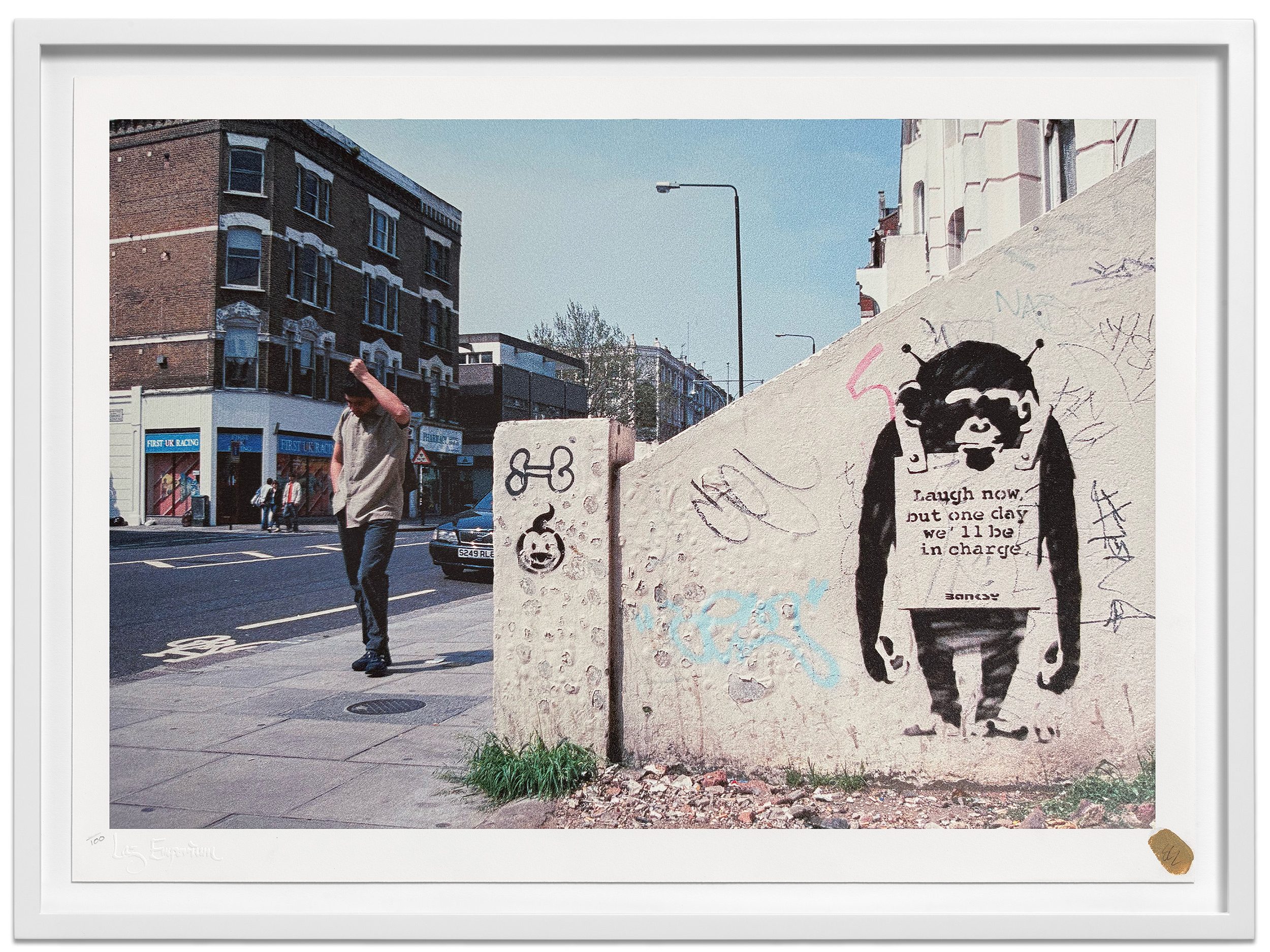
Steve Lazarides – Ape Rule- available framed / unframed.
View details via GraffitiStreet
Why Steve Lazarides’ Banksy Photographs Matter
Street art presents a particular challenge to art history because the original work may be inseparable from a surface that cannot be preserved. Walls are repainted, buildings demolished and interventions removed through redevelopment, weather, vandalism or municipal cleaning.
Photography therefore performs a more significant role than simple reproduction. It preserves the relationship between an artwork and its original surroundings: the architecture, scale, texture and social context that shaped the first public encounter.
Lazarides’ archive records these conditions before many of the works entered Banksy folklore. It returns familiar images to the streets from which they emerged and restores the sense of uncertainty that can disappear once street art is transferred into books, galleries and auction catalogues.
The photographs also expose the labour behind Banksy’s apparent spontaneity. Stencils had to be designed, cut, transported and positioned; locations had to be assessed; and each intervention carried the possibility of interruption or failure. What looked instantaneous was often carefully constructed.
In this sense, Lazarides’ images occupy several categories simultaneously. They are photographic artworks, historical documents and secondary relics of primary actions. The original wall or intervention may have vanished, but the photograph preserves the atmosphere surrounding its transformation.
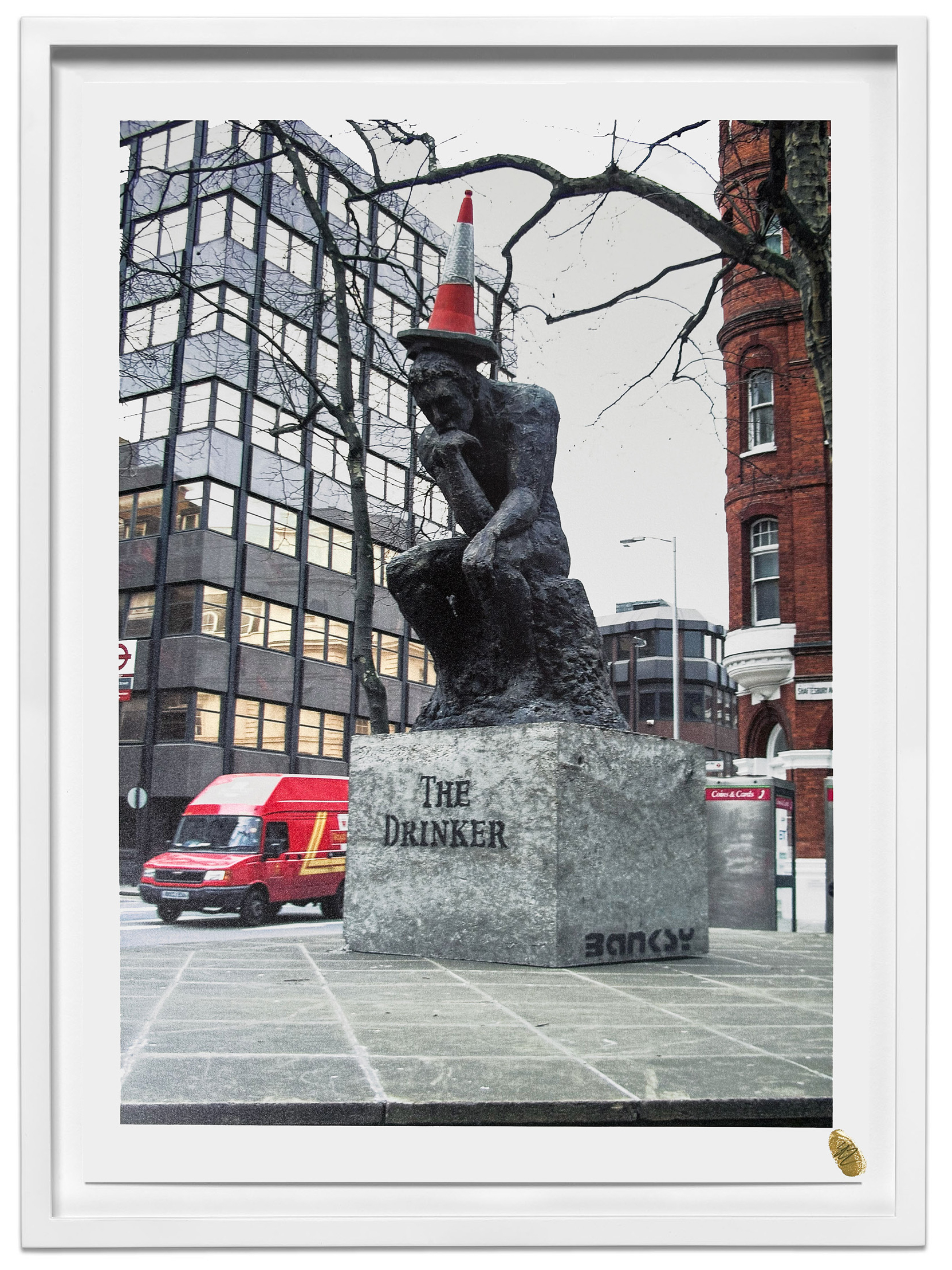
Steve Lazarides – Inebriated Wisdom- available framed / unframed.
View details via GraffitiStreet
Banksy Captured: Preserving the Early Years
Lazarides brought this archive into public view through the Banksy Captured books, combining his photographs with recollections of the years he spent alongside the artist. The two-volume series documents Banksy’s development between 1997 and 2008, from the early Bristol period to projects undertaken as the artist’s reputation expanded internationally.
The books are compelling precisely because they are not detached historical surveys. They offer the perspective of someone operating inside the events being described, recording not only finished artworks but the atmosphere, practical difficulties and improvisation surrounding their creation.
They restore human effort to a figure who is often discussed as though he were entirely immaterial. Banksy’s anonymity can create the illusion that the work simply appears, detached from an individual body or physical process. Lazarides’ photographs correct that illusion without supplying the face behind it. The artist remains hidden, but the act of making becomes visible.
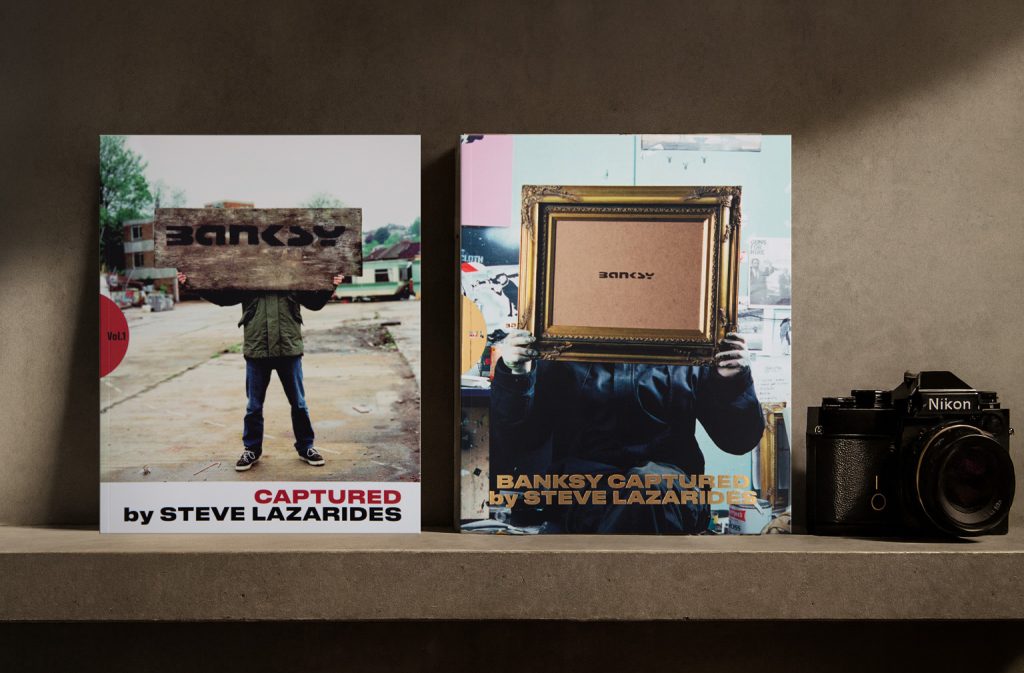
Steve Lazarides – Banksy Captured Vol. 1 & Vol. 2
View details via GraffitiStreet
Steve Lazarides, Banksy and the Rise of Street Art
The years covered by Lazarides’ archive coincide with a decisive transformation in the cultural position of street art.
Banksy’s practice developed from Bristol’s graffiti landscape into exhibitions, publications, unauthorised museum interventions and international projects that challenged established distinctions between vandalism, political communication and contemporary art.
Lazarides occupied an important position within that transition. His photography preserved the street-based origins of the work, while his activities as an agent and later a gallerist helped introduce artists associated with graffiti and counterculture to audiences beyond their original environments.
His subsequent exhibition programme included artists such as Invader, JR, and Vhils, etc, reflecting a wider commitment to creative practices that had developed outside conventional institutional routes.
This history matters because Banksy’s rise was not simply the story of an artist producing memorable images. It was also the story of new systems of distribution and attention: streets used as publishing platforms, photographs carrying temporary interventions across the world and independent exhibitions competing with the authority of established galleries. Lazarides helped document and navigate that shift while it was still taking place.
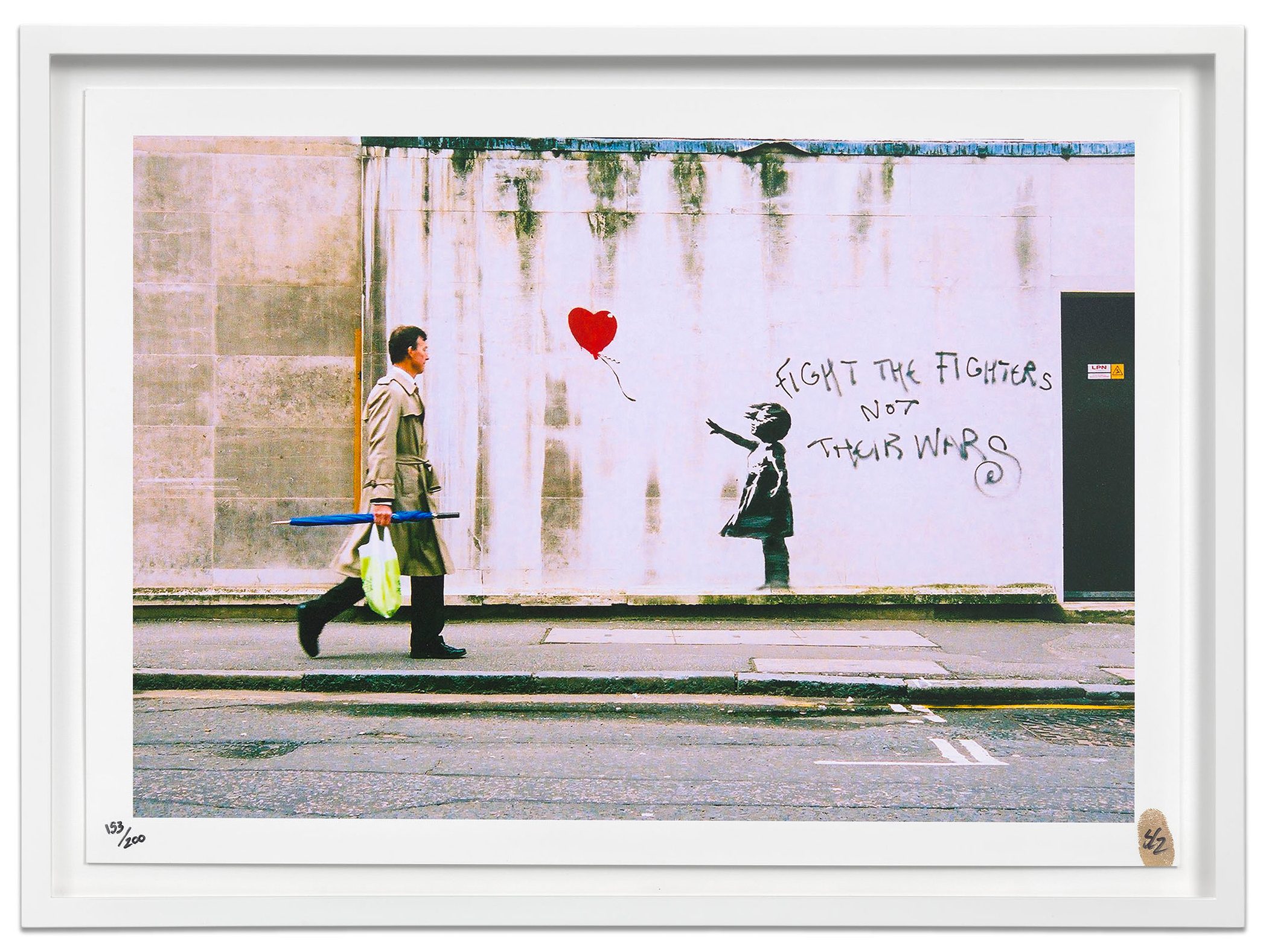
Steve Lazarides – Balloon Fight (Flight)- available framed / unframed.
View details via GraffitiStreet
Why Did Steve Lazarides and Banksy Separate?
The professional relationship ended in 2008, after eleven years. Rather than leaving the separation entirely unexplained, Lazarides has said that working with Banksy had become a full-time responsibility and that he wanted to represent other artists.
After the split, Banksy continued independently, while Lazarides developed his career as a gallerist, curator, publisher and photographer. Their professional paths diverged, but the archive permanently connects their histories.
It preserves the period before Banksy became a global cultural entity: the earlier years when the work remained physically vulnerable, the market was exciting and developing into a world now where a Banksy stencil on a building is often covered or cut out!
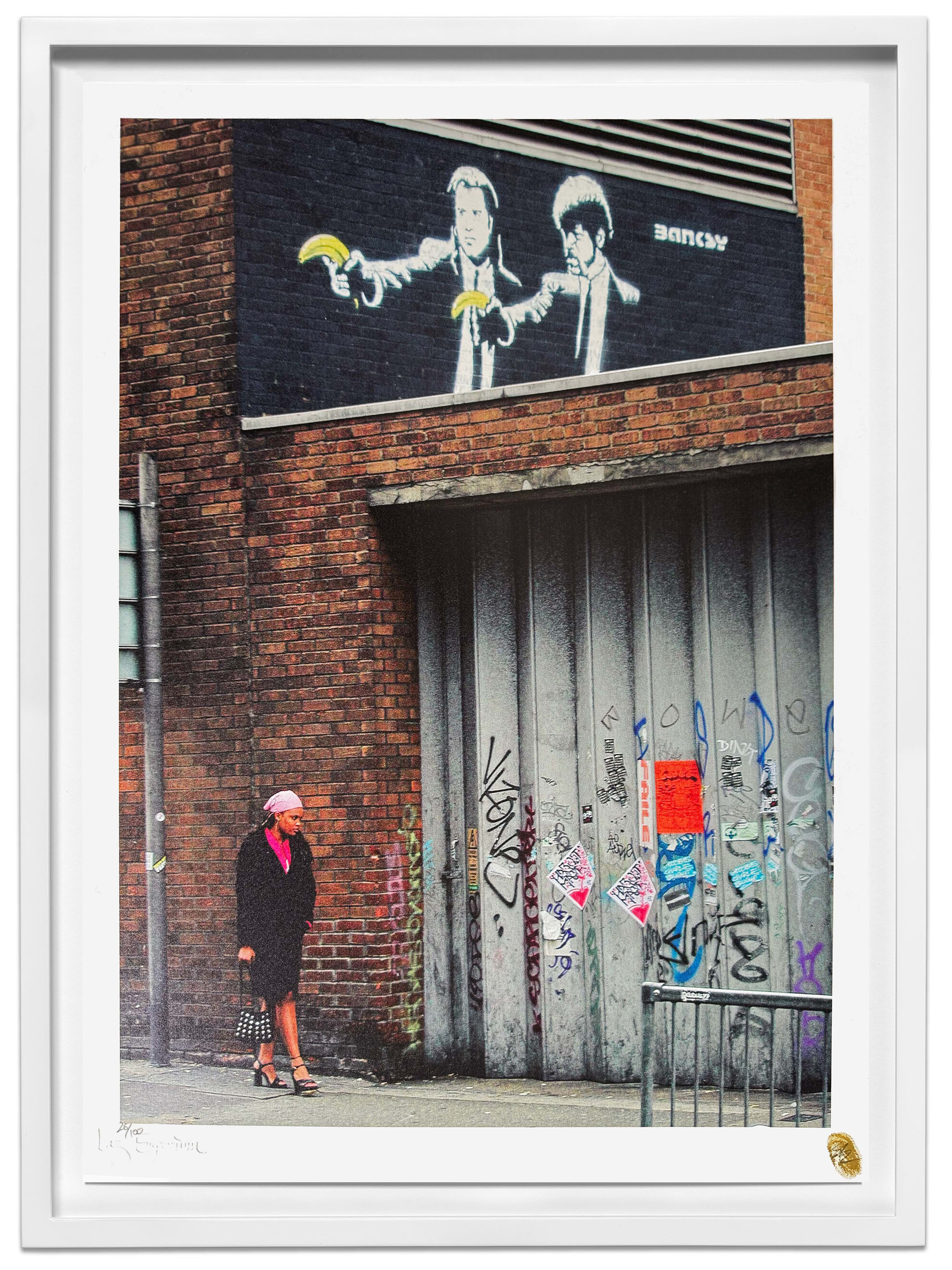
Steve Lazarides – Streets of Rage- available framed / unframed.
View details via GraffitiStreet
Will Steve Lazarides Ever Reveal Banksy’s Identity?
Lazarides has repeatedly declined to reveal Banksy’s identity, despite persistent public speculation and even financial offers for the information. In 2024, he described having been asked the question countless times while continuing to protect the anonymity of his former collaborator.
Yet the question risks obscuring what the photographs actually offer.
Their importance does not depend upon revealing a face. They provide something more substantial: an intimate account of Banksy’s working process, the urban environments that shaped the art and the years in which an underground practice became an international phenomenon.
A conventional portrait might satisfy curiosity, but it would not explain Banksy’s cultural significance. Lazarides’ archive reveals how the work was made, how it occupied public space and how carefully the boundary between visibility and anonymity was maintained.
The mystery remains intact because the photographs understand that access and exposure are not the same thing.
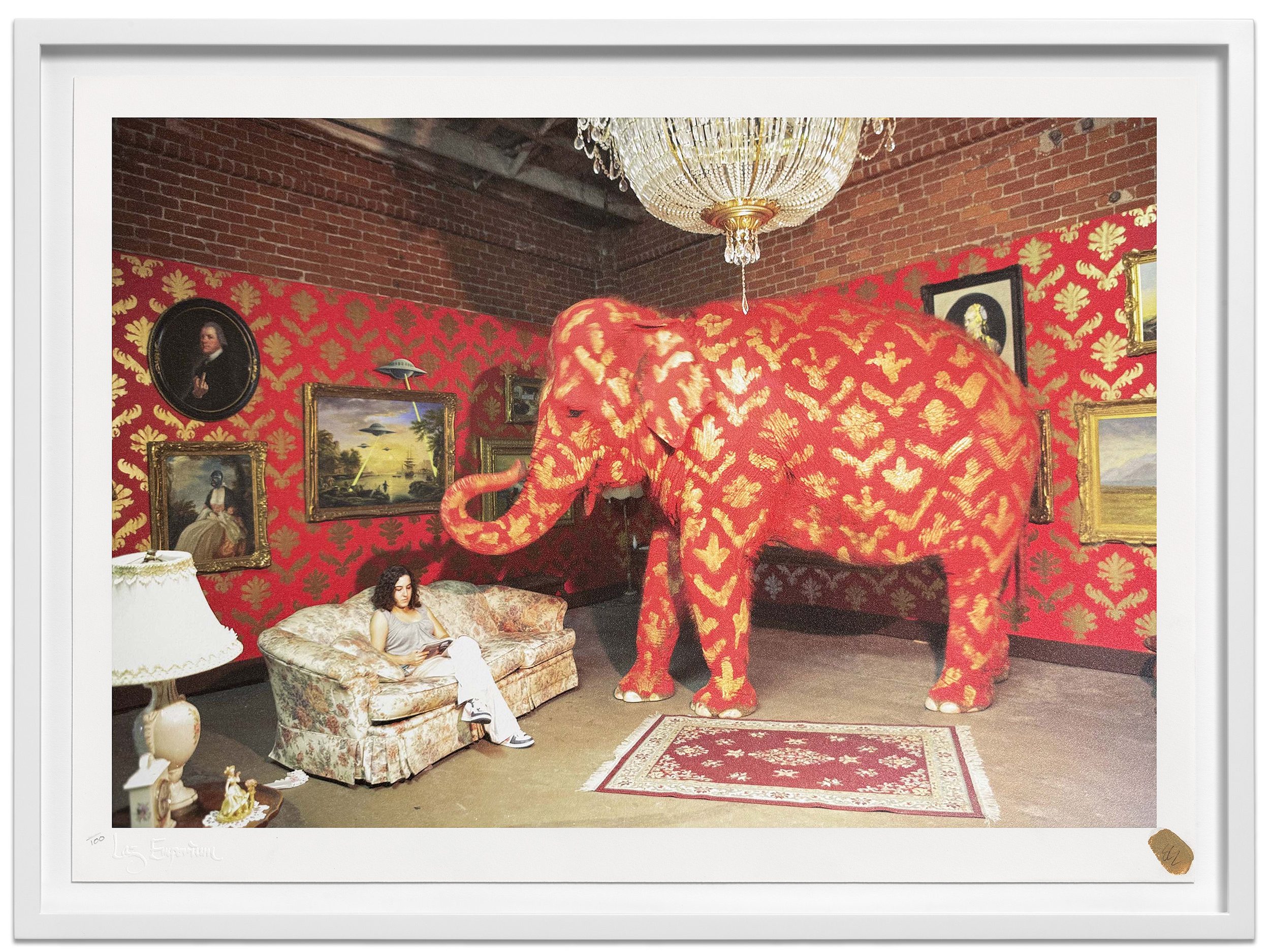
Steve Lazarides – Unforgettable You- available framed / unframed.
View details via GraffitiStreet
The GraffitiStreet Perspective
At GraffitiStreet, we view Steve Lazarides’ signed photographic editions as historically significant works that sit within photography as witness, street-art documentation and the early Banksy narrative.
For a Banksy collector, a Lazarides photograph edition can provide important curatorial context, reconnecting familiar imagery with the streets, working methods and cultural conditions from which it emerged. For collectors of photography and urban art, the editions preserve a pivotal moment when graffiti and street art were moving from subculture towards wider contemporary recognition.
The strongest images stand independently as photographs. Their grain, composition and partial figures retain the atmosphere of a period defined by secrecy and impermanence. They record moments that cannot be recreated because the original locations, circumstances and relationship between photographer and subject no longer exist in the same form.
When considering a Steve Lazarides photograph, collectors should examine the edition details, signature, condition, provenance and presentation. Conservation-standard framing is particularly important for photographic works, protecting the print while allowing its tonal depth and archival character to remain visible.
Street art was made to exist precariously. The walls could disappear, but Lazarides ensured that the history would not disappear with them.
Watch on YouTube
Frequently Asked Questions About Steve Lazarides
Steve Lazarides is a British photographer, agent and former gallerist who worked closely with Banksy between 1997 and 2008, initially as his photographer and later as his agent and dealer.
Lazarides met Banksy in Bristol in 1997 after Sleazenation magazine commissioned him to photograph and interview the emerging artist.
He worked with Banksy for eleven years, from 1997 until their professional relationship ended in 2008.
Steve Lazarides shot over 10,000+ photographs of Banksy at work between 1997 and 2008, on film, across eleven years.
The published photographs document Banksy working while preserving his anonymity. They show partial figures, hands, silhouettes and working scenes rather than a definitive public portrait.
Banksy Captured is a two-volume photographic series by Steve Lazarides documenting the eleven years he spent working alongside Banksy.
They preserve Banksy’s working process and the original contexts surrounding temporary street interventions, creating an important visual record of the artist’s formative years.
Lazarides has said that Banksy had become a full-time responsibility and that he wanted to represent other artists, leading them to follow separate professional paths in 2008.
Selected signed Steve Lazarides photographic editions and signed Banksy Captured volumes are available through GraffitiStreet online and at its Chichester gallery.
Collect Steve Lazarides Photography at GraffitiStreet
A curated selection of signed Steve Lazarides photographic editions is available to view at GraffitiStreet Gallery and acquire through our online collection.
Drawn from Lazarides’ years alongside Banksy, these photographs offer a rare opportunity to collect part of the visual record surrounding one of contemporary art’s most influential and elusive figures. Selected editions are available framed to conservation standards or unframed.
GraffitiStreet also has a limited number of signed paper-cover editions of Banksy Captured Volume One and Banksy Captured Volume Two. Together, the books provide an intimate photographic chronicle of the period between 1997 and 2008, when anonymity, subversion and artistic ambition collided on city walls. These are available signed or unsigned.
Explore the available Steve Lazarides photographic editions and signed Banksy Captured books online, or arrange a private viewing at:
GraffitiStreet Gallery
25A West Street
Chichester
West Sussex
England PO19 1QW
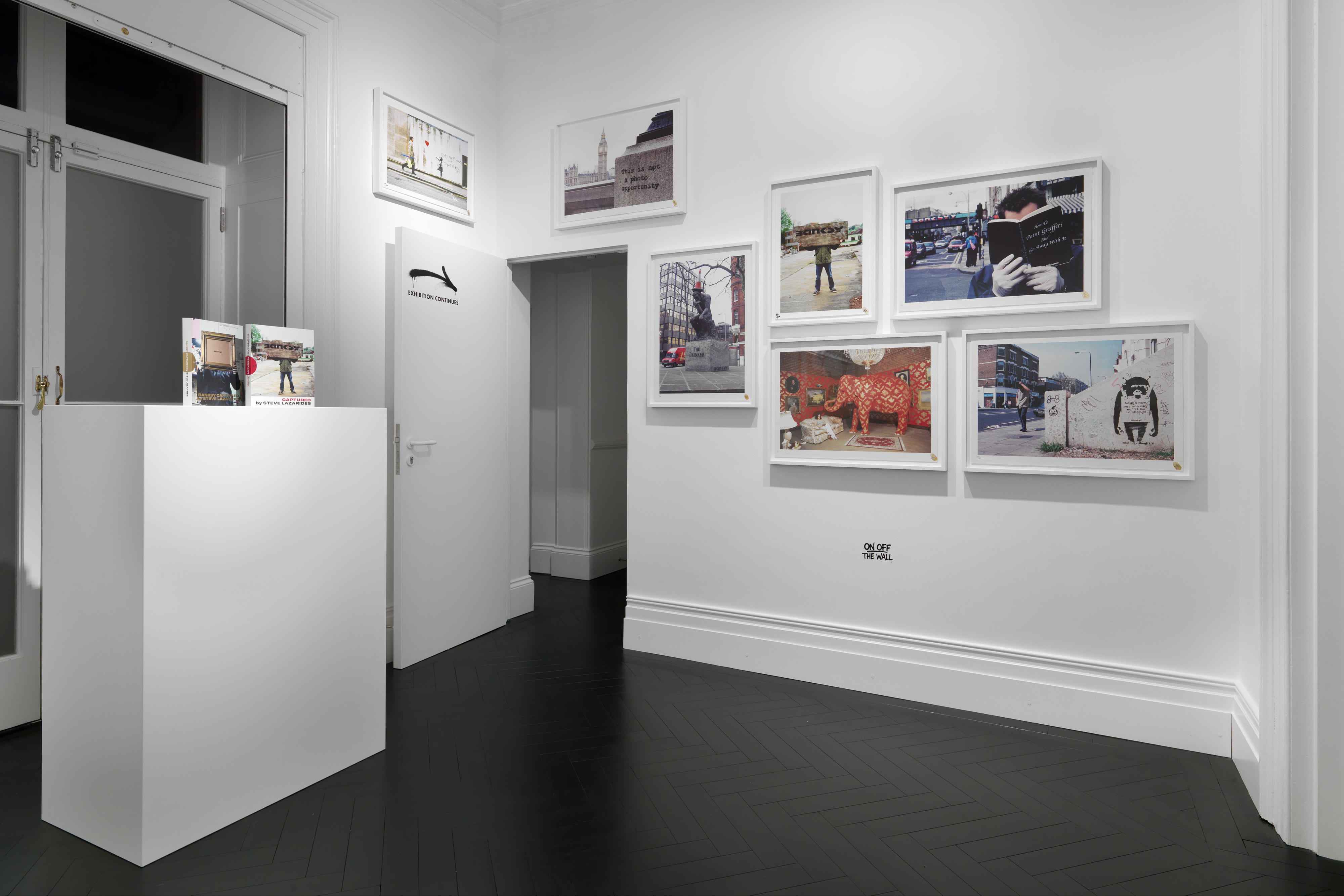
Limited Edition Prints. Signed Books. Rare moments captured. Own your piece of history today.