Bordalo II’s Flamingos in Olhão: Big Trash Animals Made From the Materials Threatening Their Habitat
Bordalo II has transformed two walls in Olhão, Portugal, into Flamingos da Ria Formosa, a pair of sculptural murals featuring three monumental adult flamingos and a more playful baby bird. Built from recycled plastic, metal, bicycle parts and abandoned objects, the works extend the Portuguese artist’s long-running Big Trash Animals series while confronting viewers with the same waste materials contributing to pollution, overconsumption and habitat loss in the nearby Ria Formosa lagoon.
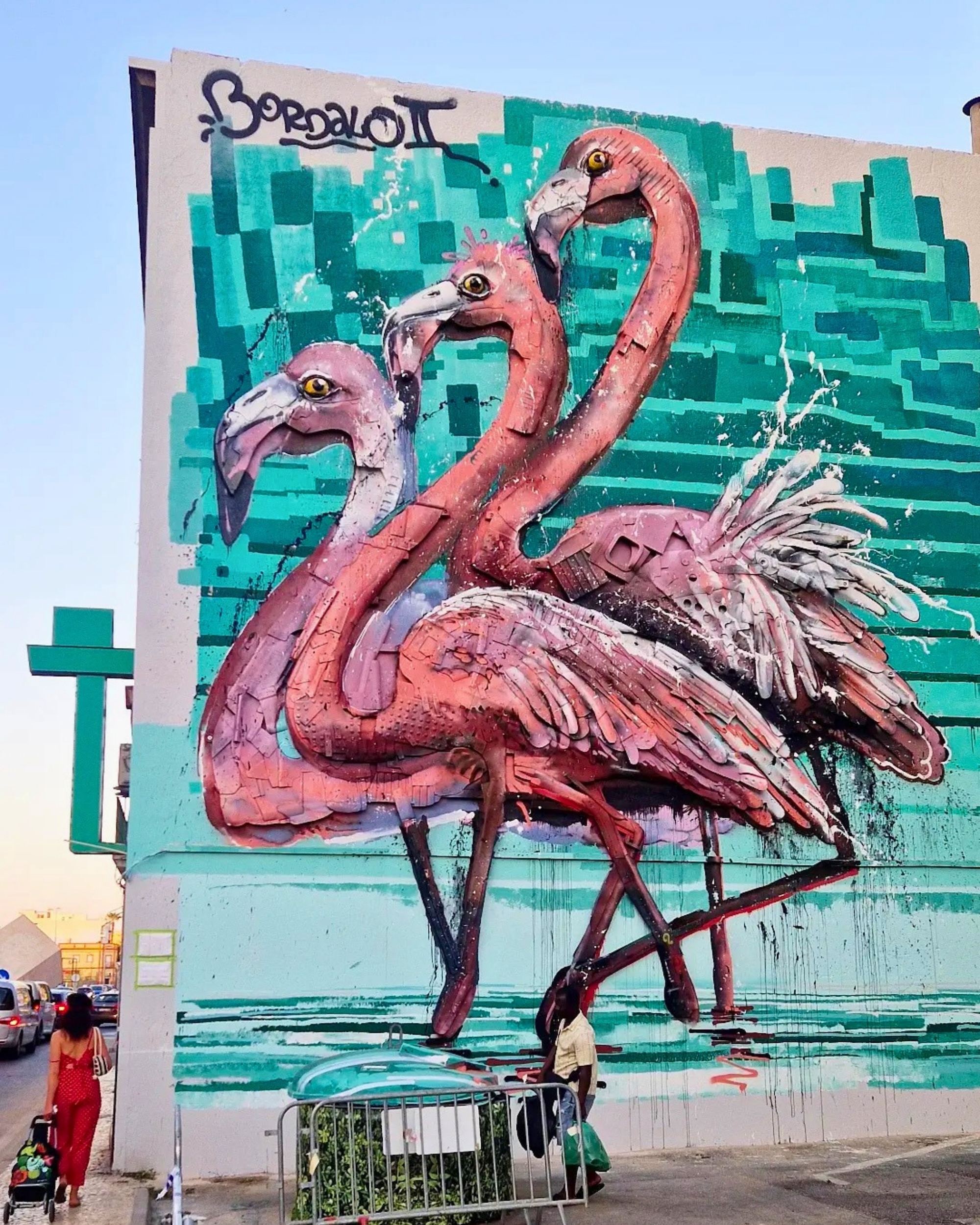
The Bordalo II Olhão flamingos connect the city directly to the wildlife and vulnerable habitats of the nearby Ria Formosa lagoon. Image copyright Bordalo II
Big Trash Animals
From a distance, the adult flamingos appear elegant and almost natural. Their long pink necks rise above layered wings, their bodies overlapping across the wall as though the birds have paused together in shallow water. Turquoise and green blocks surround them, suggesting the shifting tones of the lagoon, its salt marshes and its tidal landscape.Move closer, however, and the illusion begins to break.
Feathers become cut plastic. Wings reveal industrial fragments. Necks, joints and bodies are assembled from broken objects that once belonged to ordinary systems of production and consumption. The birds remain beautiful, but that beauty is deliberately unstable. Every graceful curve is built from evidence of what society has thrown away.
That contradiction sits at the centre of Bordalo II’s practice. He creates animals from the materials most closely associated with the destruction of their habitats, turning waste into both structure and accusation.
Three birds emerge from the wall in layers of plastic, metal and discarded objects, their sculptural bodies pushing beyond the painted surface. From a distance they read as graceful, almost natural. Up close, the illusion breaks: every wing and neck is built from the broken fragments of contemporary consumption.
That contradiction sits at the centre of Bordalo II’s Big Trash Animals series. By rebuilding animals from waste, he forces viewers to look directly at the materials most associated with pollution, overconsumption and the destruction of natural habitats.
The artist adds the finishes touches to A separate baby flamingo. Video copyright Bordalo II
Two Flamingo Murals in Olhão
Flamingos da Ria Formosa unfolds across two separate walls rather than functioning as one isolated image.
The principal mural presents three monumental adult flamingos gathered tightly together. Painted in coral, rose, dusty pink and pale grey, the birds stretch across the façade in a dense sculptural composition. Their necks create a rising rhythm through the centre of the wall, while their wings push physically beyond the painted surface.
The relief elements give the birds real weight and shadow. Pieces of plastic and metal overlap like feathers, while exposed fixings, cut edges and recognisable fragments of discarded material preserve the rawness of Bordalo II’s street-based language.
The second mural introduces a more humorous counterpoint: a baby flamingo rendered in softer grey and white tones. Its body is assembled from an eccentric mixture of abandoned objects, including fragments resembling bicycle wheels, frames and mechanical components.
Where the adult birds appear poised and commanding, the younger flamingo feels awkward, curious and full of character. Its exaggerated proportions and improvised anatomy bring a lighter energy to the project without weakening the environmental message.
Together, the two murals create a small urban habitat. One wall presents the flamingo as a symbol of the Ria Formosa’s beauty and ecological importance. The other introduces humour, vulnerability and the suggestion of a younger generation inheriting the consequences of today’s environmental choices.
Bordalo II’s three adult flamingos rise across a façade in Olhão, built from discarded plastic, metal and reclaimed objects. Video copyright Bordalo II
Returning Art to the Streets of Olhão
Bordalo II positioned the commission as a return to a city with a strong history of graffiti and public expression:
“For over 30 years, Olhão was a global hub for graffiti, street art, and other forms of street-level expression, largely thanks to SEN.”
He also acknowledged that many of those earlier walls have since disappeared beneath redevelopment and neutral paint, adding: “That’s no tragedy as ephemerality is part of the process.”
Flamingos da Ria Formosa becomes a new layer in Olhão’s evolving visual identity, connecting its street-art history with the environmental concerns of the present.
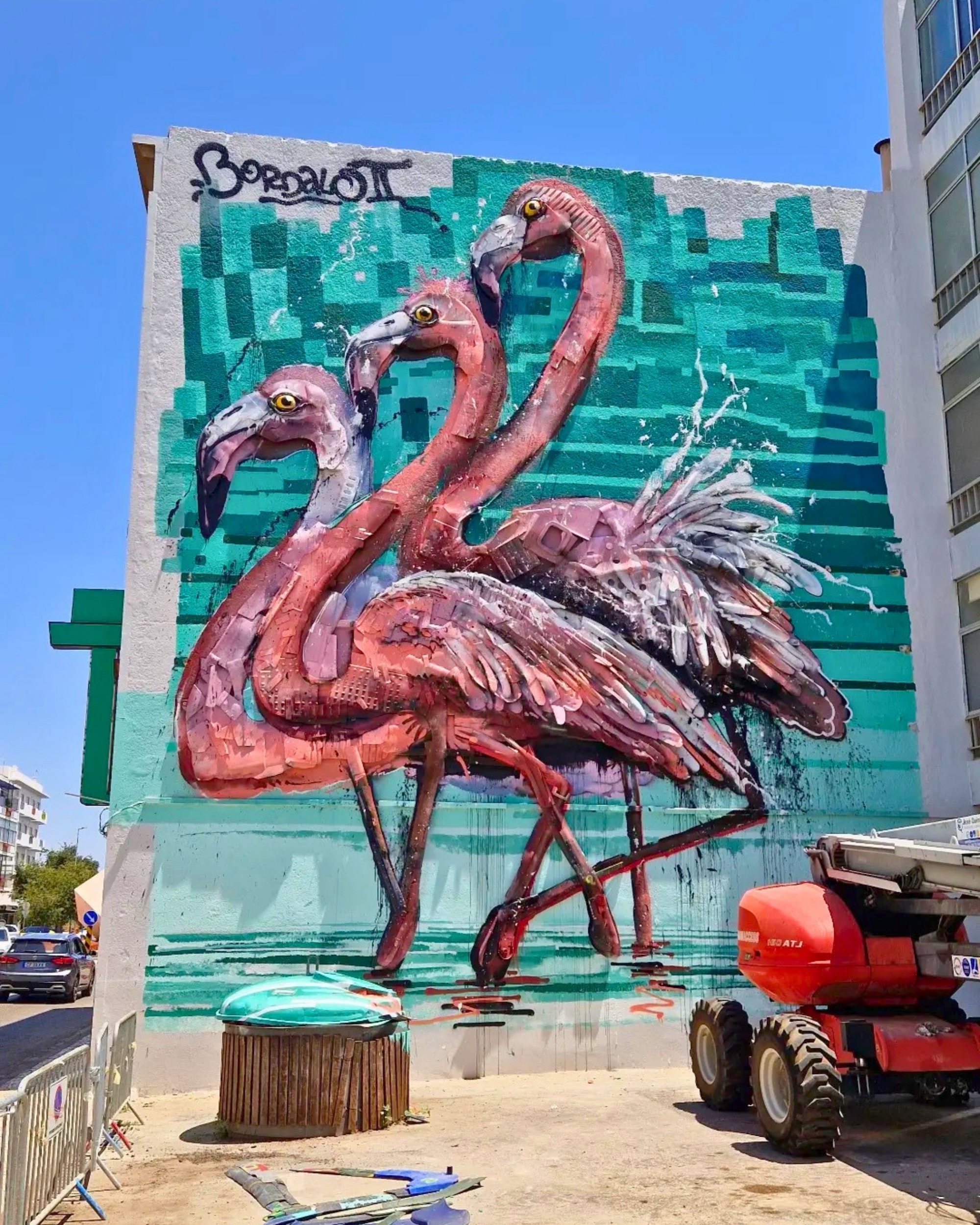
Bordalo II’s three adult flamingos rise across a façade in Olhão, built from discarded plastic, metal and reclaimed objects. Image copyright Bordalo II
Why the Ria Formosa Matters to the Artwork
The title Flamingos da Ria Formosa connects the work directly to the coastal lagoon beside Olhão.
The Ria Formosa is a vast network of islands, channels, salt marshes, mudflats and shallow waters stretching along the eastern Algarve. It is an important habitat for resident wildlife and for migratory and wintering birds travelling between Europe and North Africa.
Flamingos are among the lagoon’s most recognisable visitors. Their presence in the artwork is therefore not decorative or arbitrary. They represent a real ecosystem existing immediately beyond the city.
Bordalo II’s choice of materials makes that relationship impossible to ignore. The same plastics and industrial waste that appear inside the sculptural birds are among the materials capable of entering waterways, damaging habitats and disrupting the natural systems on which species depend.
The rubbish is not shown beside the animals as an external threat. It becomes their anatomy.
This is one of the most powerful ideas within Bordalo II’s Big Trash Animals series. Pollution is not presented as distant, abstract or invisible. It is brought directly into the animal’s body, where it becomes impossible to separate the beauty of the creature from the consequences of human consumption.
The baby flamingo adds an especially important dimension. Its awkwardness makes it humorous, but its youth also introduces the idea of inheritance. It asks what kind of landscape future generations — human and animal — will receive.
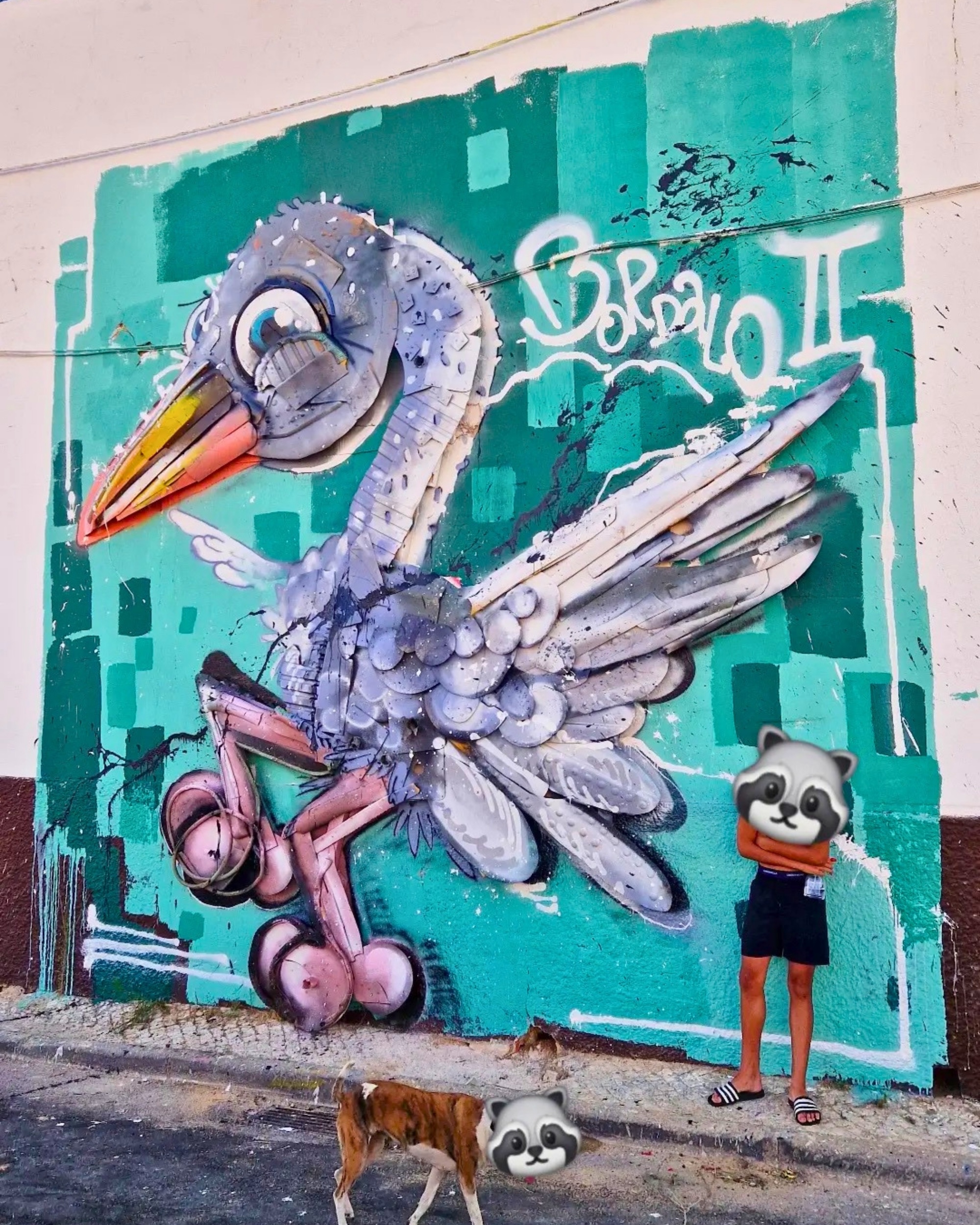
A separate baby flamingo brings humour and personality to the project, its awkward body assembled from plastic parts and discarded materials. Image copyright Bordalo II
Flamingos da Ria Formosa sits within both Bordalo II’s Big Trash Animals and his wider marine and coastal practice, while the earlier Feminist Flamingo reveals how the same species has carried a distinct social and political meaning elsewhere in his work.
Collect Bordalo II Through GraffitiStreet
Bordalo II has always worked through a striking paradox: he makes animals appear alive by assembling the materials contributing to their disappearance. The murals do not ask viewers simply to admire the birds; they ask whether admiration can become responsibility.
Explore Bordalo II artworks at GraffitiStreet, including original works, limited-edition prints and sculptures, available online or to view at our gallery in Chichester, England. For availability, collector advice or other enquiries, contact the GraffitiStreet team.
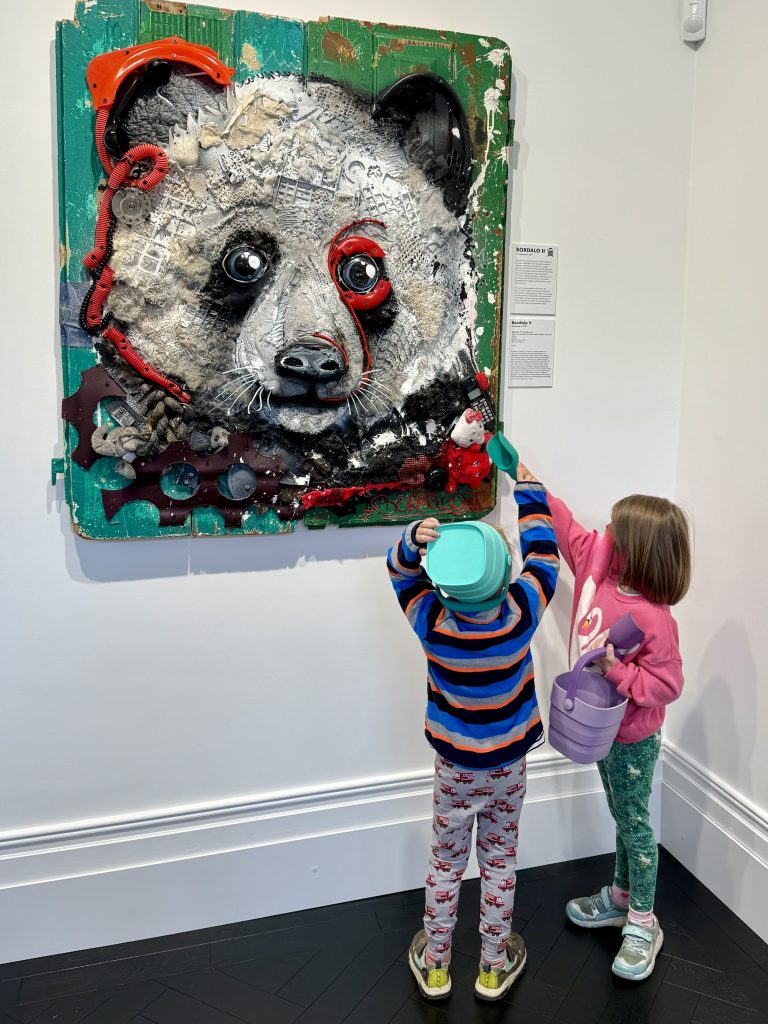
Two young visitors take a closer look at an original Bordalo II artwork at GraffitiStreet Gallery. Copyright GraffitiStreet.
