‘CARNIVAL IS CANCELLED’ Case Maclaim for ‘Out in the Open’, Aalborg 2020
For the first time in 38 years, the biggest carnival in Northern Europe has been cancelled.
In 2019, Aalborg Carnival beat its own record with more than 85,000 participants flooding the streets in costume, music, and celebration. But in 2020, the world shifted. Due to the Coronavirus pandemic, Aalborg Carnival, scheduled for 23 May 2020, was officially cancelled, along with the International Parade (15 May) and the Children’s Carnival (16 May). And in that sudden quiet, street art stepped forward as a form of public reflection.
Case Maclaim Aalborg mural: Carnival is Cancelled
In response to the cancellation, German street artist Case Maclaim painted a large-scale mural in Aalborg, Denmark, as part of Out in the Open, a mural programme curated by Kirk Gallery.
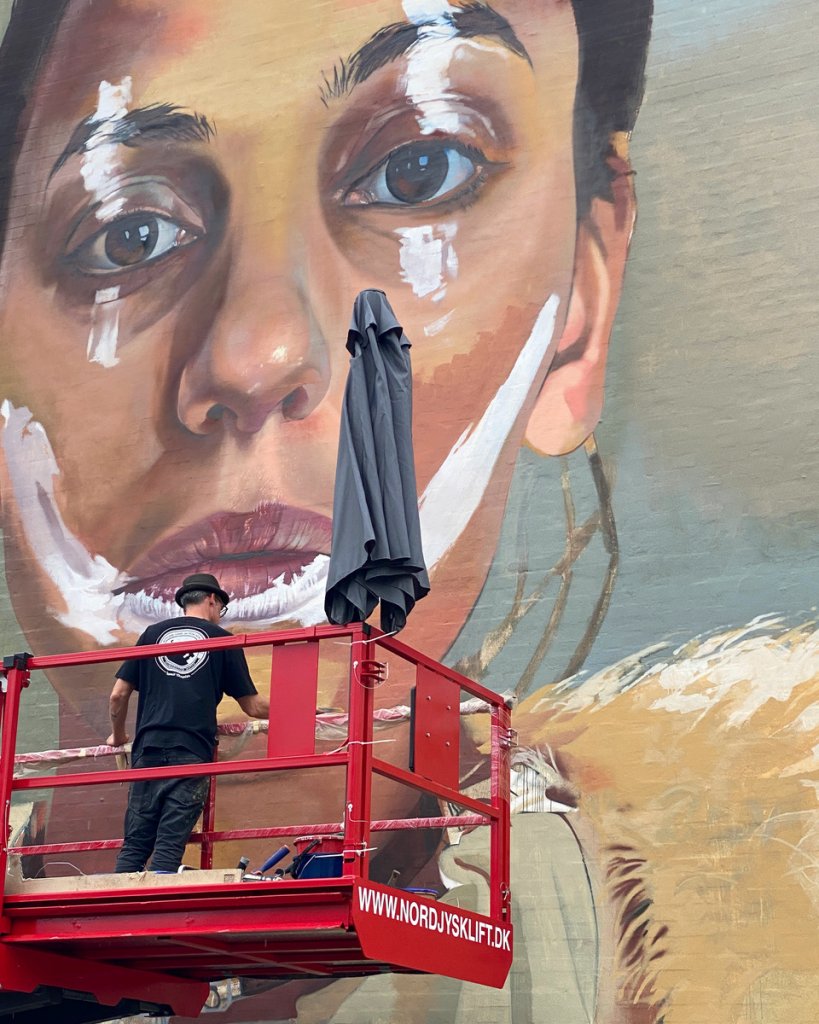
Case Maclaim, Carnival is Cancelled, Aalborg, Denmark 2020. Photo credit Kirk gallery
Titled Carnival is Cancelled, the mural portrays a young woman dressed in her clown costume, caught in a moment of suspended anticipation. Her face is partly concealed by a half-finished clown mask, suggesting a preparation interrupted mid-ritual. She believed she was going to the carnival. Instead, she is left paused between fantasy and reality, costume and uncertainty.
It’s a powerful visual metaphor for 2020 itself: the moment the world collectively stopped mid-sentence.
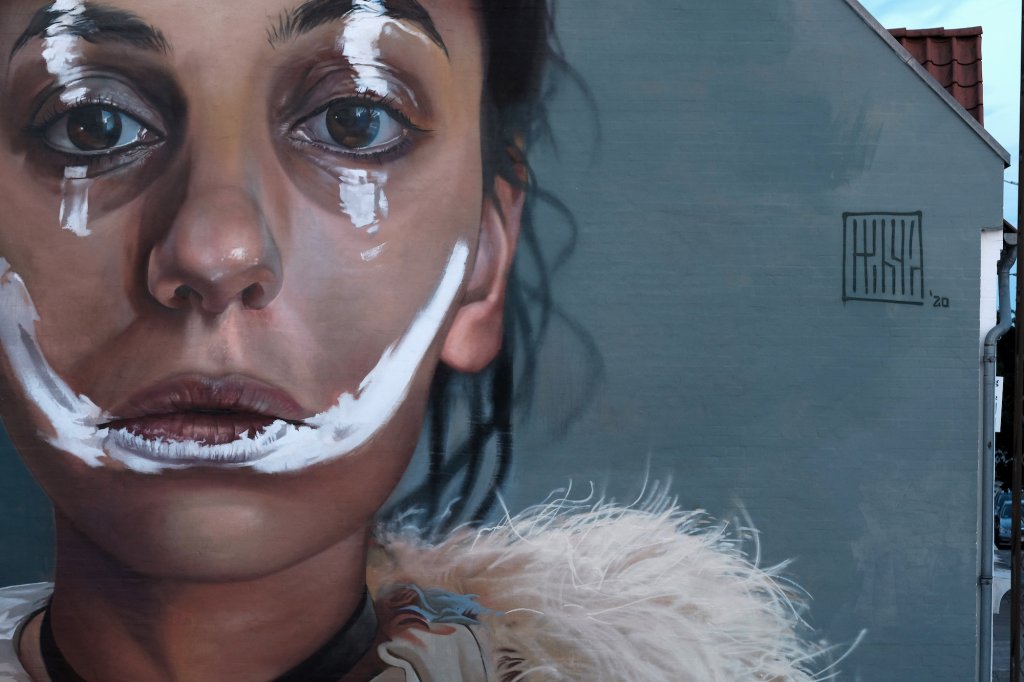
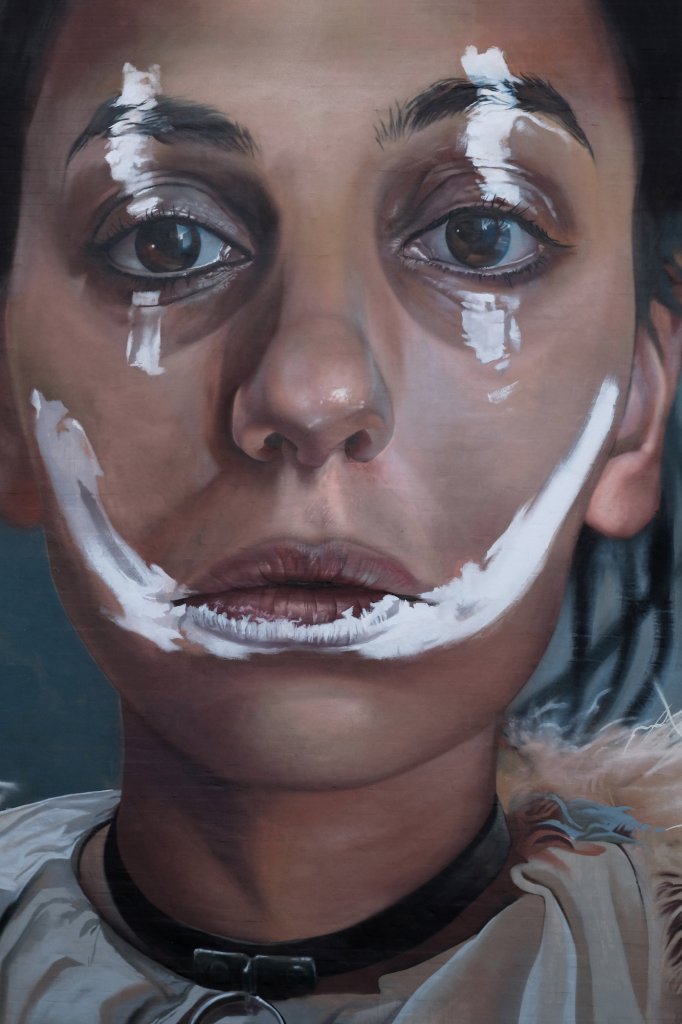
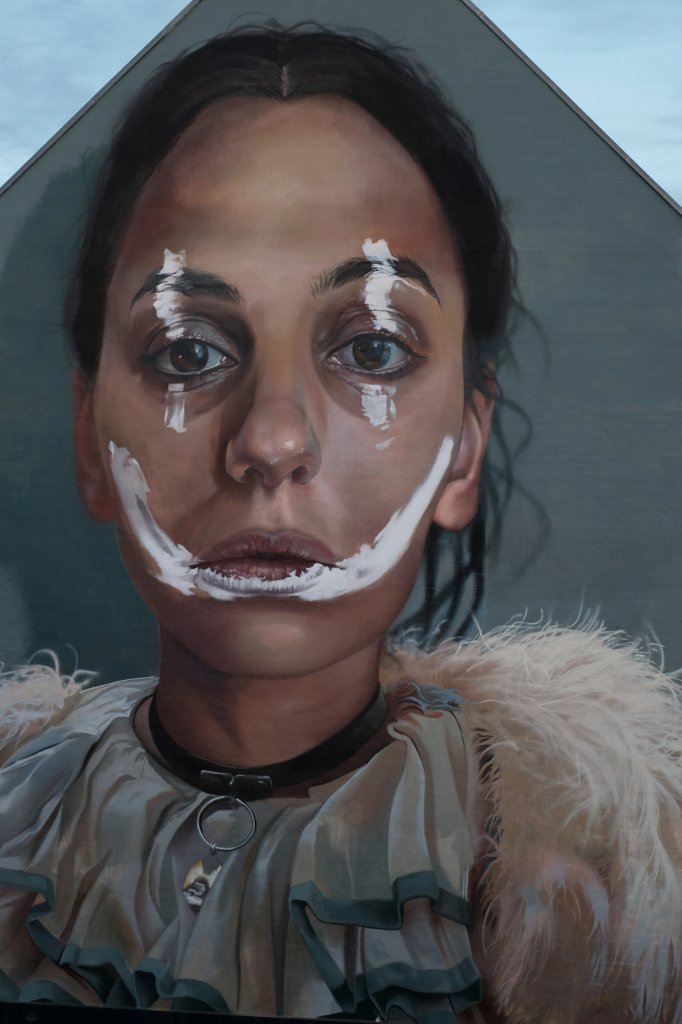
Case Maclaim, Carnival is Cancelled, Aalborg, Denmark 2020. Photo credit Kirk gallery
When carnival becomes a symbol of equality
In Case Maclaim’s words:
“A carnival is something special because it is an event where all are equal. It is the only time of the year where everybody gets to be the same – rich or poor, CEO or student, man or women since everybody is dressed out to be something different.”
That idea is what makes Aalborg Carnival so culturally resonant. It is not just a party, but a temporary social reordering, where identity becomes playful and fluid, and the city becomes shared ground. When that disappears, it leaves a deeper absence than expected, not only economic or logistical, but emotional. Maclaim’s mural holds that absence in place. It gives it a face.
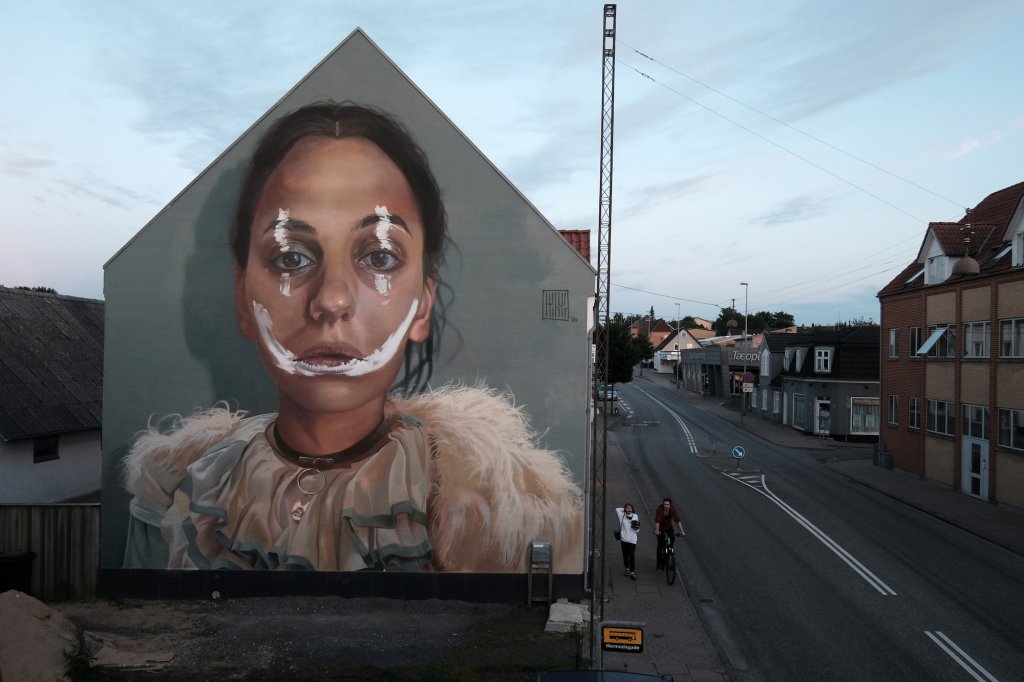
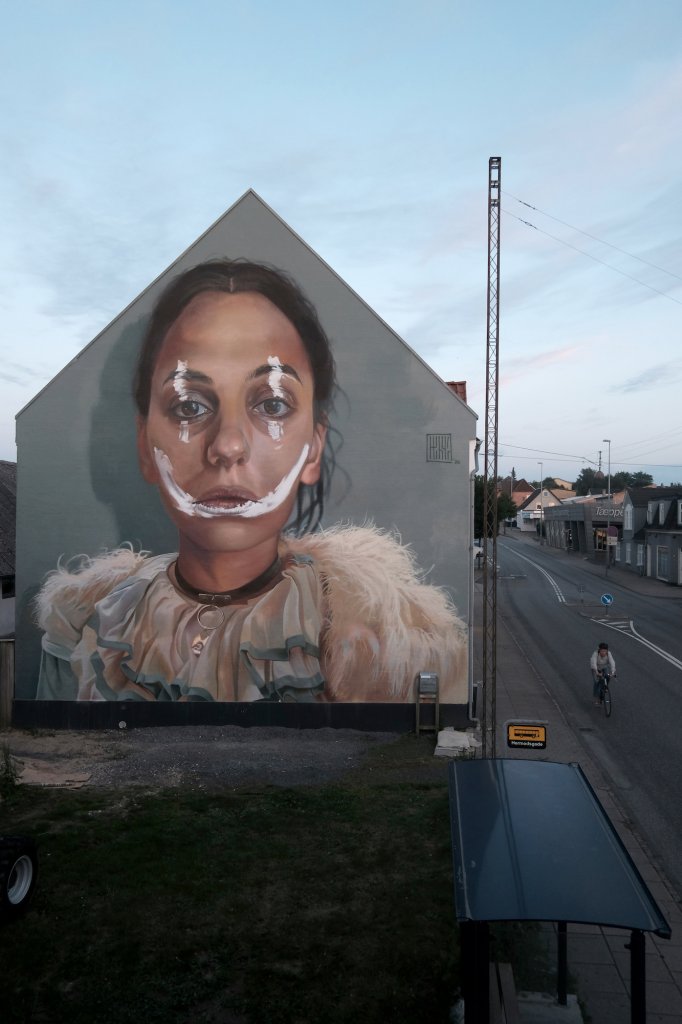
Case Maclaim, Carnival is Cancelled, Aalborg, Denmark 2020. Photo credit Kirk gallery
A mural as public memory
Street art often functions like a cultural timestamp. Unlike gallery exhibitions, murals live directly in the everyday rhythm of a city. They are passed by on commutes, noticed in peripheral vision, photographed, posted, and remembered. In this sense, Carnival is Cancelled becomes more than an artwork: it becomes a public archive of the pandemic era.
And perhaps, a reminder that even cancelled celebrations still leave behind a kind of shared spirit.