Street Artist in the Spotlight: Shamsia Hassani
Shamsia Hassani is an Afghan artist widely recognised as Afghanistan’s first female graffiti artist, whose unmistakable female figures have transformed walls, canvases and imagined cityscapes into spaces for visibility, resilience and reflection. Born in Tehran to Afghan parents, Hassani later studied Fine Arts at Kabul University, where she also taught before discovering graffiti in 2010.
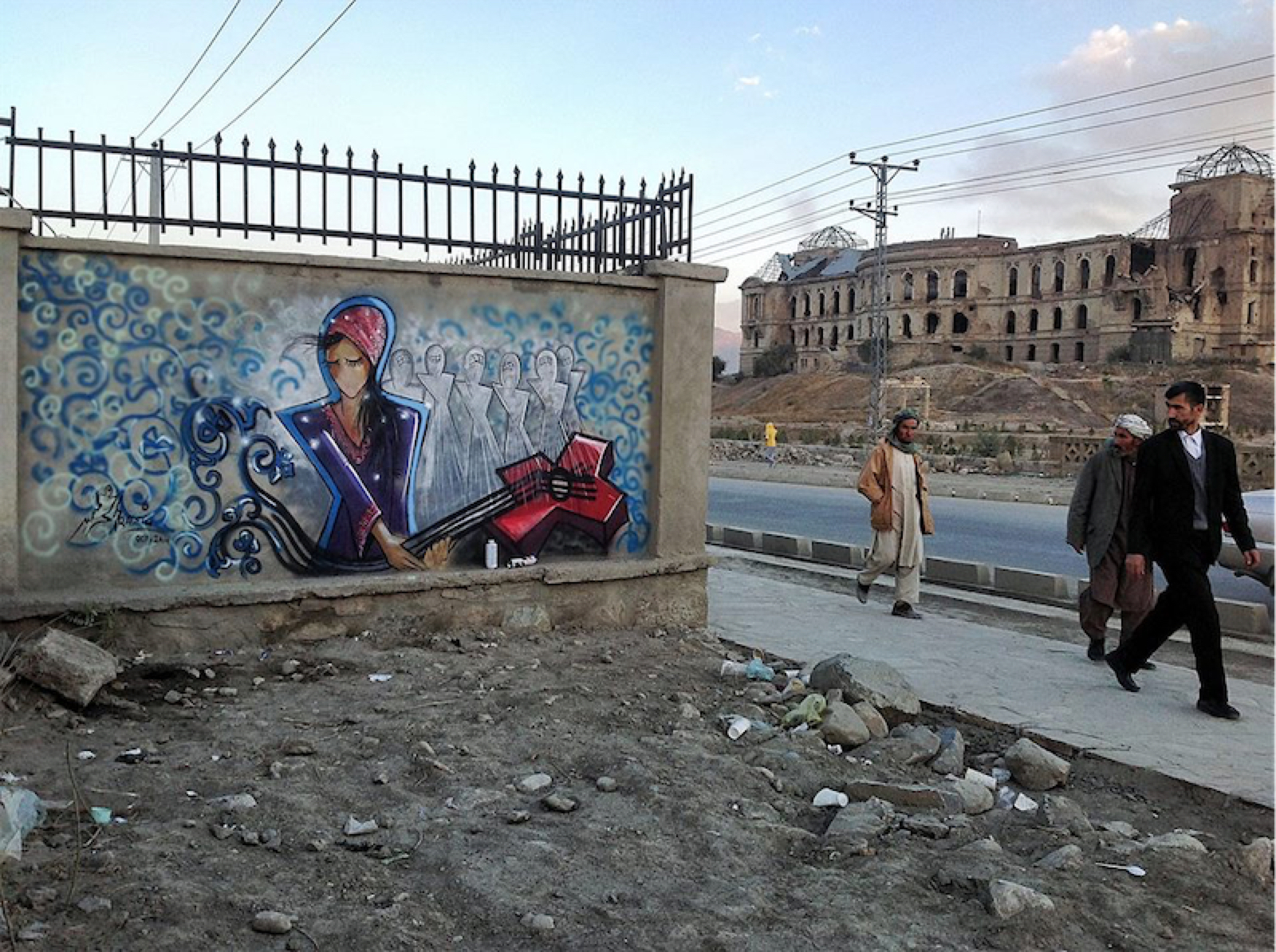
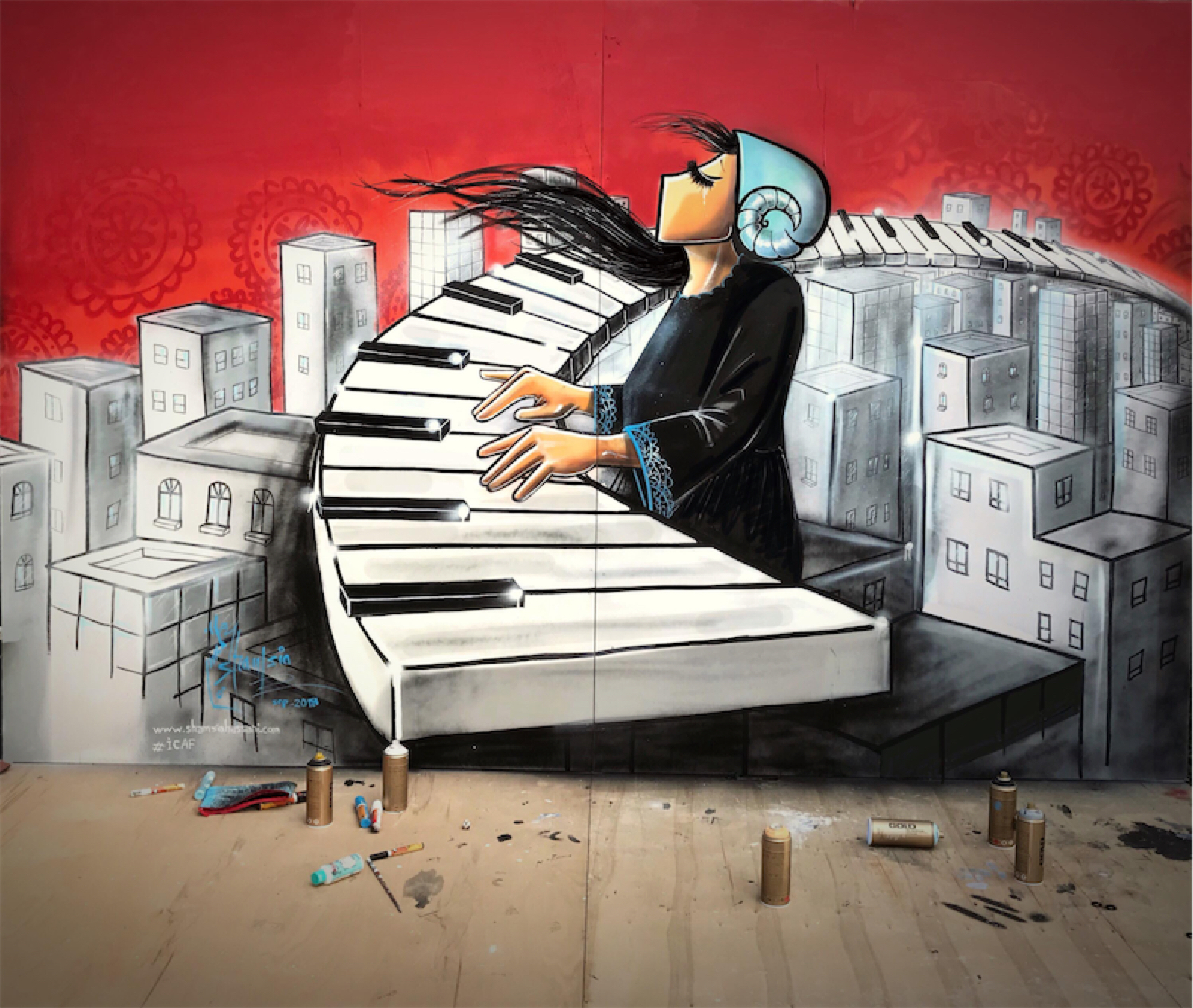
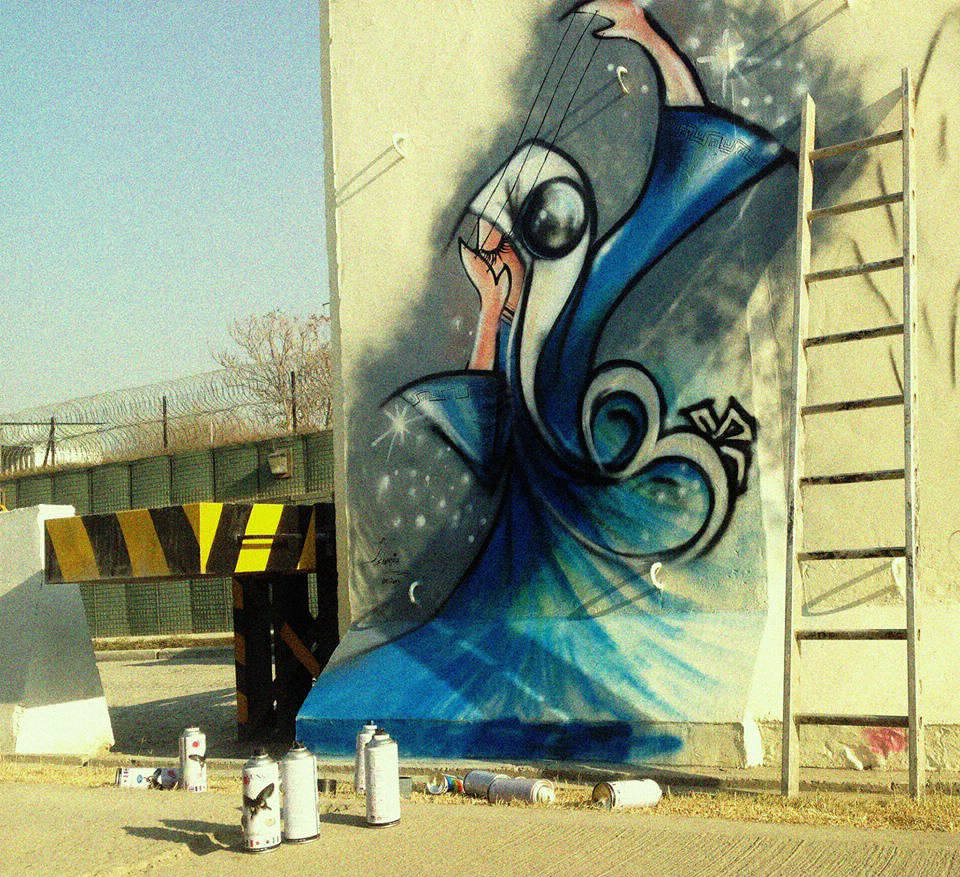
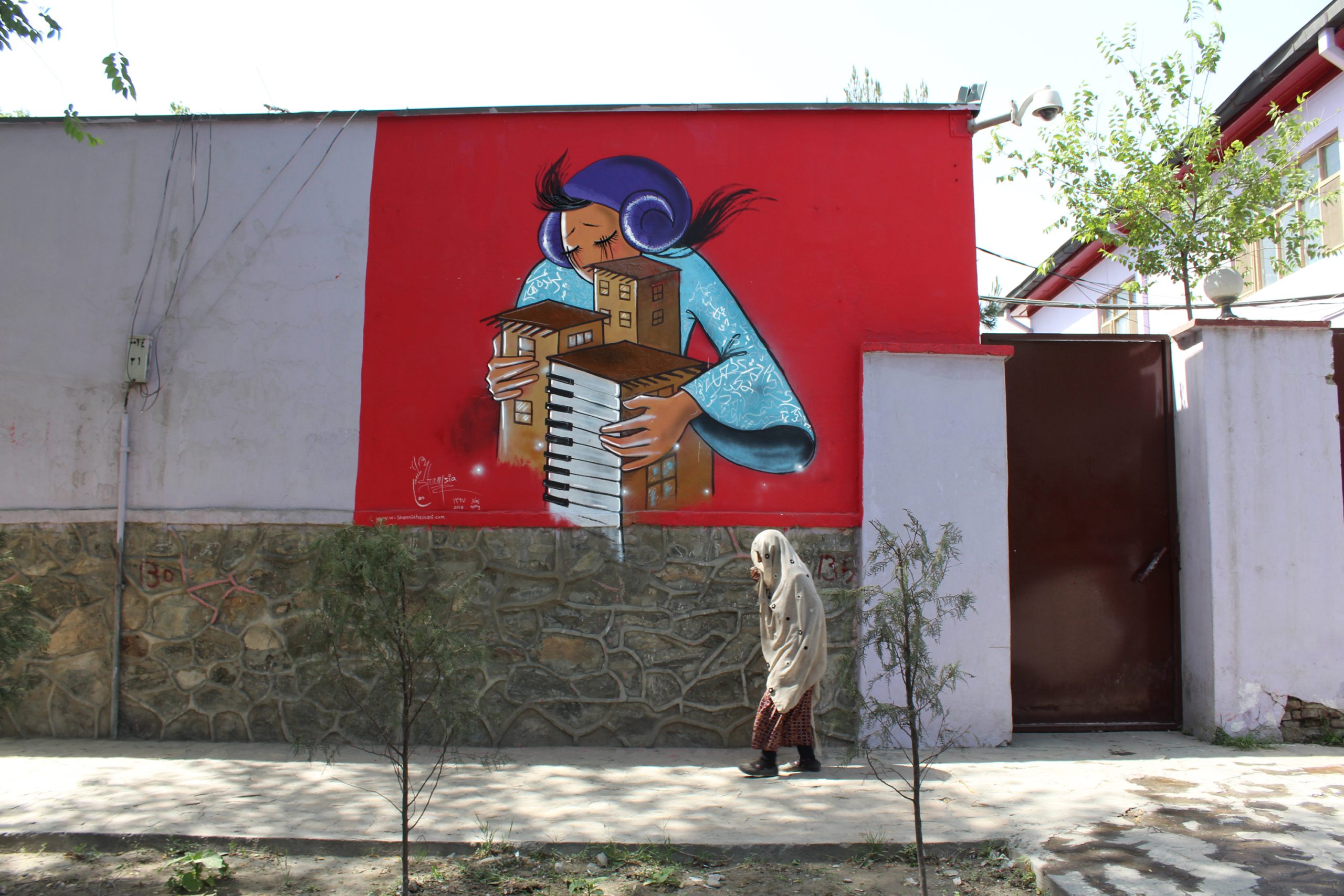
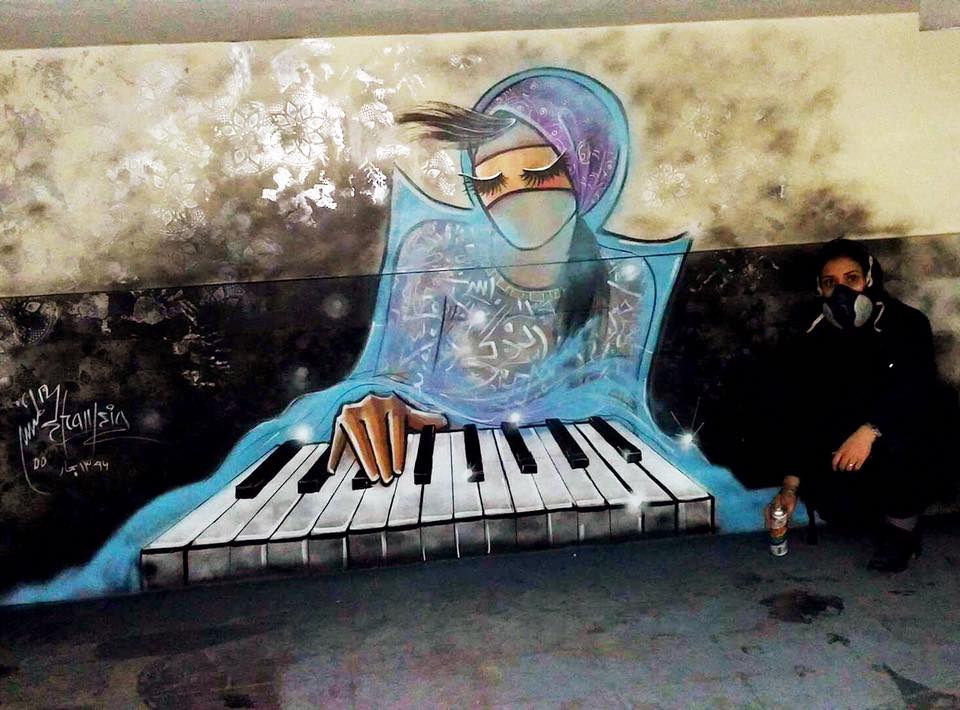
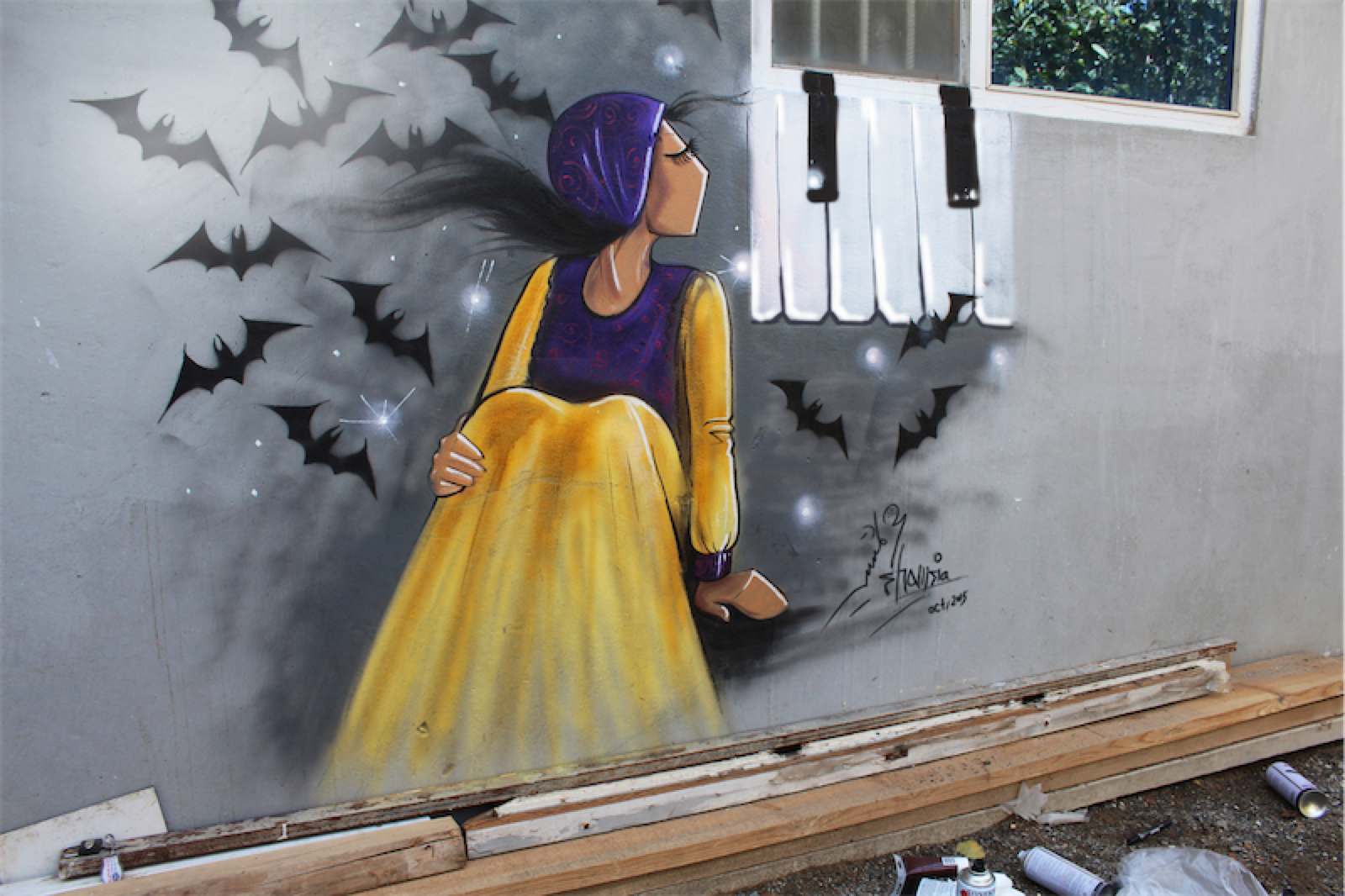
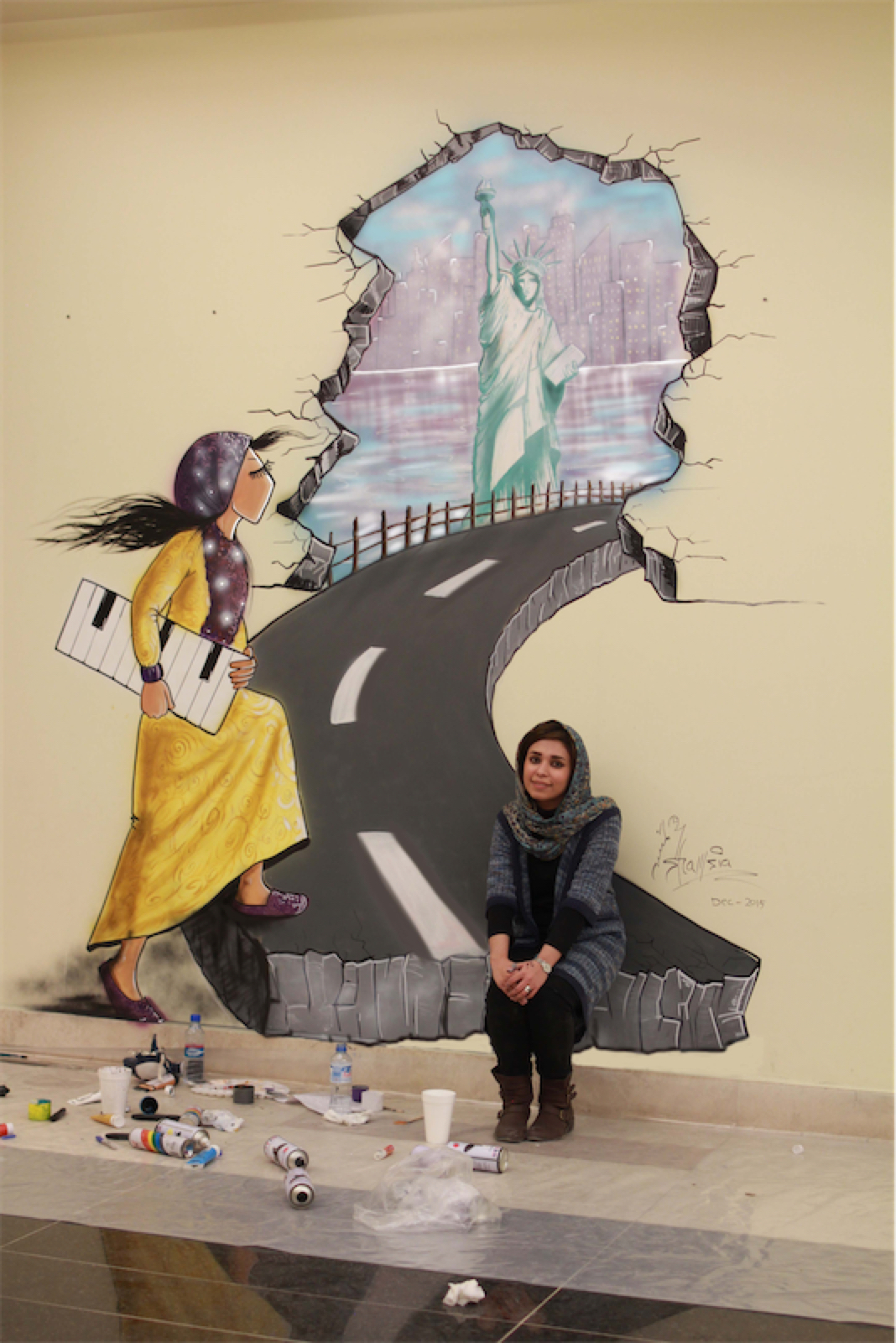
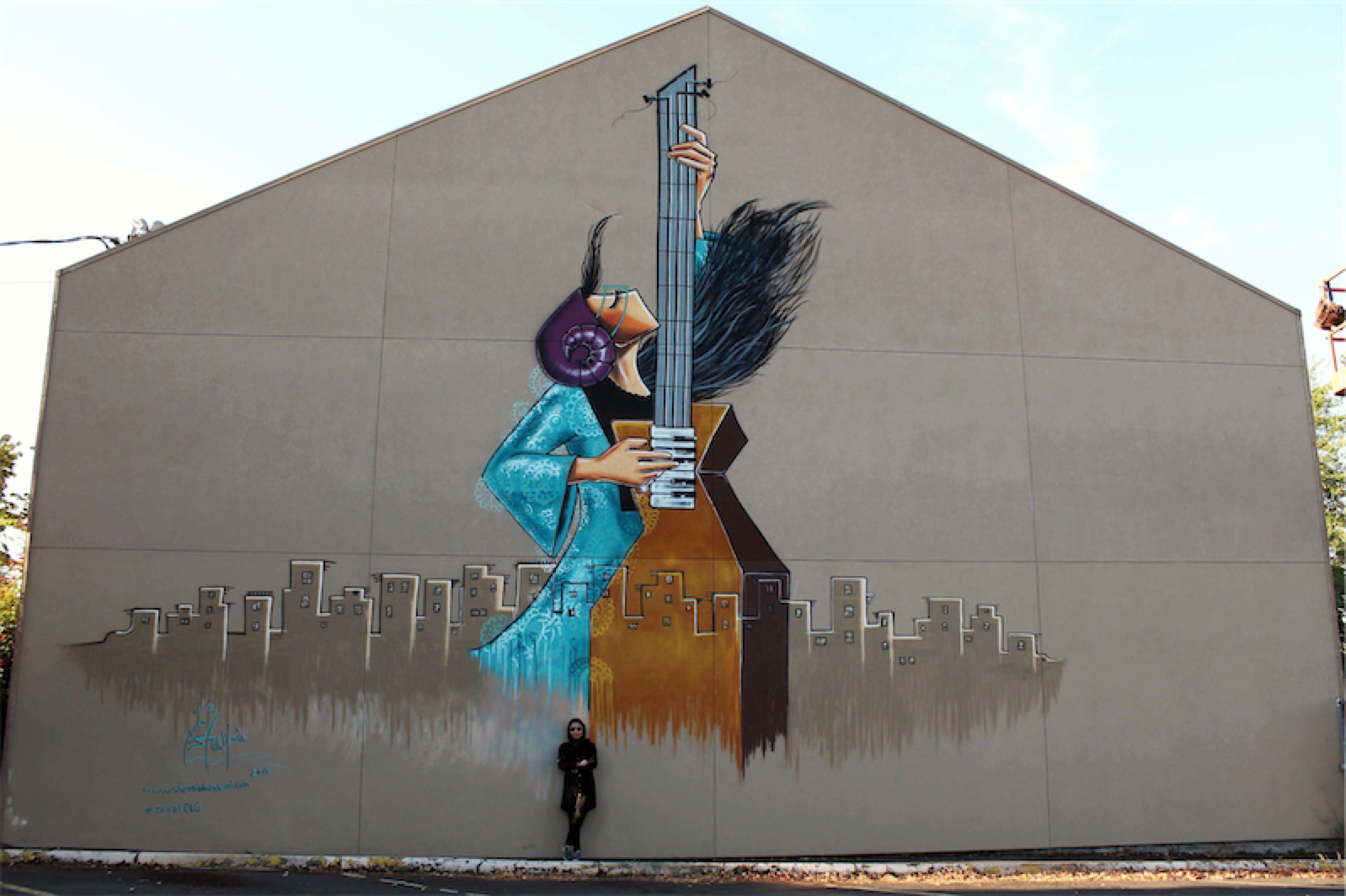
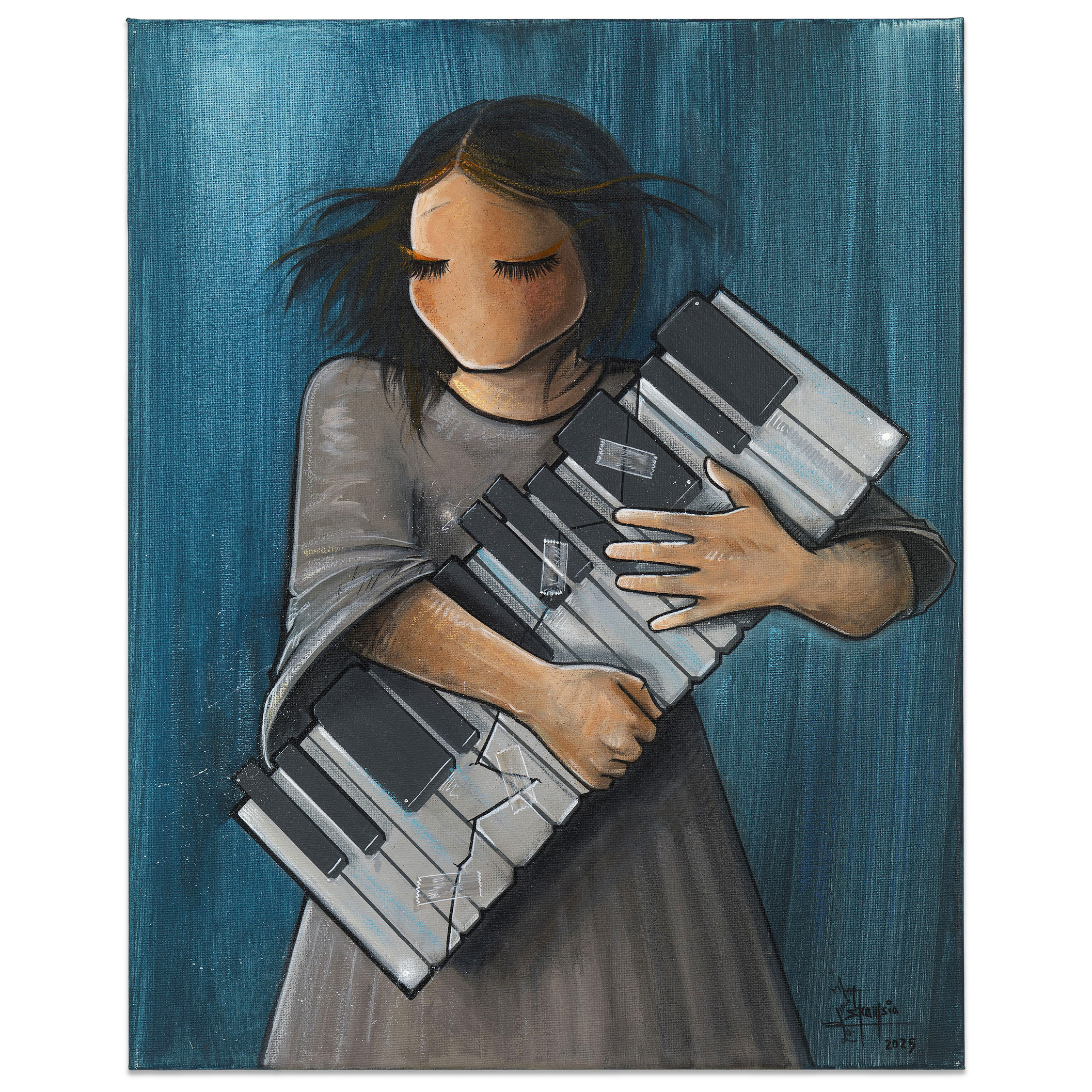
Her recurring women are immediately recognisable: closed eyes, absent mouths, elongated forms and, often, musical instruments. Their silence does not diminish their presence. Instead, Hassani uses symbolism, colour and scale to explore identity, imagination and the experiences of Afghan women, creating figures capable of communicating without words.
GraffitiStreet explores this visual language in greater depth in The Symbolism in Shamsia Hassani’s Murals: Women, Silence and Imagination.

Shamsia Hassani. Image © Shamsia Hassani. All Rights Reserved.
Women, Silence and the Language of Music
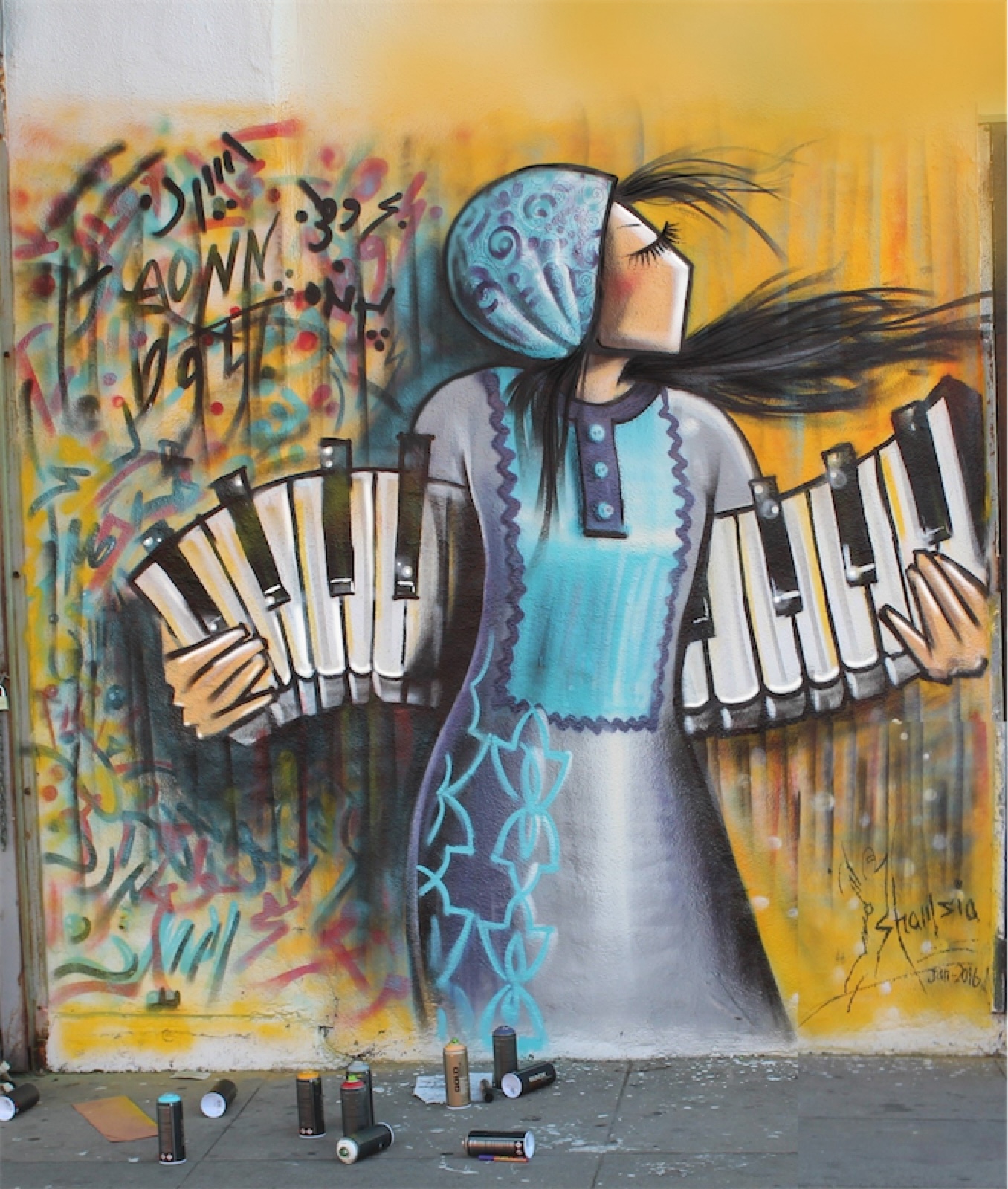
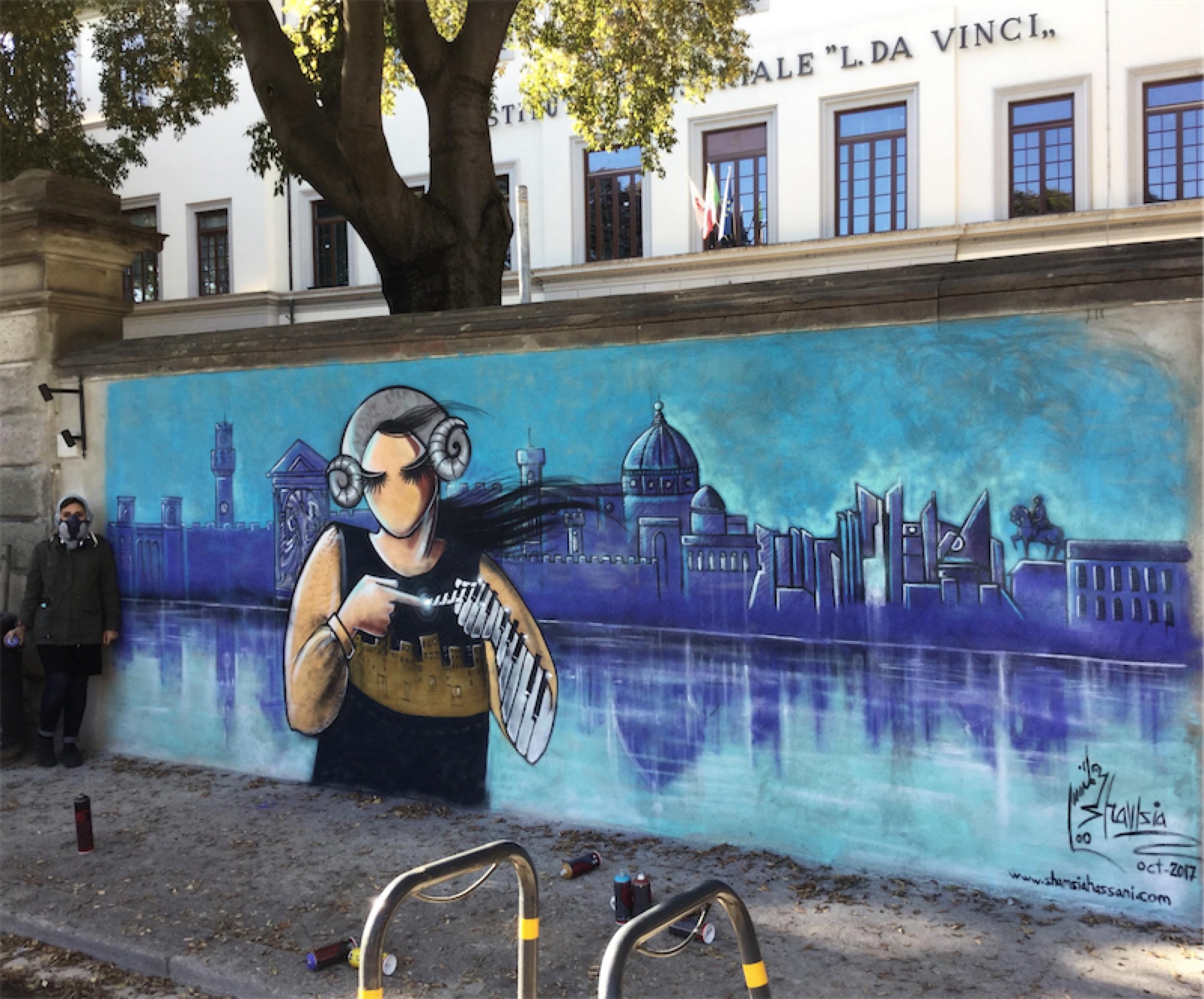
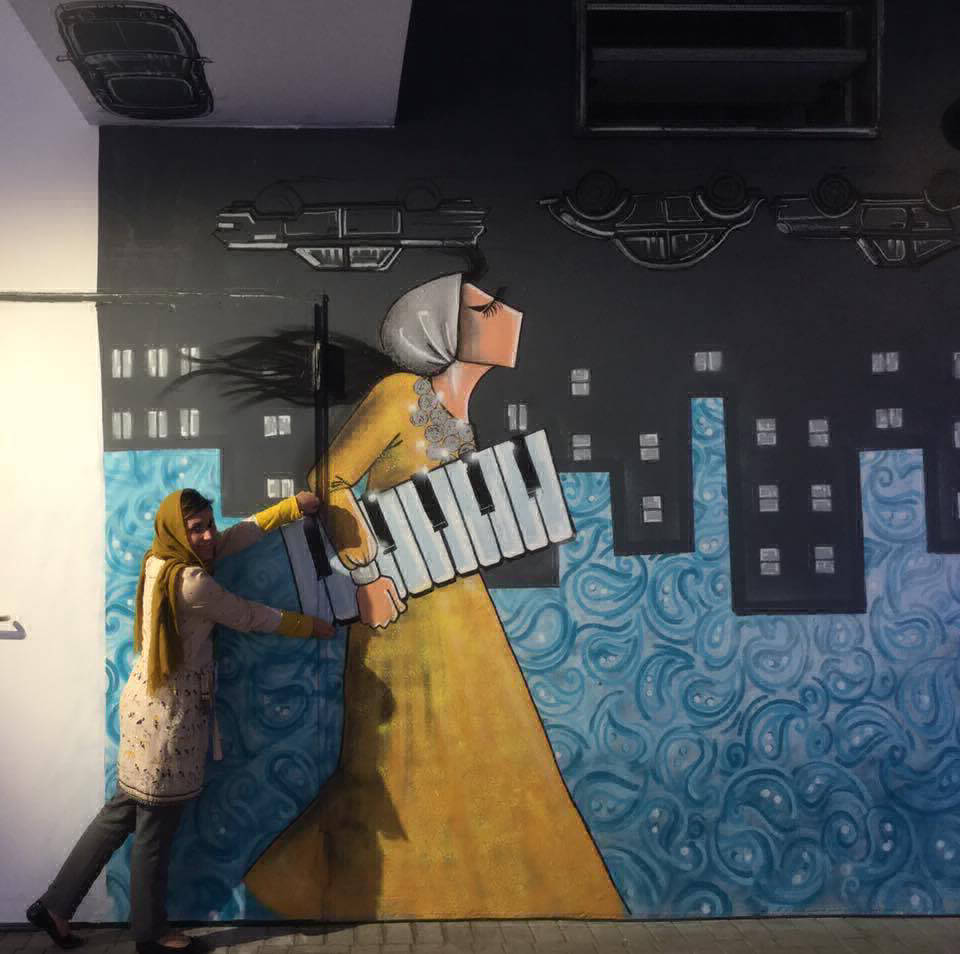
Music runs throughout Hassani’s visual language. Instruments repeatedly appear within her paintings and murals, offering another form of expression to figures whose mouths are absent. Closed eyes similarly carry multiple meanings, suggesting introspection, imagination and an inner world that exists beyond the circumstances surrounding them.
Together, these recurring motifs have developed into a sophisticated symbolic vocabulary through which Hassani explores voice, visibility, dreams and resilience without relying on literal narrative.
From Kabul Walls to Dreaming Graffiti
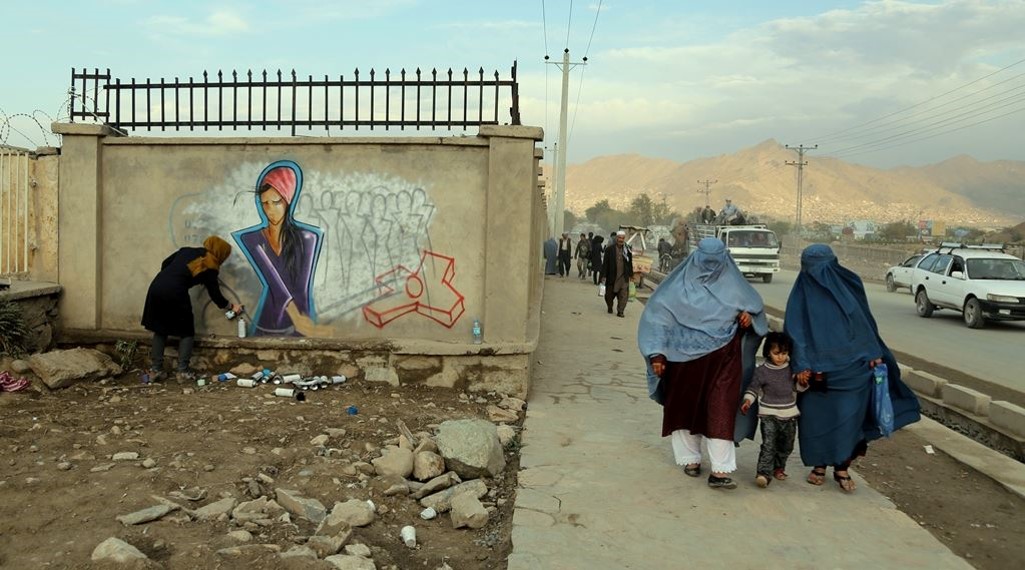
Hassani began painting on the streets of Kabul in 2010, drawn to graffiti because it allowed art to become part of everyday life rather than remain confined within galleries. Her murals introduced colour and monumental female figures onto walls shaped by years of conflict.
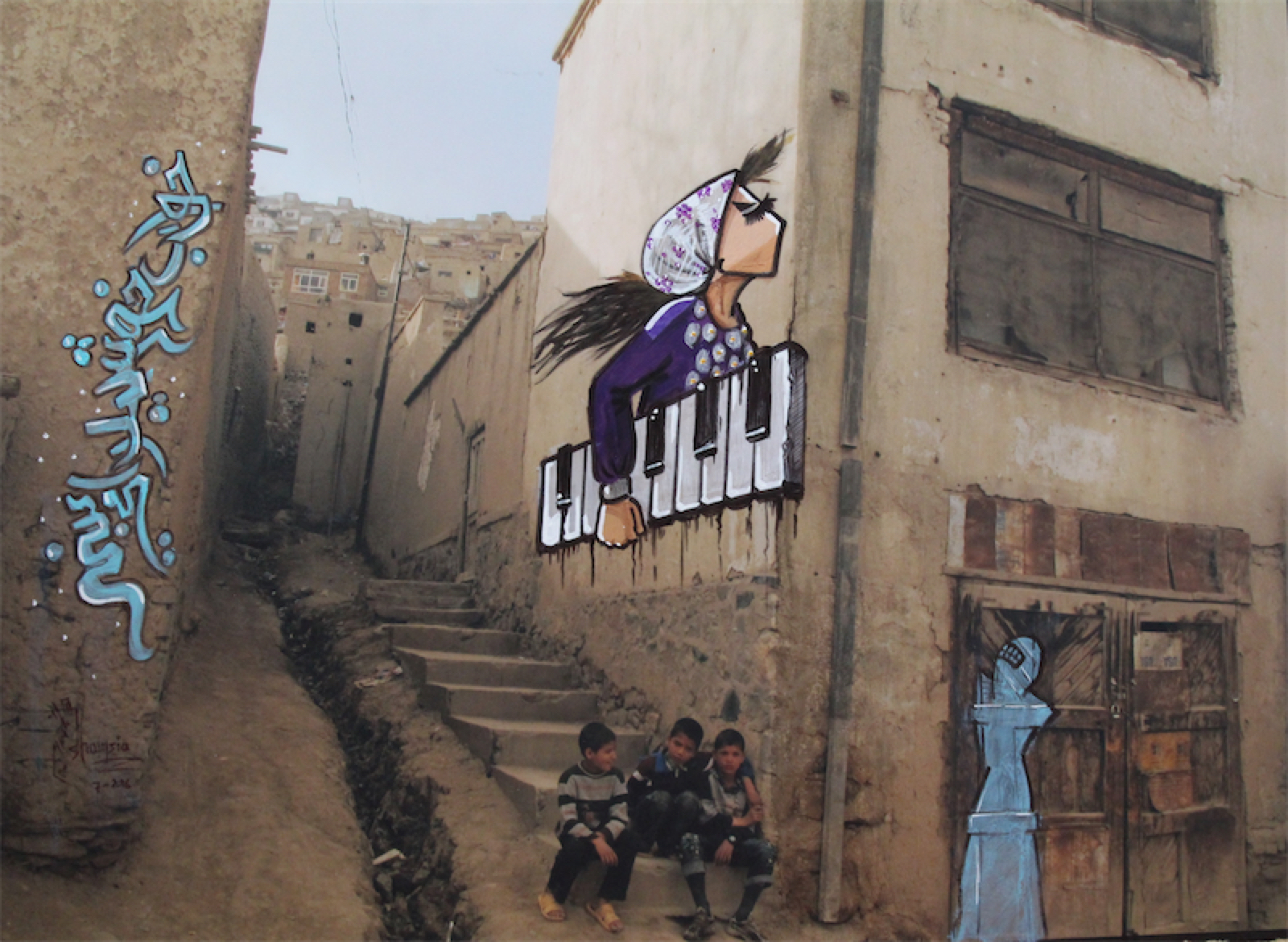
As security deteriorated and spending prolonged periods painting publicly became increasingly difficult, she developed Dreaming Graffiti. Hassani photographed walls around Kabul and digitally painted imagined murals onto them, creating the artworks she dreamed of placing physically on those sites.
What began as a practical response to restriction became a distinctive strand of her practice in its own right, allowing imagination to reclaim spaces she could no longer safely access.
The Fall of Kabul and Life in Exile
When the Taliban returned to power in August 2021, Hassani left Kabul and her position at Kabul University and sought refuge abroad, beginning a new chapter of her practice in exile. She is now based in Los Angeles, while Afghanistan and the experiences of Afghan women remain deeply embedded within her work.
Leaving Kabul introduced an increasingly visible sense of exile, memory, loss and the search for home into Hassani’s later paintings. She has spoken movingly about the rupture of leaving behind family, friends and the life she knew, emotions that resonate strongly through her more recent Nowadays series.


A Global Voice Rooted in Afghanistan
Hassani’s work now reaches far beyond Kabul, yet Afghanistan and the experiences of Afghan women continue to shape her visual language.
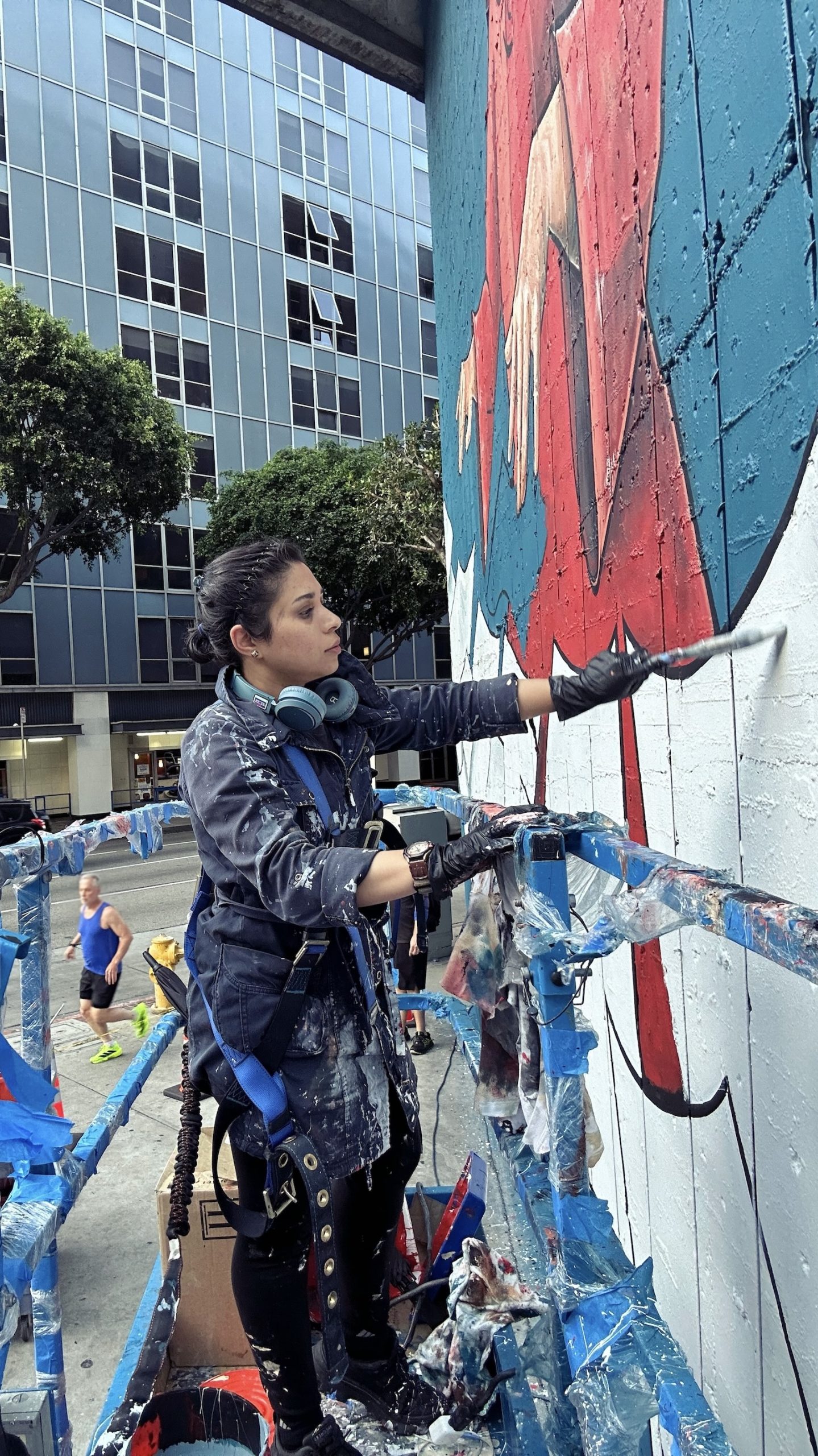
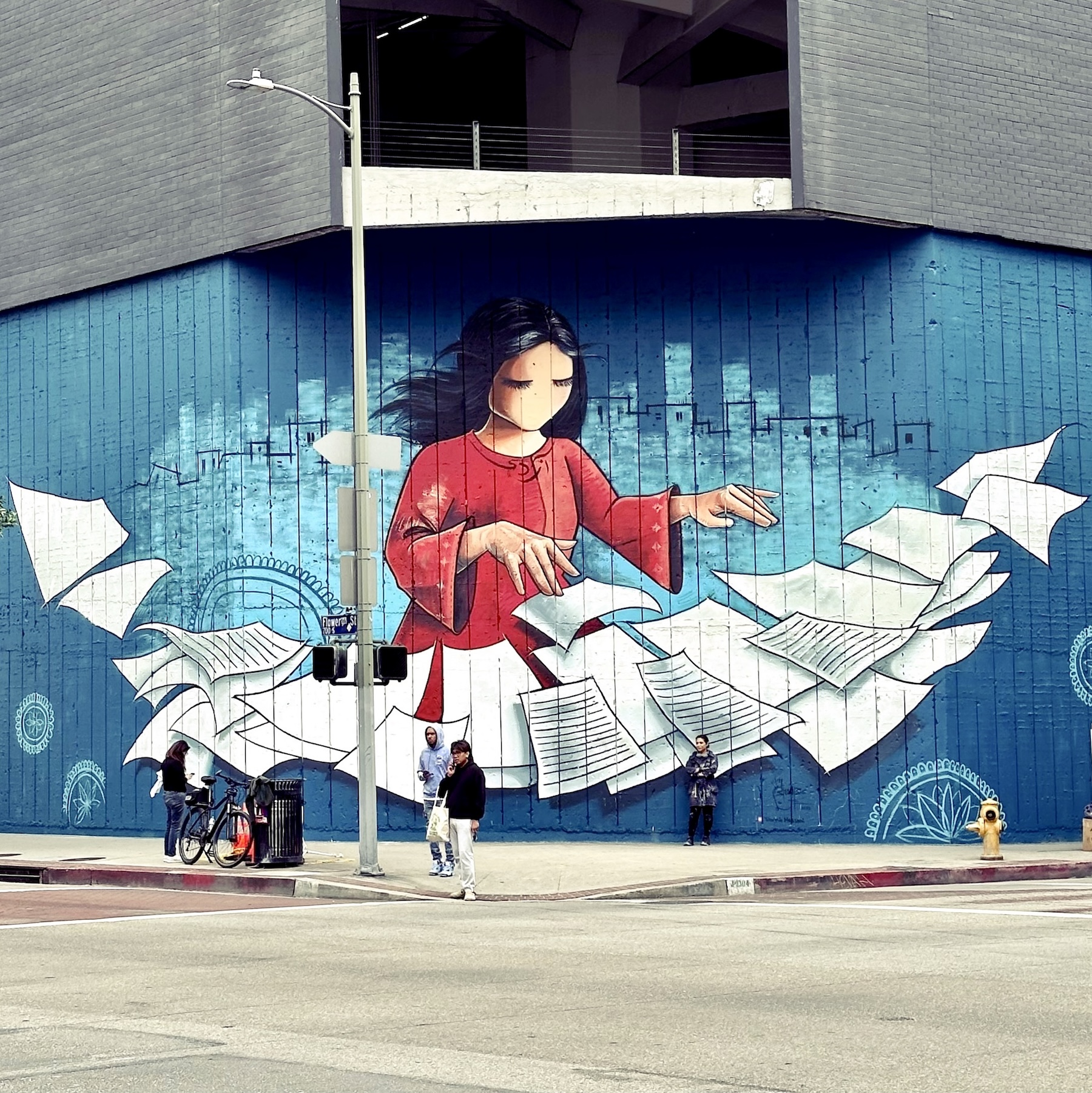
The Melody in Los Angeles uses monumental scale to explore education, possibility and the importance of allowing young people to imagine a future, while Birds of No Nation in Houston addresses displacement and restricted freedom through birds whose ability to sing and move freely has been constrained.
Across these works, Hassani’s figures remain quiet yet unmistakably present, carrying memories and experiences rooted in Afghanistan into public spaces thousands of miles from the streets where her practice began.
From Studio to GraffitiStreet Gallery
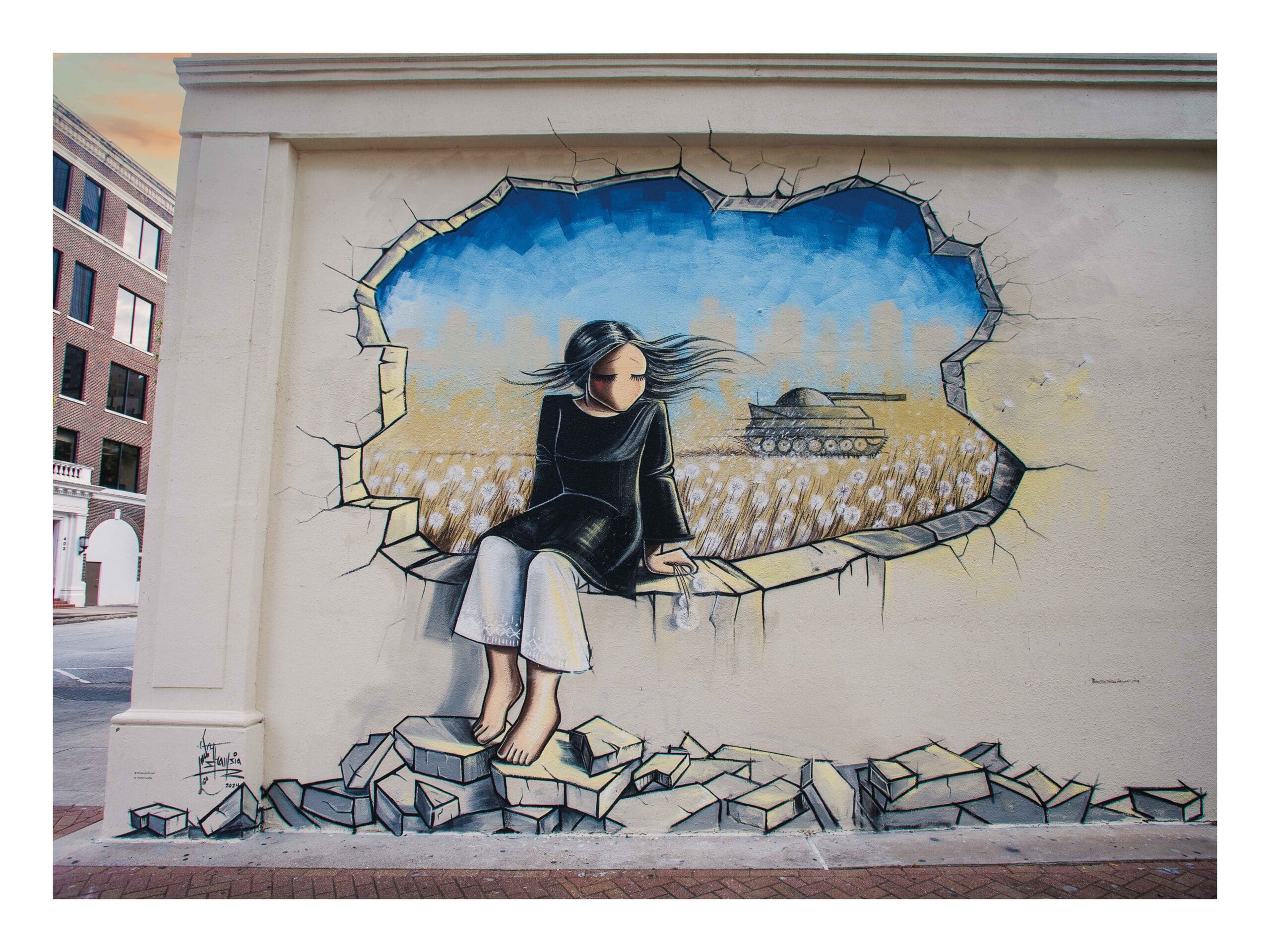
In 2026, GraffitiStreet presented Hassani’s original Nowadays paintings as part of Urban Equinox at our Chichester gallery. At a far more intimate scale than her monumental murals, these works retain her familiar symbolic language while exploring exile, memory, belonging and the emotional idea of home.
In Nowadays #05, a barefoot female figure moves through a dreamlike landscape accompanied by a remembered city, a fractured line held together with small plasters and drifting dandelion seeds. Encountering the work in the gallery, its quietness is particularly affecting; Hassani compresses questions of displacement, memory and emotional repair into details that reveal themselves slowly.
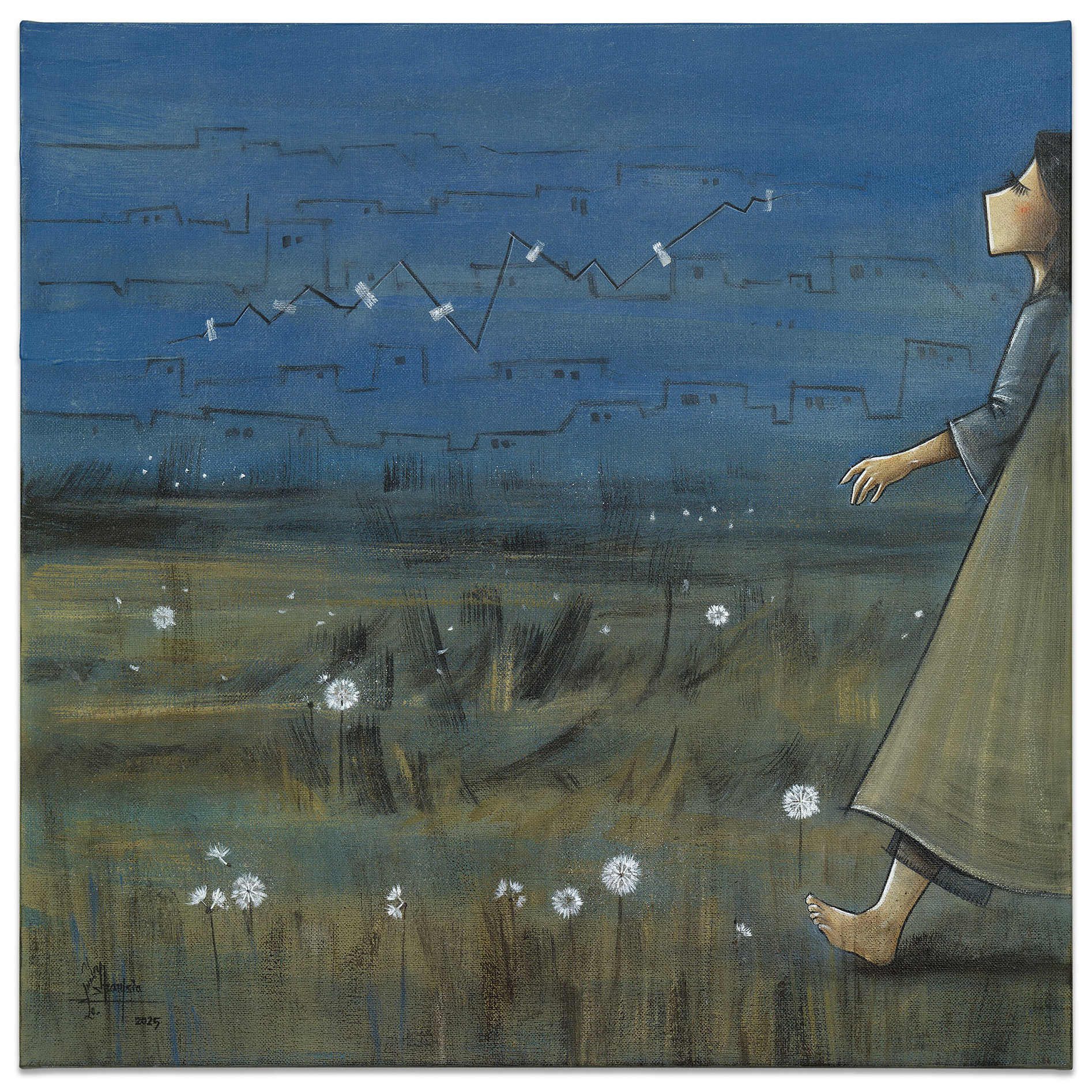
Shamsia Hassani – Nowaday #05. Available via GraffitiStreet
Read Shamsia Hassani’s Nowadays: Dandelions, Fractures and the Memory of Home.
Related Reading: Shamsia Hassani
For a broader introduction to her life and practice, Shamsia Hassani: 10 Things You Need to Know traces her beginnings in Kabul, the development of Dreaming Graffiti and the symbols that have shaped her work.
In GraffitiStreet’s International Women’s Day conversation with Shamsia Hassani, Hassani speaks directly about painting in Kabul, the importance of public art, Dreaming Graffiti and her commitment to keeping the experiences of Afghan women and girls visible.
The Melody follows her monumental Los Angeles mural and its focus on education, creativity and opportunity, while Birds of No Nation explores migration, displacement and freedom through another major public work.
More Artists in the Spotlight
Explore STIK, whose deceptively simple figures similarly communicate complex emotions through minimal gesture, posture and expression. For another artist using the street to address politics, conflict and social injustice, discover Banksy, whose public interventions have long combined accessible imagery with pointed social commentary. You can also explore Helen Bur, whose figurative murals bring quieter questions of identity, women and lived experience into public space.
Discover Shamsia Hassani at GraffitiStreet
GraffitiStreet has presented original works by Shamsia Hassani at our Chichester gallery, including paintings from her Nowadays series exhibited in Urban Equinox. Seen at this more intimate scale, her familiar language of women, memory, imagination and resilience becomes even more personal.
Explore the GraffitiStreet collection or contact GraffitiStreet for current Shamsia Hassani availability, acquisitions and private viewings.
Visit GraffitiStreet Gallery, 25A West Street, Chichester, West Sussex, England PO19 1QW.
Image copyright Shamsia Hassani ARR