Ten Facts About Banksy’s ‘Di-Faced Tenner’: Art, Critique, and Counterfeit Culture
Banksy’s Di-Faced Tenner is one of the artist’s sharpest early interventions into value, authority and national identity. First produced in 2004, the counterfeit-style £10 banknote replaces Queen Elizabeth II with Diana, Princess of Wales, turning British currency into a satirical object that sits somewhere between street art, political prank, forged money and collectible artwork. With the words “Banksy of England” replacing “Bank of England,” the work questions what gives money its power, who gets to appear on it, and why society accepts certain forms of value as legitimate while rejecting others.
Through ten key details, from Diana’s portrait and Darwin’s reverse to the altered wording, mass circulation, Pest Control connection and British Museum acquisition, Di-Faced Tenner reveals how Banksy turned a familiar banknote into one of his most layered early works on trust, value and authenticity.
1. A Title Built on a Pun
The title Di-Faced Tenner plays on the word “defaced,” while also referring to “Di,” the popular nickname for Princess Diana. It is a small linguistic move with a huge conceptual charge, because the work is both a defaced ten pound banknote and a Diana-faced banknote.
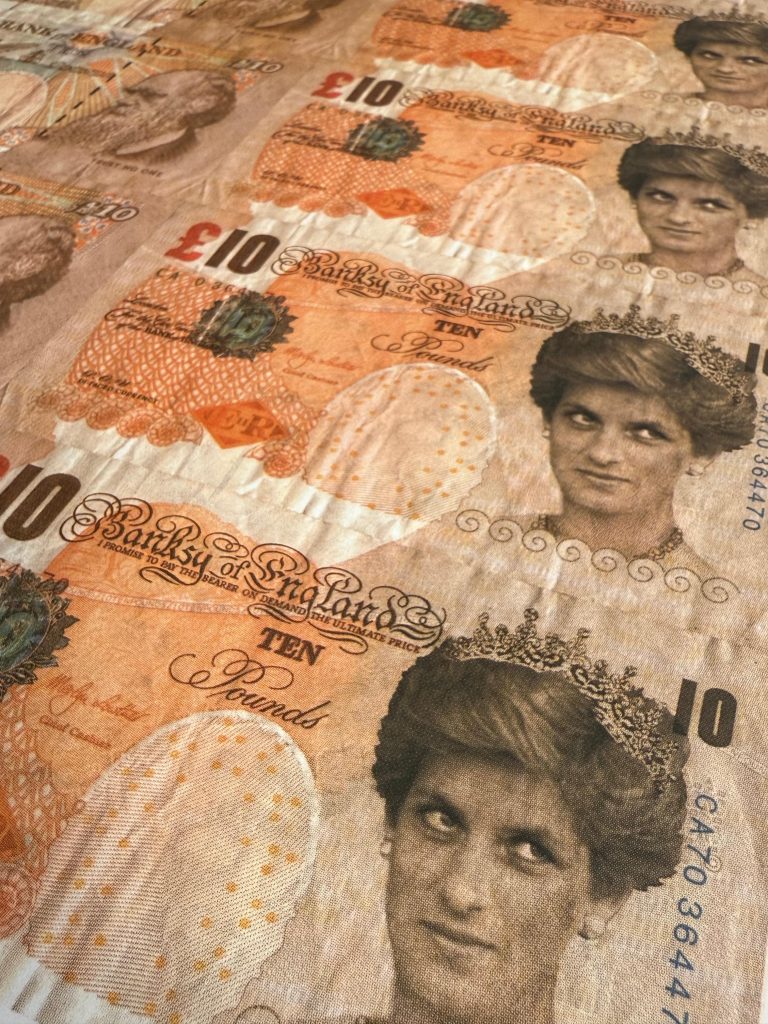
Banksy – Di-Faced Tenner Sheet (Uncut). Photo copyright GraffitiStreet
2. Princess Diana Replaces the Queen
The central image is Diana, Princess of Wales. By replacing Queen Elizabeth II with Diana, Banksy shifts the note from royal authority to public mourning, celebrity culture and national mythology.
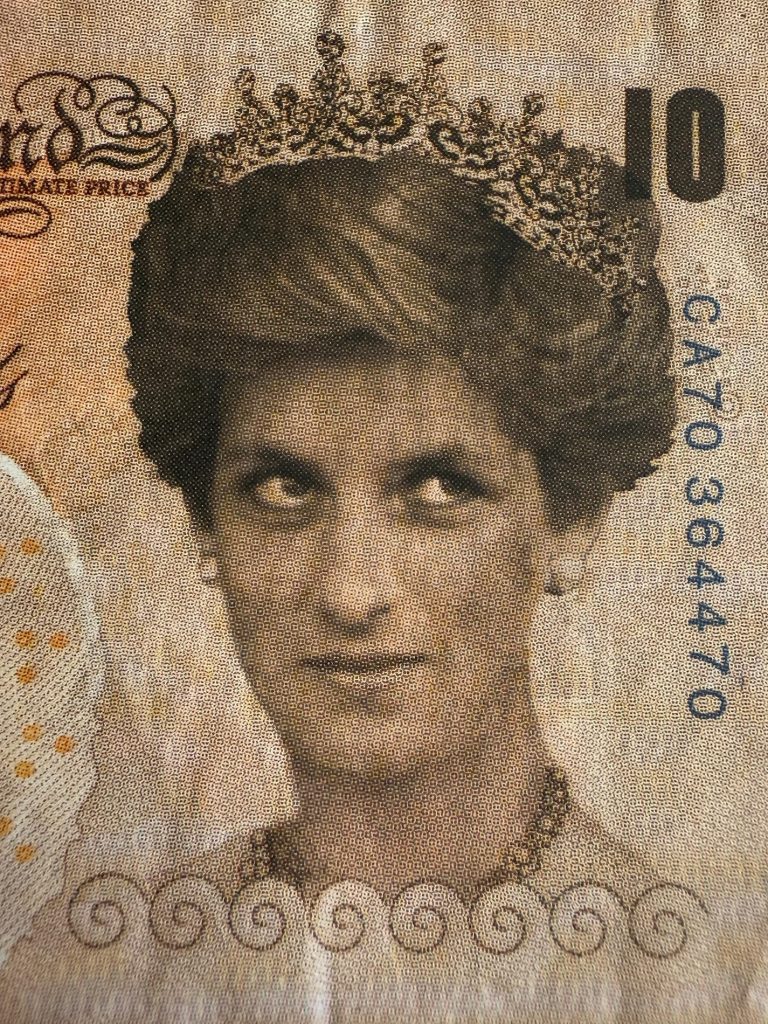
Banksy, Di-Faced Tenner, 2004. Offset lithograph on paper, 14.4 x 7.6 cm. Supplied with a Letter of Provenance signed by Steve Lazarides, Banksy’s former agent. Available through GraffitiStreet. Photo copyright GraffitiStreet.
3. “Banksy of England”
Created in 2004, Di-Faced Tenner transforms the familiar British £10 note into a subversive artwork. Banksy replaced the official authority of the Bank of England with “Banksy of England,” turning the note into a parody of state power, financial trust and national value. In the lower left of the design, the note also carries “P.O.W.” and “Di-Faced Currency,” a reference to Pictures on Walls, the influential print publisher closely associated with Banksy’s early editions.

Banksy, Di-Faced Tenner, 2004. Offset lithograph on paper, 14.4 x 7.6 cm. Supplied with a Letter of Provenance signed by Steve Lazarides, Banksy’s former agent. Available through GraffitiStreet. Photo copyright GraffitiStreet.
4. Charles Darwin Remains on the Reverse
Di-Faced Tenner is based on the old paper British £10 note, which featured Charles Darwin on the reverse. Banksy kept Darwin in place while replacing Queen Elizabeth II on the front with Diana, Princess of Wales, allowing the note to remain instantly recognisable as British currency while shifting its meaning into satire. Darwin’s presence adds another layer to the work, introducing ideas of evolution, survival and adaptation alongside Banksy’s wider critique of social systems, inherited power and economic belief.
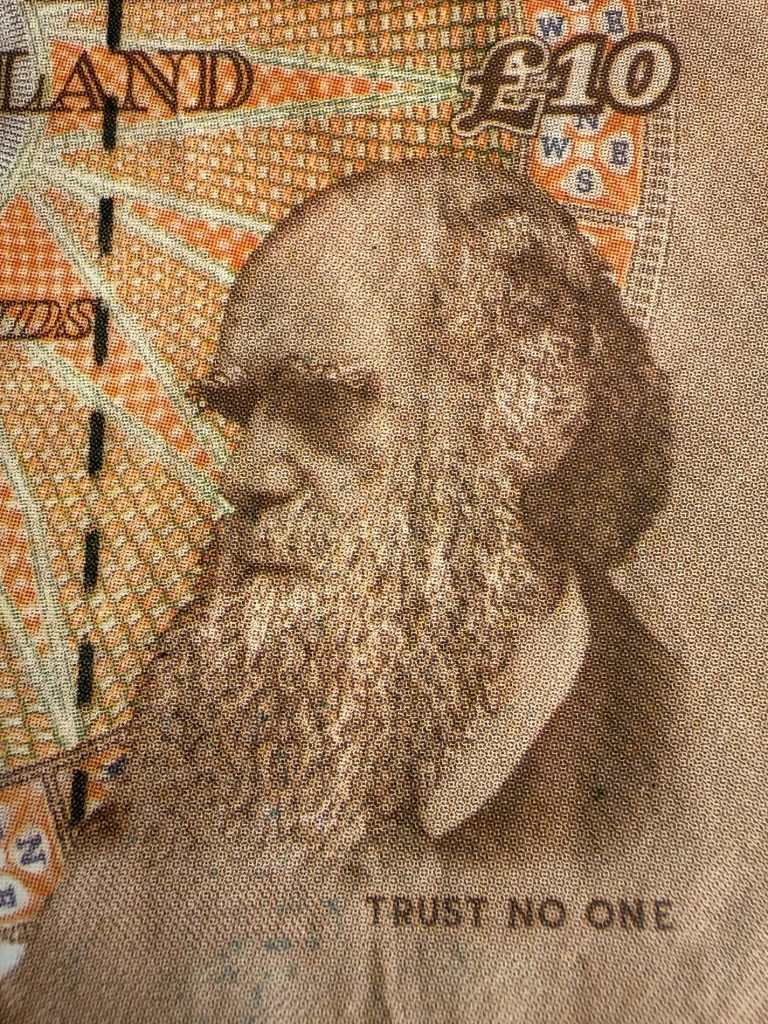
Photo Copyright GraffitiStreet
5. Hidden Critiques in the Text
Banksy altered the wording of the note to include phrases such as “I promise to pay the bearer on demand the ultimate price” and “Trust No One.” These details sharpen the work’s critique of money, monarchy, media spectacle and the public cost of fame.
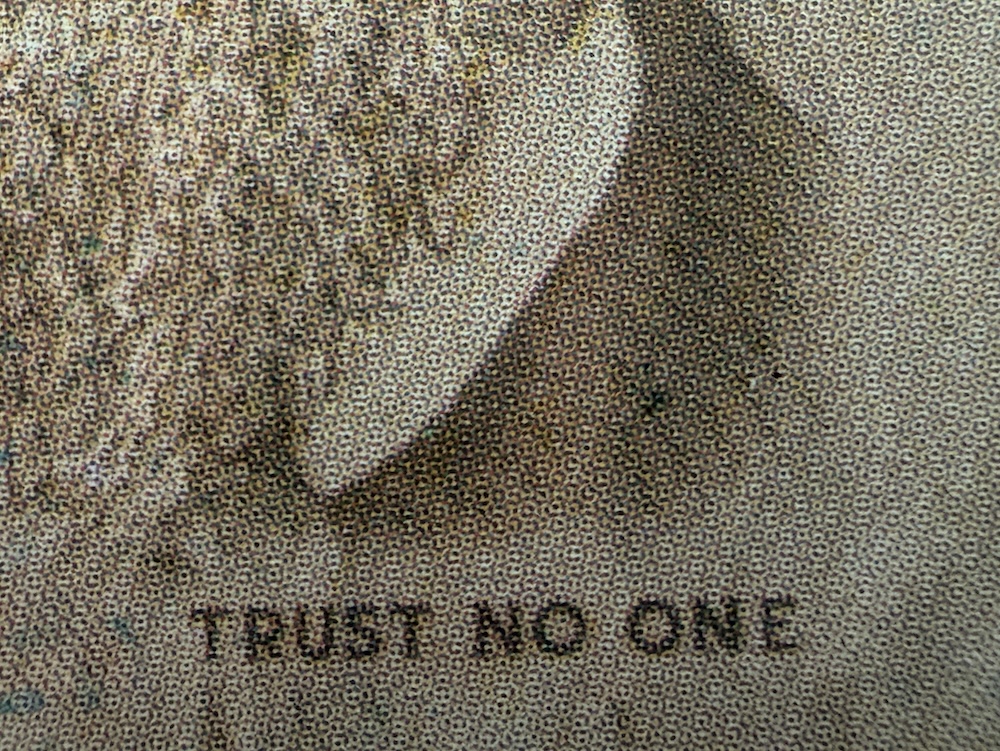
Photo Copyright GraffitiStreet
6. Mass Production
Banksy reportedly produced around £1 million worth of Di-Faced Tenner notes, turning the fake currency into one of his most ambitious early street-art interventions. An estimated 100,000 notes are believed to have entered circulation during his public stunts, yet despite the work’s obvious relationship to counterfeiting, Banksy faced no known legal prosecution.
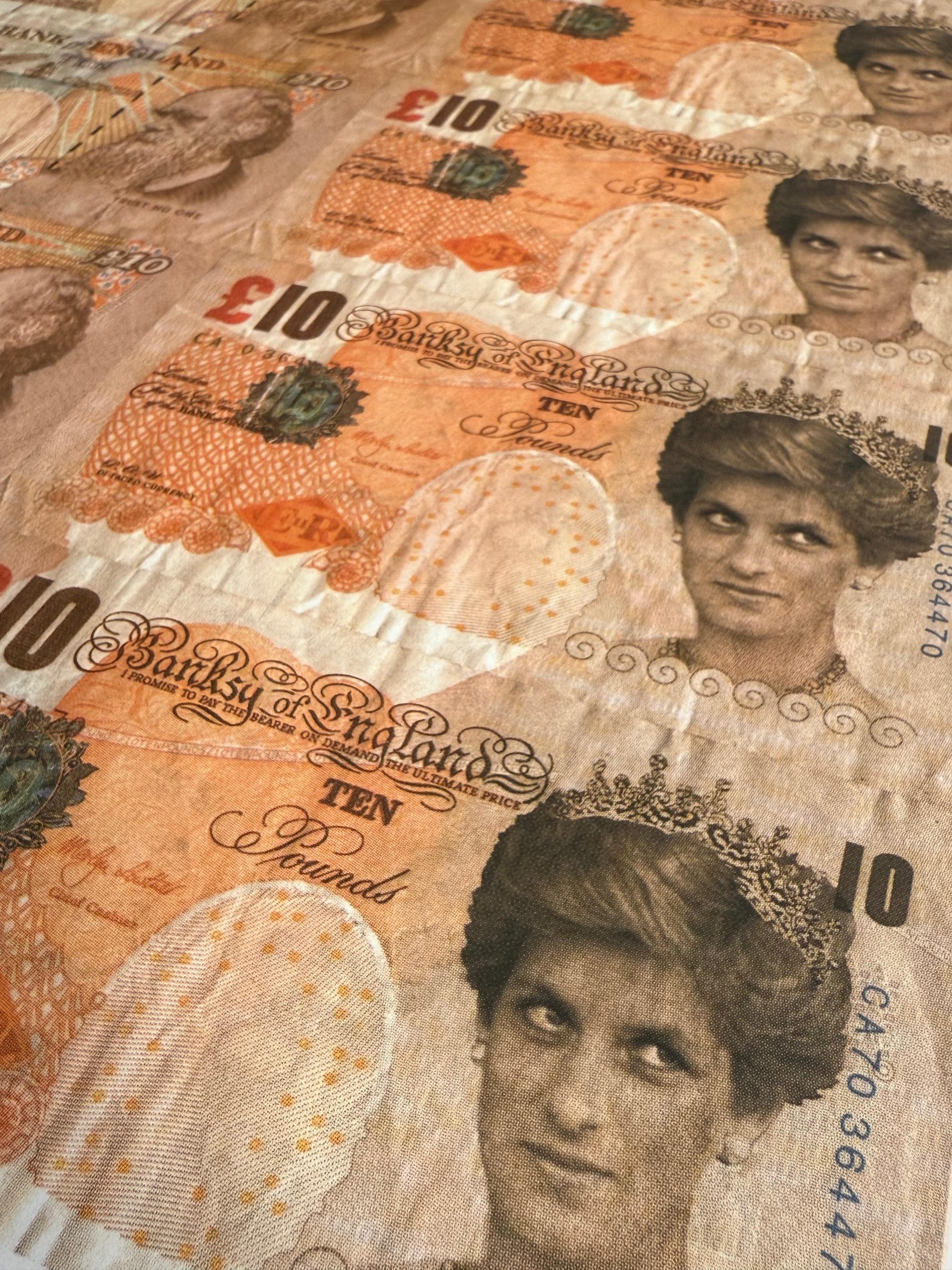
Photo Copyright GraffitiStreet
7. Produced Like Money, Released Like Street Art
Banksy reportedly printed around 100,000 Di-Faced Tenner notes in 2004, creating the equivalent of approximately £1 million in fake currency. Rather than treating the work as a conventional print release, he used it as a public intervention, with suitcases of notes reportedly released into crowds at Notting Hill Carnival and Reading Festival. Some accounts also refer to notes appearing at Liverpool Street Station during rush hour and people mistaking it for real money.
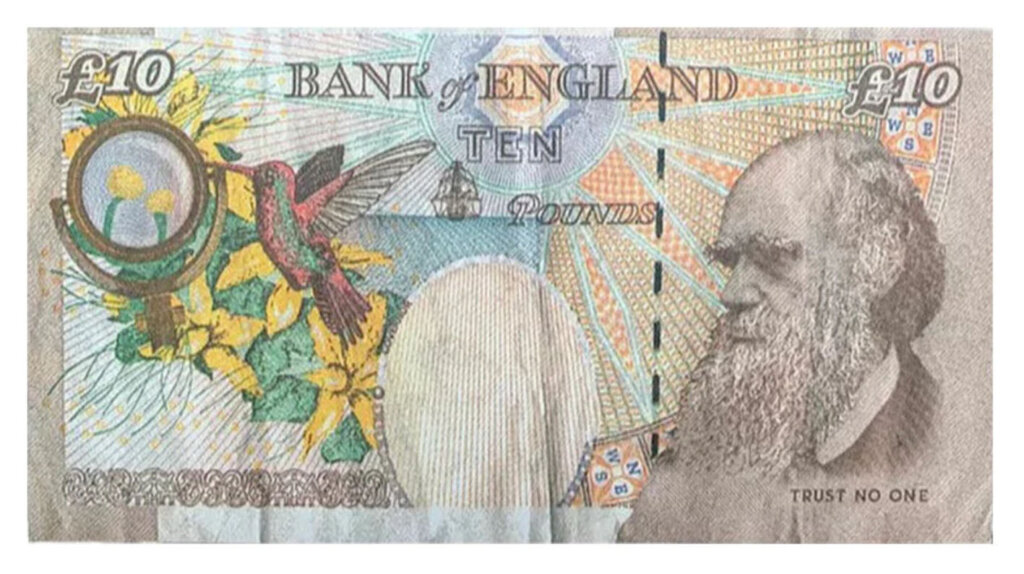
Banksy, Di-Faced Tenner, 2004 (back). Offset lithograph on paper, 14.4 x 7.6 cm. Supplied with a Letter of Provenance signed by Steve Lazarides, Banksy’s former agent. Available through GraffitiStreet. Photo copyright GraffitiStreet.
8. Limited Editions for Collectors
Beyond the loose notes associated with the public stunts, Di-Faced Tenner also exists as collectible print editions. The market commonly refers to signed and unsigned editions of 50, along with 32 artist proofs, although edition descriptions can vary depending on whether the work is being discussed as loose notes, sheets or artist proofs.
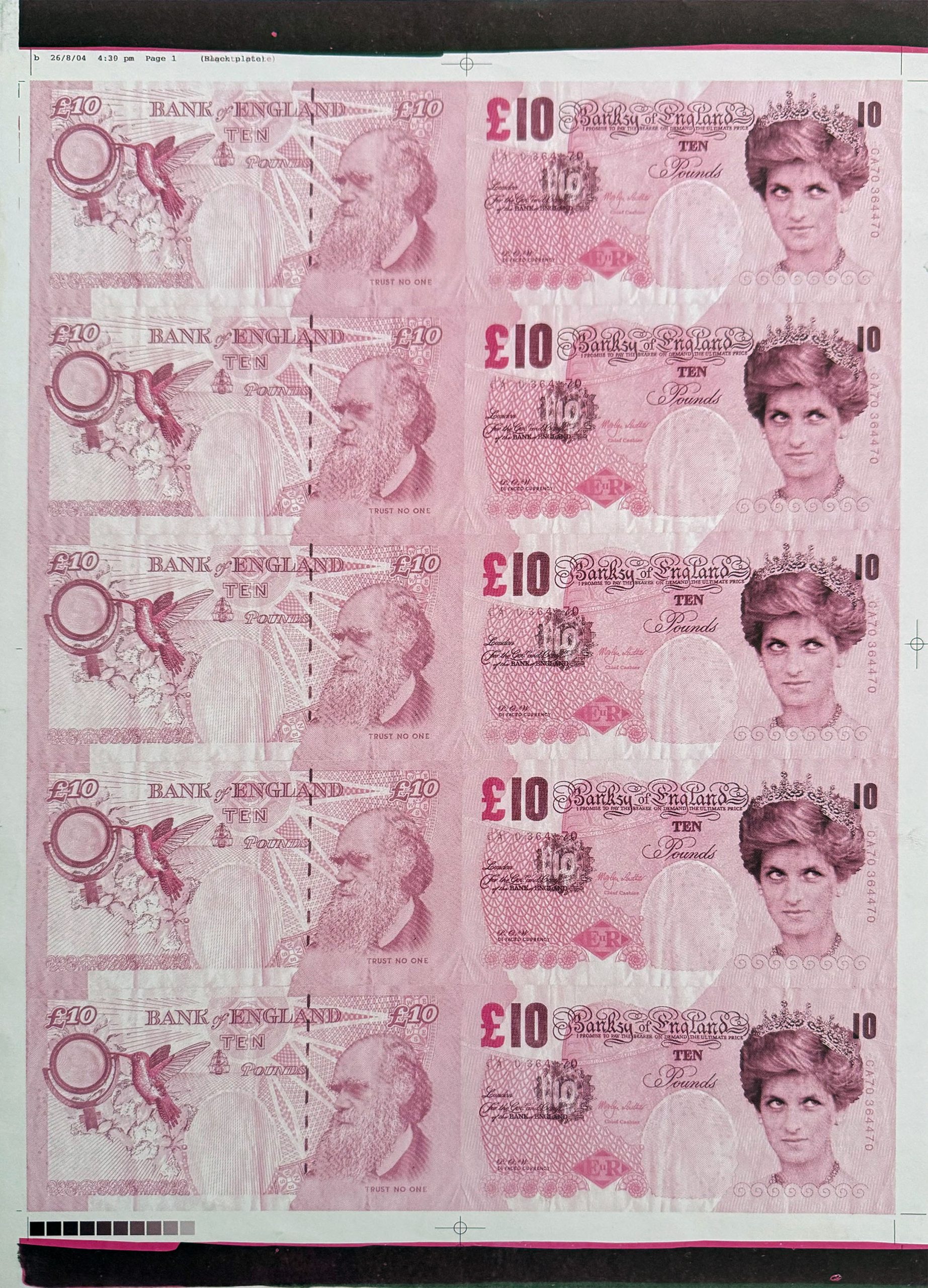
Banksy’s 2004 Di Faced Tenners (pink) lithograph is from a rare signed edition of 32. Photo copyright GraffitiStreet
9. Pest Control and Authentication
Di-Faced Tenner became deeply connected to Banksy authentication. Pest Control, the official body for Banksy certification, has historically used torn halves of Di-Faced Tenners as part of its Certificate of Authenticity system, with one half attached to the certificate and the matching half retained for verification.
Image copyright Pest Control
10. The British Museum Acquisition
In 2019, the British Museum acquired a Banksy Di-Faced Tenner for its collection of coins, medals and currency. The note joined the museum’s tradition of “skit notes,” or parody banknotes, confirming the work’s significance beyond street art and placing it within a longer history of political and financial satire.
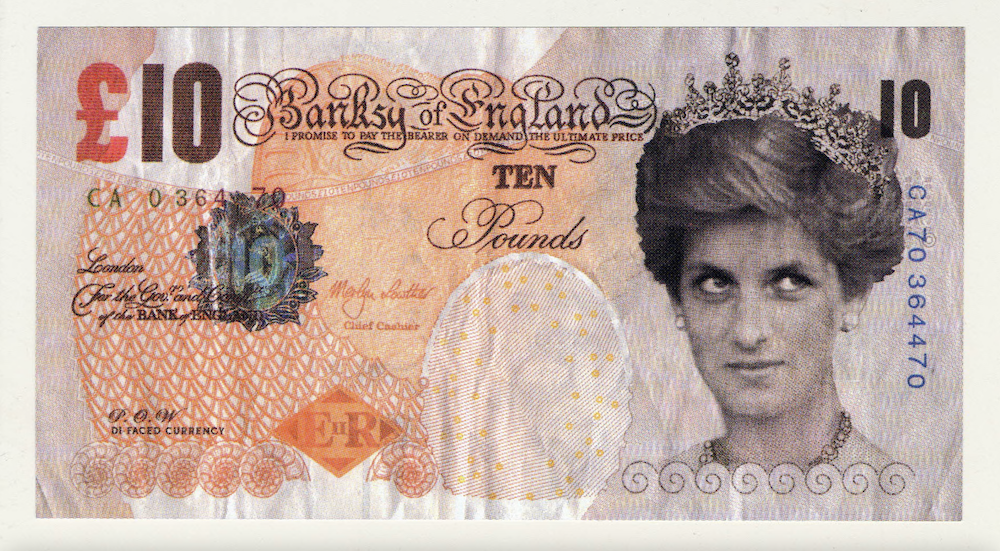
Image copyright Pest Control
Why Banksy’s Di-Faced Tenner Matters
Di-Faced Tenner remains one of Banksy’s most intelligent early works because it does what the best Banksy pieces do: it takes something ordinary, official and trusted, then quietly exposes the absurdity inside it. A banknote is only paper until a nation agrees to believe in it. An artwork is only paper until the market, the artist, the collector and the institution agree to believe in it. Banksy collapses those systems into one object.
For collectors, Di-Faced Tenner is especially important because it captures Banksy at the point where street intervention, counterfeit culture, political satire and the formal art market begin to collide. Its subject is authenticity, and its own market value depends on exactly that. Provenance, condition and Pest Control certification are therefore central when assessing any Banksy Di-Faced Tenner.
Frequently Asked Questions about Banksy’s Di-Faced Tenner
Banksy’s Di-Faced Tenner is a 2004 counterfeit-style £10 banknote featuring Diana, Princess of Wales, in place of Queen Elizabeth II.
The title is a pun on “defaced” and “Di,” referring to Princess Diana.
No. It was an artwork designed to look like British currency. Some examples were reportedly mistaken for real money during public distribution.
Yes. Di-Faced Tenner is closely associated with Pest Control, Banksy’s official authentication body, which has historically used torn halves of the fake notes as part of its Certificate of Authenticity system.
Yes. The British Museum acquired a Banksy Di-Faced Tenner in 2019 for its collection of coins, medals and currency.
Yes. The Banksy Di-Faced Tenner available online through GraffitiStreet is supplied with a Letter of Provenance signed by Steve Lazarides, Banksy’s former agent.
Collect Banksy’s Di-Faced Tenner with GraffitiStreet
Banksy’s Di-Faced Tenner is available online through GraffitiStreet and is supplied with a Letter of Provenance signed by Steve Lazarides, Banksy’s former agent. As one of Banksy’s most recognisable early works on value, authenticity and counterfeit culture, it offers collectors the opportunity to acquire a defining object from the artist’s early practice.
GraffitiStreet can advise on provenance, condition, bespoke framing options and acquisition. View the artwork online or contact GraffitiStreet to speak directly with co-founder and Banksy specialist Rosh Boroumand.
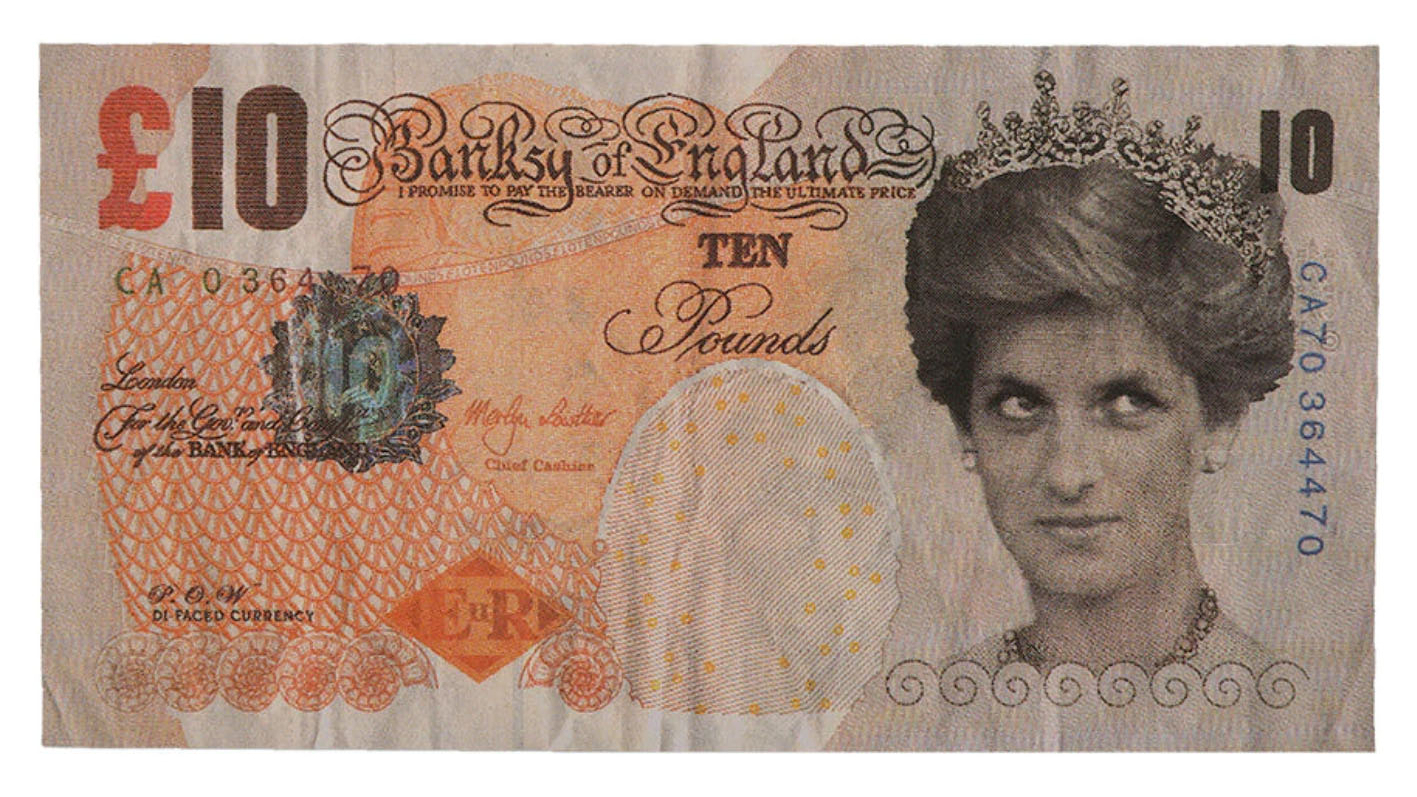
Banksy, Di-Faced Tenner, 2004. Offset lithograph on paper, 14.4 x 7.6 cm. Supplied with a Letter of Provenance signed by Steve Lazarides, Banksy’s former agent. Available through GraffitiStreet. Photo copyright GraffitiStreet.