Ten Banksy Quotes from Existencilism: Art, Politics and the Street
Published in 2002, Banksy’s Existencilism is the artist’s second book and one of the most revealing documents from his early career. Small enough to fit in a pocket, the black-covered publication brings together stencil art, photographs, vandalism, observations, jokes and fragments of writing that helped establish the voice now inseparable from Banksy’s work.
The title itself sets the tone. Existencilism folds “stencil” into “existentialism”, turning a school of philosophy into a typically Banksy play on words. Behind the humour, however, are many of the ideas that would continue through his work over the following decades: authority, capitalism, public space, individual freedom and the absurdities of modern life.
Here, we revisit ten Banksy quotes from Existencilism alongside works and street interventions that echo the same ideas.
1. Good Intentions
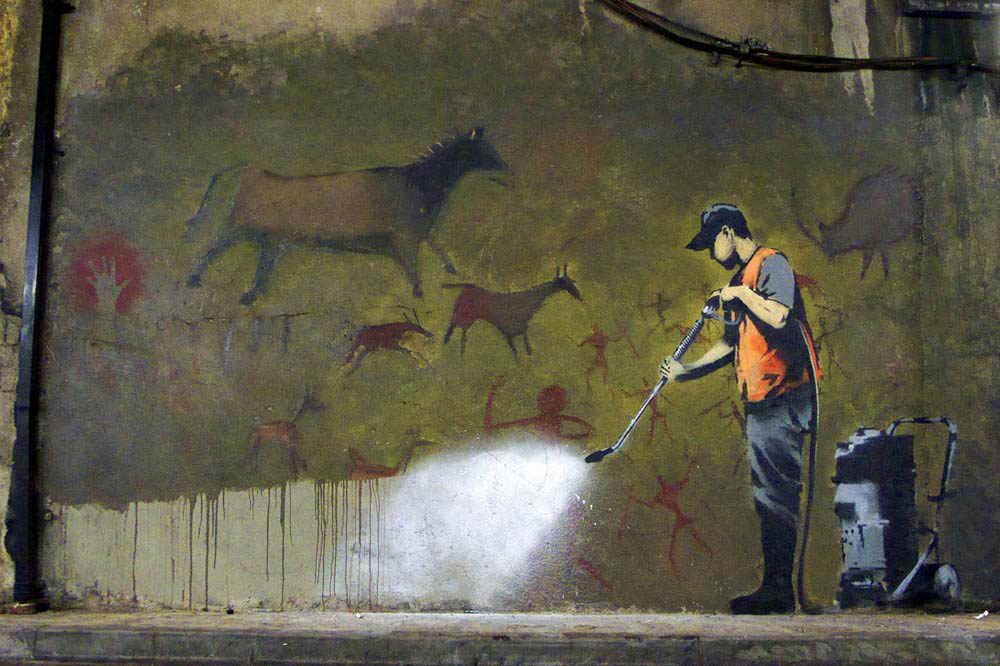
“There’s nothing more dangerous than someone who wants to make the world a better place.”
It is classic Banksy: a seemingly optimistic idea turned inside out. The line questions what happens when conviction becomes certainty and when the desire to improve society begins to justify controlling it.
2. Being Yourself
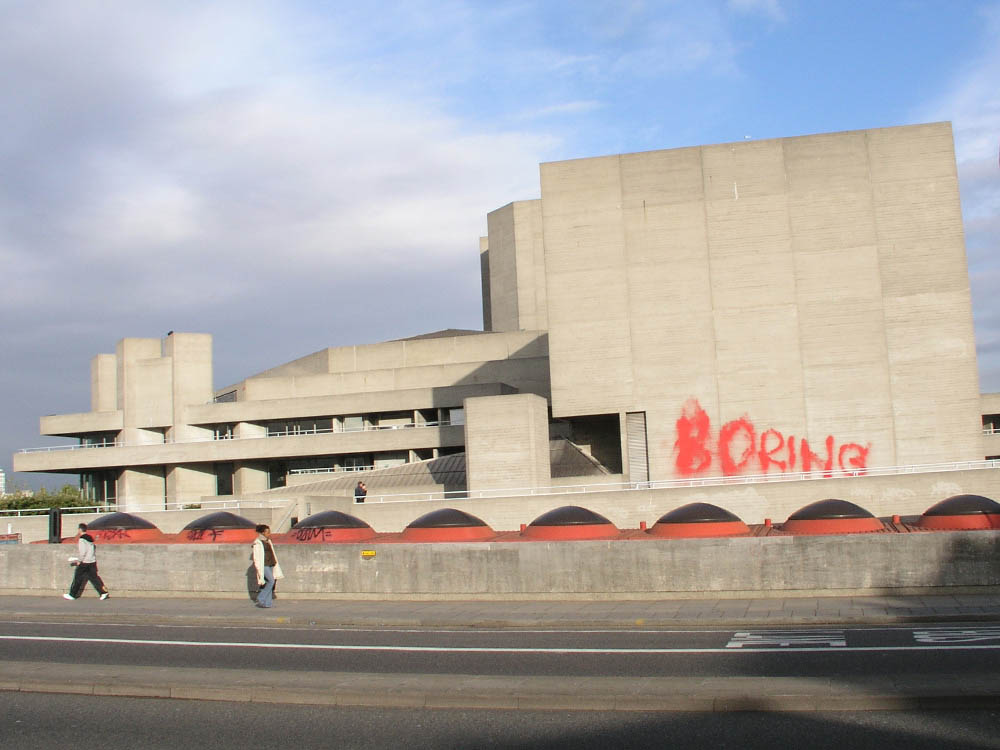
“Being yourself is overrated anyway. It doesn’t help.
People say ‘I’m just being myself’ as if that’s some kind of achievement.
That’s not an achievement, that’s not honesty,
it’s lack of imagination and cowardice.”
Banksy’s anonymity makes this observation particularly interesting. Rather than presenting identity as something fixed and sacred, he suggests it can become another convention to hide behind.
3. Identity and Authority
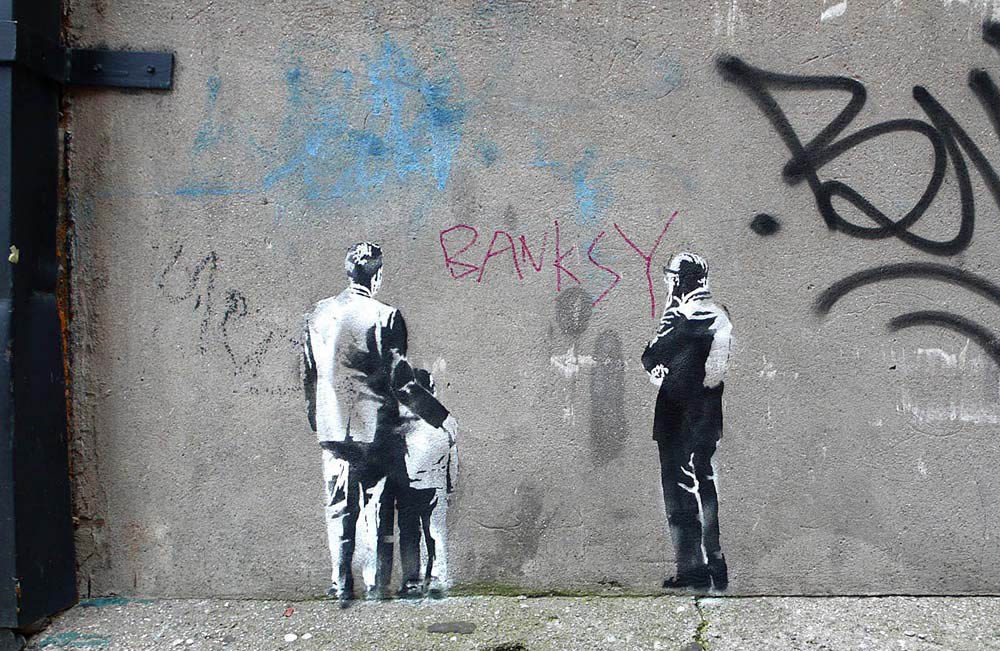
“Last year there was a story on the news that went
‘A man arrested in Central London today was found to be carrying over a hundred British passports, twenty birth certificates and more than three hundred driving licenses.
Police say they have not yet been able to identify the man.’”
The joke works because it exposes the absurdity hidden within bureaucracy. Documents are supposed to establish identity; Banksy imagines so many of them that identity becomes impossible to determine.
4. Artists
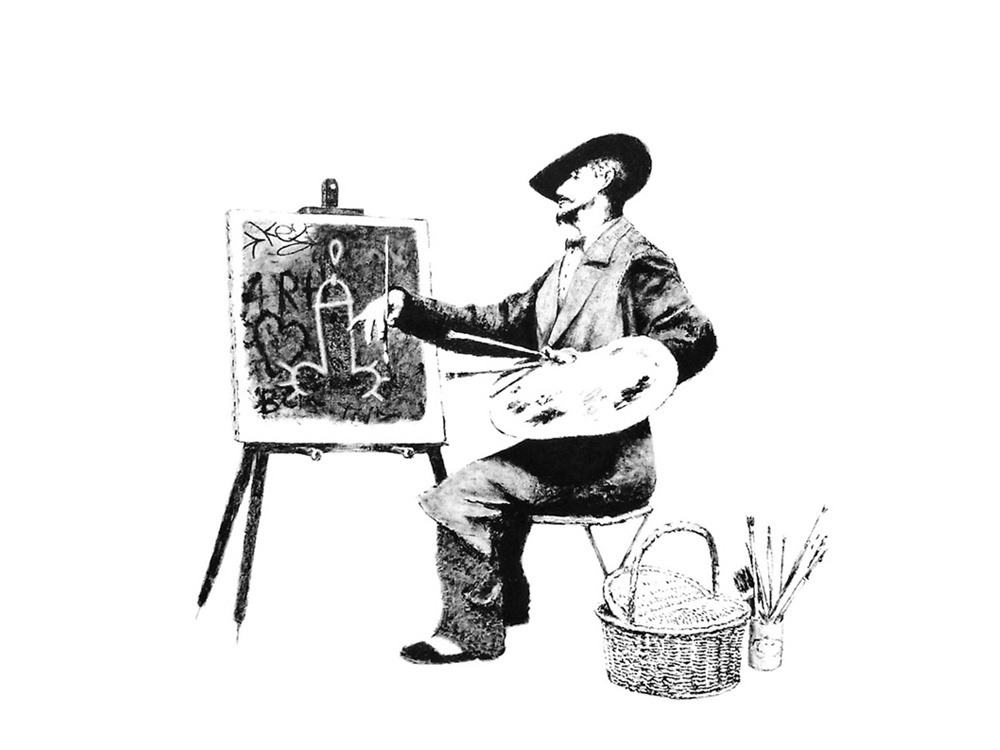
“All artists are willing to suffer for their work.
But why are so few prepared to learn to draw?”
Banksy has always been willing to turn the joke back towards the art world. Beneath the punchline is a pointed distinction between cultivating the image of an artist and developing the skill required to make art.
5. Defying Gravity
“Painting something that defies the law of the land is ok.
Painting something that defies the law of the land
and defies the law of gravity at the same time is ideal.”
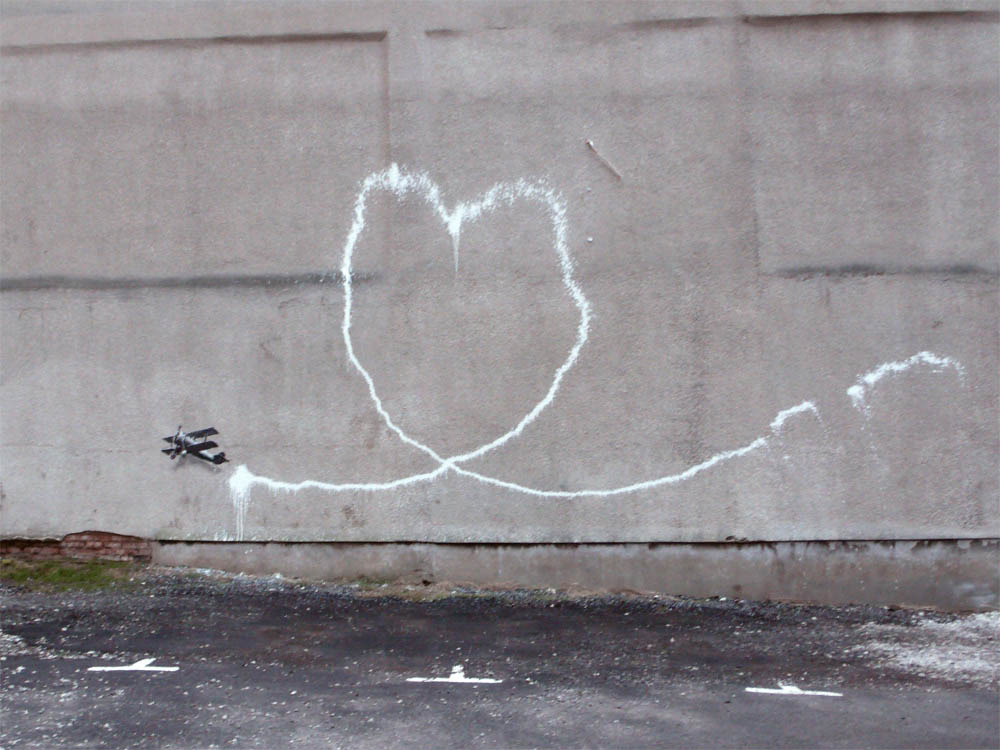
Illegal placement has always been part of Banksy’s visual language. Height, architecture and physical difficulty can transform a simple stencil into something closer to an intervention, a work whose location is inseparable from its meaning.
6. This Is Not a Photo Opportunity
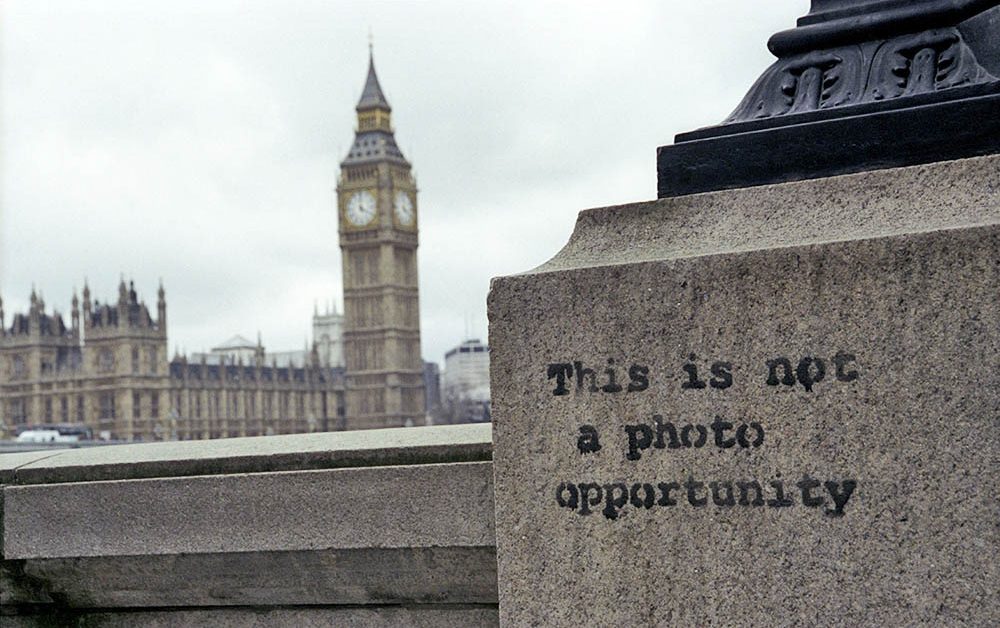
“This is not a photo opportunity.”
Long before the Instagram age fully arrived, Banksy was already interested in the way places, events and even acts of resistance become spectacles to be photographed and consumed.
Explore Banksy works available via GraffitiStreet
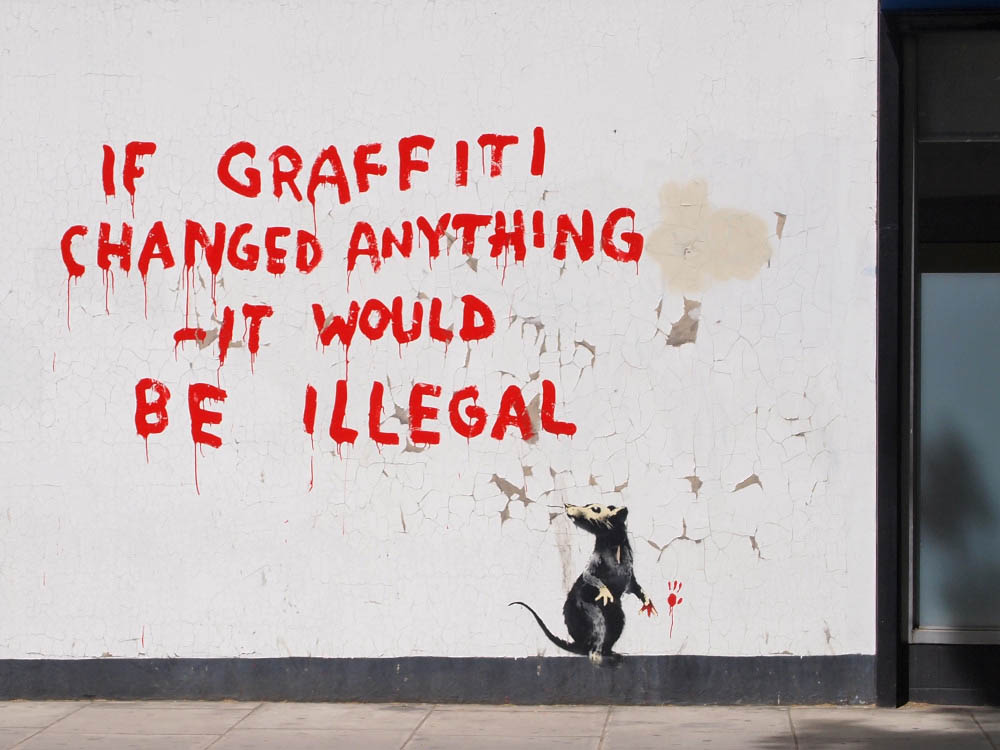
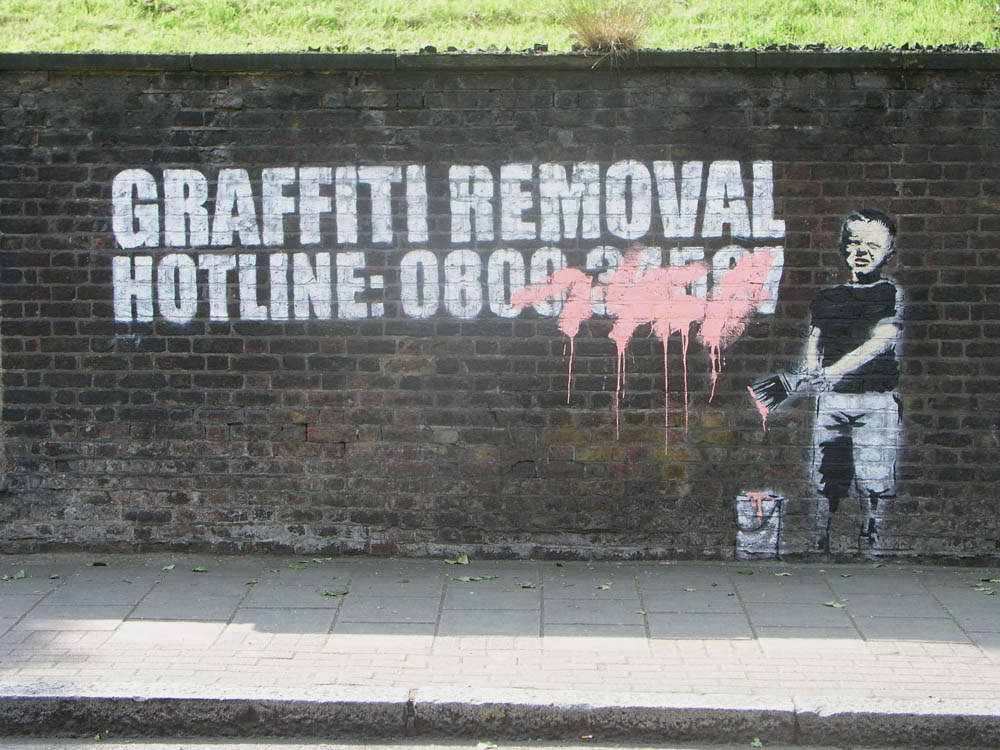
7. The Graffiti Problem
“They say there is a graffiti problem.
The only problem with graffiti is that there isn’t enough of it.”
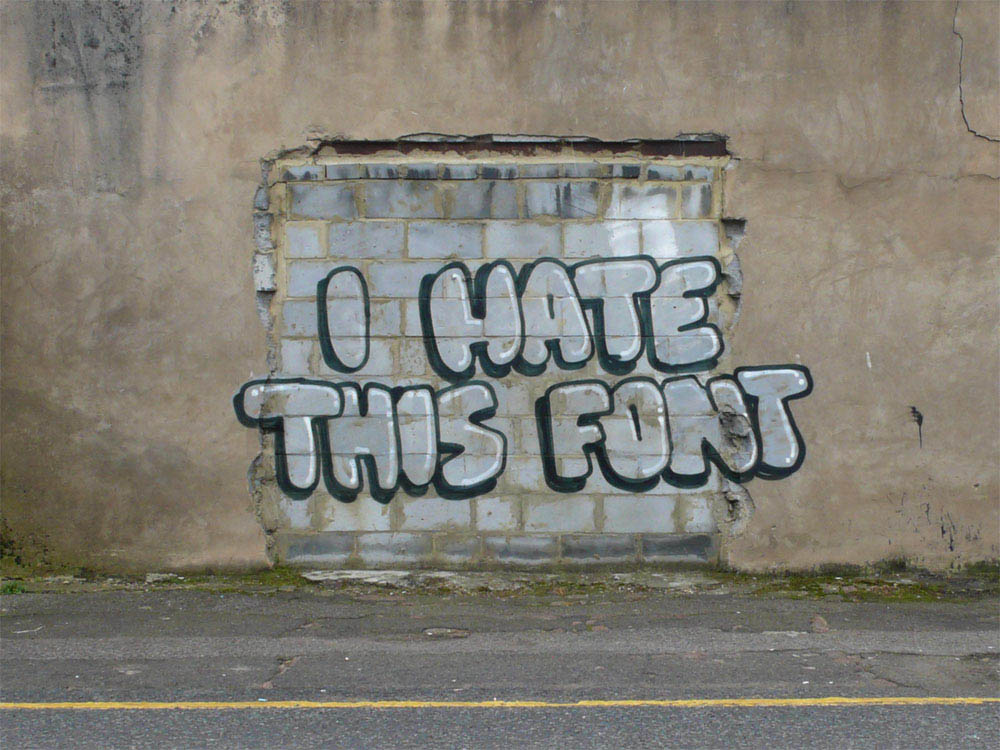
For Banksy, the argument around graffiti has never simply been about whether somebody has permission to paint a wall. It is also about who is permitted to communicate in public space, and why commercial advertising is so often accepted where unsanctioned art is not.
8. Police, Power and the Street
“Policemen and security guards always wear hats with a peak that comes down low over their eyes. Apparently this is a psychological technique because eyebrows are very expressive,
they let you down if you’re lying or trying to bully somebody.
You have far more authority if you keep them covered up.
The advantage of this is that it makes it difficult for your average cop to see anything
more than six foot off the ground. Which is why painting rooftops and bridges is so easy.”
Authority is one of Banksy’s recurring subjects, but rarely without humour. Police officers appear throughout his work as threatening, ridiculous, vulnerable and occasionally absurd — symbols of institutional power made human again.
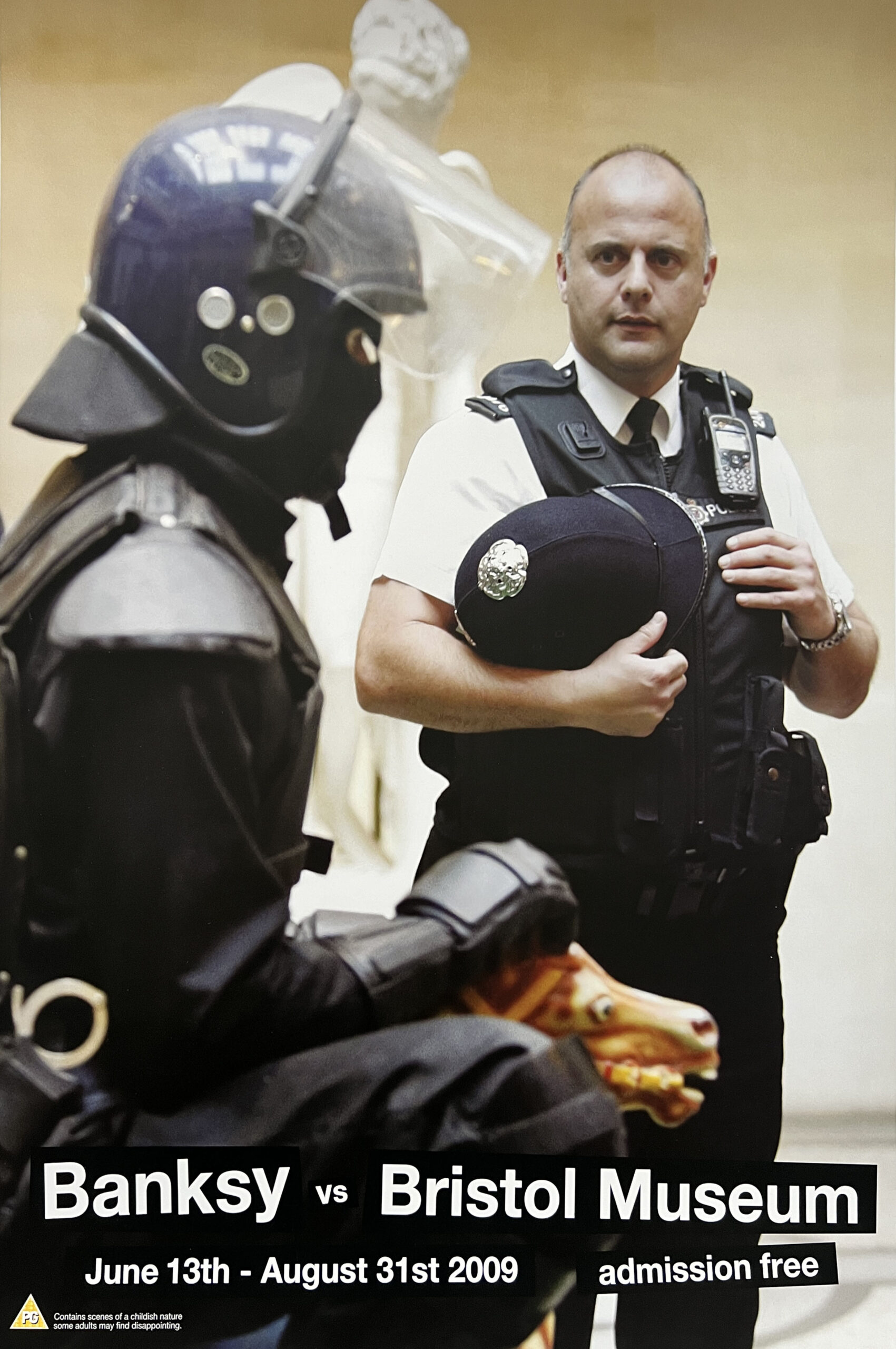
Banksy vs Bristol Museum — Riot Coppers poster available via GraffitiStreet
9. Imagine a City
“Imagine a city where graffiti wasn’t illegal, a city where everybody could draw wherever they liked. Where every street was awash with a million colours and little phrases.
Where standing at a bus stop was never boring. A city that felt like a living breathing thing which belonged to everybody, not just the estate agents and barons of big business.
Imagine a city like this and stop leaning against that wall — it’s wet.”
Perhaps one of the clearest statements of Banksy’s belief in the street itself. The city is imagined not simply as property or infrastructure, but as a shared visual environment in which ordinary people might also leave a mark.
And then, characteristically, Banksy punctures his own manifesto with a joke.
10. The Exception to the Rule
“There are no exceptions to the rule that everybody likes to be an exception to the rule.”
The contradiction is precisely the point. Banksy repeatedly exposes the gap between the rules society creates and the private belief that, somehow, those rules should apply more strictly to somebody else.
Banksy’s Official Books
Banksy has released five official books, beginning with three pocket-sized publications that documented his work, writing and ideas before his international reputation had fully taken shape.
His first, Banging Your Head Against a Brick Wall, appeared in 2001, followed by Existencilism in 2002 and Cut It Out in 2004. The larger Wall and Piece followed in 2005, bringing together material from Banksy’s earlier books alongside further photographs, interventions and commentary.
Explore the books through our Banksy quote series:
10 Banksy Quotes from Banging Your Head Against a Brick Wall
10 Banksy Quotes from Existencilism
10 Banksy Quotes from Cut It Out
10 Banksy Quotes from Wall and Piece
Banksy’s fifth official publication, Cut & Run, arrived in 2023 alongside his major Glasgow exhibition of the same name. GraffitiStreet also covered the exhibition in CUT & RUN: Banksy’s Exhibition Spanning 25 Years of Iconic Works.
Together, the books provide something Banksy’s murals alone cannot: Banksy in his own words. Read chronologically, they reveal how consistently his ideas around authority, advertising, capitalism, public space, war and the art establishment have developed alongside the imagery.
Existencilism
The title Existencilism combines “existentialism” with “stencil”, turning Banksy’s preferred technique into its own mock philosophy.
More importantly, the book captures many of the ideas that would go on to define his work: suspicion of authority, hostility towards advertising and corporate power, humour as a form of resistance, and the belief that the walls of a city should not belong exclusively to those wealthy enough to buy them.
Title: Existencilism
Artist / Author: Banksy
Published: 2002
Publisher: Weapons of Mass Distraction
Format: Pocket-sized softcover publication
Dimensions: approximately 148 × 105 mm
Contents: Full-colour photographs, stencil works, street interventions, writing and commentary by Banksy
Early and later impressions of Existencilism are known, with small bibliographic differences between printings. Today, surviving copies of Banksy’s early pocket books have become collectible objects in their own right, physical records of the period before one of the world’s most recognised artists became a global phenomenon. second edition was printed in 2007 by EPM.
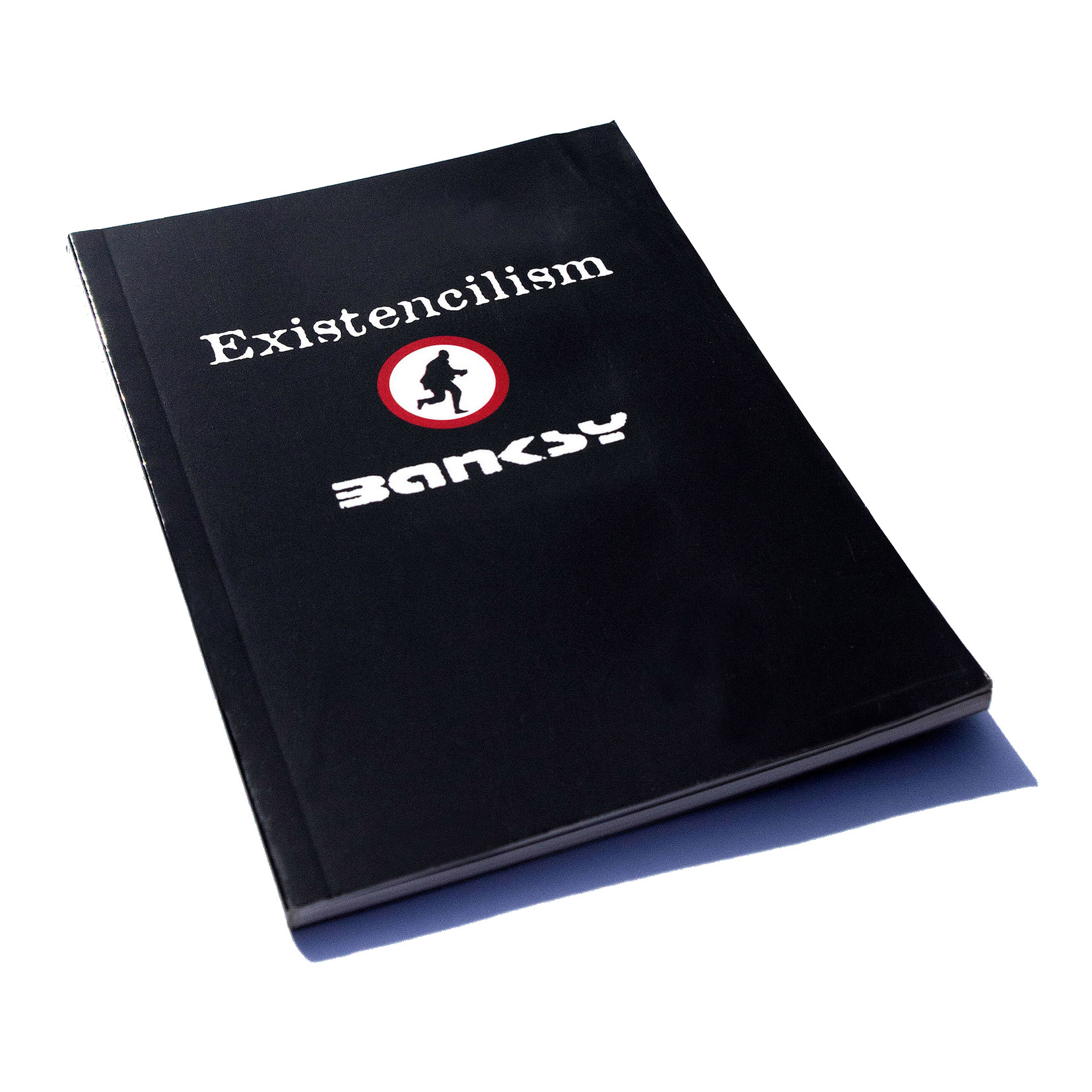
“Existstencilism” by Banksy – Image copyright EPM
Purchase Existencilism (Second Edition) here.
All Images Copyright Banksy