Bordalo II Big Trash Animals: Waste, Wildlife and Meaning
Bordalo II’s art begins with a striking contradiction: the beauty of the natural world rebuilt from the debris of human excess. The Portuguese contemporary artist, born Artur Bordalo in Lisbon in 1987, is internationally recognised for his large-scale animal sculptures made from discarded materials, yet the real force of his practice lies beyond their immediate spectacle.
Through waste, colour, scale and public space, Bordalo II examines consumer culture, overproduction, habitat destruction and the uneasy relationship between modern life and the ecosystems it continues to harm.

Bordalo II, Big Trash Animal: Raccoon, Lisbon, 2015. Created from the city’s discarded materials and viewed with love. Image copyright Bordalo II.
GraffitiStreet first documented the original Lisbon Raccoon in 2015, with the work’s changing place in the city later explored through Re-Raccoon in 2025.
Who is Bordalo II
Bordalo II is the artist name of Artur Bordalo, a Portuguese contemporary artist living and working in Lisbon. His name pays tribute to his grandfather, the painter Real Bordalo, keeping the family legacy while allowing it to evolve into a contemporary visual language rooted in the city, discarded materials and ecological consciousness.
Emerging from Lisbon’s street art scene, Bordalo II developed a practice that transforms urban waste into large-scale animal portraits. His best-known body of work, Big Trash Animals, has appeared in cities across Europe, Asia, North America, South America and the Middle East, giving his work a global presence while keeping it closely connected to local environments with the trash collected.
Since 2012, Bordalo II’s official site records 178 tons of reused materials, a figure that gives physical scale to the ecological concerns at the heart of his work. His sculptures are made from the discarded matter of contemporary life: tyres, plastics, vehicle bumpers, construction debris, appliances, electronic components and other urban fragments that might otherwise be ignored, buried or forgotten.
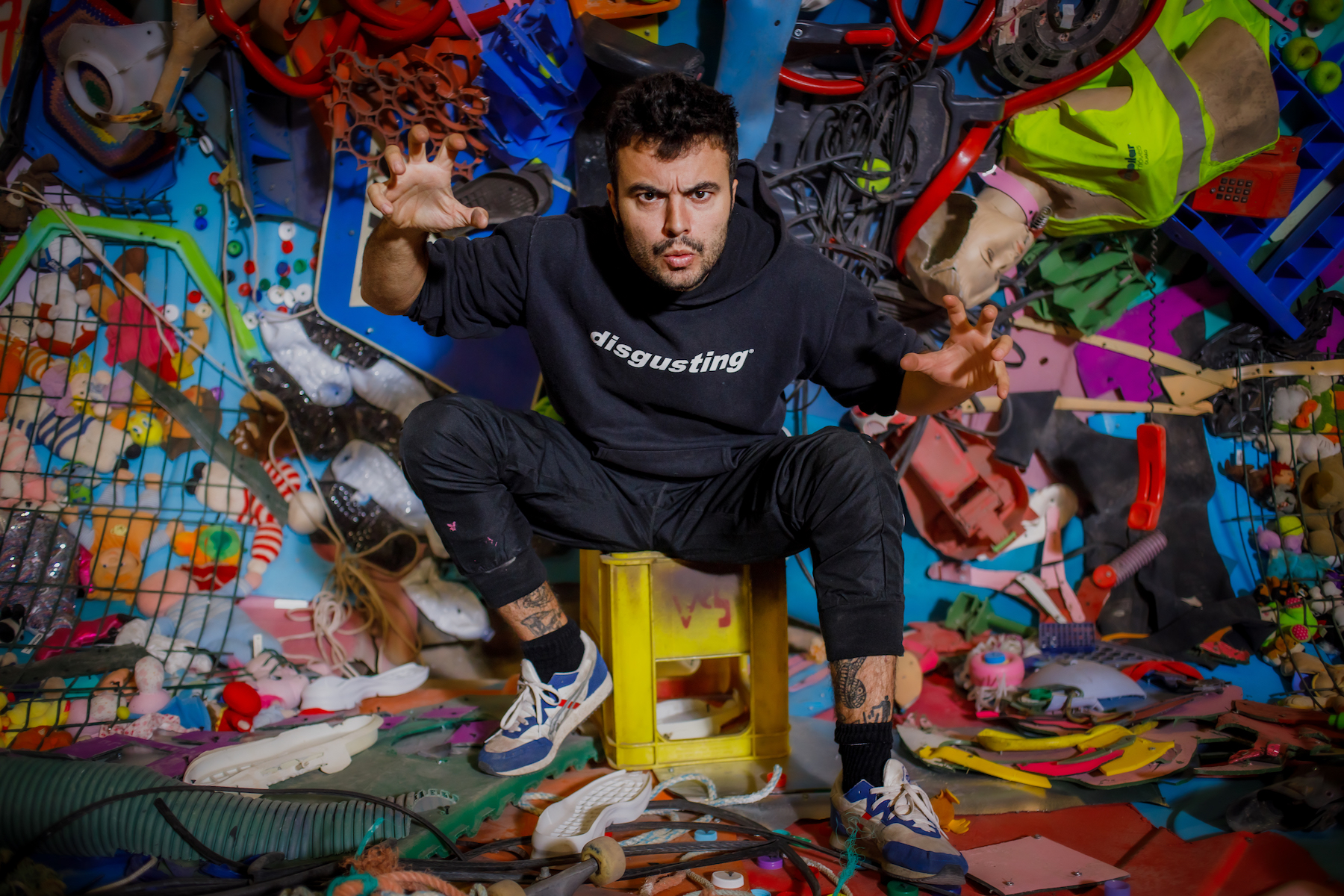
Bordalo II, EVILUTION exhibition. A powerful exploration of waste, consumption and ecological consequence through the artist’s unmistakable recycled-material language. Image copyright Bordalo II.
What Is Bordalo II Known For?
Bordalo II is best known for creating monumental animal sculptures from recycled waste materials. His works often depict foxes, raccoons, birds, bees, fish, mammals and other creatures with striking colour, texture and presence. From a distance, they can appear playful and spectacular. Up close, the body of each animal reveals the broken objects and industrial leftovers from which it has been made.
This tension is central to his practice. The animals are created from the very materials associated with the destruction of their habitats. A sculpture may first appear as an image of wildlife, then gradually disclose itself as a record of overproduction, consumption and disposal.
Bordalo II’s work has global appeal because it is immediately readable, yet conceptually layered. A passer-by can recognise the animal instantly, take a closer look and the viewer begins to see the cultural and ecological critique embedded in its surface. This is where his practice moves beyond creative recycling and becomes a serious contemporary language of environmental art.
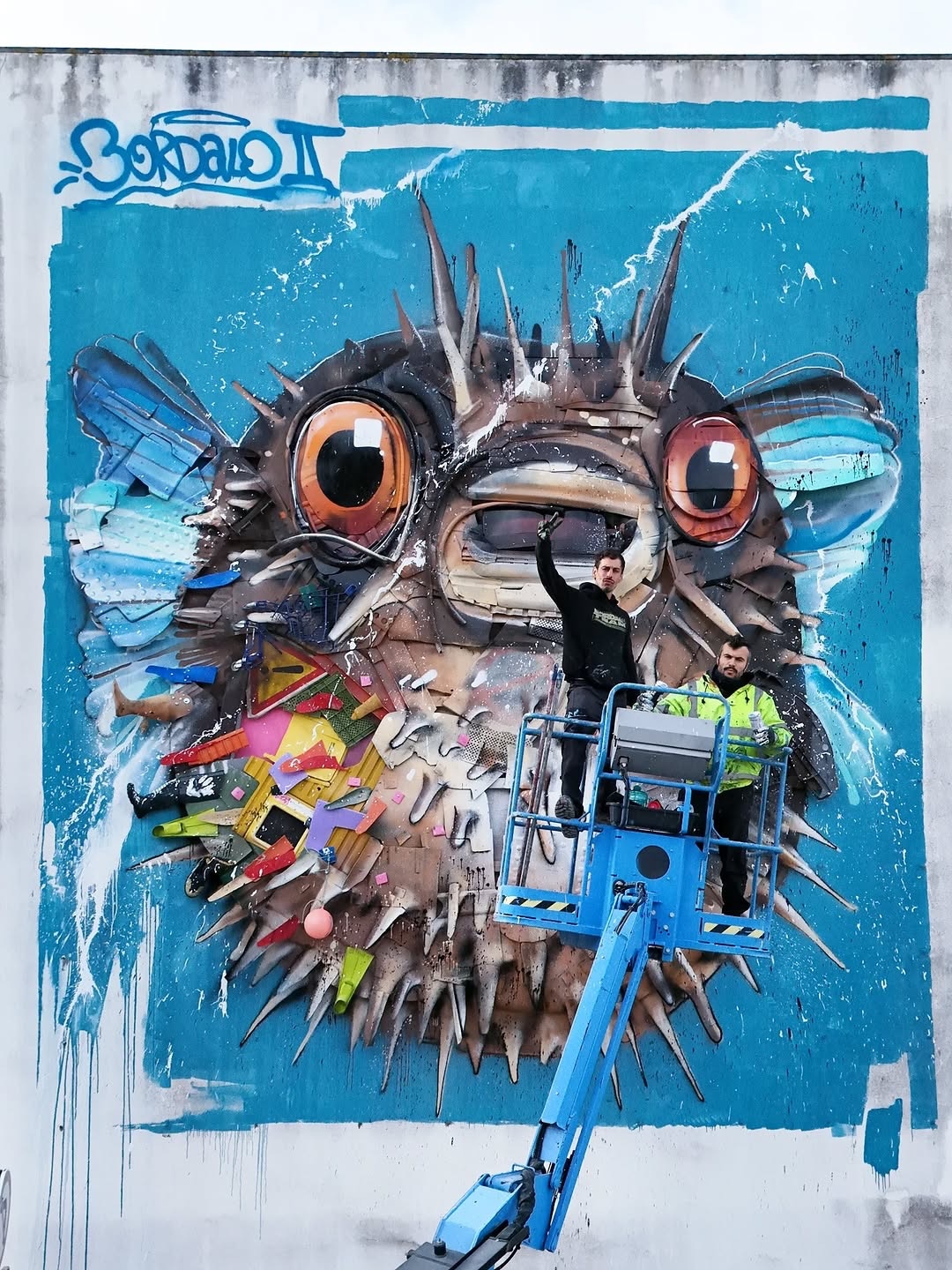
Bordalo II, Big Trash Animal: Balloon Fish, Trafaria, Costa da Caparica, Portugal. Image copyright Bordalo II.
What Is the Meaning Behind Bordalo II’s Art?
The meaning behind Bordalo II’s art begins with an uncomfortable contradiction. Humanity produces vast quantities of waste while damaging the ecosystems and species that sustain life. His sculptures make this contradiction visible by using discarded materials to represent animals affected by pollution, habitat loss, climate change, urban expansion and overconsumption.
The waste is part of the message. Each fragment carries evidence of a system built around speed, convenience, desire and disposal. When these objects are reassembled into animal form, they create a visual relationship between what humans discard and what the natural world is forced to absorb.
This is why Bordalo II’s work has such emotional force. The viewer is drawn in by colour, scale and the familiarity of the animal, then held by the material truth of the sculpture. The work does not rely on shock alone. It creates recognition. It asks us to look again at what we throw away, what we value and what our habits leave behind.
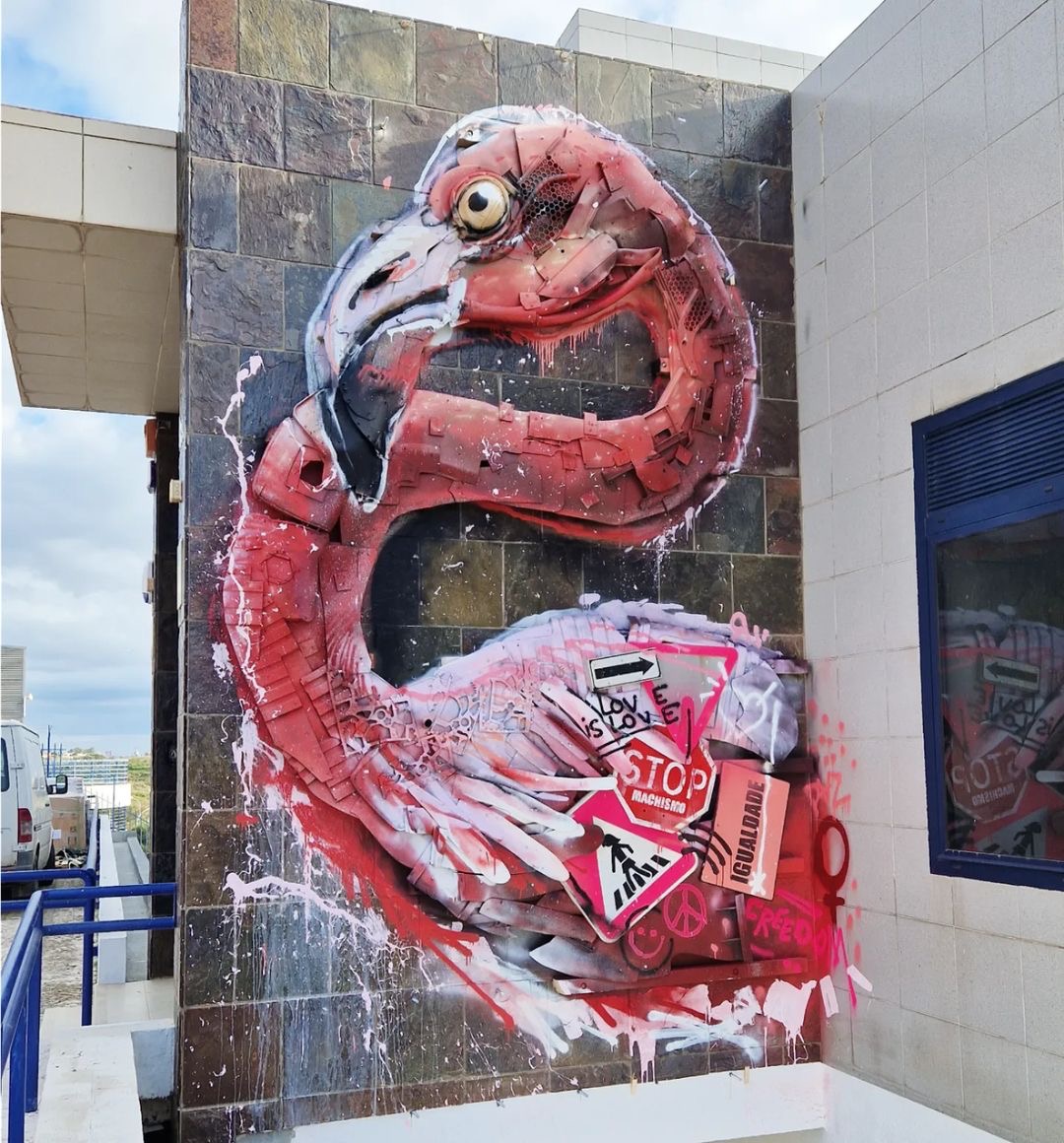
Bordalo II, Big Trash Flamingo, created for Women’s Day. Image copyright Bordalo II.
Why Does Bordalo II Use Waste Materials?
Bordalo II uses waste materials because they are both physical substance and conceptual evidence. These materials come from the same culture of excessive production and consumption that his work critiques. Every tyre, plastic shard, broken appliance and vehicle part carries the memory of use, convenience and abandonment.
In transforming these discarded objects, Bordalo II challenges the assumption that waste is without value. Materials rejected by society become monumental, expressive and publicly admired. Yet the transformation never fully erases their former identity. The viewer can still recognise the debris, which keeps the environmental message active within the image.
This is one of the most powerful qualities of his art. Bordalo II allows waste to become beautiful while still holding it accountable. The result is art that feels generous, inventive and visually alive, while remaining rooted in a clear ecological warning.
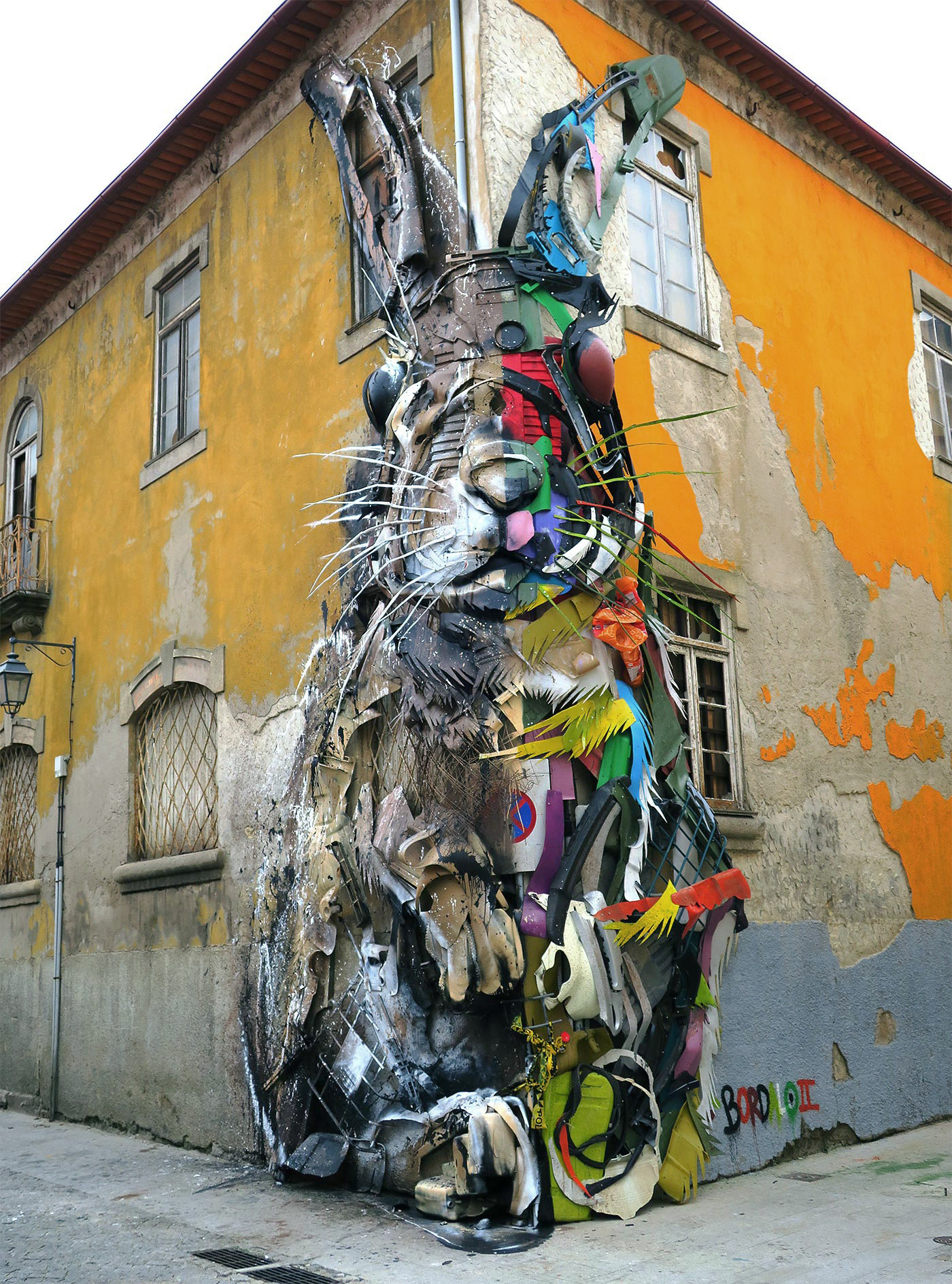
Bordalo II, Half Rabbit, Vila Nova de Gaia, Portugal, 2017. Image copyright Bordalo II.
Why Does Bordalo II Create Animal Sculptures?
Bordalo II creates animal sculptures because animals allow his environmental concerns to become emotionally immediate. Wildlife gives the work a recognisable form and a shared visual language. A viewer may not know the full context of the artwork, but they can recognise a fox, bird, raccoon, bee, fish or wild cat. The animal becomes a witness to human behaviour.
Many of Bordalo II’s creatures represent species affected by habitat destruction, plastic waste, pollution, climate change, industrial activity and urban expansion. They are not sentimental images of nature. They are portraits of vulnerability, resilience and ecological pressure.
This is why the sculptures often feel playful and unsettling in the same breath. They carry the appeal of public art and the weight of environmental warning. They invite affection, then ask for responsibility.
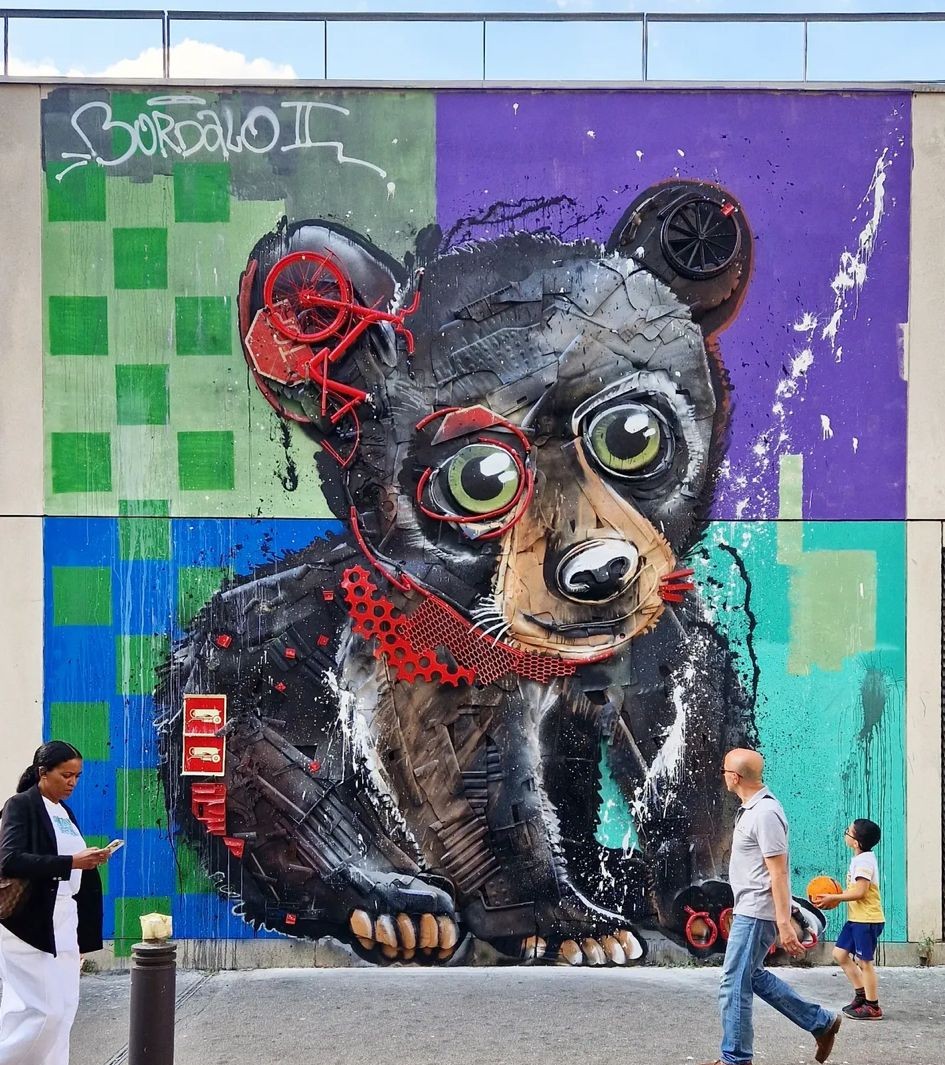
Bordalo II, Baby Bear, Paris. Big trash animal. Image copyright Bordalo II.
What Are Bordalo II’s Big Trash Animals?
Big Trash Animals is Bordalo II’s best-known body of work, but the series is more layered than a single visual approach. Bordalo II presents the project through three distinct sub-series: Neutral, Half-Half and Plastic.
This structure is essential to understanding the sophistication of his practice. The series moves between concealment, contrast and exposure. In one approach, the waste is camouflaged so the sculpture appears closer to a real animal. In another, the animal is divided between a naturalistic side and an exposed trash-built side. In the most direct works, the materials are left fully visible, allowing the discarded objects to dominate the surface.
Together, these three approaches show how Bordalo II continually rethinks the relationship between animal form, waste material and environmental meaning. Big Trash Animals is not only a series of impressive public sculptures. It is a visual system for thinking about how nature is represented, damaged and reconstructed through the debris of human life.
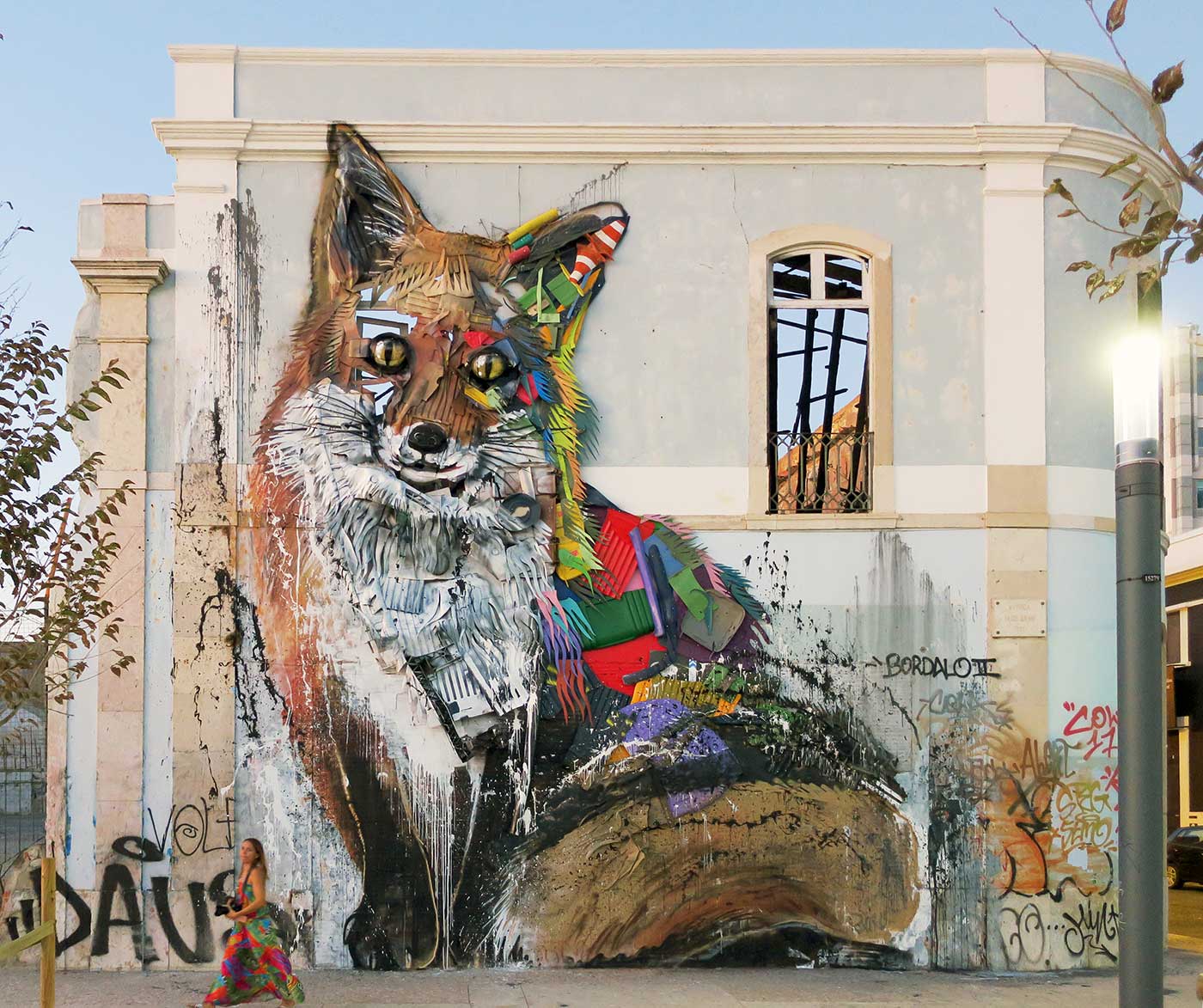
Bordalo II, Half Fox, Attero, Lisbon, Portugal, 2017. Image copyright Bordalo II.
Neutral, Half-Half and Plastic: The Three Types of Big Trash Animals
In the Neutral sub-series, Bordalo II camouflages the waste using paint and other materials so the sculpture gives the impression of being close to a real animal. The individual objects become almost imperceptible, creating complex textures that feel organic rather than industrial. Examples include Red Squirrel in Dublin, Ireland, 2017; Baby Dear in Lodz, Poland, 2024; Moose Father and Baby in Boston, USA, 2022; and Pelican in Aruba, 2016.
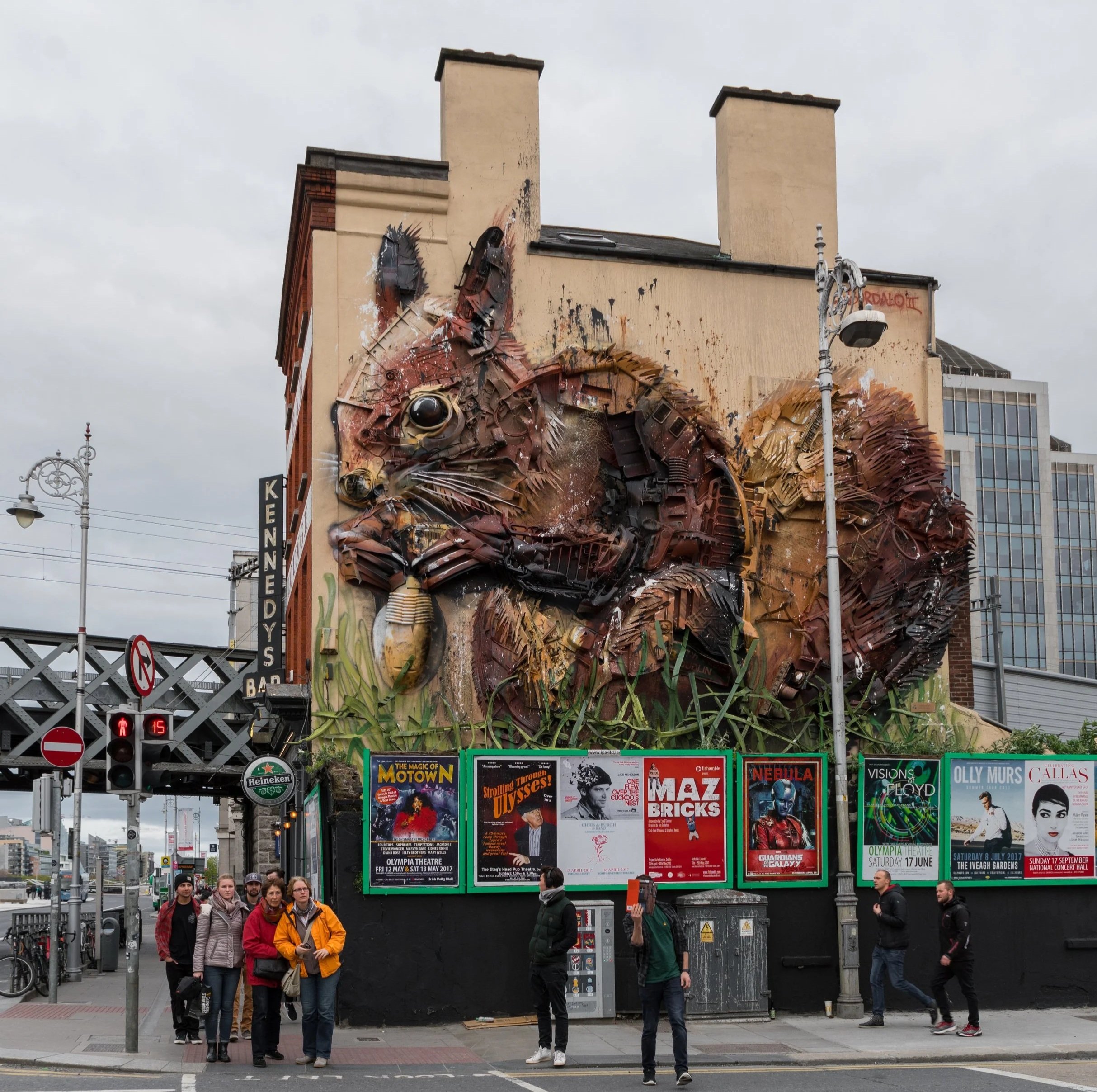
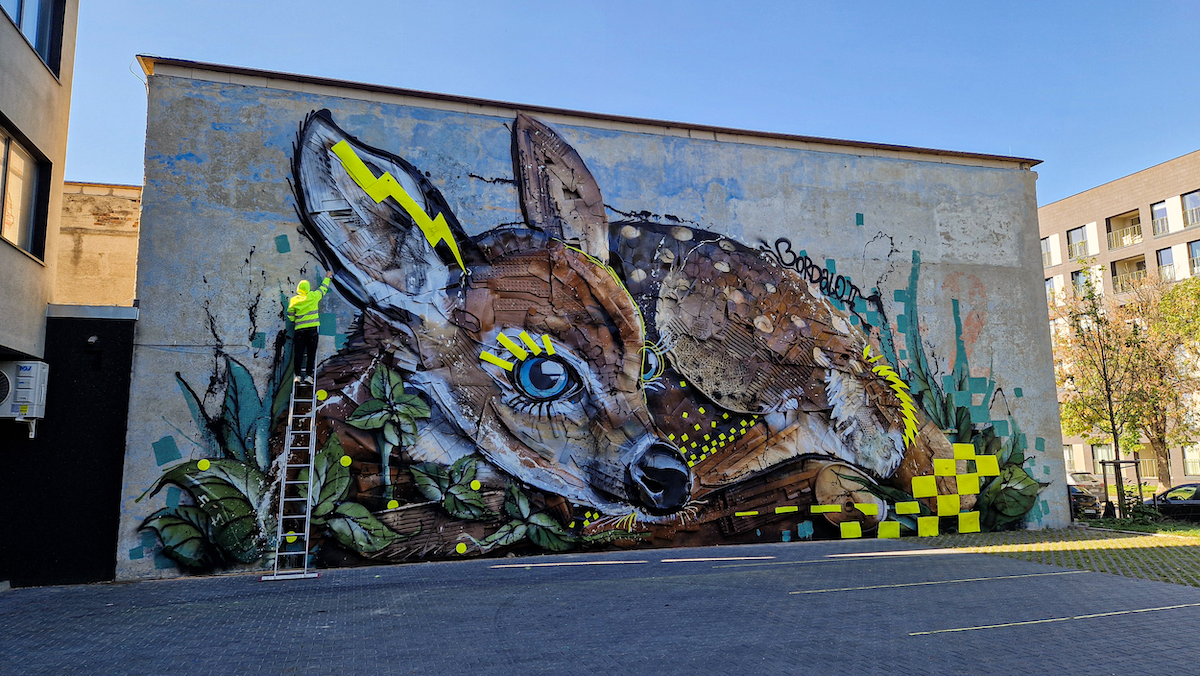
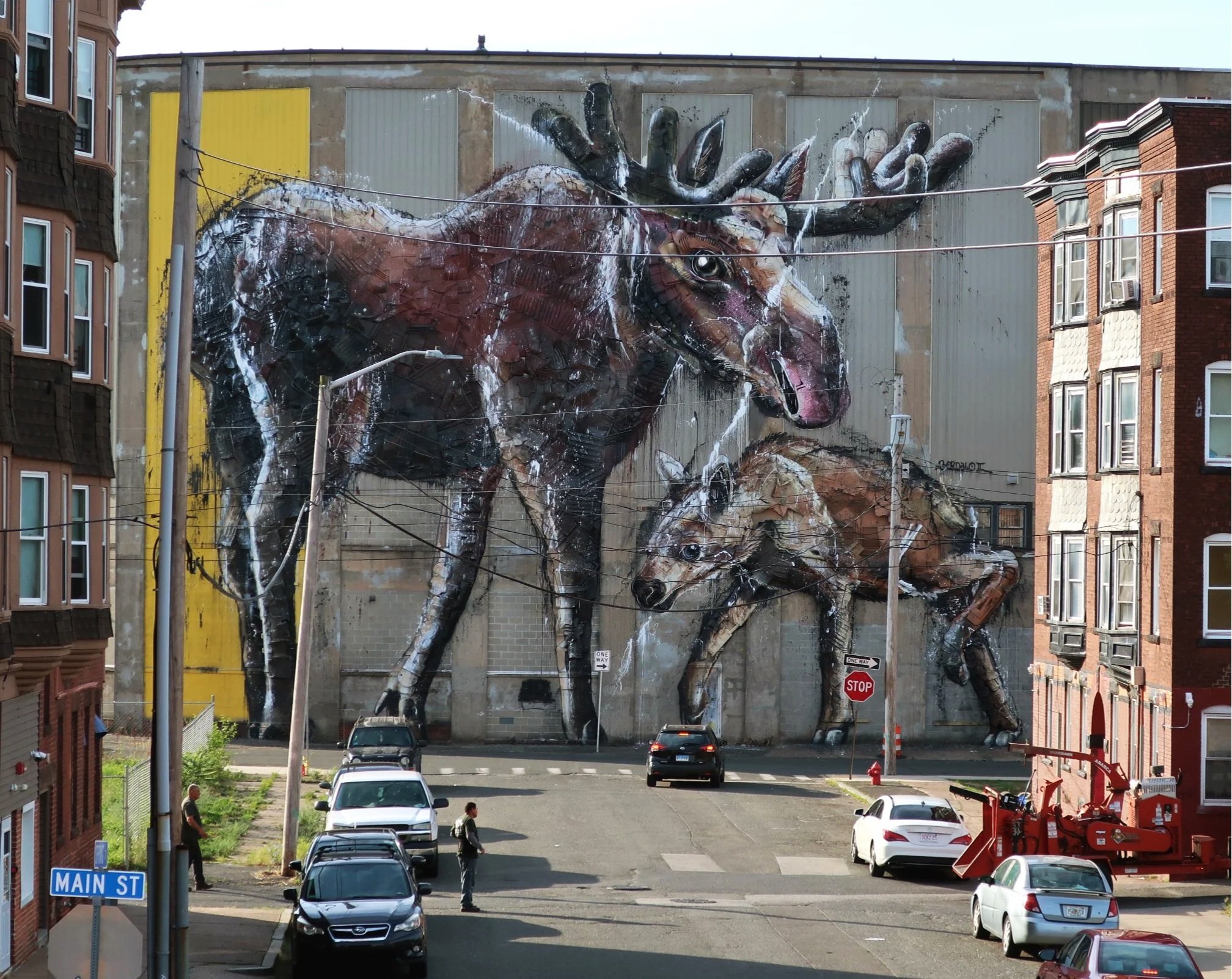
mage copyright Bordalo II
In the Half-Half sub-series, Bordalo II makes the contradiction between nature and waste more explicit. These sculptures are divided between a more naturalistic animal surface and an exposed trash-built side. Examples include Half Rabbit in Vila Nova de Gaia, Portugal, 2017; Half Hedgehog in Montreal, Canada, 2023; and Half Panda in Lisbon, Portugal, 2022.
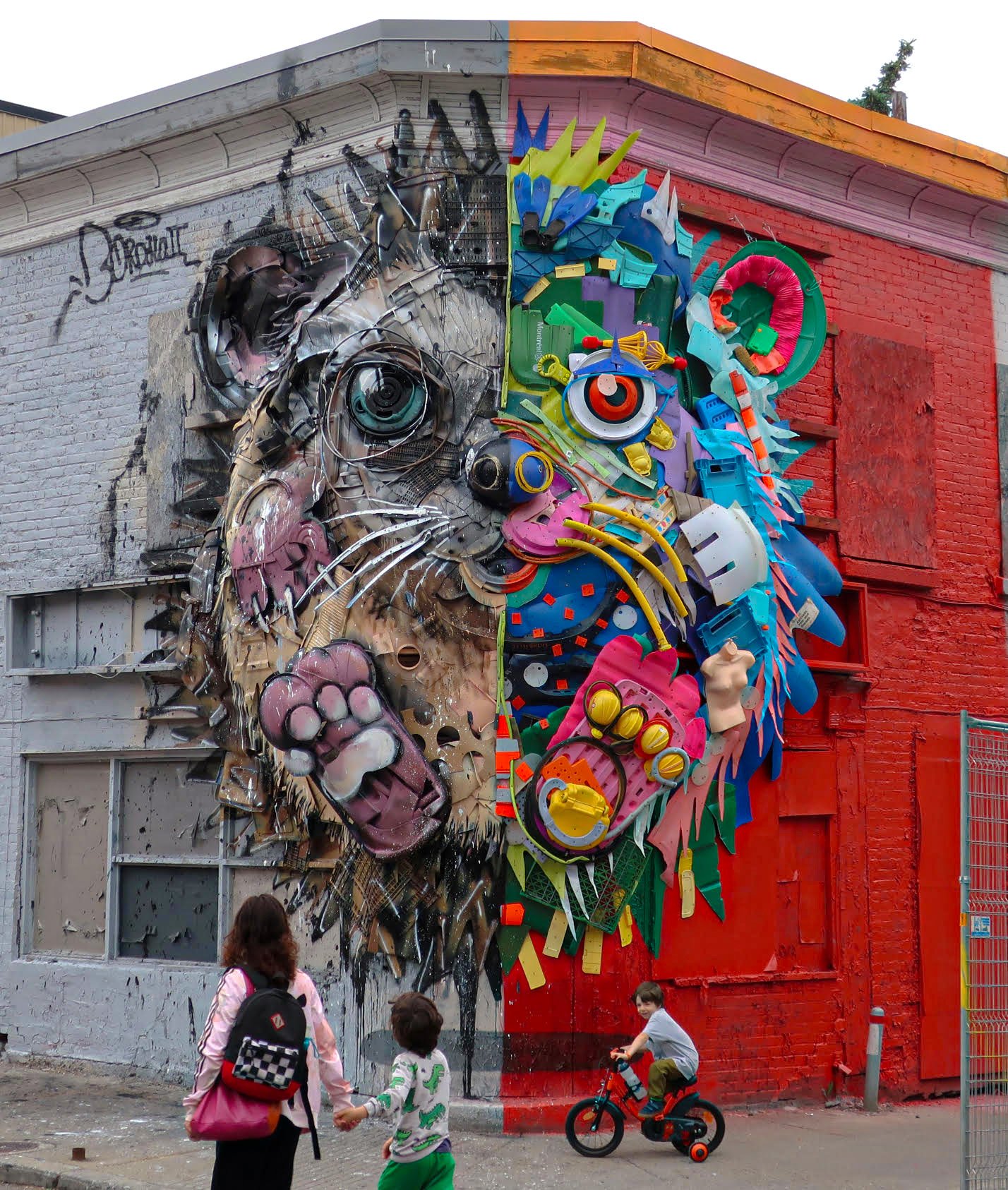
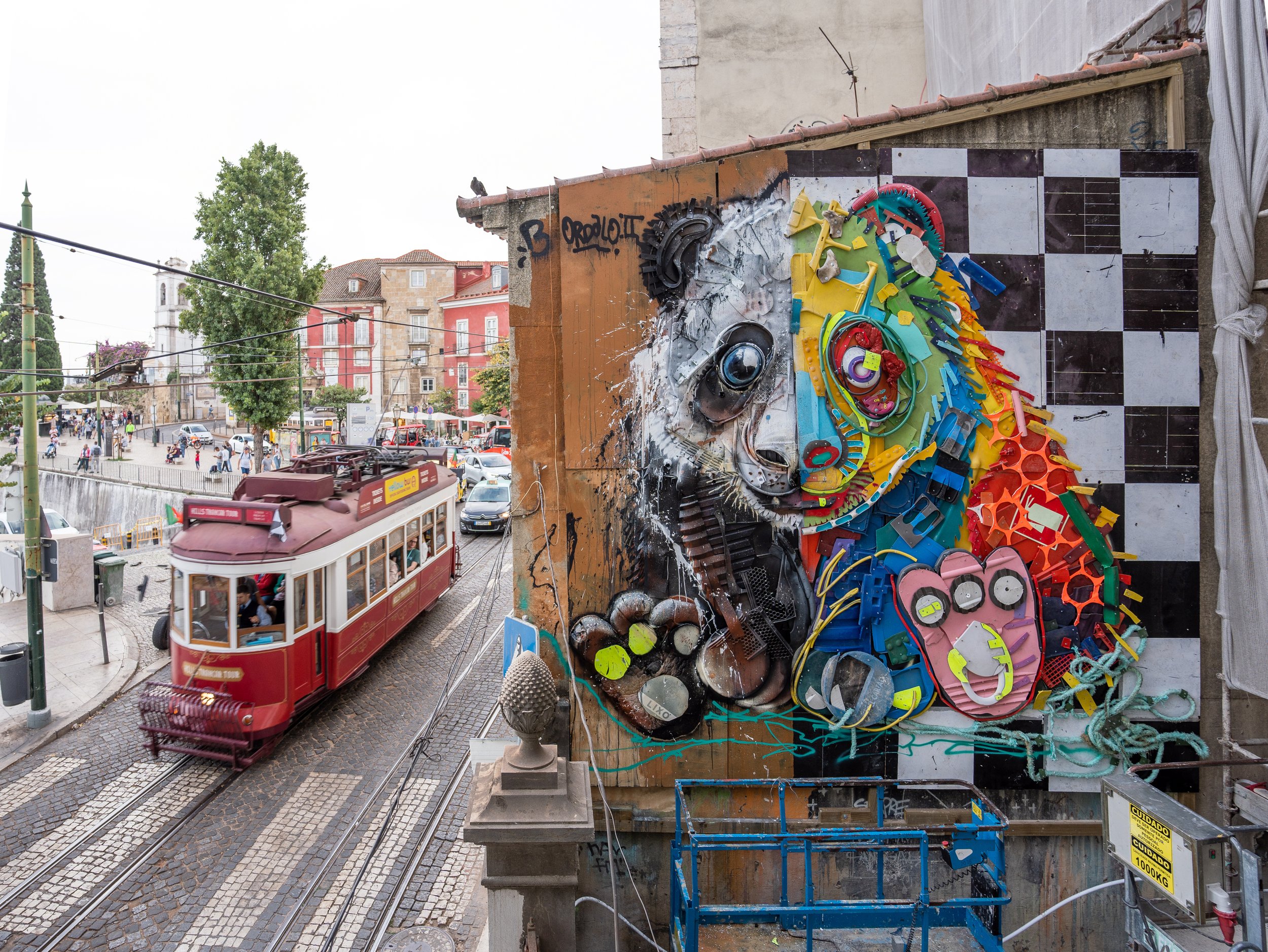
Image copyright Bordalo II
In the Plastic sub-series, Bordalo II abandons camouflage and allows the discarded materials to dominate the visual surface. Plastics and other objects are given greater prominence, with strong colours and layered textures that invite the viewer to identify individual components. Examples include Mountain Lion in El Paso, USA, 2022; Plastic Rooster in Massachusetts, USA, 2024; and Plastic Mom and Baby Monkey in Miami, USA, 2021.
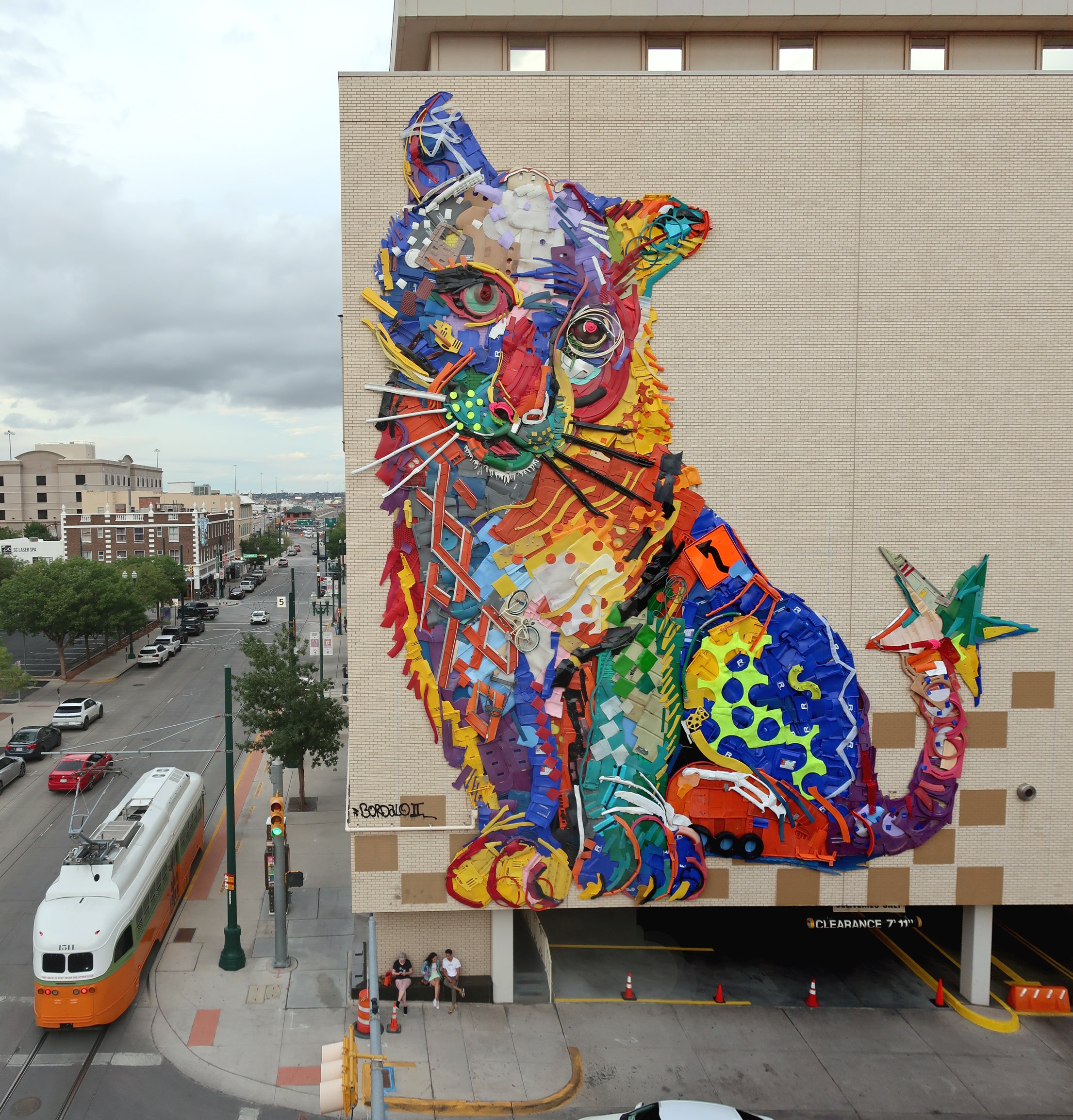
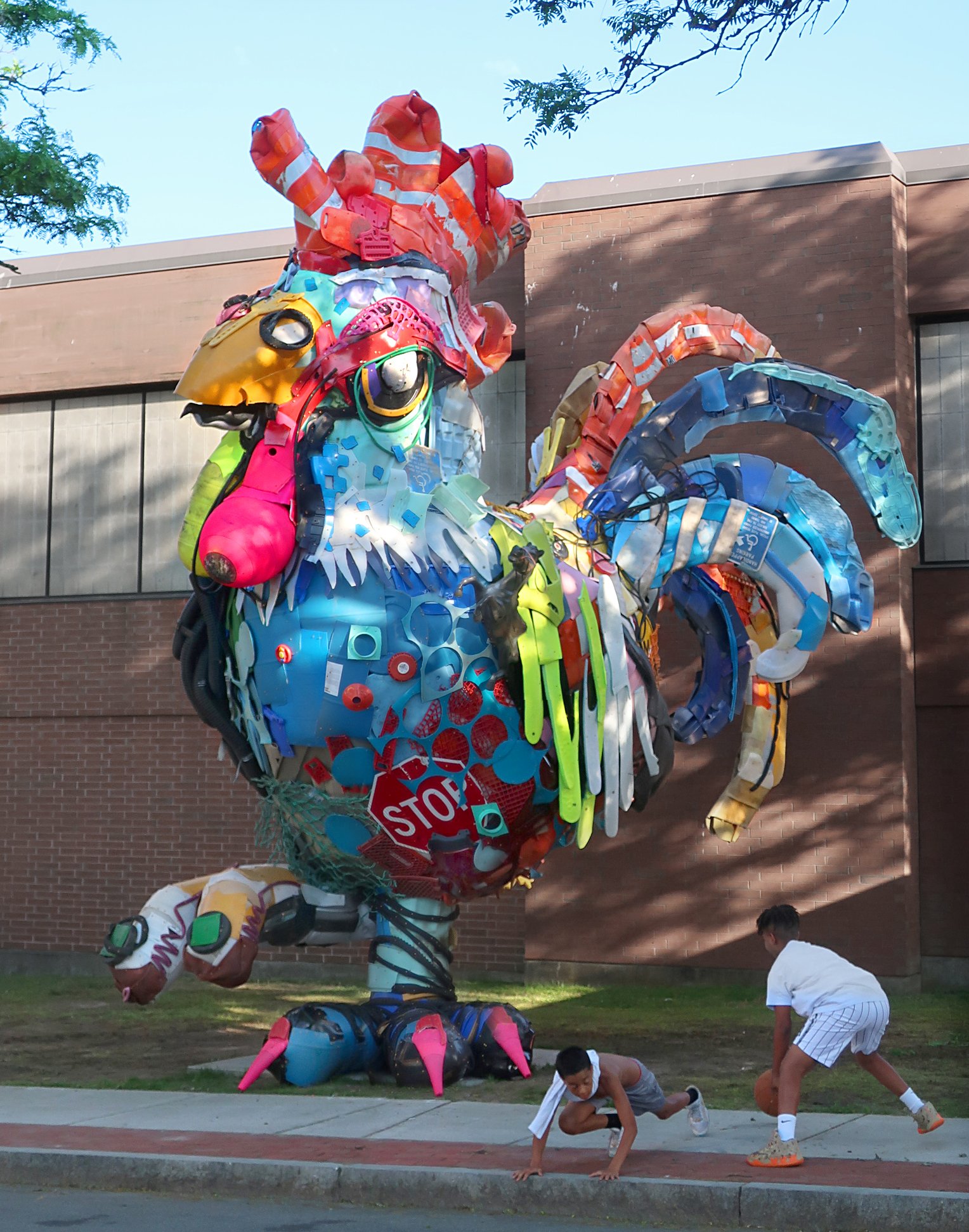
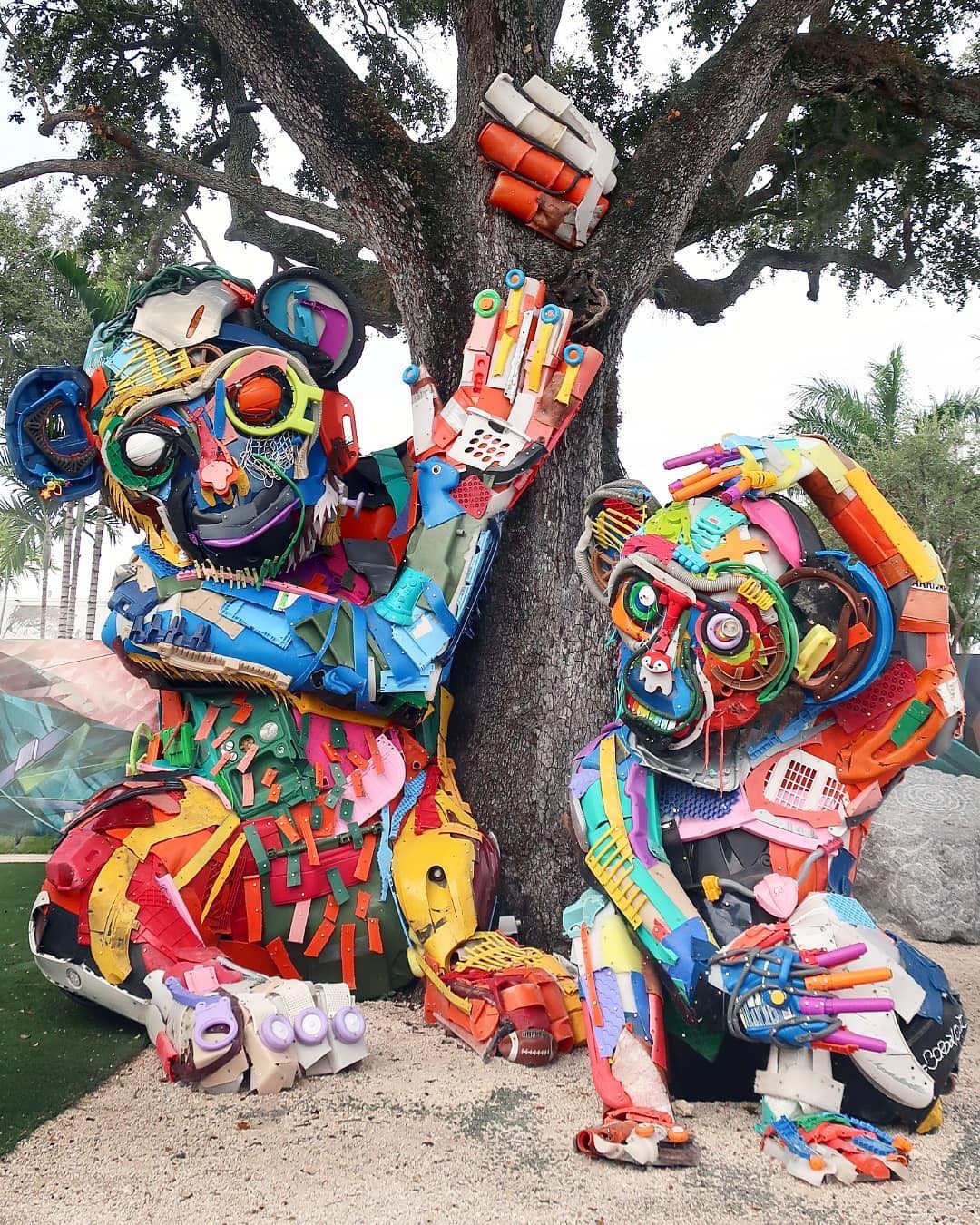
Image copyright Bordalo II.
This three-part structure gives Big Trash Animals its conceptual range. Neutral works conceal the waste. Half-Half works place nature and trash in direct confrontation. Plastic works expose the materials fully, turning the animal into a vivid portrait of consumer culture itself.
Big Trash Animals form one part of Bordalo II’s wider artistic language, explored across GraffitiStreet’s complete guide to Bordalo II’s art, while the earlier Evolution of Big Trash Animals traces how the series developed into its Neutral, Half-Half and Plastic forms.
How Does Bordalo II Show the Impact of Consumer Culture?
Bordalo II shows the impact of consumer culture by making waste visible. His sculptures expose the afterlife of the objects we use and discard. They reveal how quickly materials move from desire to disposal, from usefulness to abandonment.
Consumer culture often depends on invisibility. Waste leaves our homes, shops and streets, then enters other systems: landfill, oceans, industrial storage, informal recycling, polluted landscapes and damaged habitats. Bordalo II interrupts that disappearance by bringing discarded materials back into public attention.
His art asks viewers to consider the consequences of convenience and the ecological cost of abundance. The sculptures do not moralise from a distance. They stand in the city, made from the evidence itself.
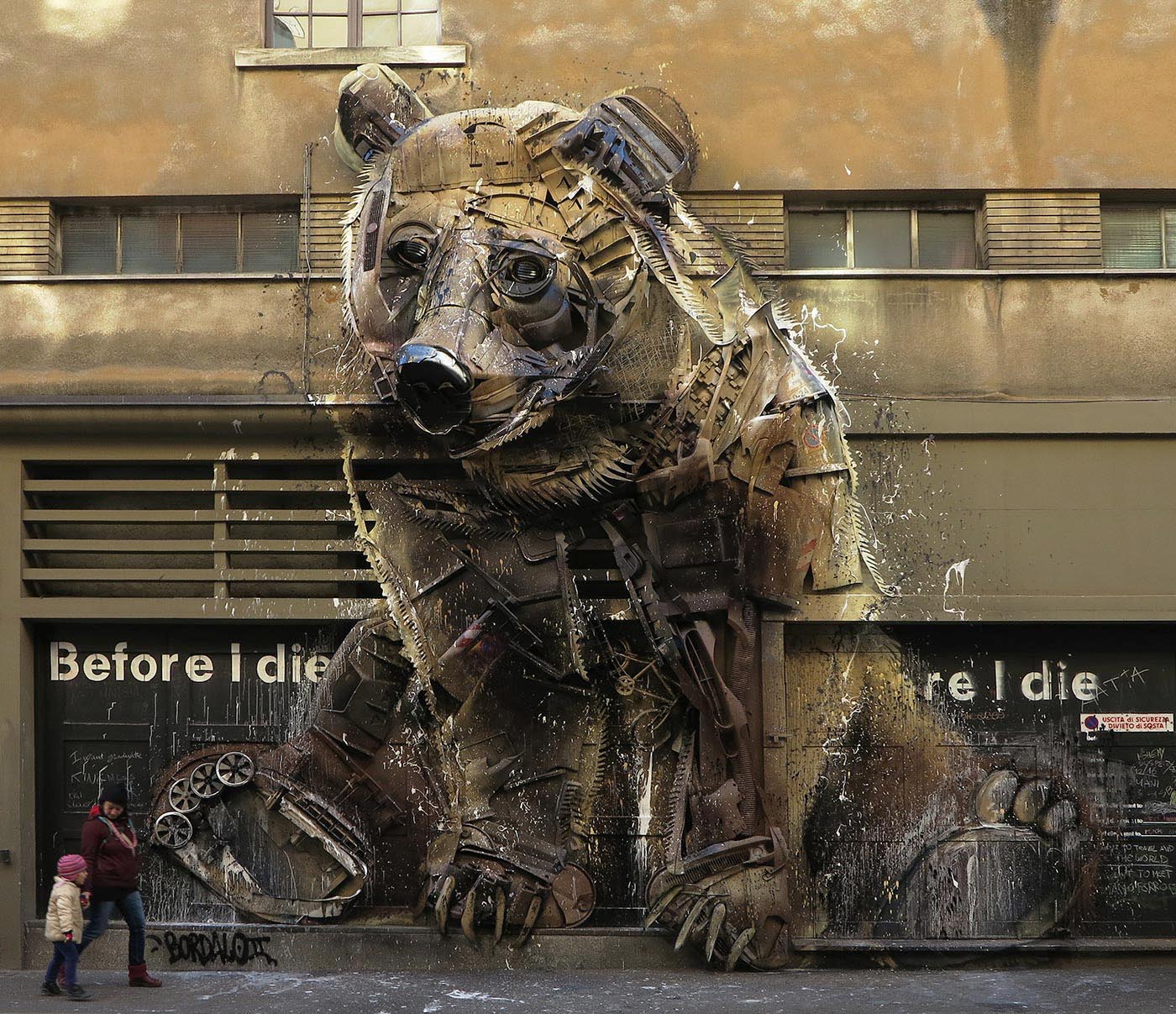
Bordalo II, Bear Decomposed, Torino, Italy, 2016. Image copyright Bordalo II.
Why Is Public Art Important to Bordalo II’s Environmental Message?
Public art is essential to Bordalo II’s environmental message because his work belongs to the places where waste, consumption and urban life intersect. By installing sculptures on building façades, industrial sites, city walls and public streets, he brings environmental reflection into everyday experience. The city becomes both setting and subject as its discarded materials become the body of the artwork, and the residents become the audience.
This matters because environmental conversations are often pushed into specialist spaces, policy language or scientific data. Bordalo II makes those conversations physical, visible and emotionally accessible. His work does not require a museum ticket, It asks people to pause, look and recognise something familiar in a new way.
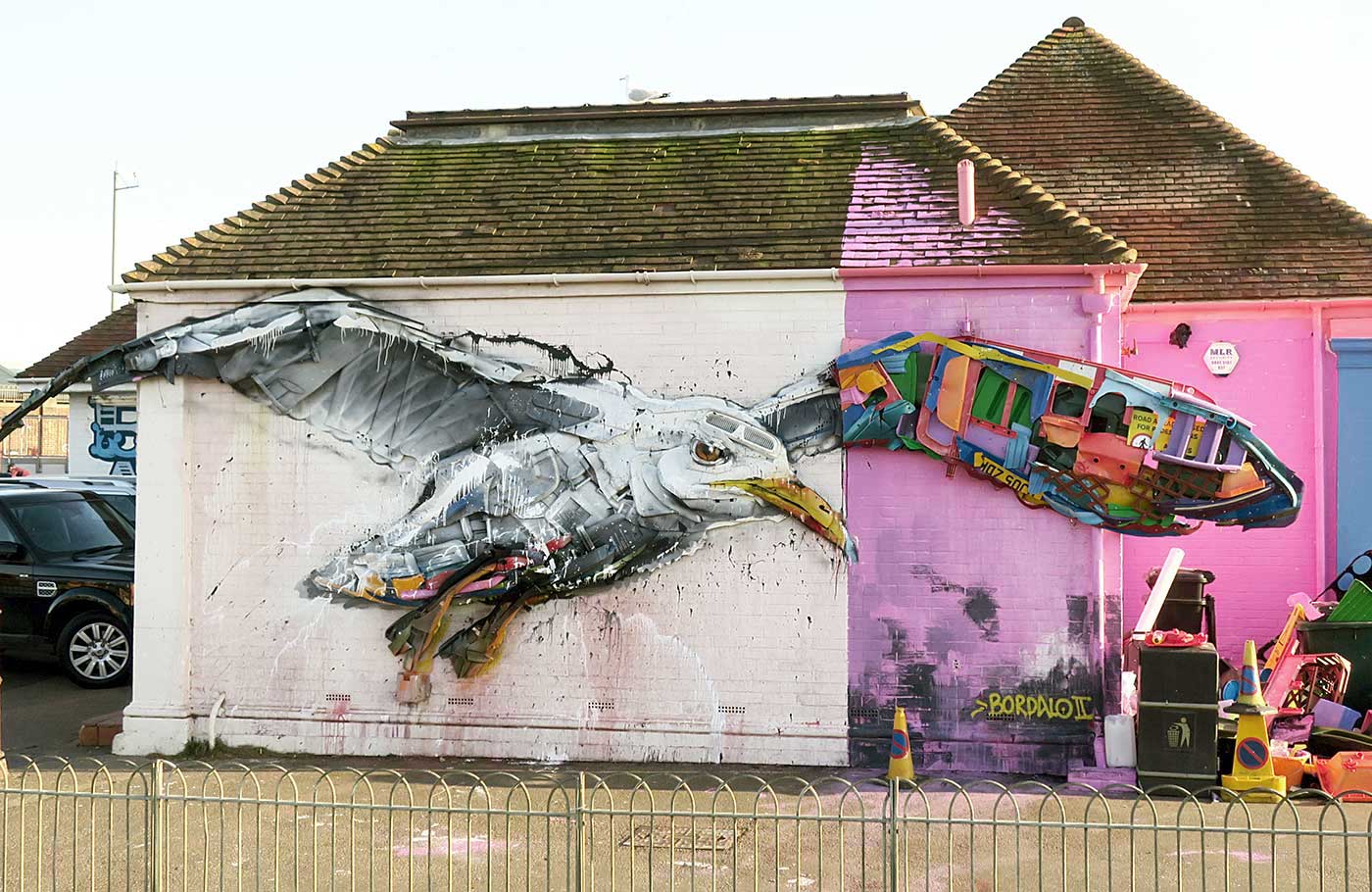
Bordalo II, Half Seagull, Brighton, UK, 2018. Image copyright GraffitiStreet.
GraffitiStreet’s first-hand account of the Hove Trash Seagull reveals how locally collected waste, coastal identity and environmental responsibility converged in a single public work, while Bordalo II and the Sea follows this marine strand across more than a decade.
Why Is Bordalo II Important in Contemporary Street Art?
Bordalo II matters because he has changed what contemporary street art can physically and emotionally hold. His practice moves beyond the painted wall into sculpture, assemblage, public installation and environmental witness, carrying the accessibility of urban art into a more expansive conversation about material culture, ecology and the responsibilities of the present.
At a time when climate anxiety, overconsumption, plastic pollution and ecological responsibility shape conversations across art, design, urbanism and public life, Bordalo II has created a visual language that feels immediately recognisable and urgently contemporary. His animals are not simply impressive public artworks; they are monuments to what we discard, what we endanger and what still might be transformed through imagination, labour and care.
“Bordalo II has transformed waste into one of the most recognisable languages in contemporary street art,” says Rosh Boroumand, GraffitiStreet Co-Founder. “His work carries the force of the street, the intelligence of sculpture and the environmental urgency of our time.”
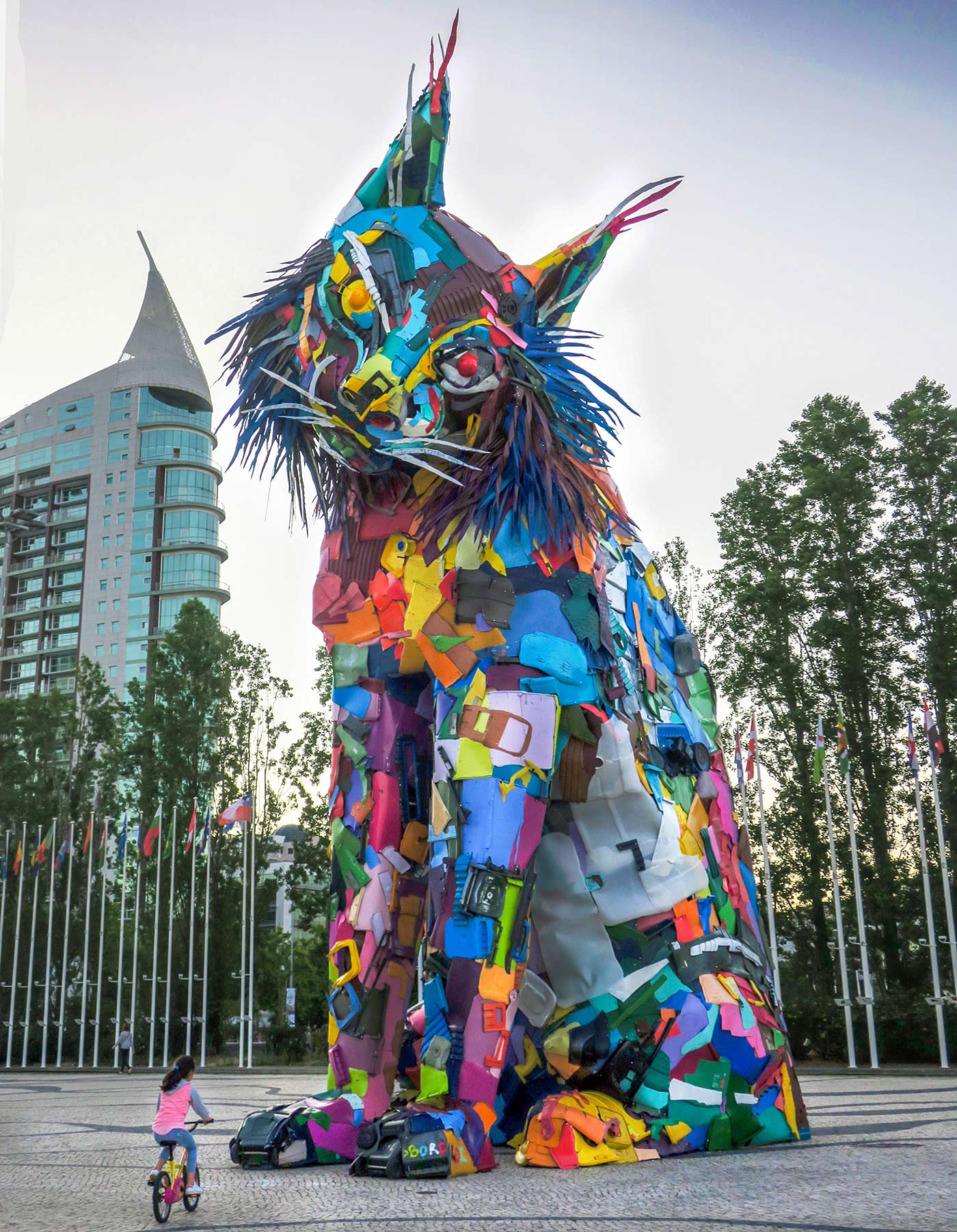
Bordalo II, Iberian Lynx, Lisboa 21, Lisbon, Portugal, 2019. Image copyright Bordalo II.
Frequently Asked Questions About Bordalo II
Bordalo II primarily uses discarded materials including tyres, plastics, scrap metal, vehicle bumpers, construction waste, appliances, electronic waste, hoses, nets, fabrics, soft toys and other found urban debris.
Big Trash Animals is Bordalo II’s best-known body of work, featuring large-scale animal sculptures constructed from reclaimed waste materials. The series highlights overconsumption, pollution, habitat destruction and ecological responsibility.
Bordalo II presents Big Trash Animals through three sub-series: Neutral, Half-Half and Plastic. Neutral works camouflage the waste, Half-Half works divide the animal between naturalistic and exposed trash-built surfaces, and Plastic works leave the materials highly visible.
Yes. Bordalo II emerged from the street art scene and continues to create public artworks, murals, installations and sculptures in cities around the world.
His work explores waste production, plastic pollution, biodiversity loss, habitat destruction, climate change, excessive consumption, overproduction and environmental sustainability.
Bordalo II’s animal sculptures are important because they transform discarded materials into powerful visual symbols of ecological responsibility. They make waste visible, environmental loss emotionally immediate and public art part of a wider conversation about how we live.
Bordalo II’s public artworks have appeared in cities across Europe, Asia, North America, South America and the Middle East, including Lisbon, Paris, London, Berlin, Amsterdam, New York, Dubai and Hong Kong.
Related Reading
For the broader practice surrounding these animal sculptures, including Provoc, Rock, Lighted and other bodies of work, continue to GraffitiStreet’s complete overview of Bordalo II’s art.
Street Artist in the Spotlight: Bordalo II
Bordalo II Unveils Happy Quokkas in Fremantle, Australia
Bordalo II’s Balloon Fish in Trafaria, Portugal: Monumental Street Art Made from Local Trash
Bordalo II Unveils Re-Raccoon 2025: A Revival of His Iconic Lisbon Artwork
Bordalo II’s Trash Animal Panda: A Symbol of Waste and Wake-Up Calls
Sources & Further Reading
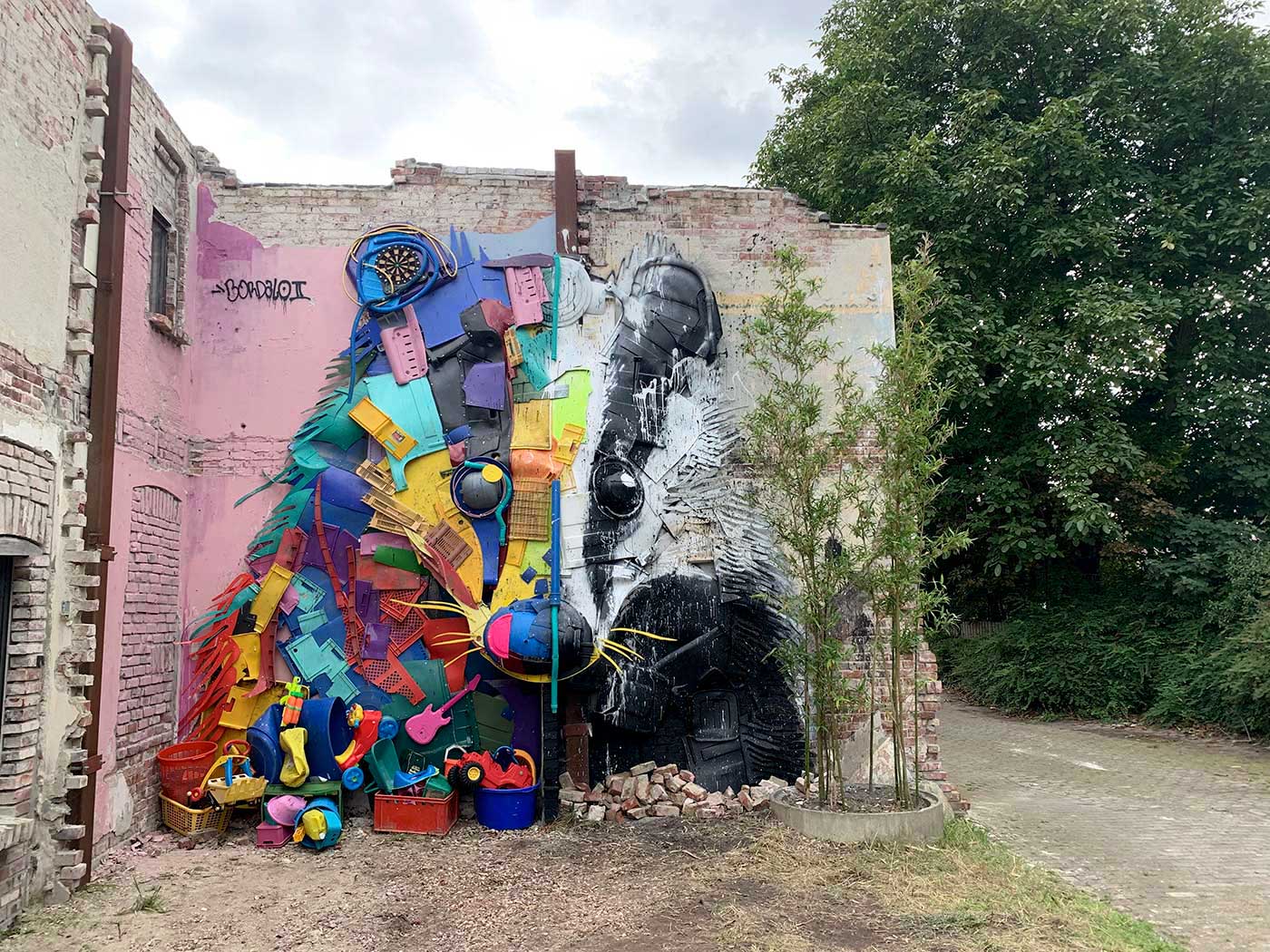
Bordalo II, Half Badger, Varel, Germany, 2019. Image copyright Bordalo II.
Discover Bordalo II at GraffitiStreet
GraffitiStreet has worked with Bordalo II since the early years of his international rise, including our Underground exhibition in London 2015, where the artist created the London Rat from discarded materials collected across East London.
Through our gallery, editorial platform, and collector resources, we continue to share Bordalo II’s work and wider practice, from his celebrated Big Trash Animals to his Small Trash Animal originals and more provocative works.
For Bordalo II availability, acquisitions, and private viewings, explore the collection online, contact us directly, or visit our gallery in the heart of Chichester, England.
GraffitiStreet Gallery
25A West Street
Chichester
West Sussex
England PO19 1QW