NeSpoon Transforms Maison Pic in Valence with Her Largest Lace Mural to Date
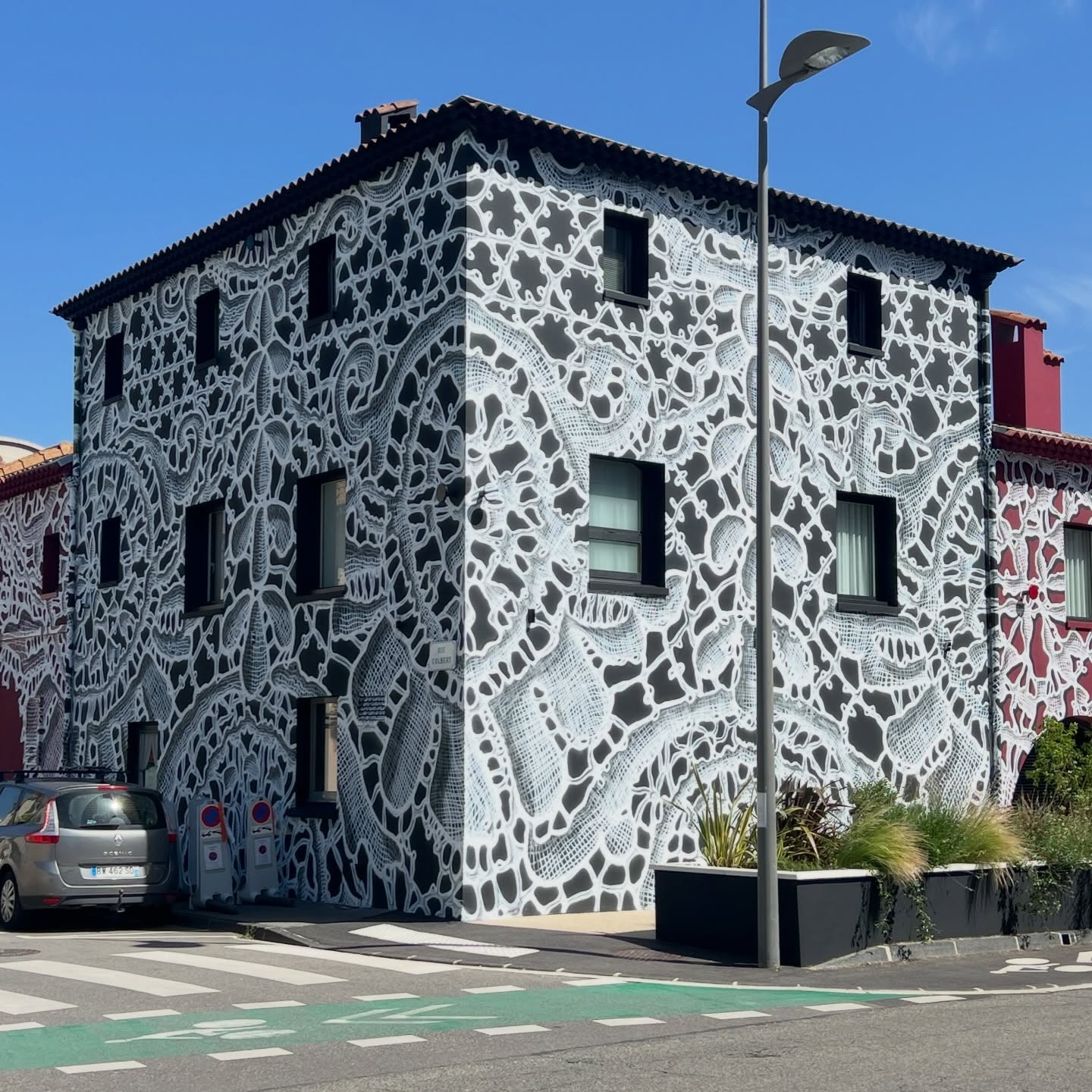
Polish street artist NeSpoon has transformed Maison Pic in Valence, France, with a monumental 1,000-square-metre lace mural spanning ten façades. Created from a historic lace pattern preserved by the Musée des Manufactures de Dentelles in nearby Retournac, the work connects regional craft heritage with the Pic family’s culinary legacy, enveloping an entire city block in intricate white ornament.
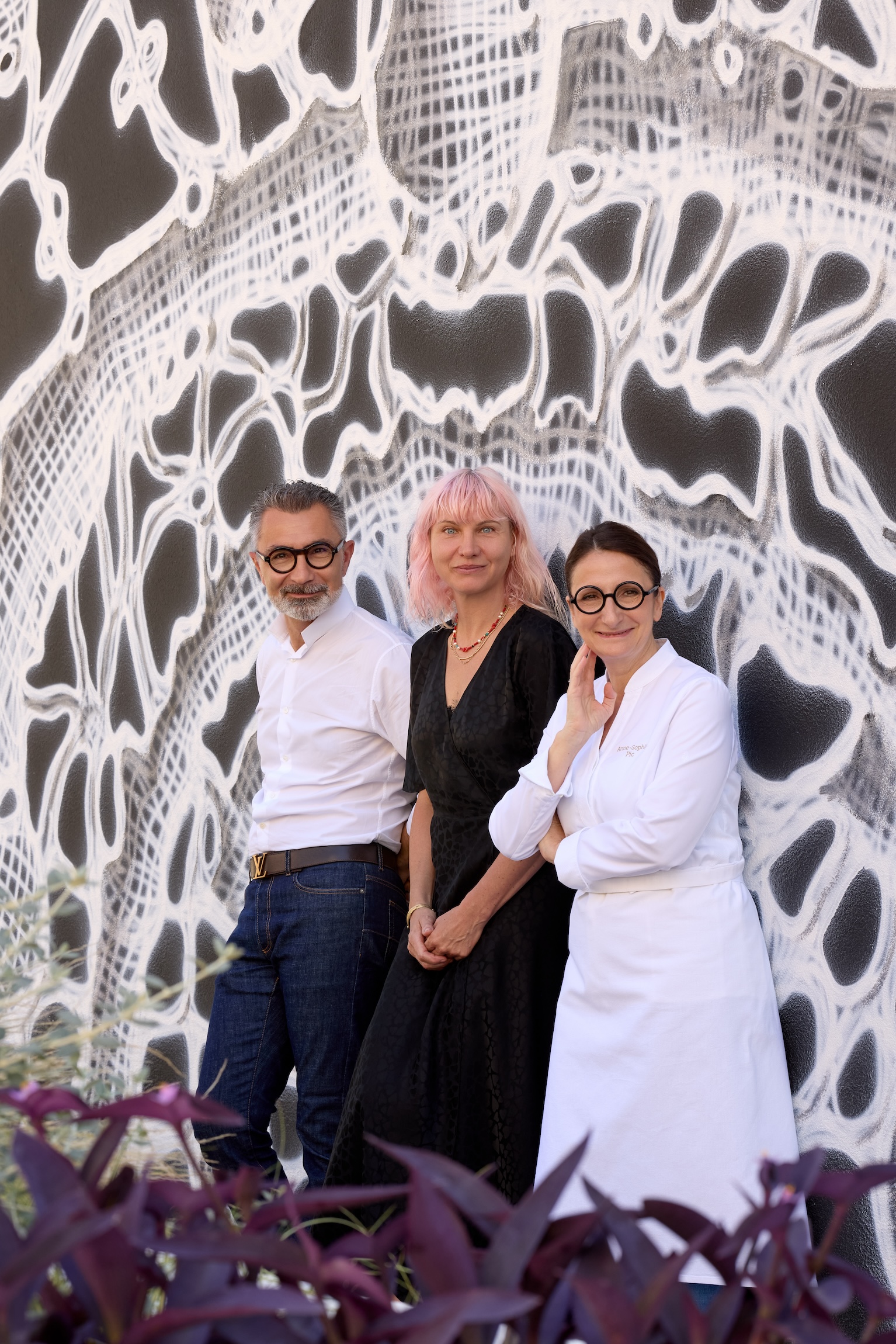
David Sinapian, NeSpoon and Anne-Sophie Pic at Maison Pic, where the artist’s lace composition now extends across ten façades. Photo © Epicurian.
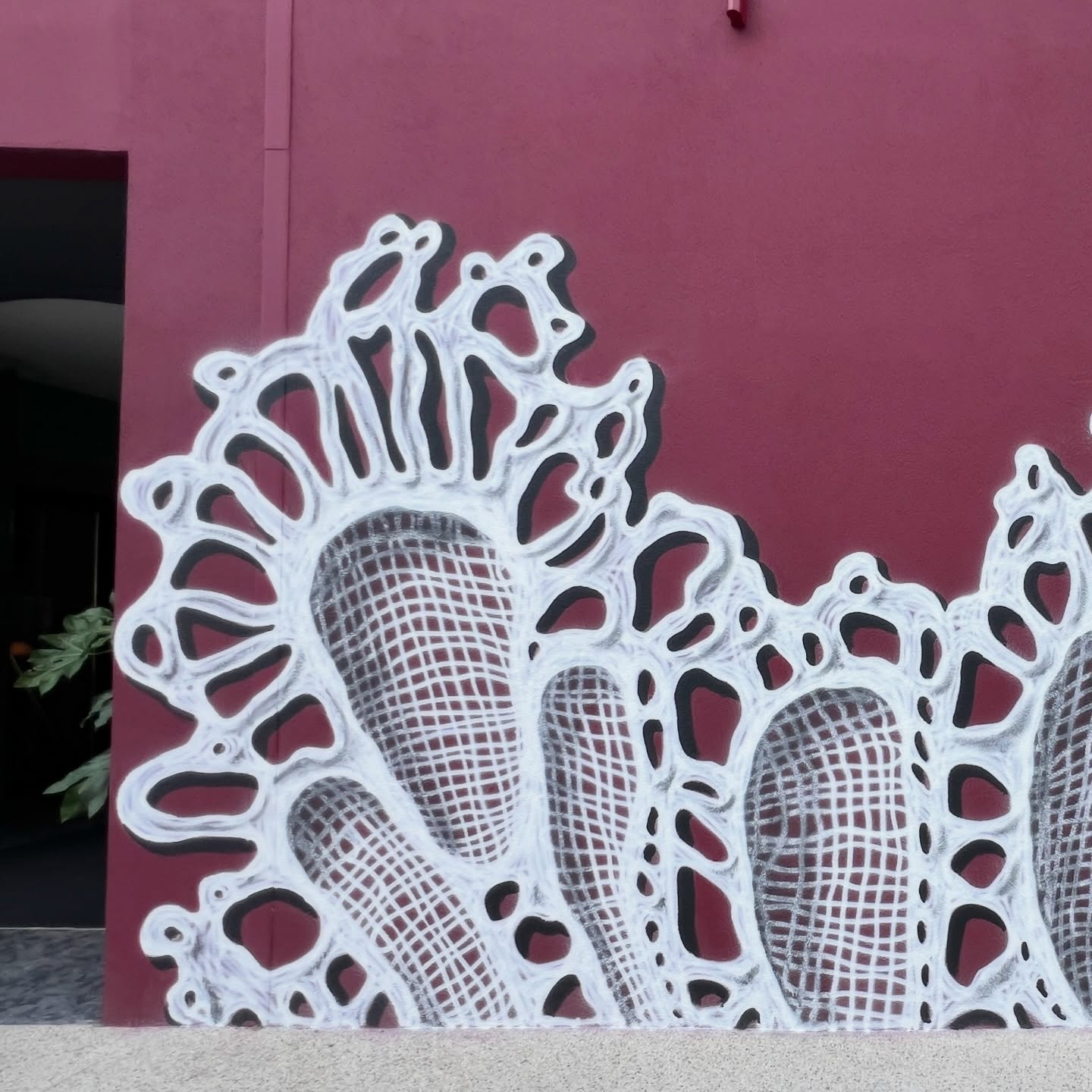
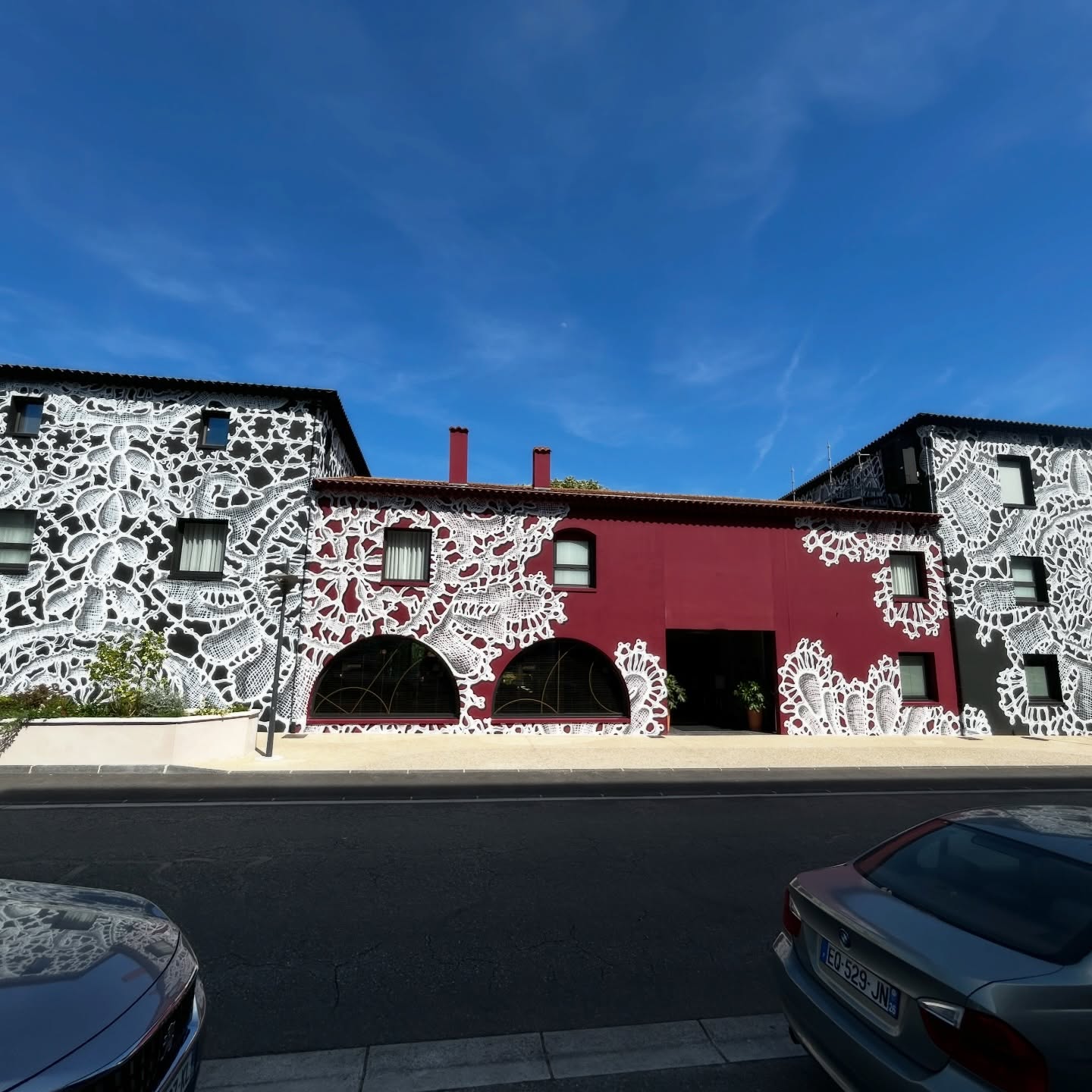
This is NeSpoon’s largest mural to date. Covering approximately 1,000 square metres across ten façades, it transforms the historic home of one of France’s most celebrated culinary families into an immersive work of public art.
Yet scale is only part of the story. Behind the visual spectacle lies a carefully researched connection between place, craftsmanship and inherited knowledge.
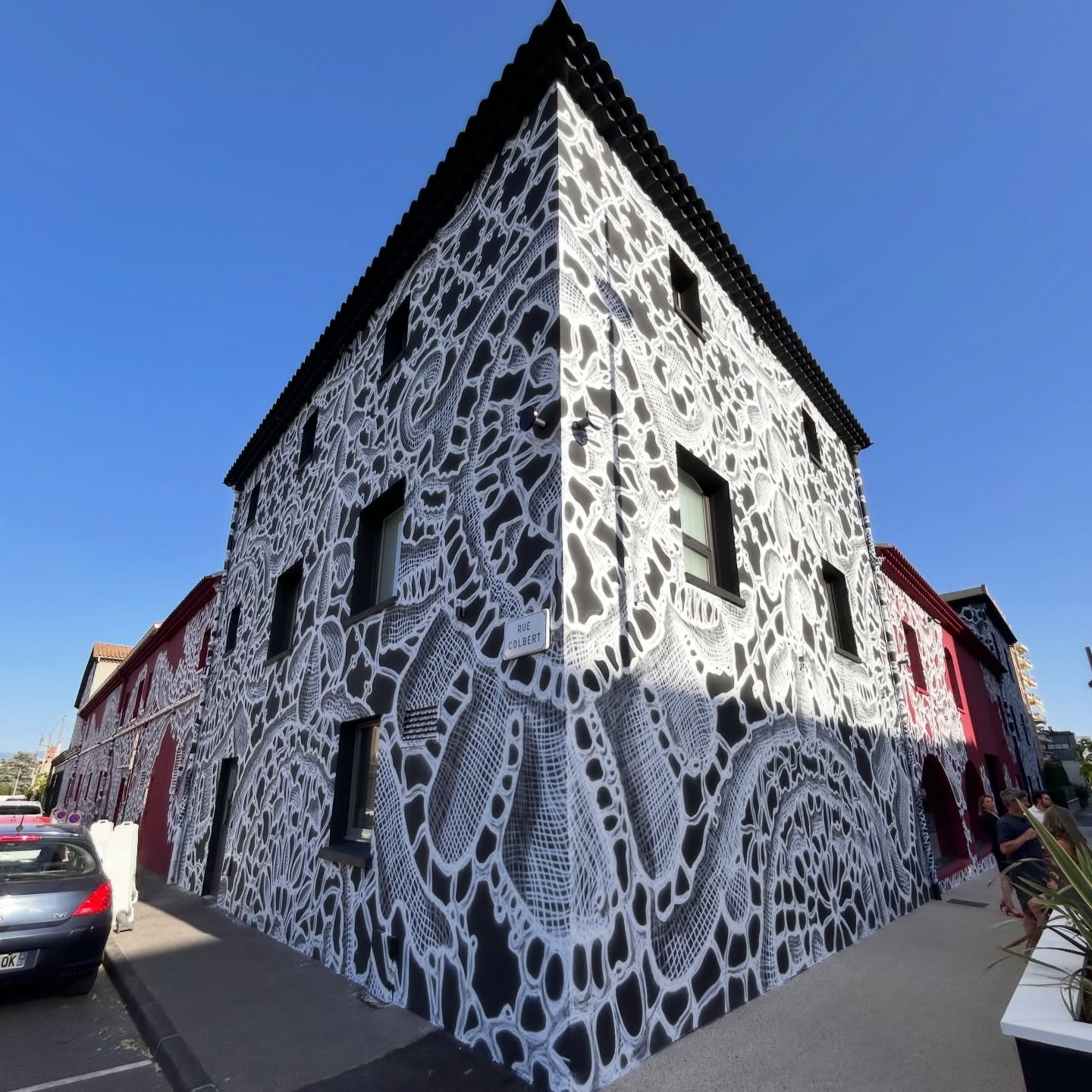
A Historic Lace Pattern Enlarged Across an Entire City Block
The mural takes its inspiration from an original piece of lace produced in Craponne-sur-Arzon, a town in the Haute-Loire region with an important lacemaking tradition. NeSpoon selected a historic example dating from around the period in which Anne-Sophie Pic’s great-grandmother helped establish the family restaurant. The original textile is preserved in the collection of the lace museum in Retournac. As Anne-Sophie Pic reflects:
“Choosing this lace pattern expresses the metaphor of who we are and what we weave each day at Maison Pic: human bonds, precise and generous, nurtured by inherited gestures and shared memories.”
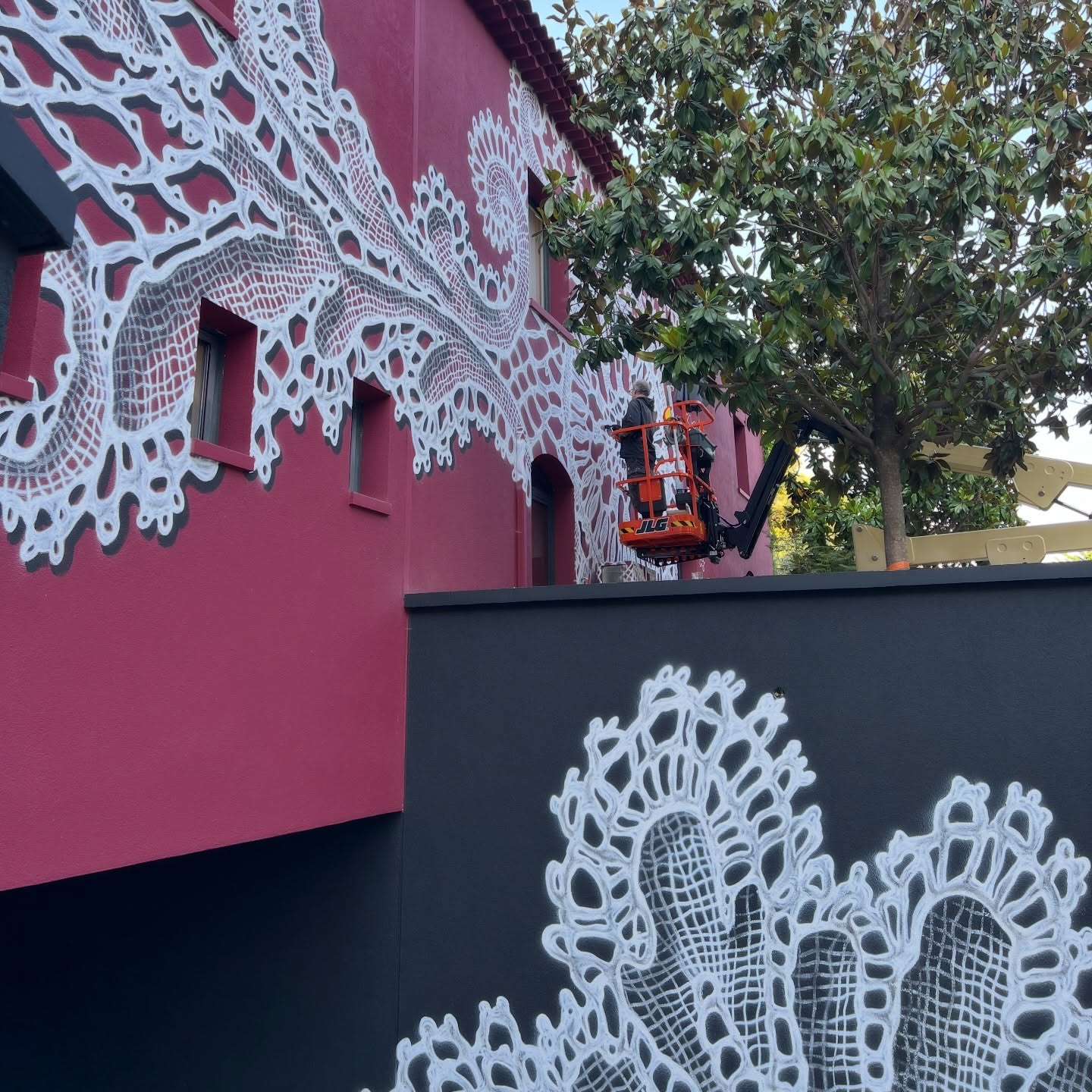
Before approaching the architecture, NeSpoon studied the lace itself, examining the flowers, meshes and ornamental structures that form its larger rhythm. Enlarged to architectural proportions, details once small enough to hold in the hand now travel across masonry, windows, doors and projecting volumes.
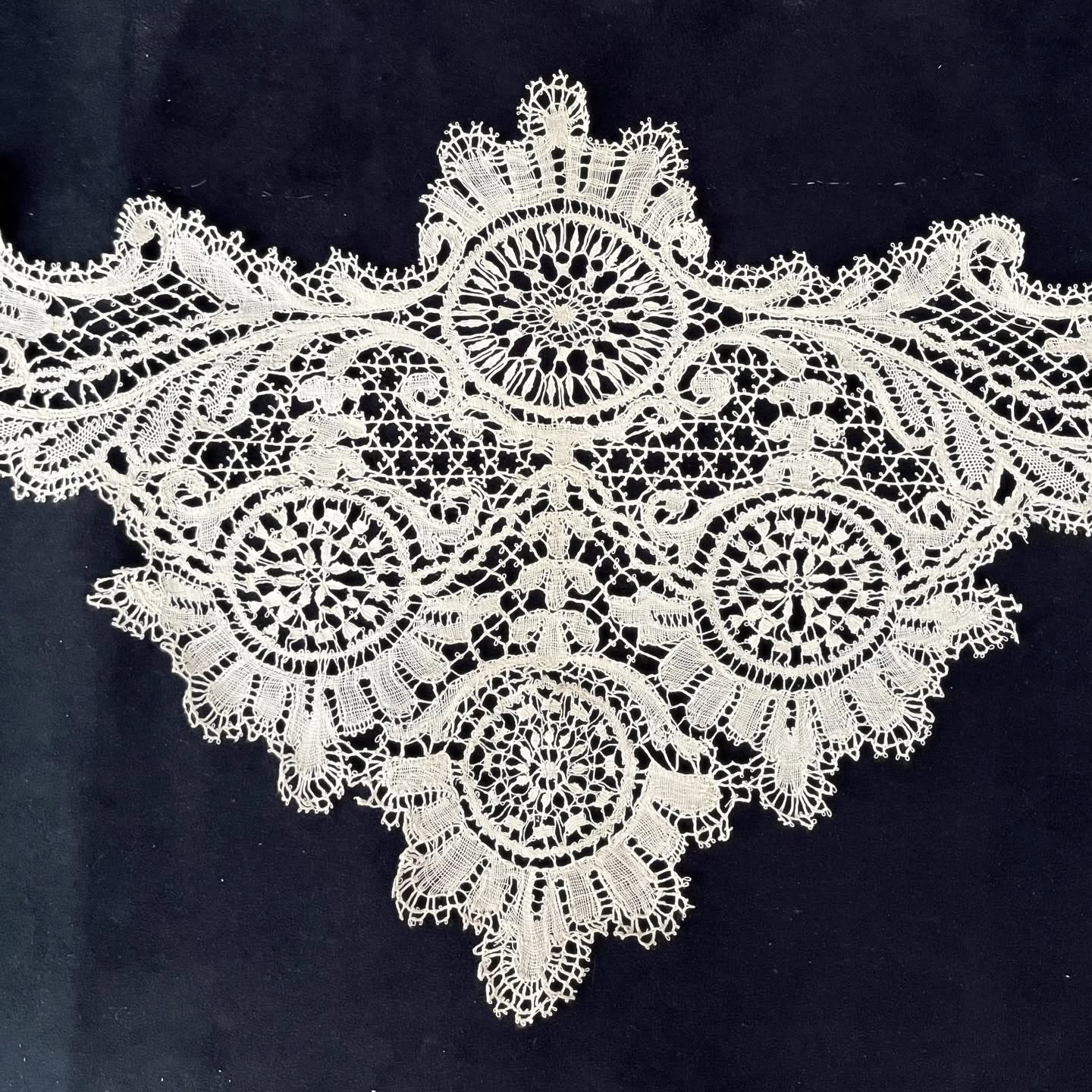
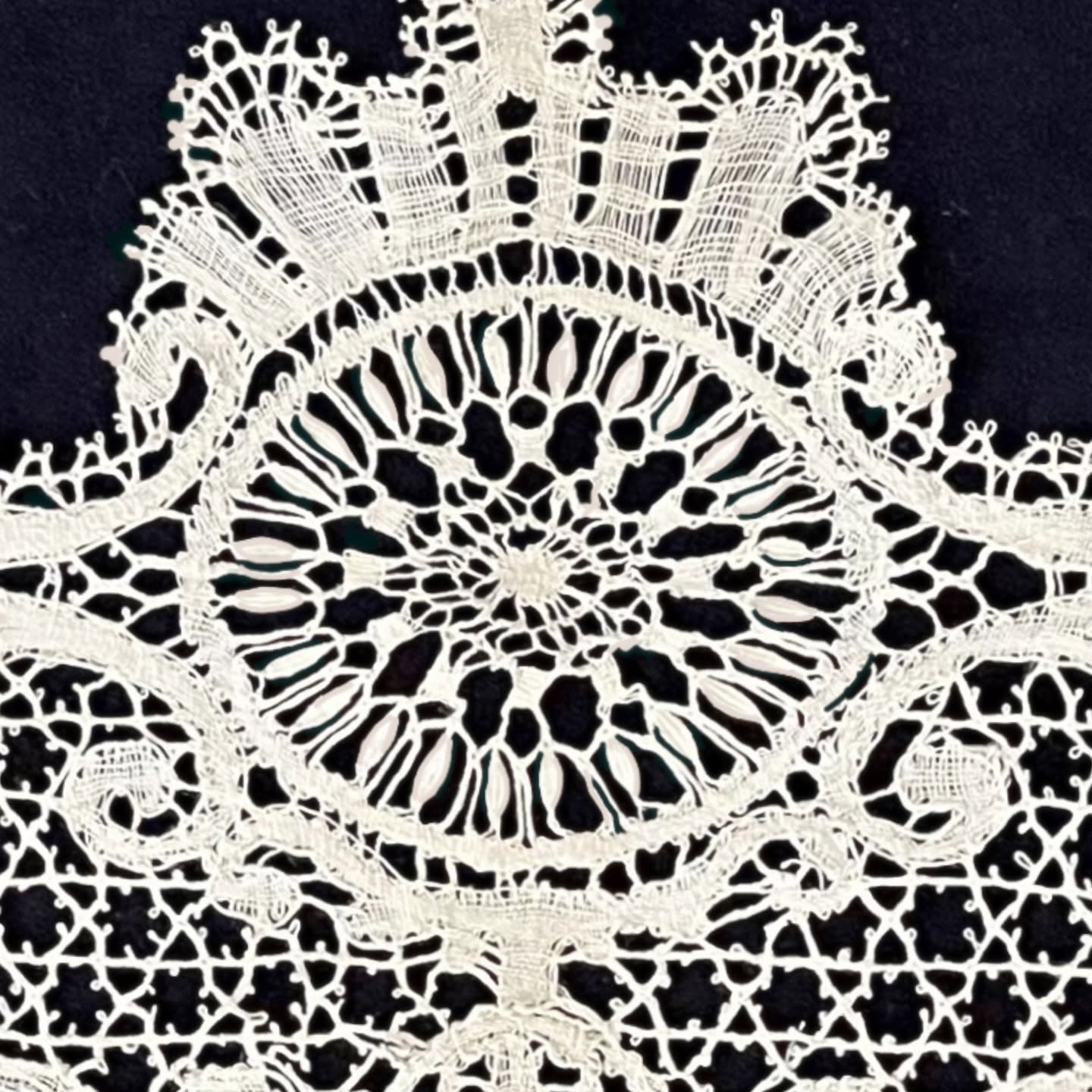
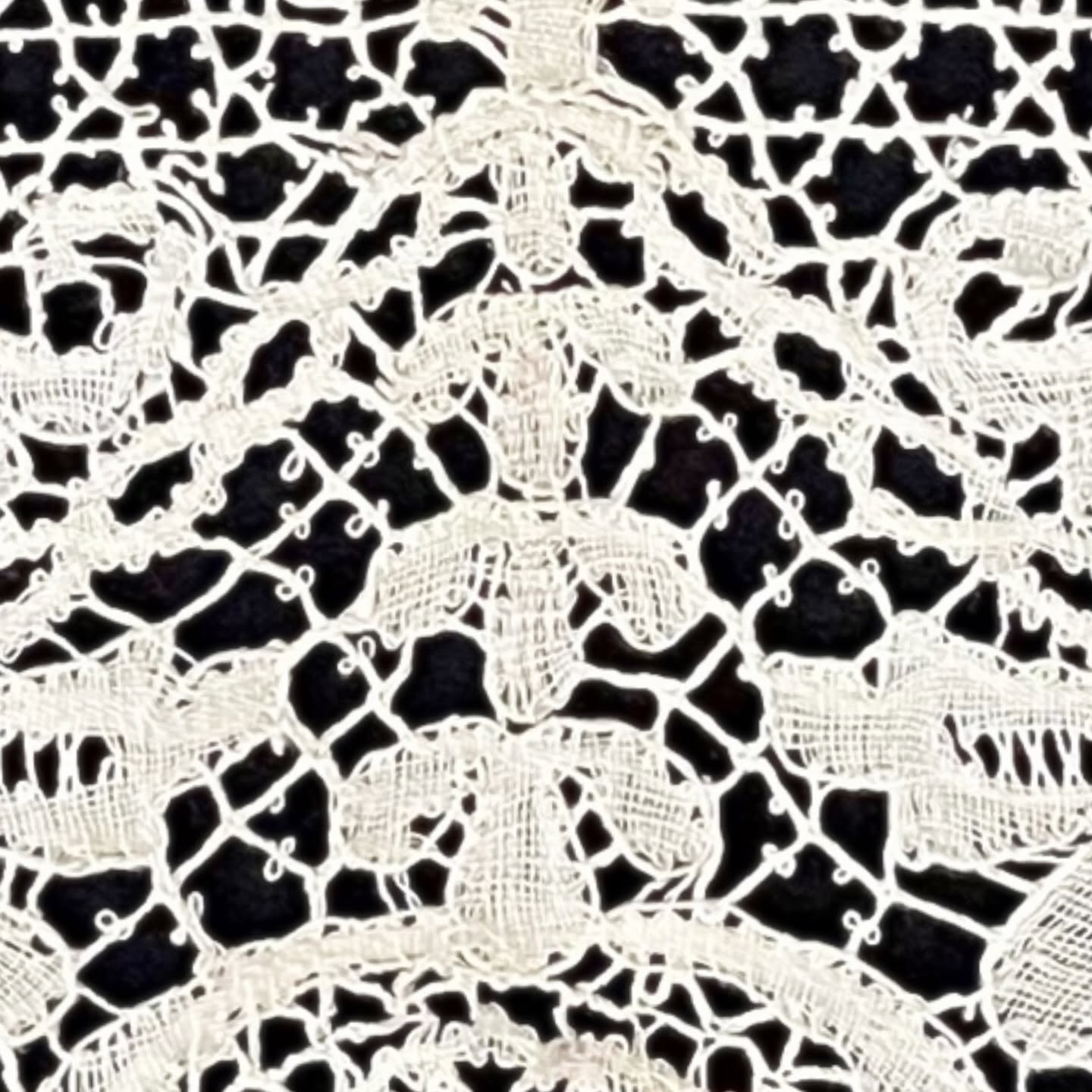
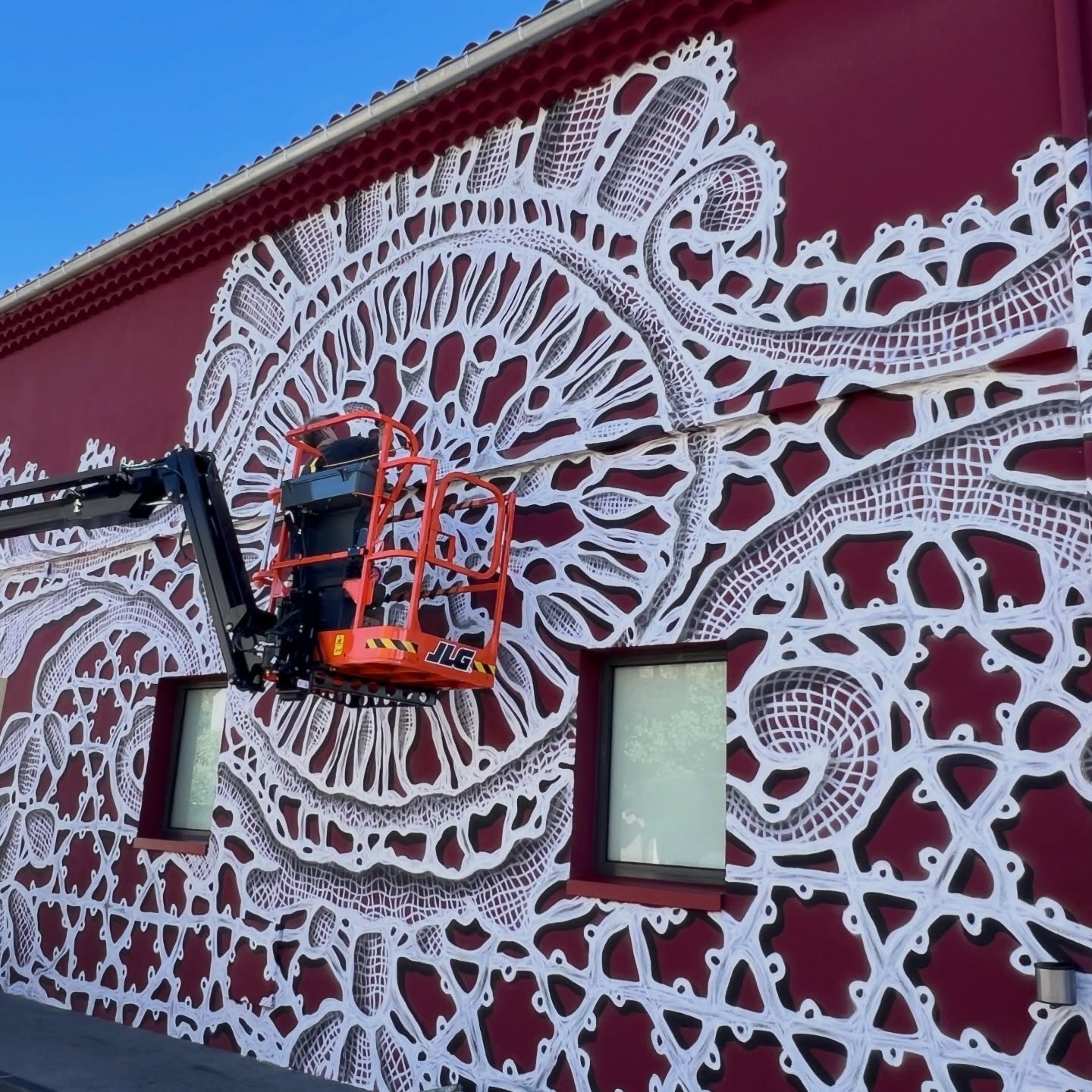
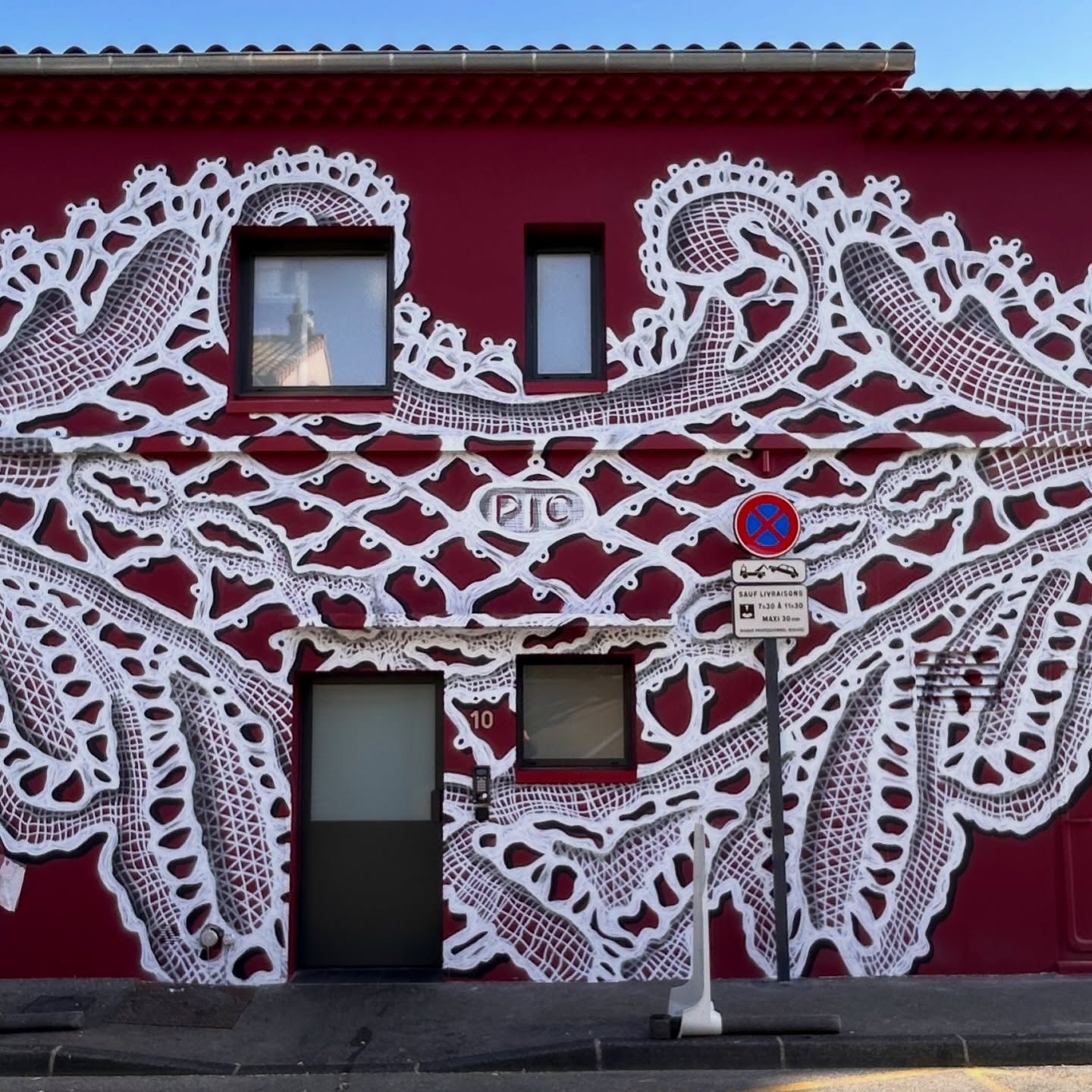
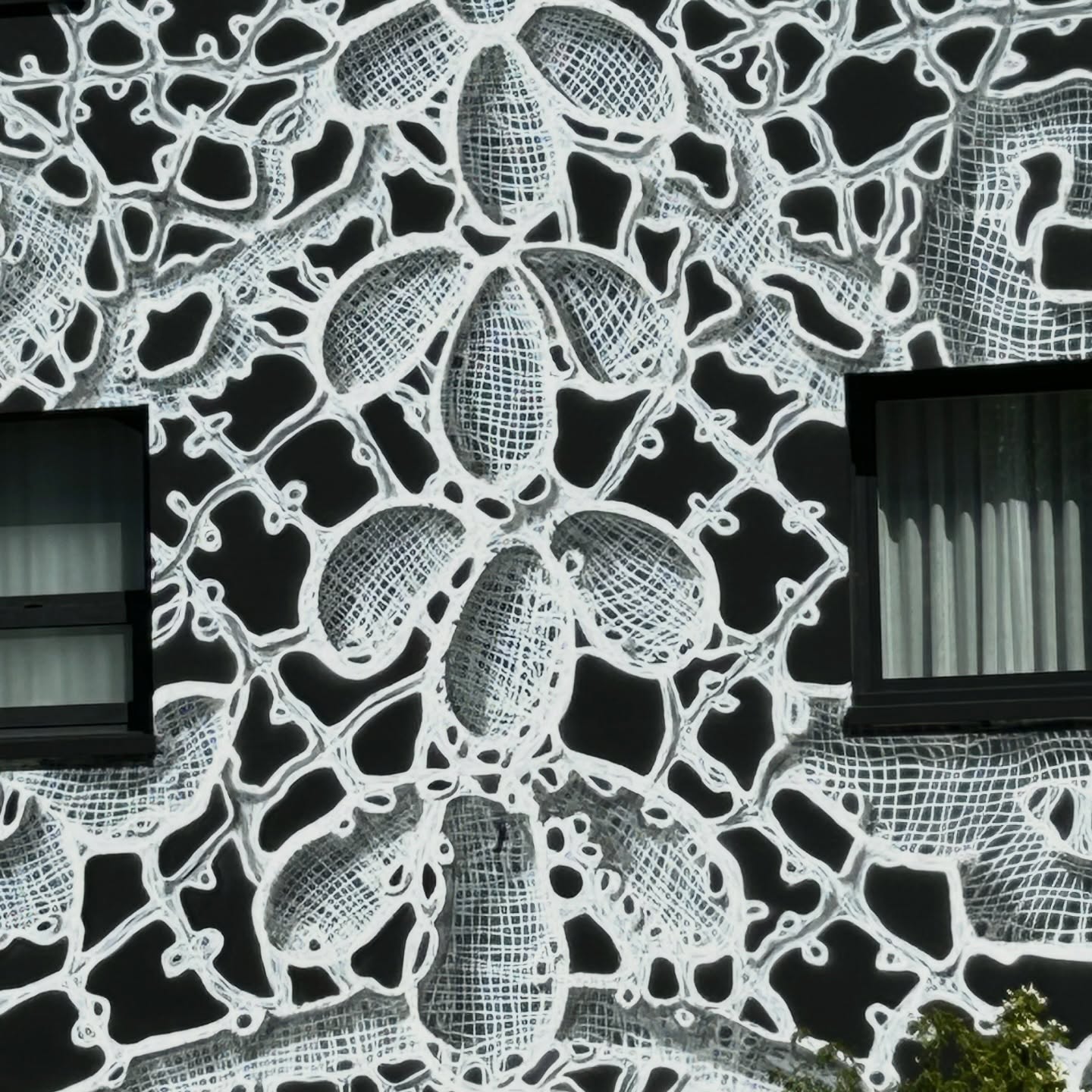
NeSpoon’s mural brings those parallel forms of craftsmanship into conversation, transforming lace into architecture and family memory into a public visual language.
NeSpoon’s Lace Becomes Architecture
NeSpoon’s practice has long explored the relationship between lace, public space and cultural memory. The Polish artist researches historic patterns, visits specialist collections and works with lacemakers before translating their designs into murals, ceramics, stencils and installations.
Her work creates a bridge between centuries-old craftsmanship and contemporary artistic expression, with particular attention to the largely female histories embedded within textile production.
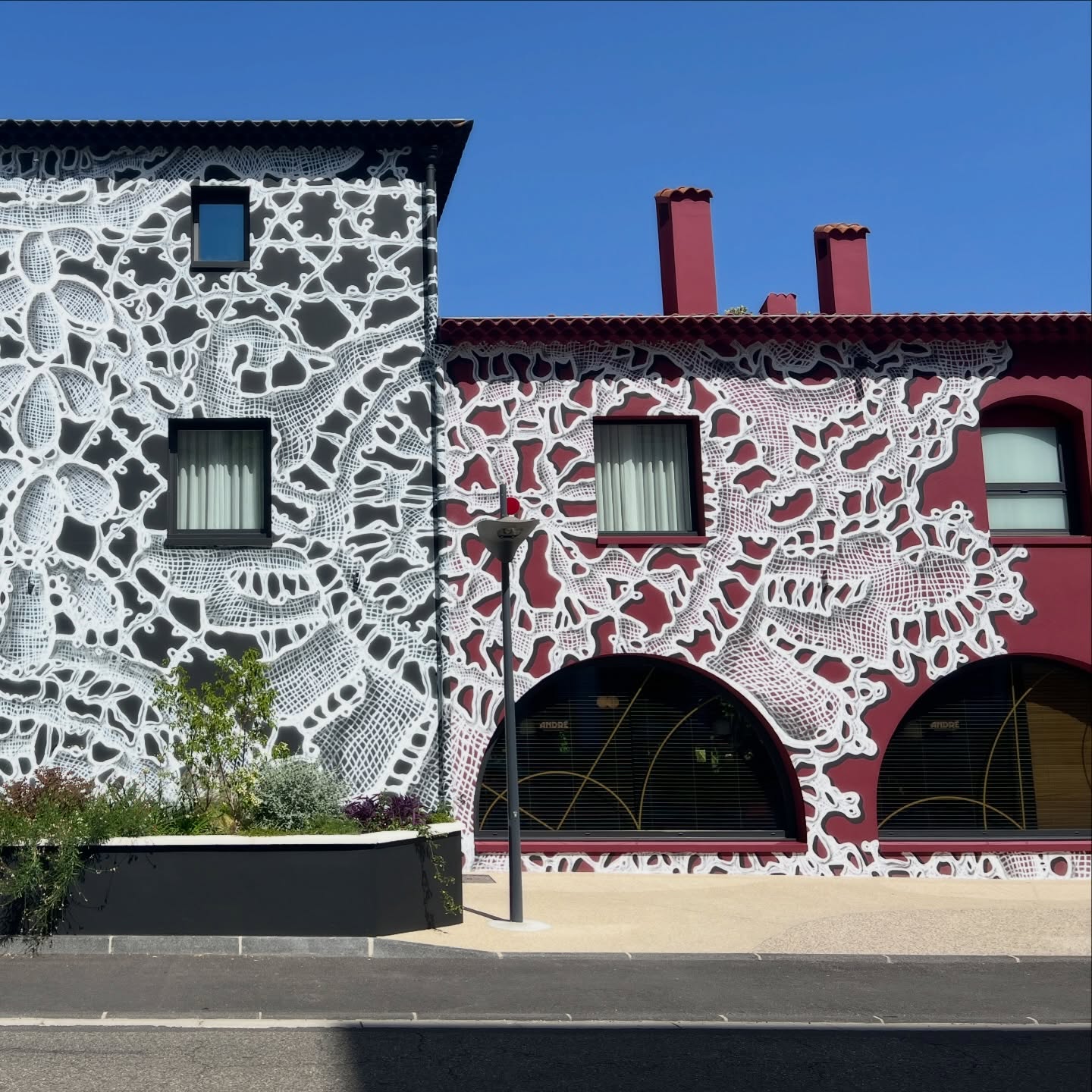
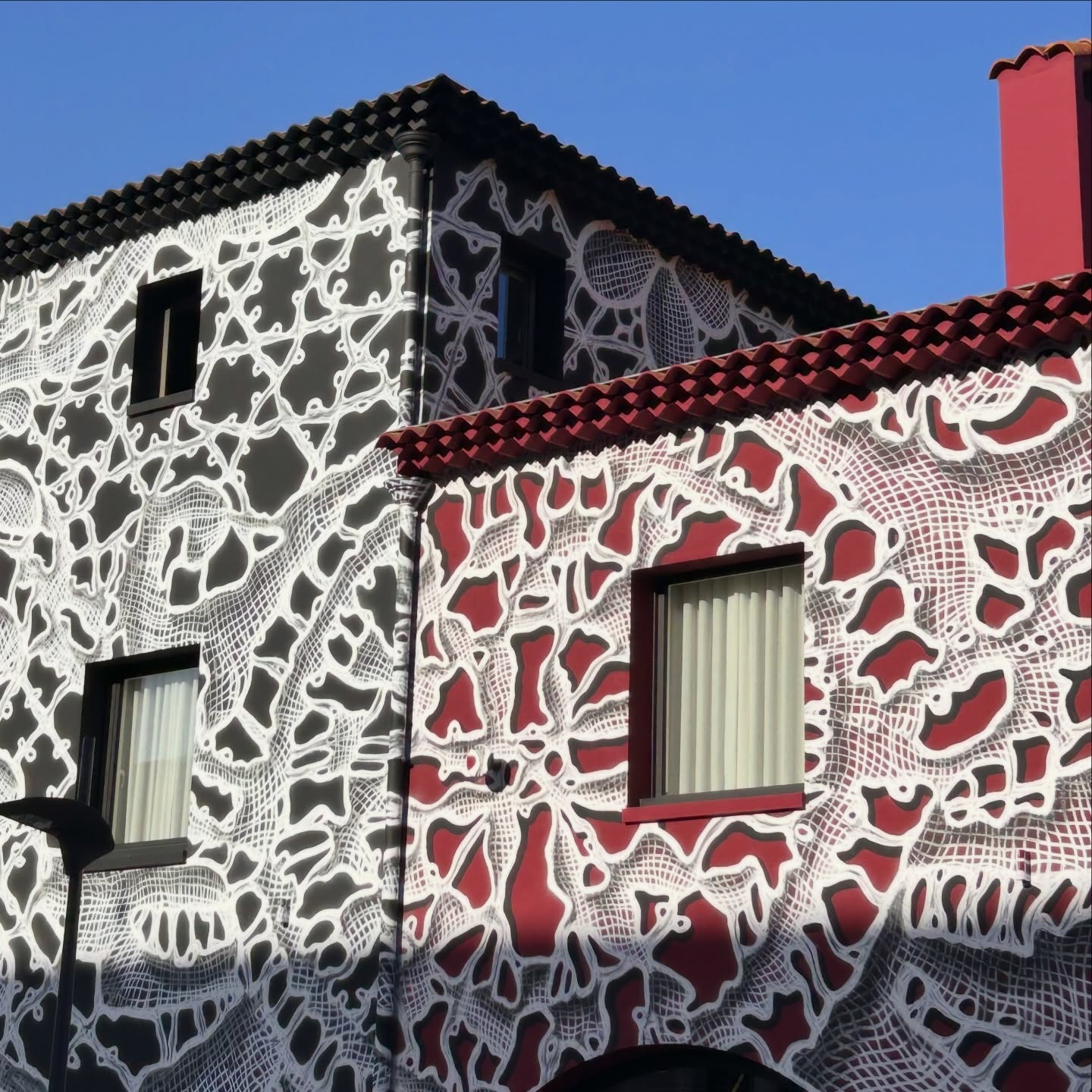
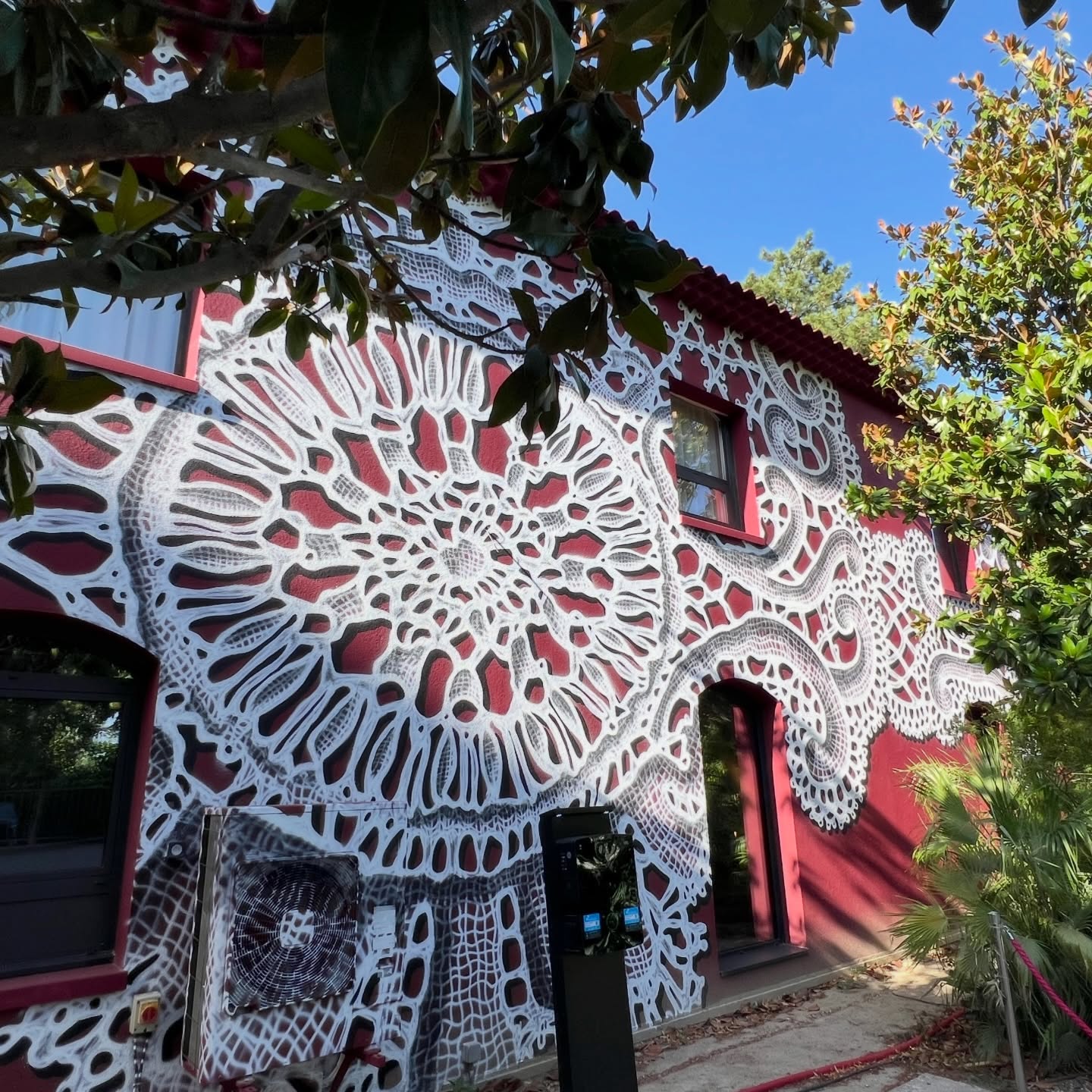
At Maison Pic, this approach reaches a new architectural scale. The lace does not simply sit on the façades as a repeated decorative motif. It appears to move through them. Circular floral forms expand around windows, dense meshes wrap around corners and sweeping bands connect separate structures across the site.
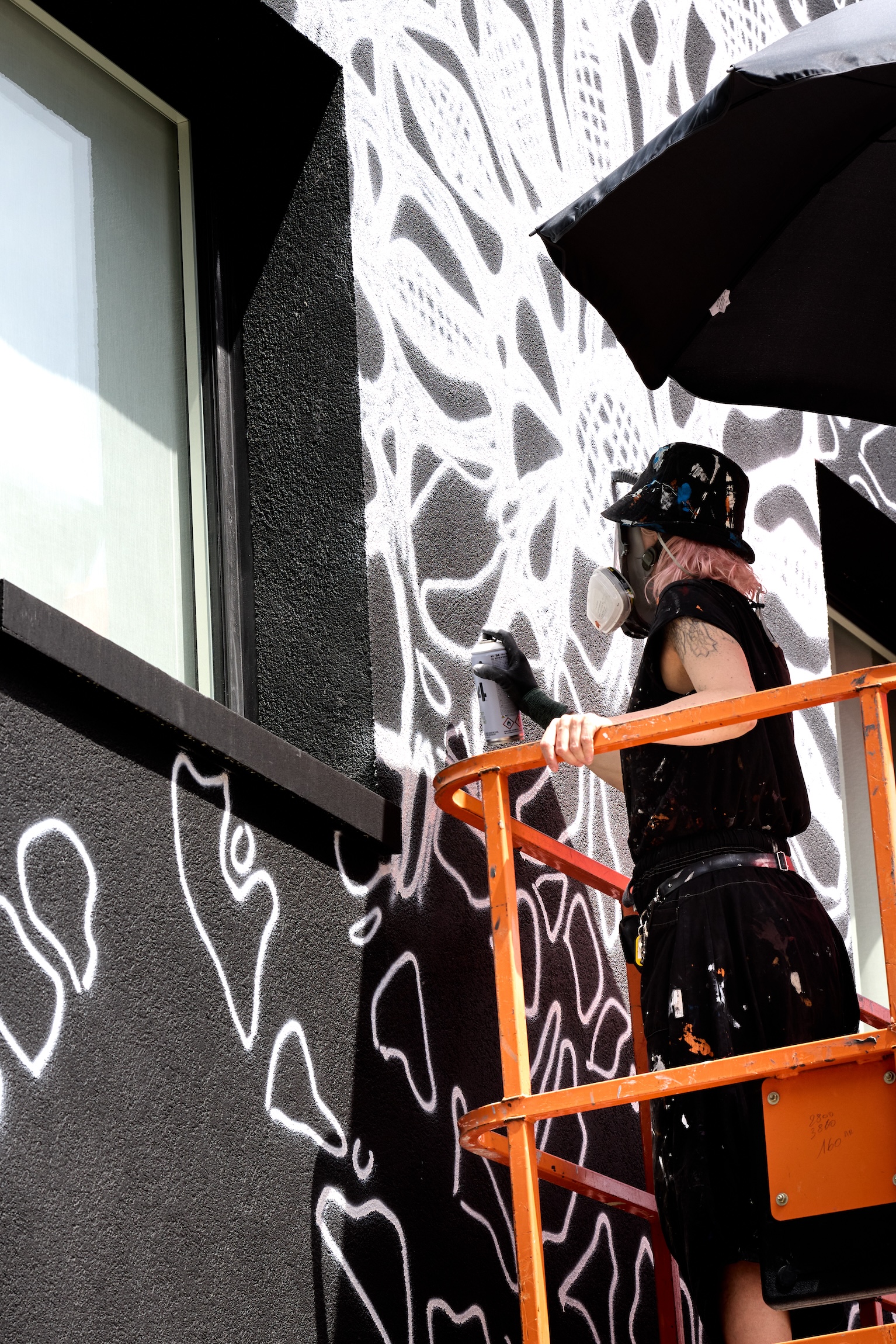
NeSpoon at work on the Maison Pic mural in Valence, translating the historic lace pattern across the building’s black façade. Photo © Epicurian.
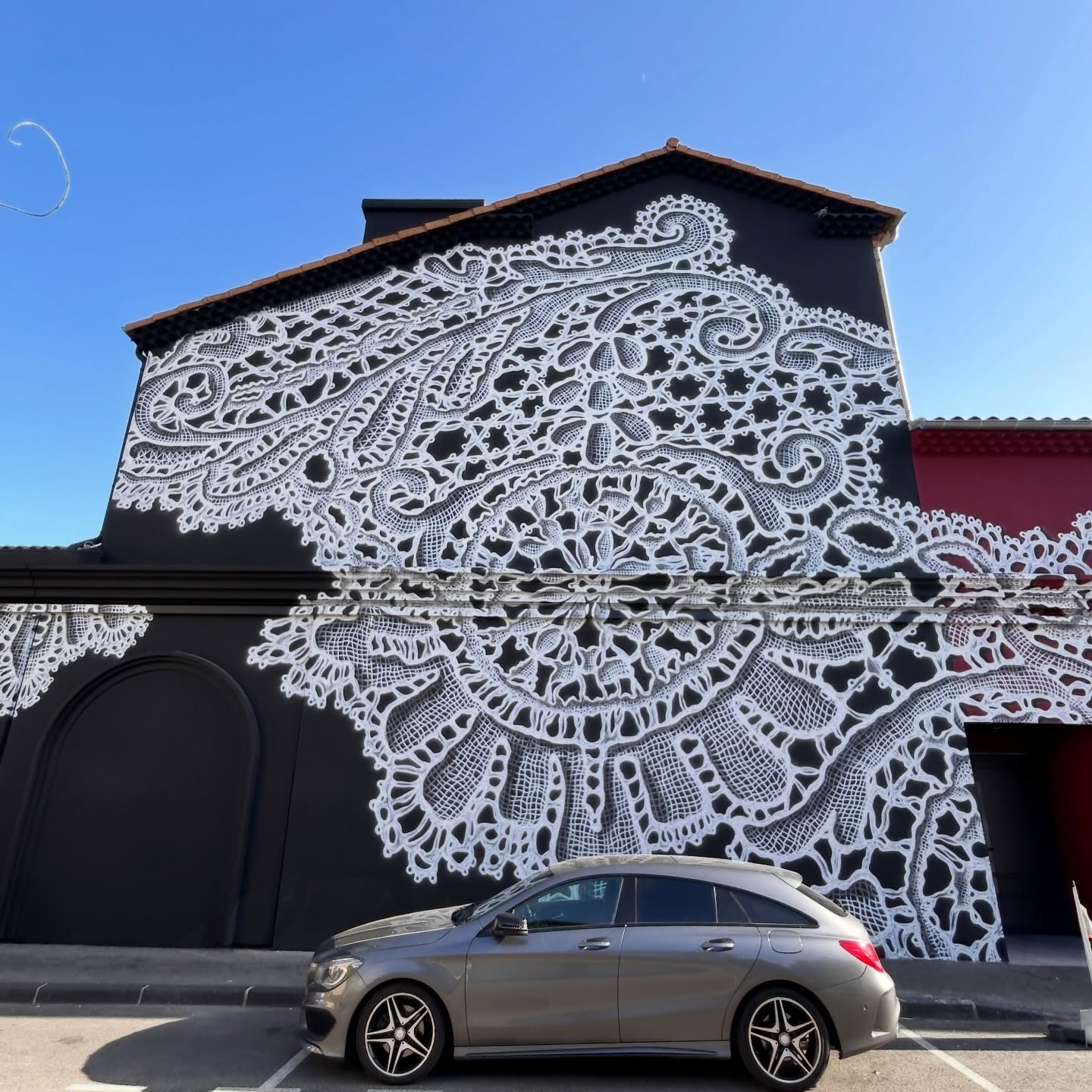
Maison Pic: A Culinary Institution Reimagined
Maison Pic is both a gastronomic destination and a repository of family history. The Pic family’s culinary story began in 1889, while the Maison Pic site in Valence is now approaching its own 90-year milestone. Today the complex encompasses a five-star hotel, the three-Michelin-starred Restaurant Pic, the André bistro, a bar, cellar and other hospitality spaces.
Anne-Sophie Pic represents the latest generation of a family whose name has become inseparable from French haute cuisine. She regained three Michelin stars for the Valence restaurant in 2007 and remains one of the very few women to have reached Michelin’s highest distinction.
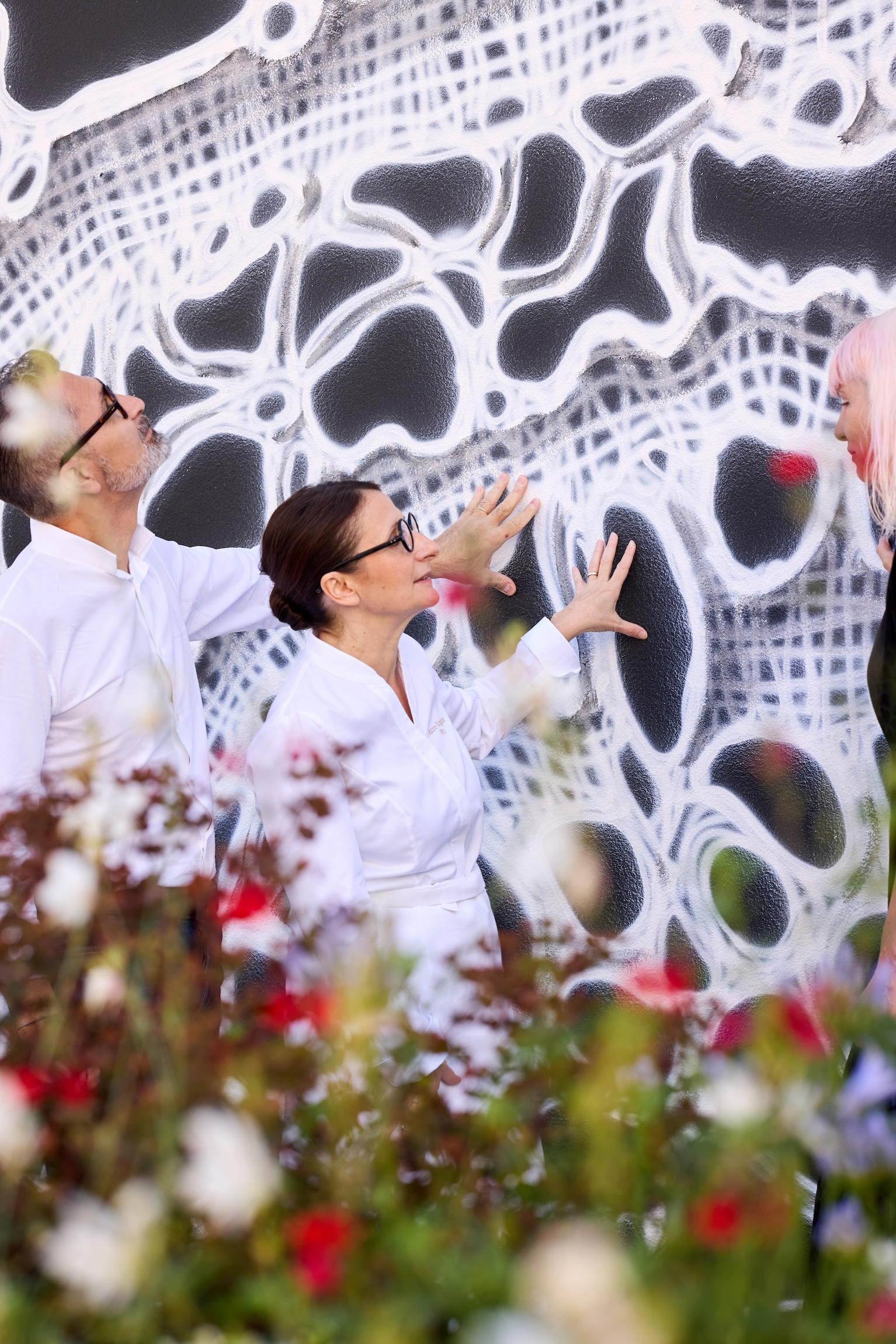
Anne-Sophie Pic and David Sinapian discuss the mural with NeSpoon during the Maison Pic project in Valence. Photo © Epicurian.
A Mural That Reveals Its Human Hand
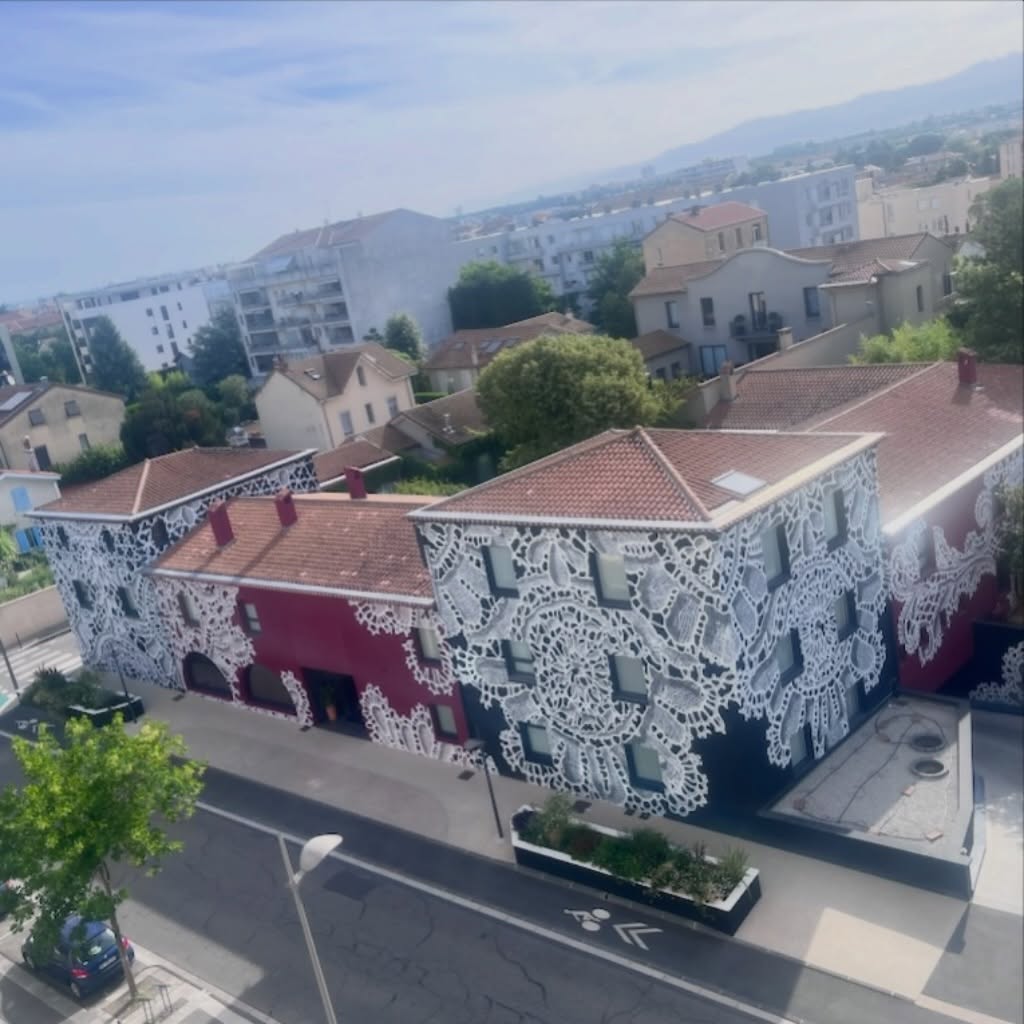
The aerial view makes the scale of NeSpoon’s intervention immediately clear. Rather than occupying a single façade, the composition extends across an entire group of buildings, binding Maison Pic together through a continuous field of lace.
That shift between distance and detail is central to the work. From above, the lace operates architecturally, transforming the site as a whole. Up close, it returns to the logic of the textile itself: repetition, concentration and the slow accumulation of individual gestures.
Who Produced the Maison Pic Mural?
The project was commissioned by Anne-Sophie Pic and David Sinapian and organised and produced by Mutt Prod, the production company founded by artist Julien de Casabianca.
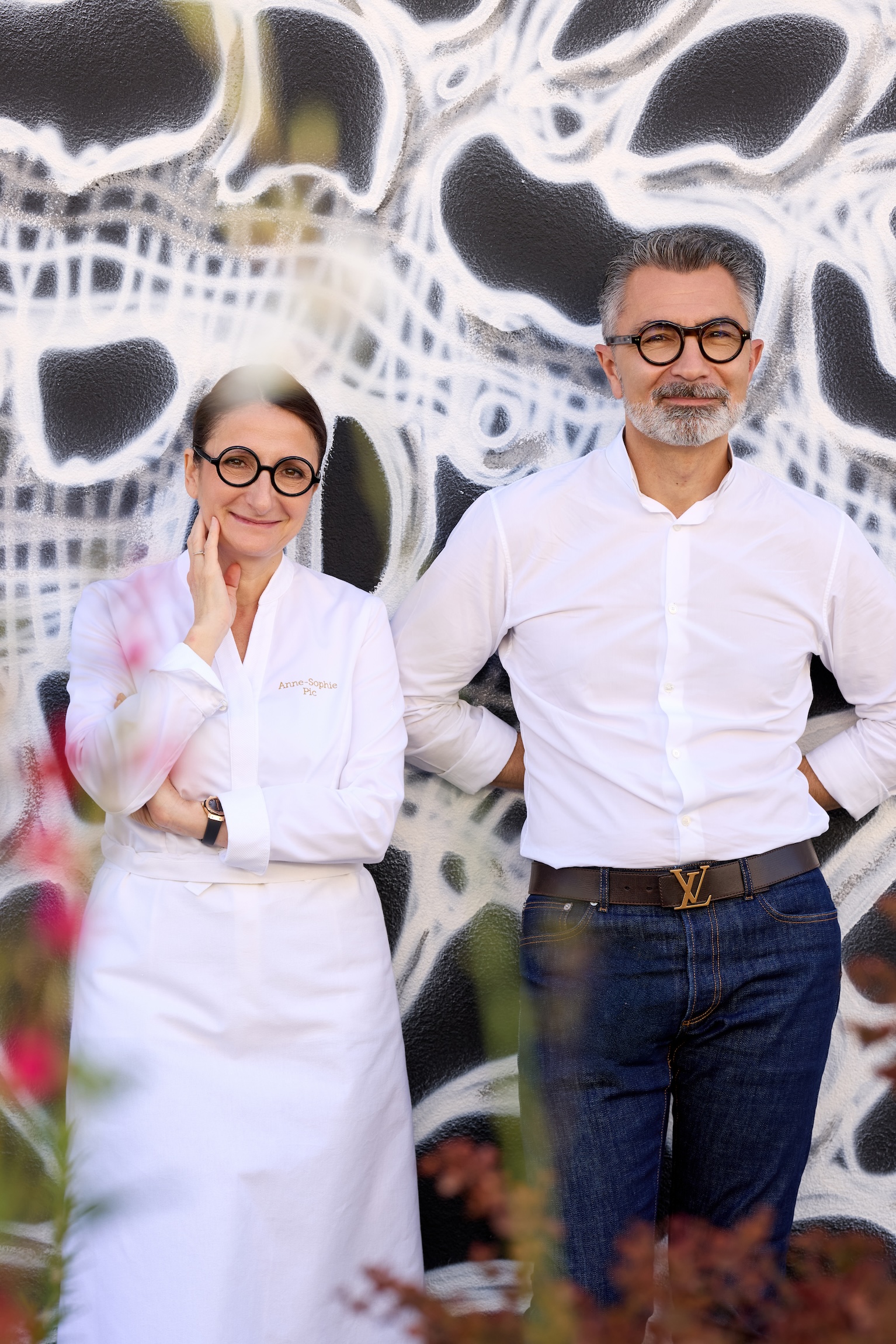
Anne-Sophie Pic and David Sinapian photographed against NeSpoon’s monumental lace mural at Maison Pic. Photo © Epicurian.
NeSpoon worked alongside project coordinator Johanna Quillet and assistant Jérôme “Jerc” Lansade, crediting the team’s coordination and support as instrumental in delivering a mural of such extraordinary complexity and scale.
The project also continues an established relationship between Maison Pic and contemporary public art. In 2024, Julien de Casabianca brought his celebrated Outings Project to the site as part of a wider cultural programme connected with the Musée de Valence.
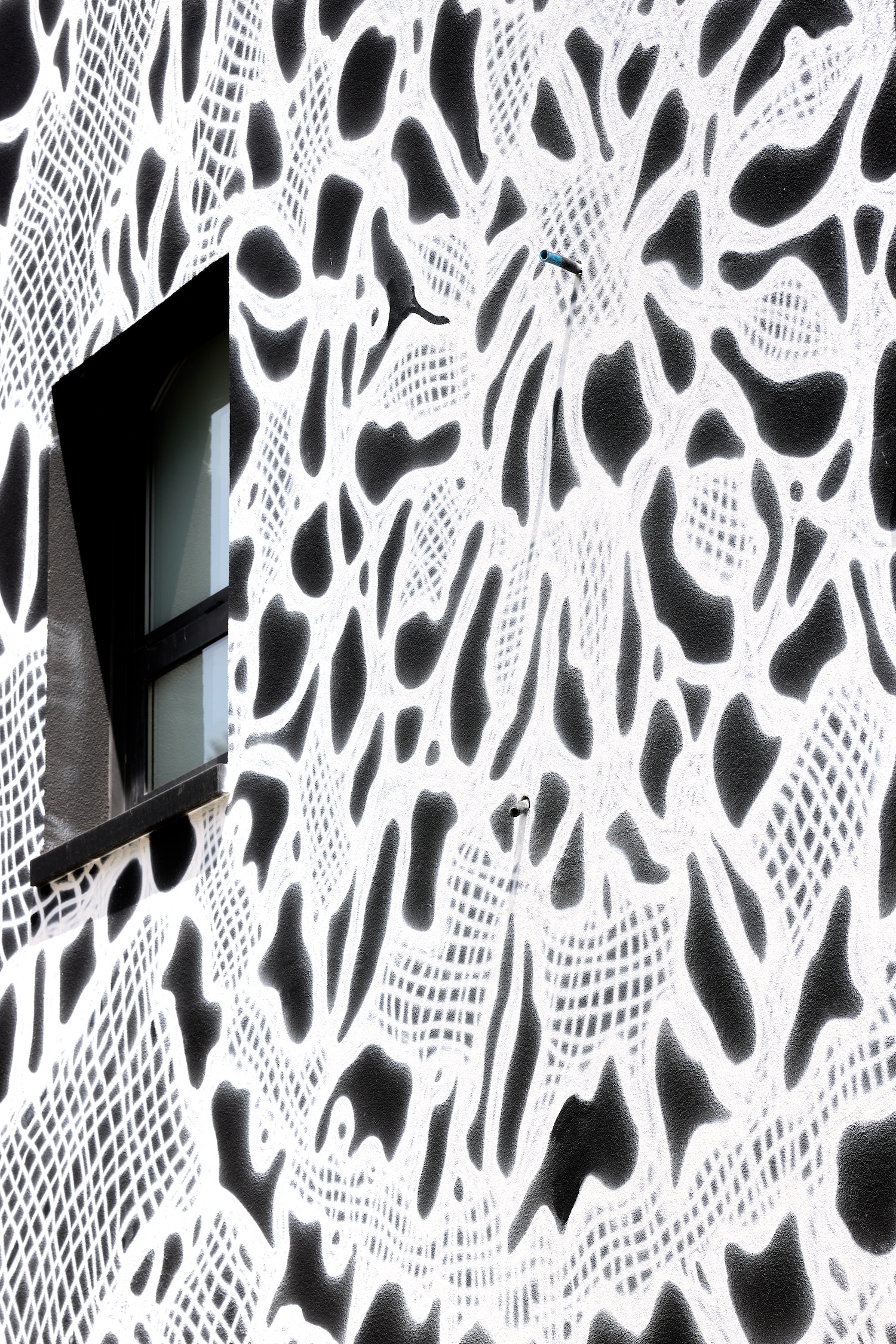
Detail of NeSpoon’s lace mural at Maison Pic, where fine mesh, floral forms and openwork patterns move across the architecture. Photo © Epicurian.
NeSpoon’s mural takes that relationship further. Rather than sitting independently on the building, her lace appears to become part of its architectural language, wrapping Maison Pic in imagery rooted in craftsmanship, heritage and place.
About NeSpoon
NeSpoon is a Polish contemporary and street artist whose practice encompasses large-scale murals, ceramics, installations and public interventions. Since beginning her street practice in 2009, she has developed an internationally recognised visual language based upon historic and contemporary lace patterns.
“I can’t say that I fell in love with lace; the laces just chose me.” NeSpoon
Her projects frequently begin with local research, museum visits and conversations with lacemakers. By transferring patterns historically associated with domestic and female labour onto monumental urban surfaces, NeSpoon gives these traditions new public visibility.
Frequently Asked Questions
The mural covers the façades of Maison Pic on Avenue Victor Hugo in Valence, in the Drôme department of south-eastern France.
According to NeSpoon, the artwork covers approximately 1,000 square metres and extends across ten façades, making it her largest mural to date.
The design was inspired by a historic piece of lace made in Craponne-sur-Arzon and preserved by the lace museum in Retournac. NeSpoon enlarged and reinterpreted the textile’s flowers, nets and ornamental forms across the architecture.
Anne-Sophie Pic is the chef and owner associated with Maison Pic in Valence. Restaurant Pic holds three Michelin stars, and Pic is recognised by her official organisation as the world’s most Michelin-starred female chef.
NeSpoon begins by researching authentic lace patterns, often through museum collections or local makers. She adapts the selected pattern to the architecture and recreates it at monumental scale using hand-painted and sprayed lines.
The mural has been created directly across the exterior façades as part of Maison Pic’s architectural renewal.
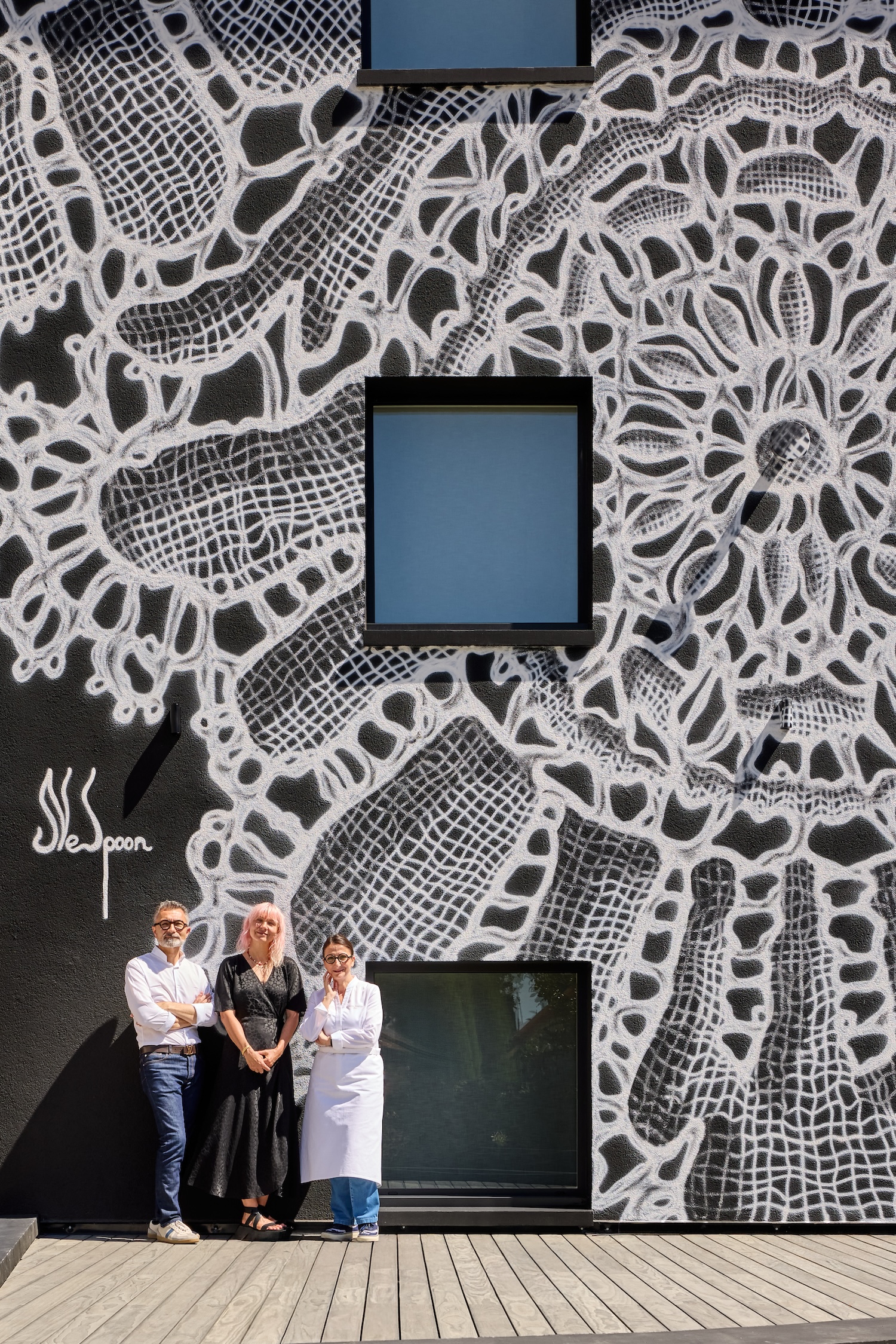
NeSpoon with Anne-Sophie Pic and David Sinapian in front of the completed Maison Pic lace mural, Valence, 2026. Photo © Epicurian.
Related Reading: NeSpoon
Explore the wider evolution of NeSpoon’s practice in Street Artist in the Spotlight: NeSpoon, tracing her journey from small ceramic Urban Jewellery and hand-cut stencil interventions to monumental lace murals across international architecture.
The Maison Pic project continues a particularly rich history of NeSpoon working with French textile heritage. In 2020, she transformed the Lace and Fashion Museum in Calais using an 1894 machine-lace pattern from its archive, before taking inspiration from nineteenth-century French needle lace for her Callac mural in Brittany and a historic Breton ceremonial shawl for Yffiniac in 2022.
Her research-led approach extends across Europe. Mirabella Imbaccari in Sicily drew upon the town’s historic bobbin-lace tradition, while Nowogród in Poland transformed a handmade Kurpie folk-costume apron into architectural-scale public art.
For a deeper understanding of the ideas behind the patterns, read GraffitiStreet’s International Women’s Day interview with NeSpoon, where she discusses lacemaking, female craft traditions and the journey that led lace from intimate textile to monumental street art.
Explore and Collect Nespoon Urban Art
GraffitiStreet presents NeSpoon’s work across original paintings and hand-cut stencil pieces, bringing the intricate lace language of her monumental public murals into works created for collectors.
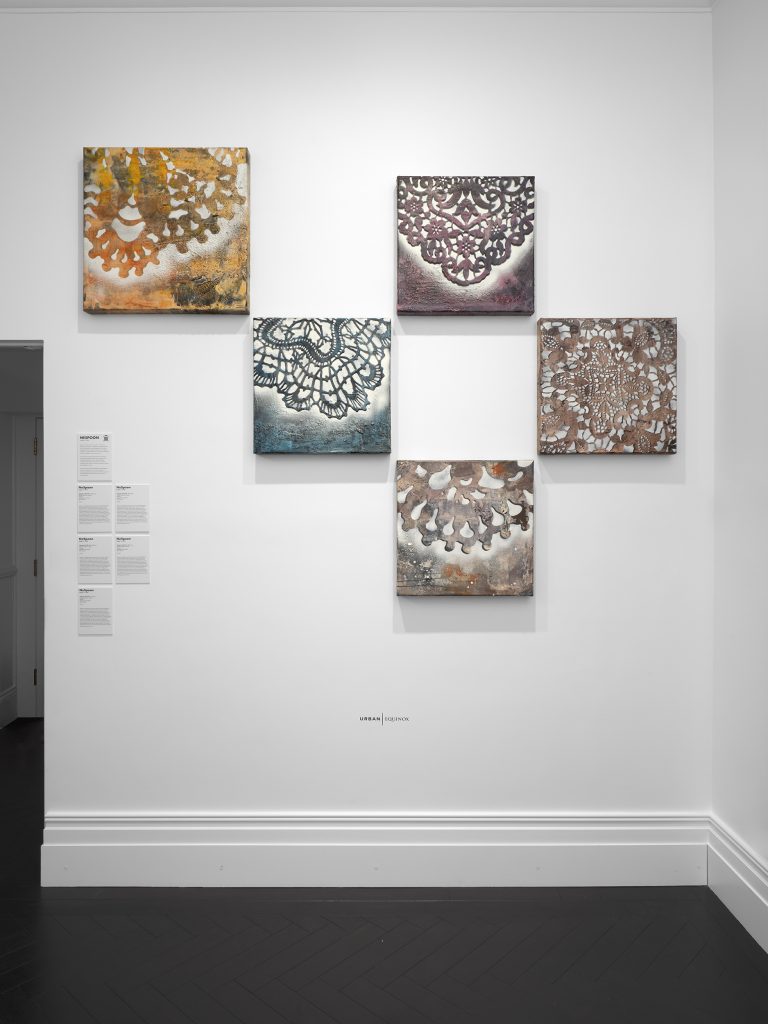
Discover available works by NeSpoon, speak with our curatorial team or enquire about sourcing a specific piece online or in person at GraffitiStreet Gallery.