The Evolution of Bordalo II’s Big Trash Animals: Neutral, Half-Half and Plastic
Bordalo II’s Big Trash Animals have evolved into one of the Portuguese artist’s most recognisable bodies of work, transforming discarded plastics, vehicle parts, tyres, textiles, electronic components and other waste into monumental portraits of wildlife. Across the series, materials associated with consumption and disposal become the bodies of animals affected by pollution and environmental degradation.
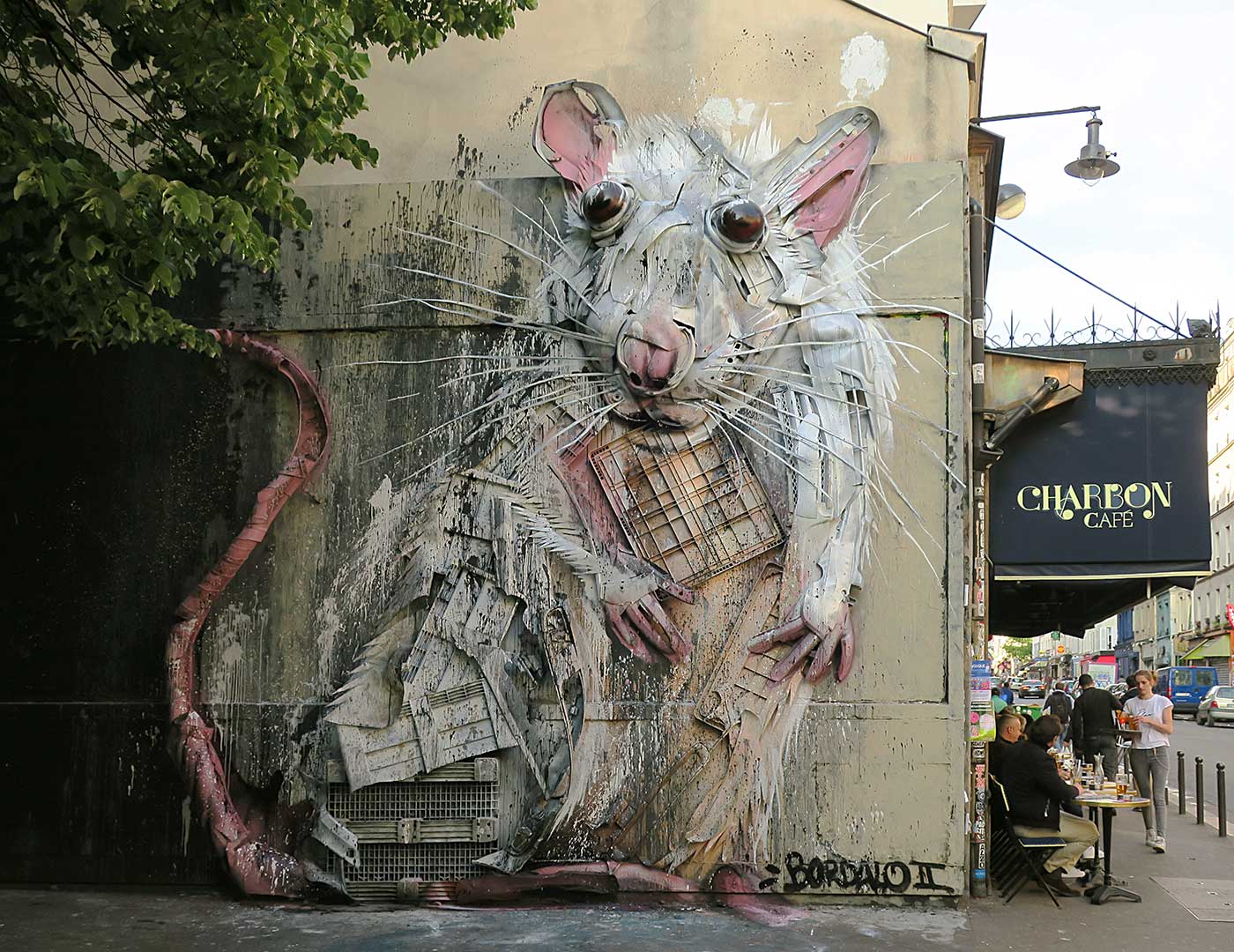
What makes the Big Trash Animals particularly compelling is the way Bordalo II has continued to experiment with how that waste is revealed. Through the Neutral, Half-Half and Plastic subseries, the same fundamental materials are treated in radically different ways, moving from illusion and camouflage towards increasingly exposed layers of colour, texture and discarded objects.
Explore GraffitiStreet’s complete guide to Bordalo II’s Big Trash Animals.
Why Plastic Waste Matters to Bordalo II’s Art
The environmental context behind the work is significant. Global plastic production grew from around 2 million tonnes in 1950 to 460 million tonnes in 2019, an increase of almost 230 times. By 2019, the world was generating approximately 353 million tonnes of plastic waste annually, yet only around 9% was ultimately recycled.
Plastic pollution affects wildlife through entanglement, ingestion and the wider degradation of habitats and ecosystems. Bordalo II turns that environmental problem into something physically visible, using discarded materials to recreate animals and making the relationship between waste and the natural world central to the artwork.
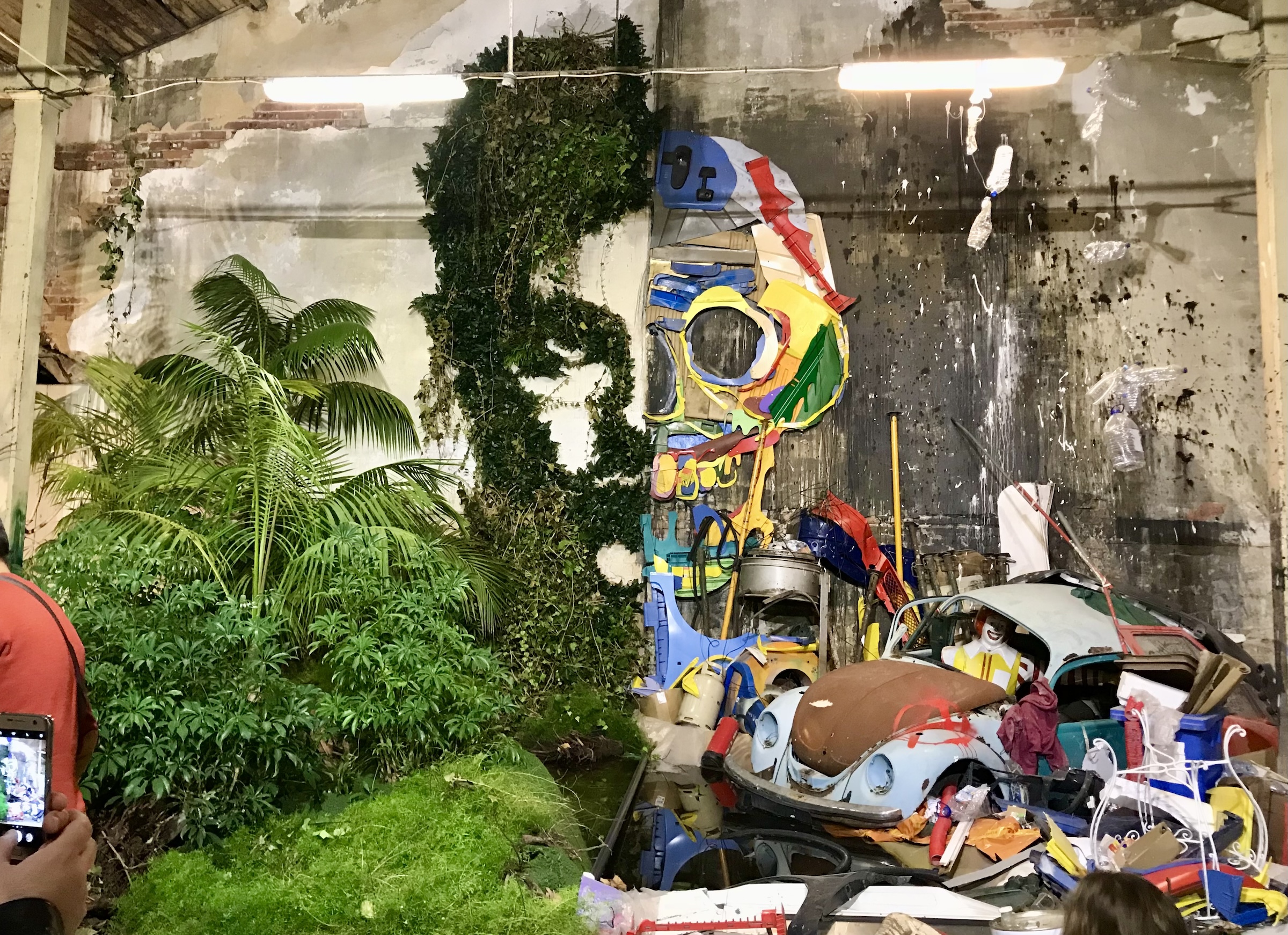
Neutral: When Waste Becomes Almost Invisible
The Neutral works use paint and carefully layered materials to camouflage much of the rubbish from which the animals are constructed. At first glance, the viewer encounters something surprisingly organic and lifelike, yet closer inspection reveals plastics, fabrics, electronics, hoses, nets and other discarded objects embedded within the sculpture.
This tension between illusion and material reality defined many of Bordalo II’s formative Big Trash Animals, from rats and birds to larger wildlife sculptures installed in cities around the world.
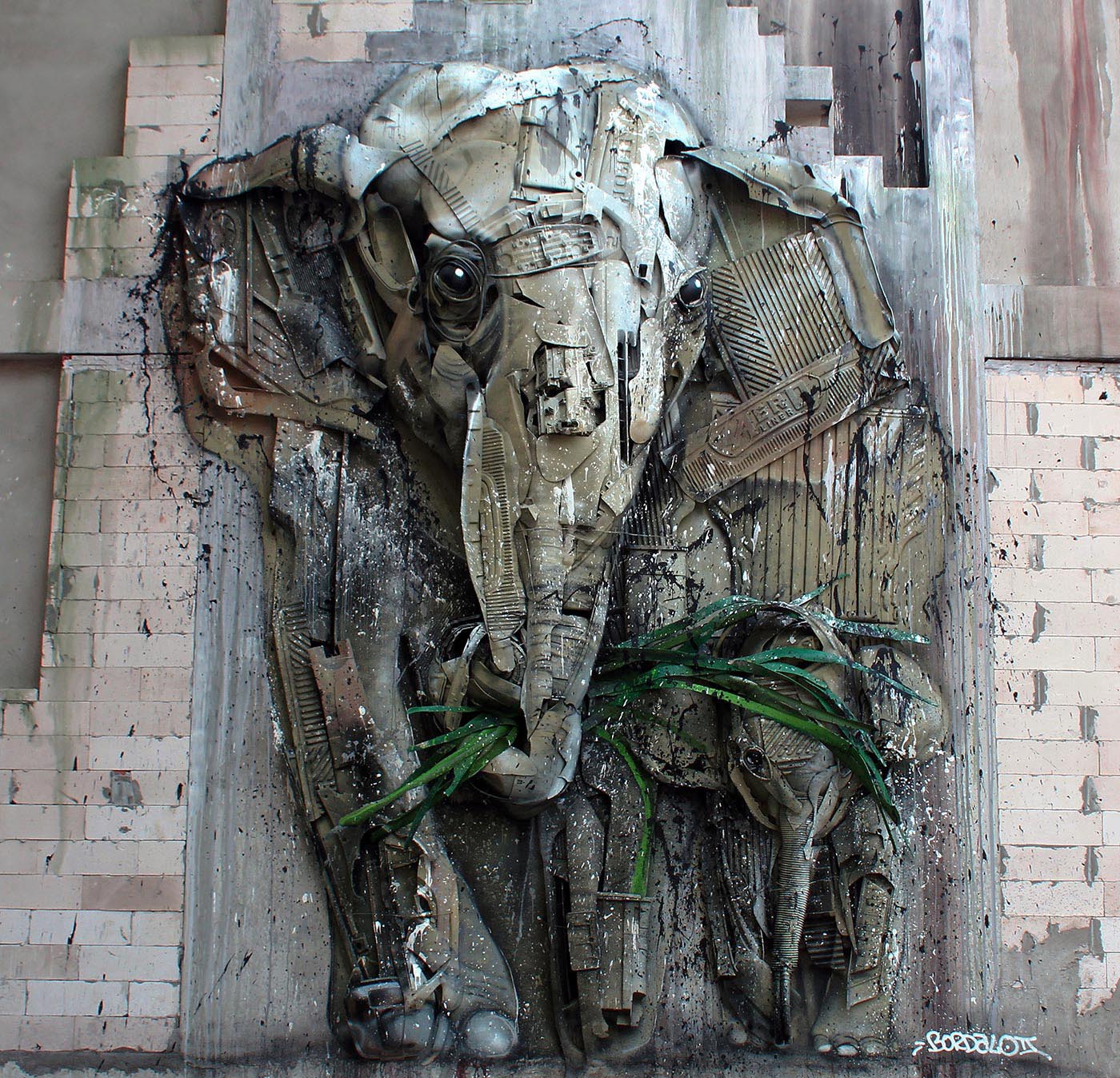
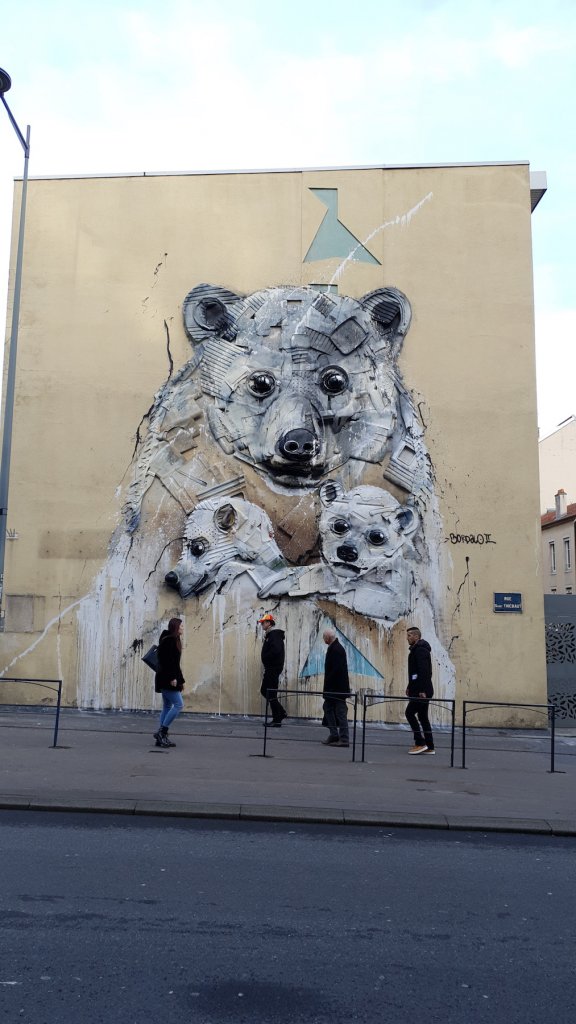
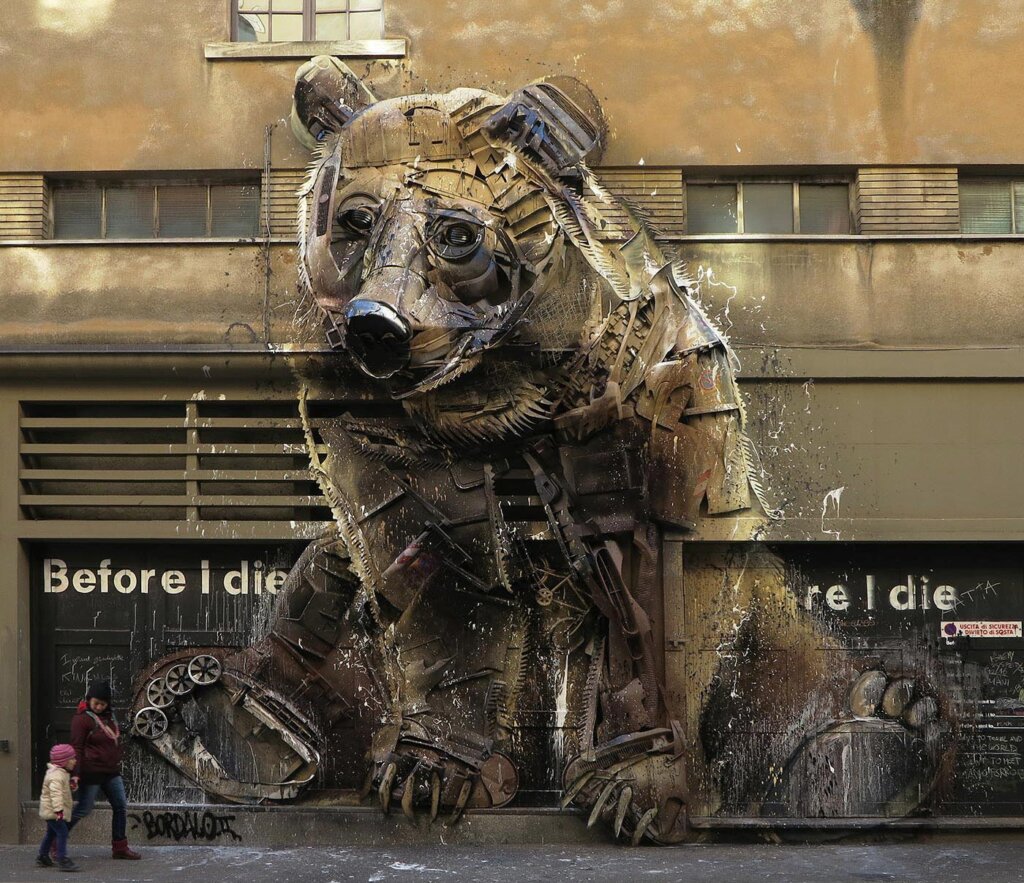
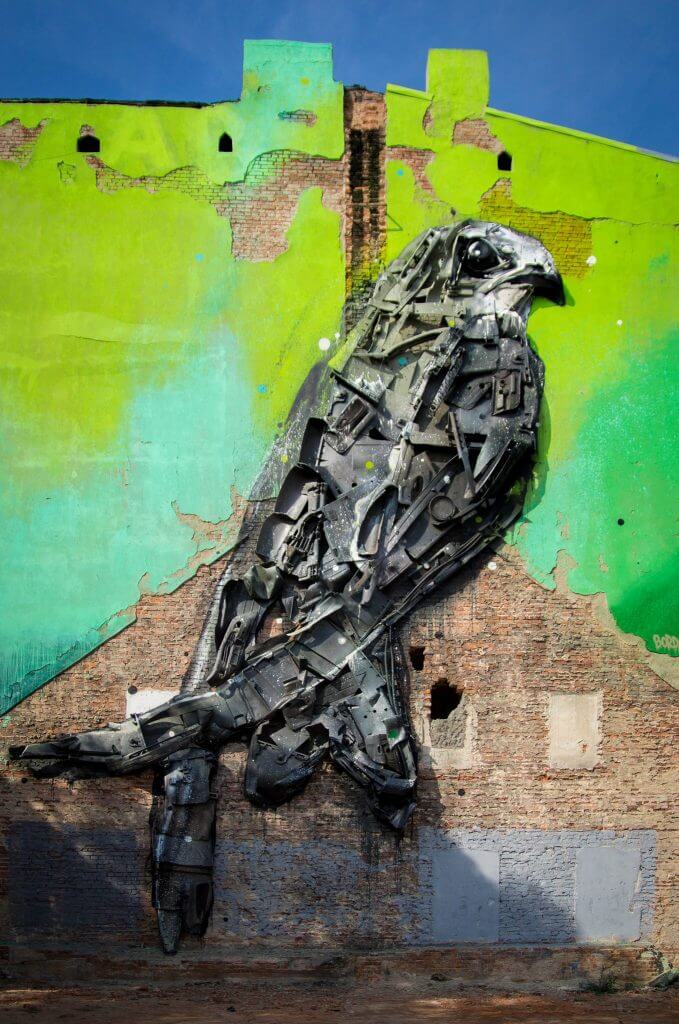
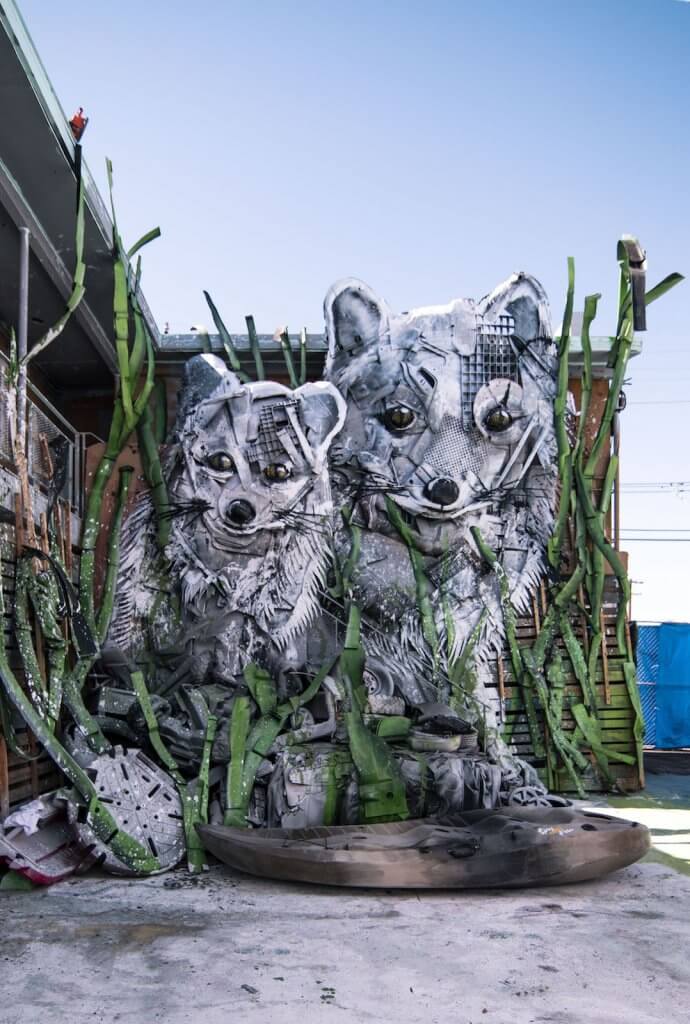
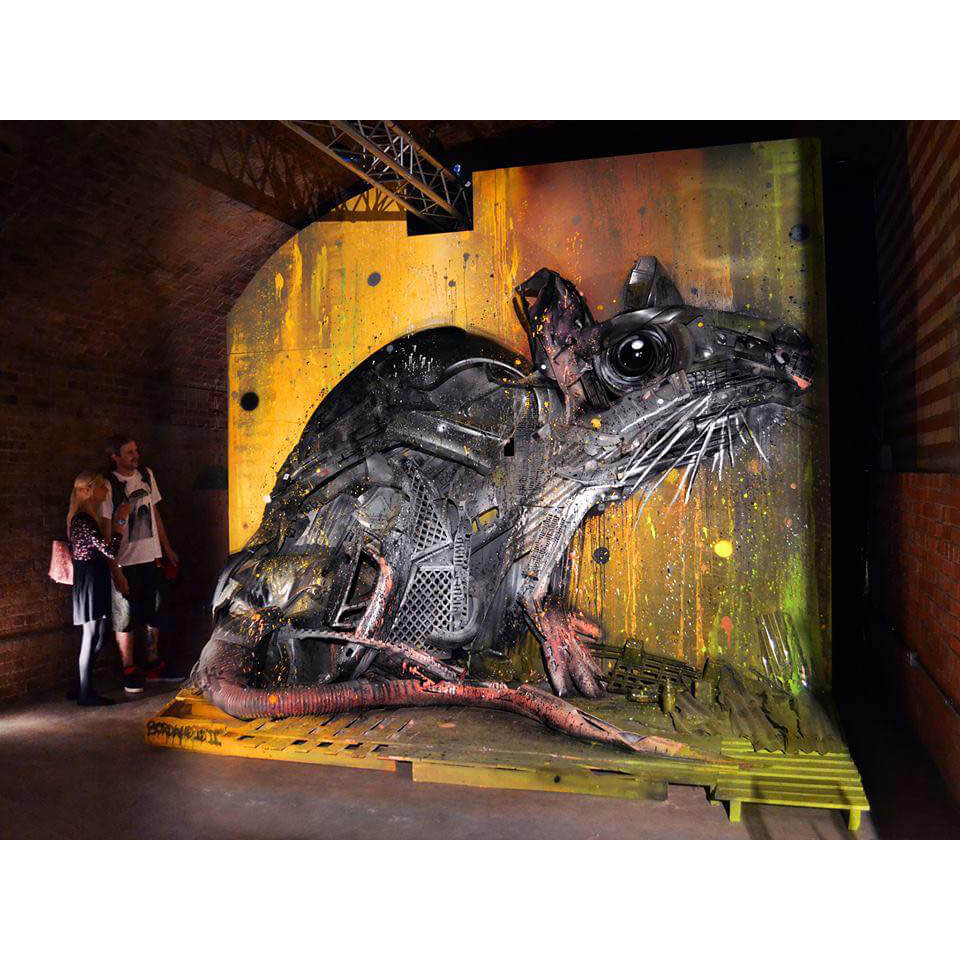
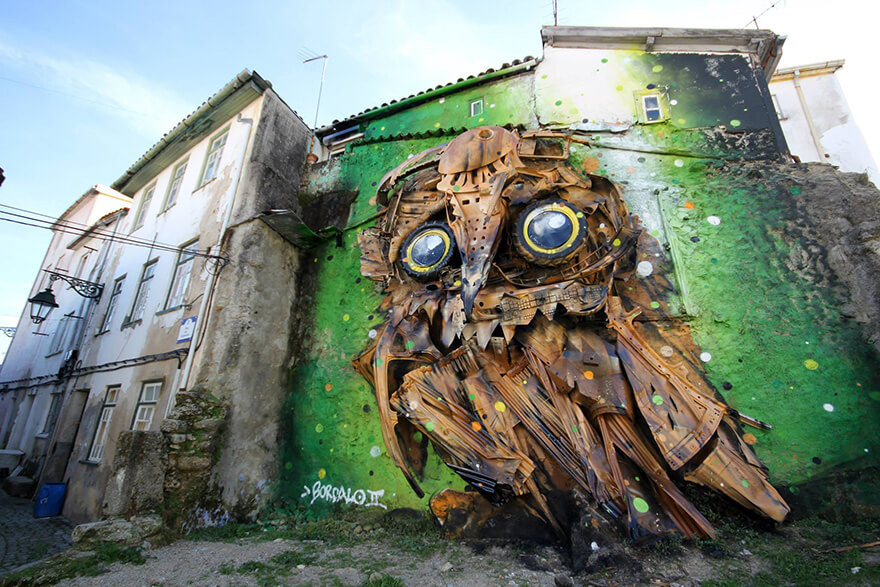
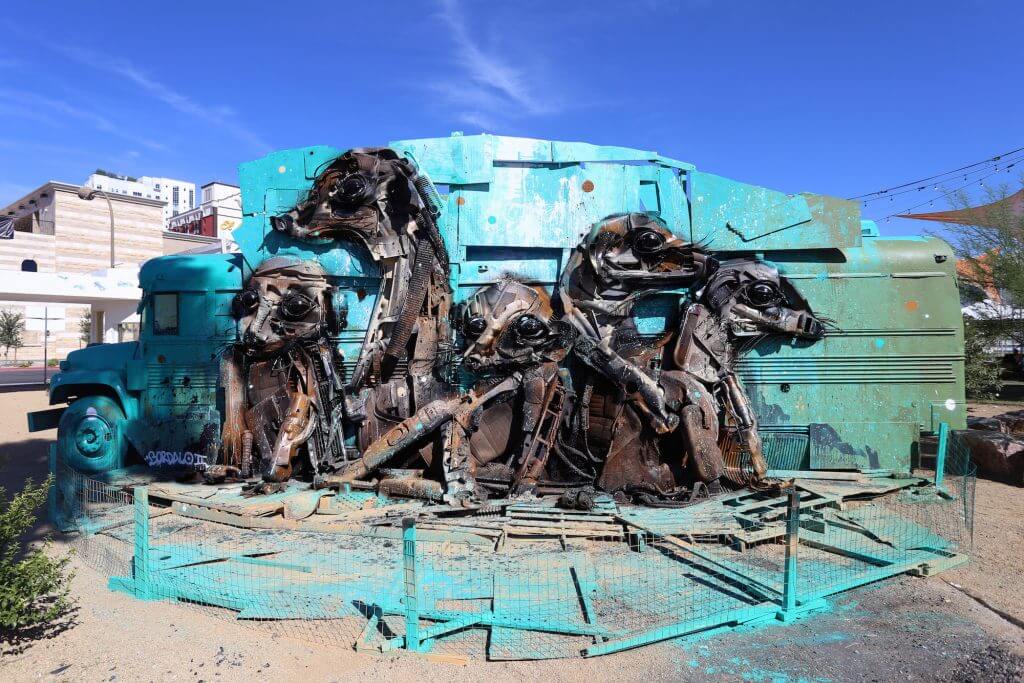
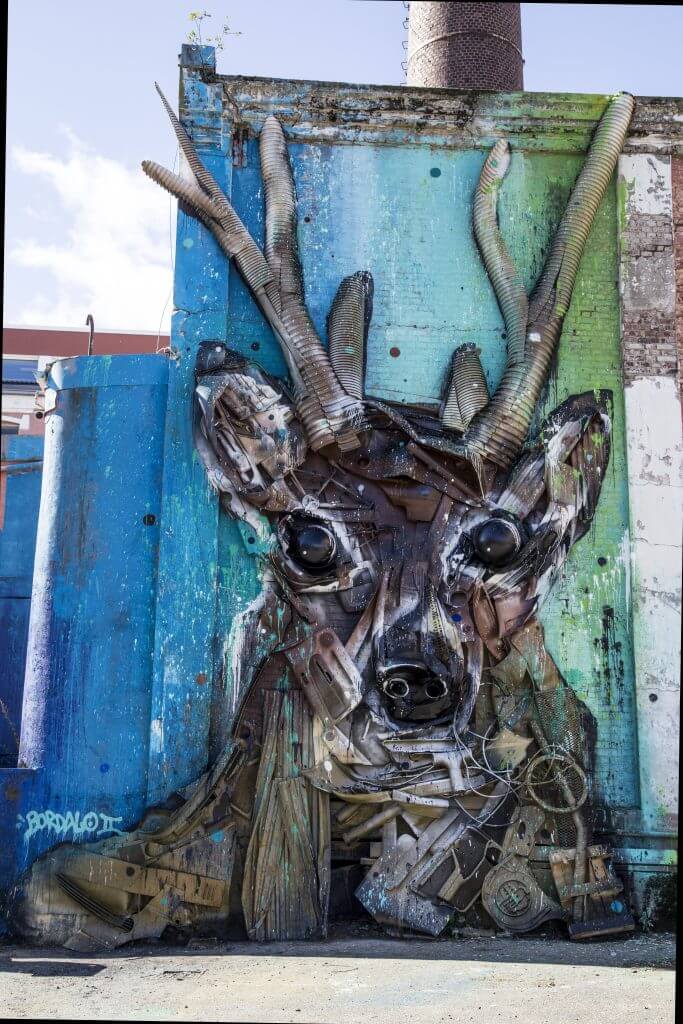
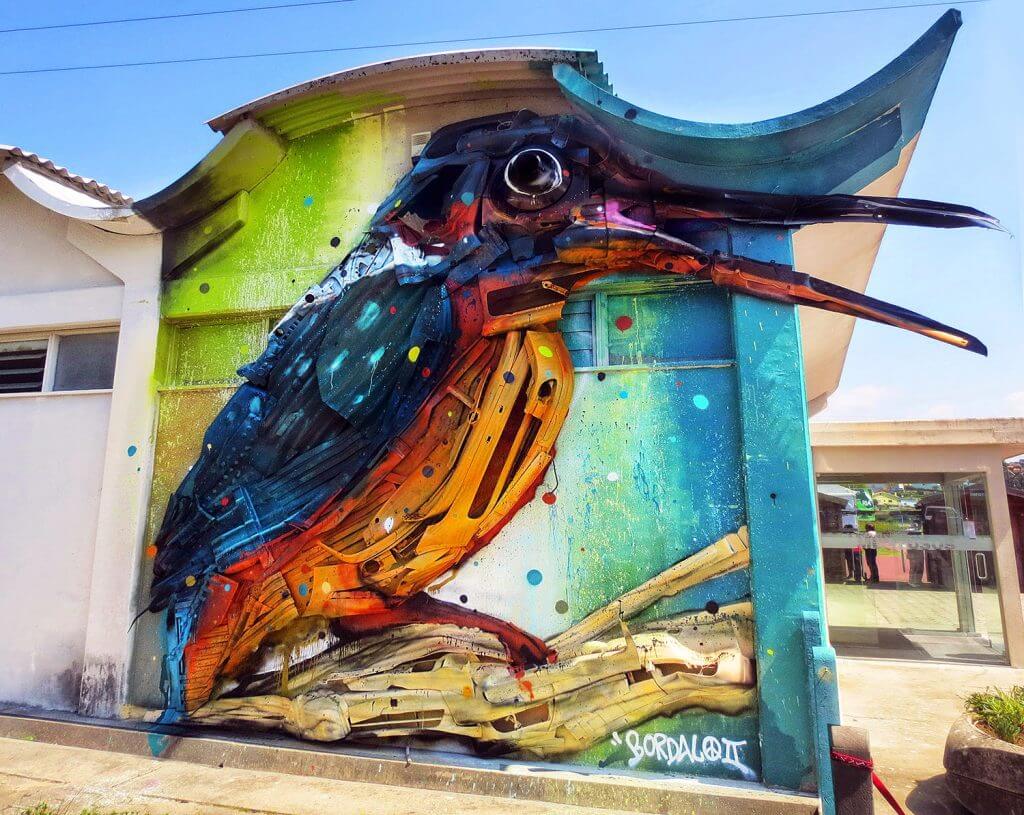
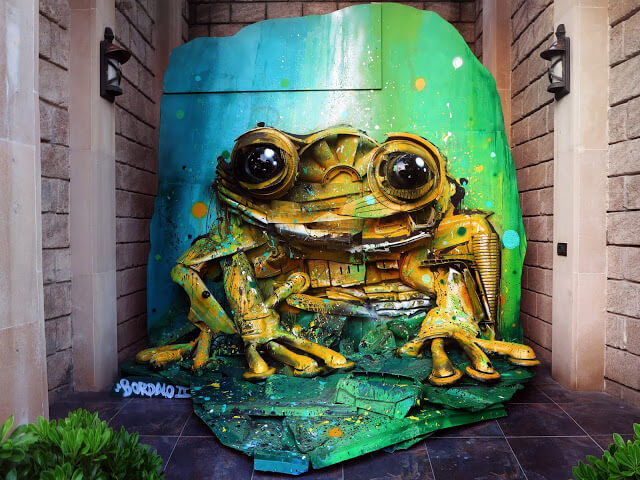
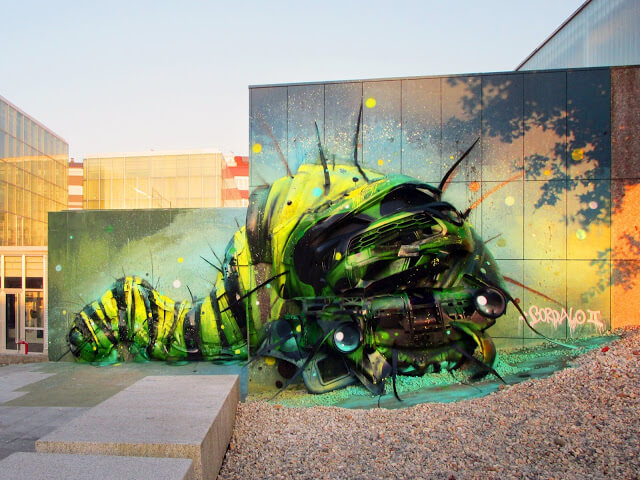
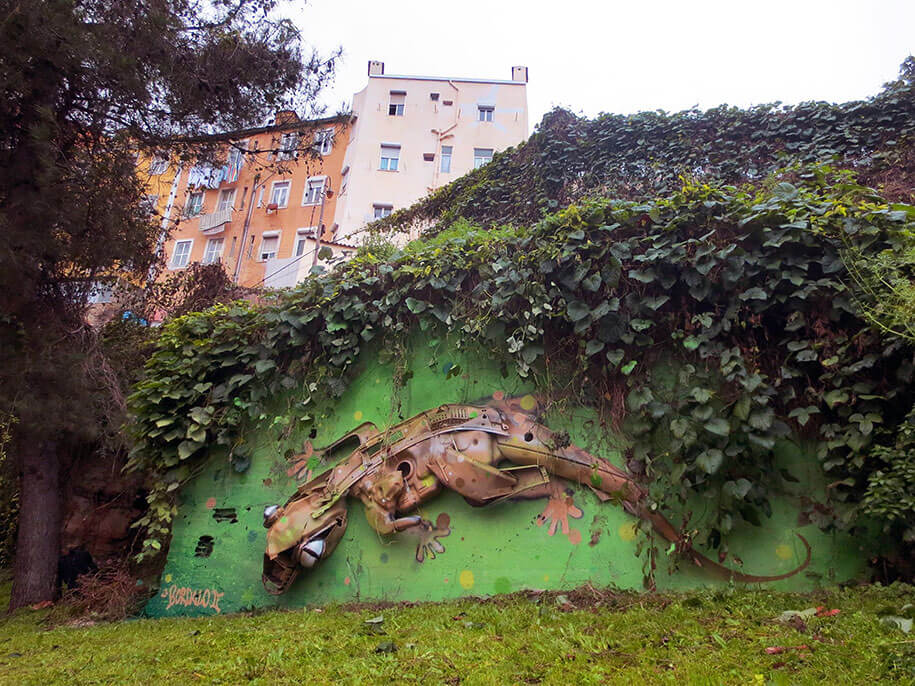
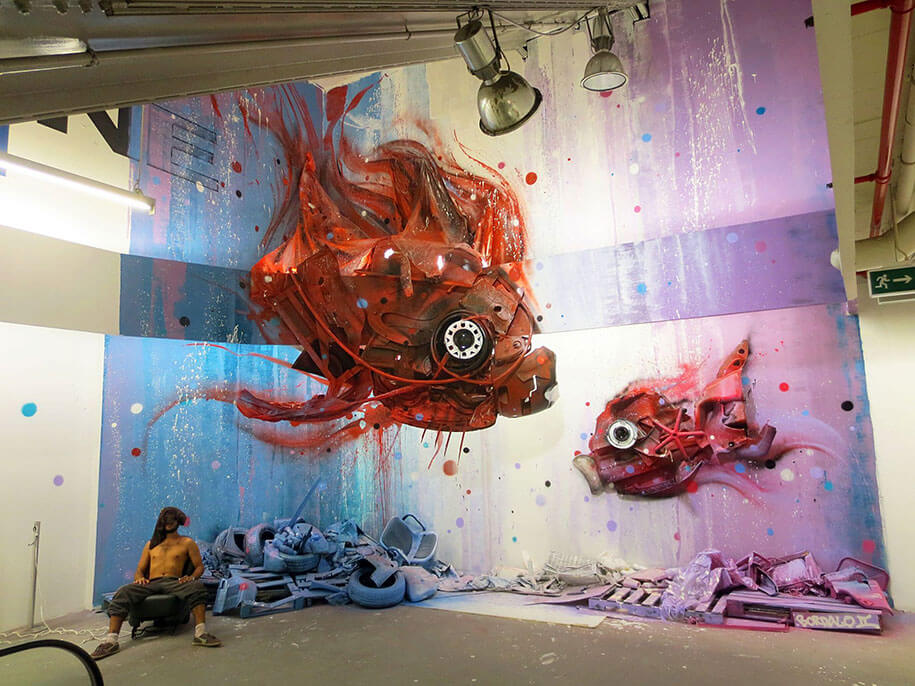
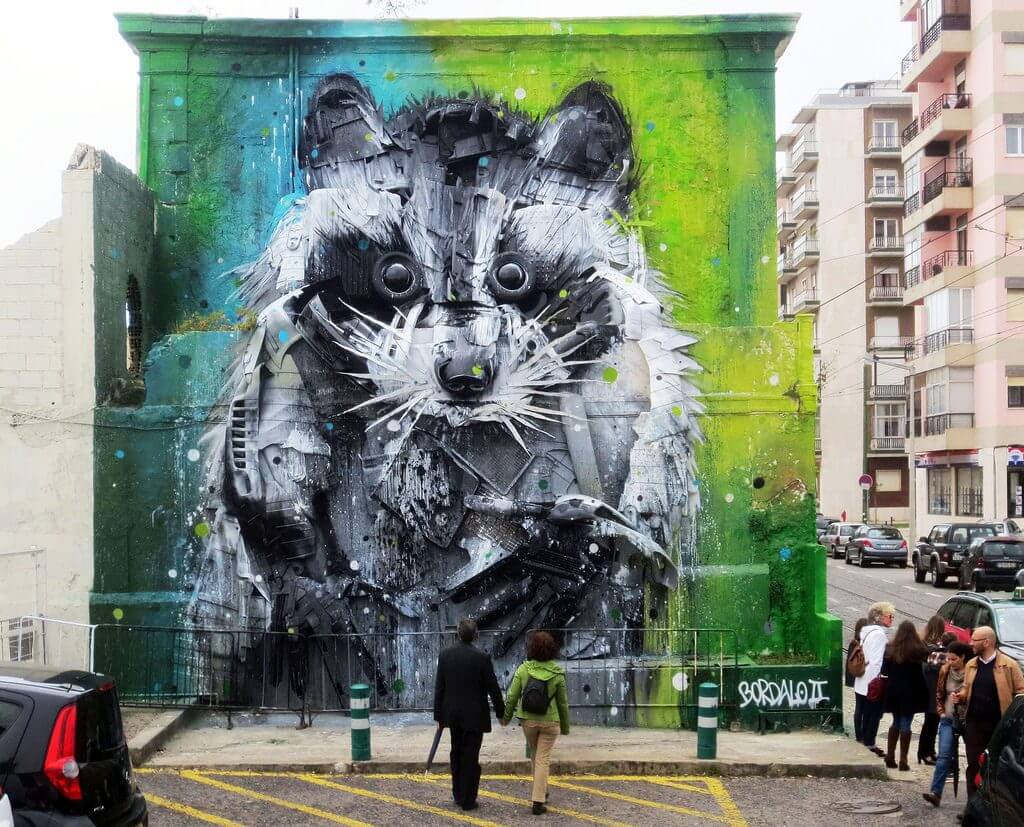
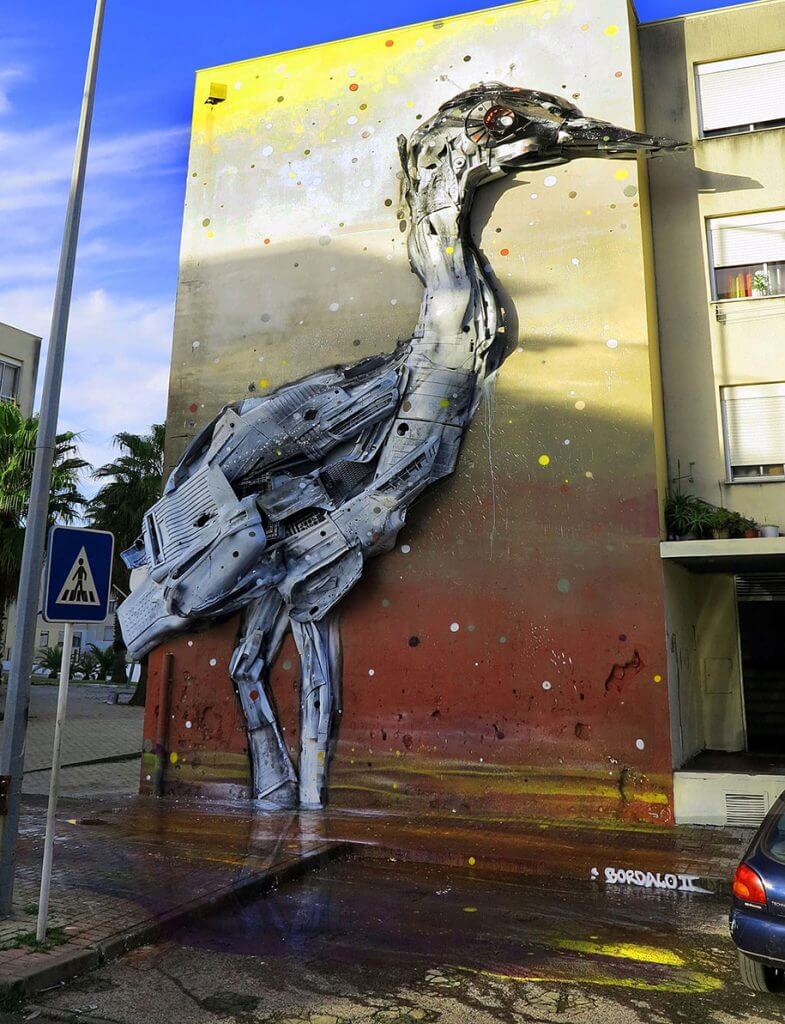
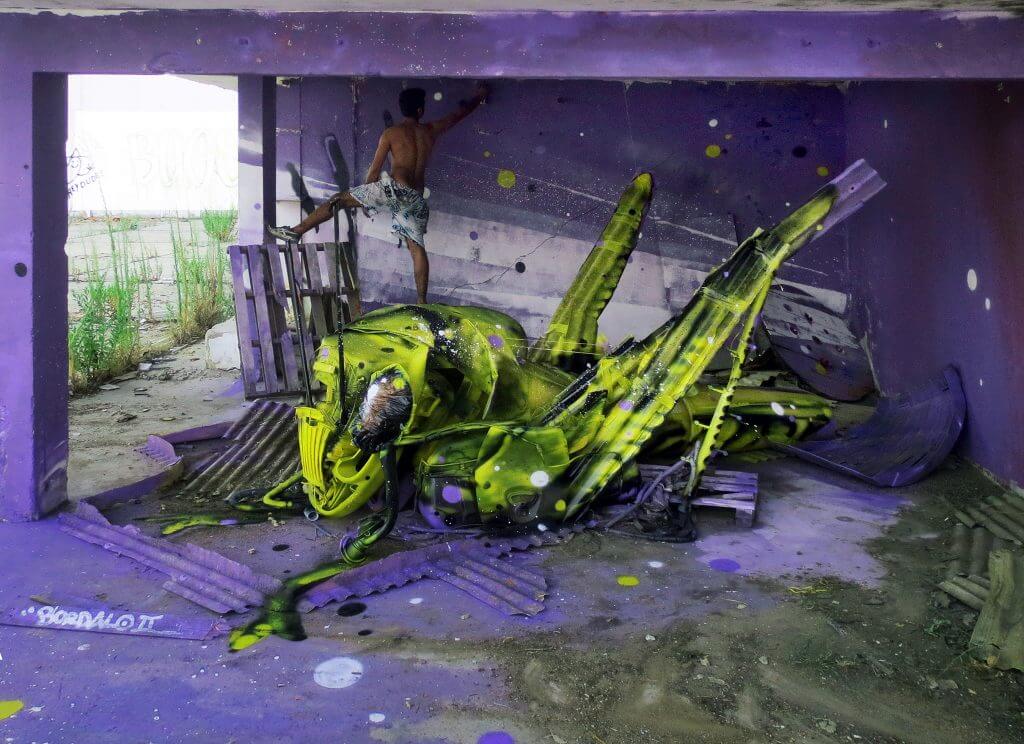
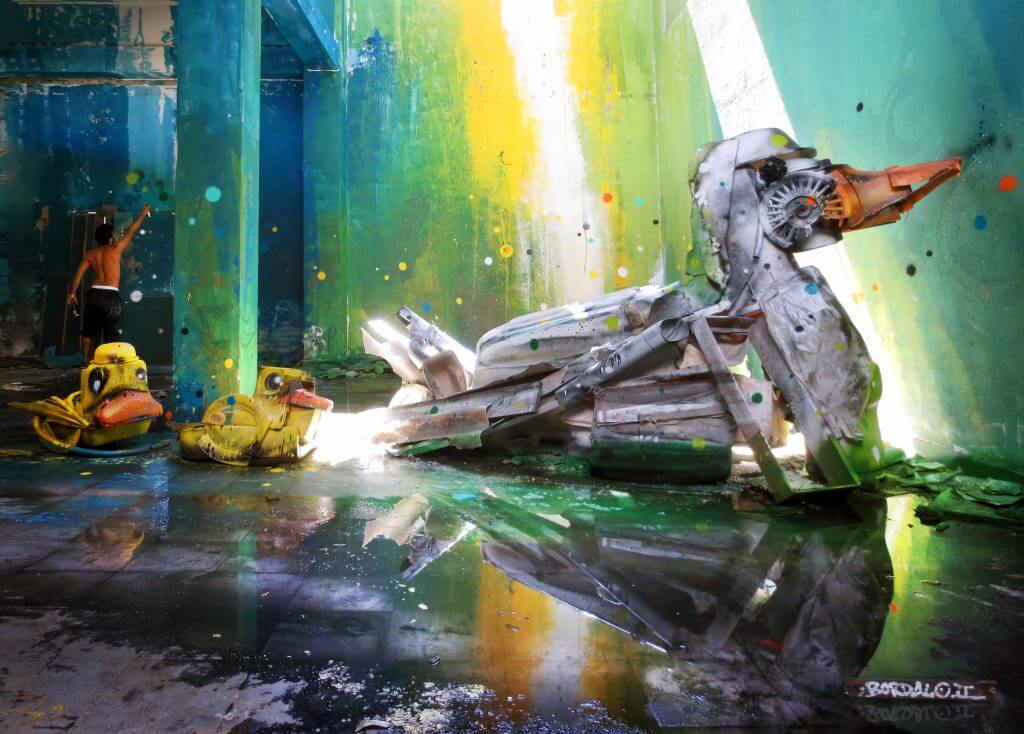
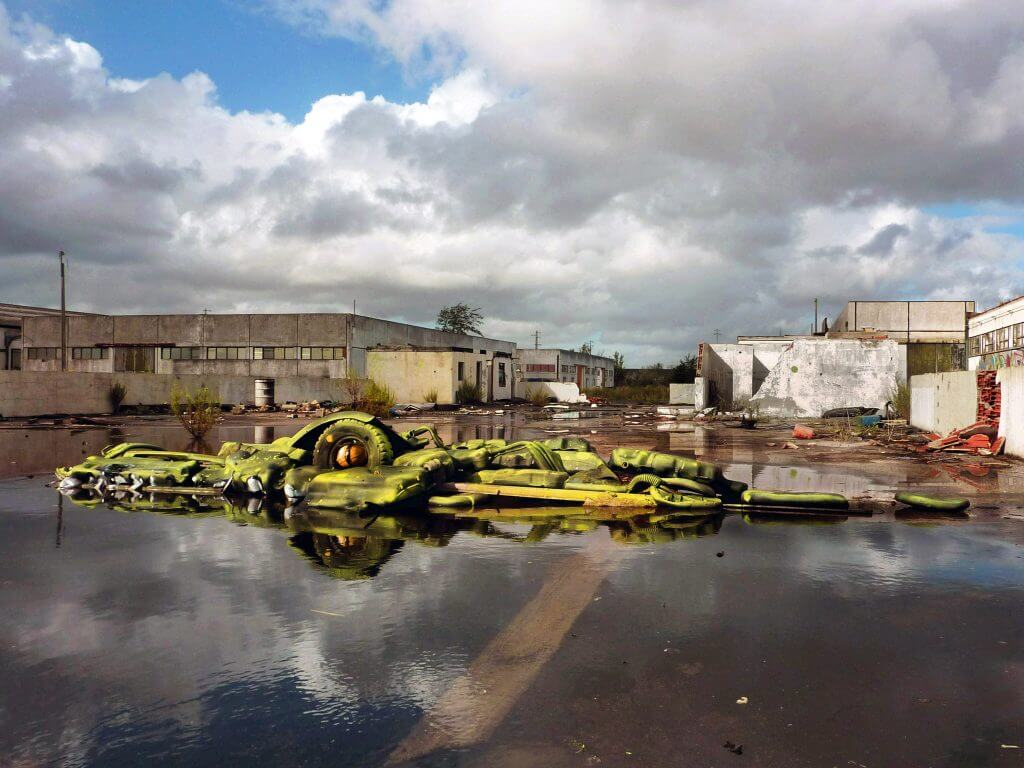
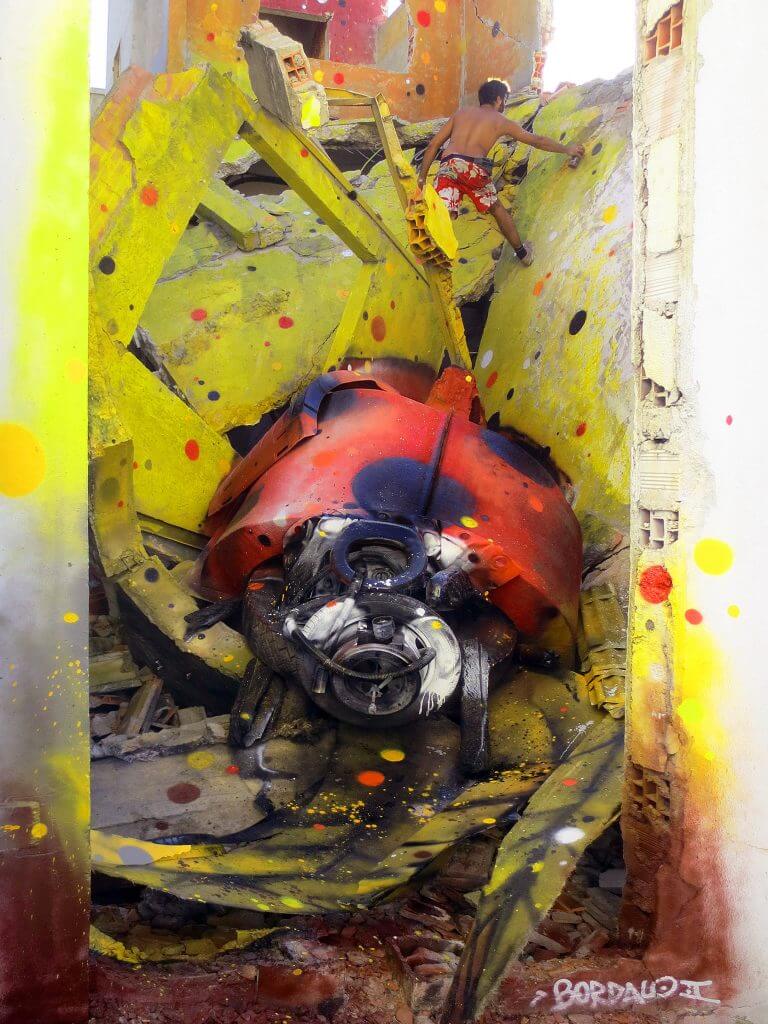
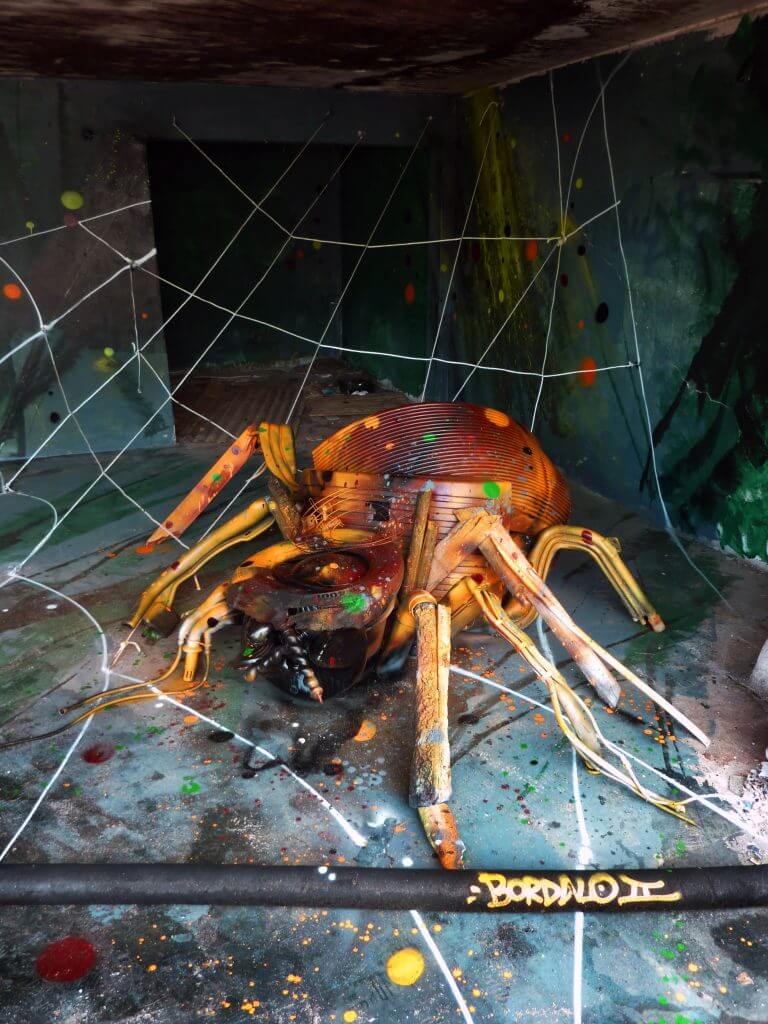
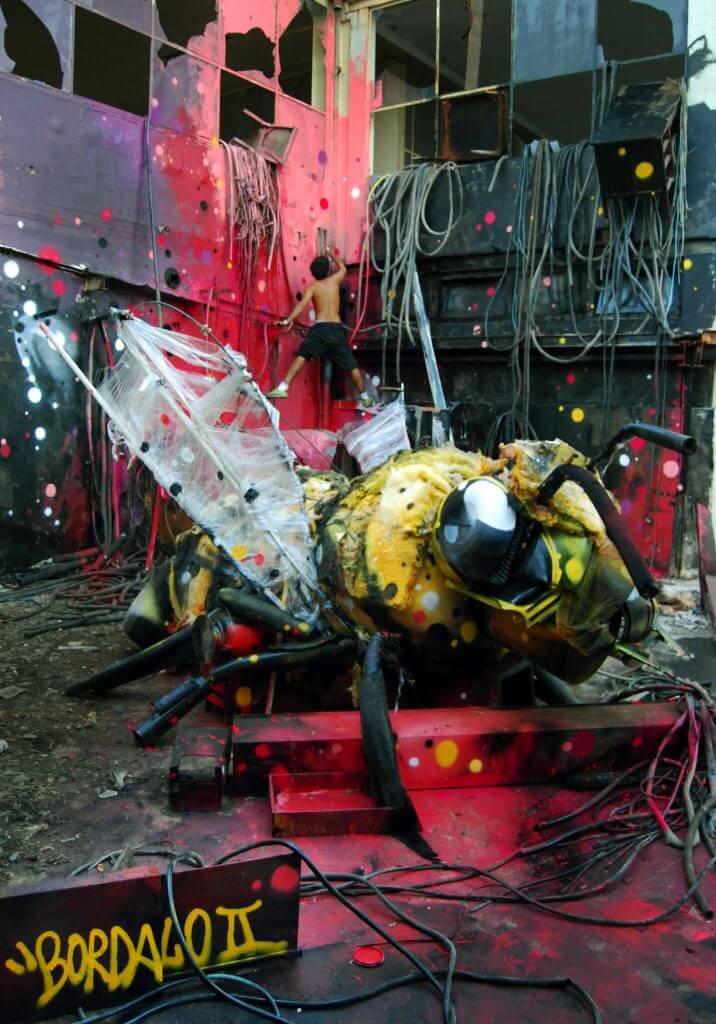
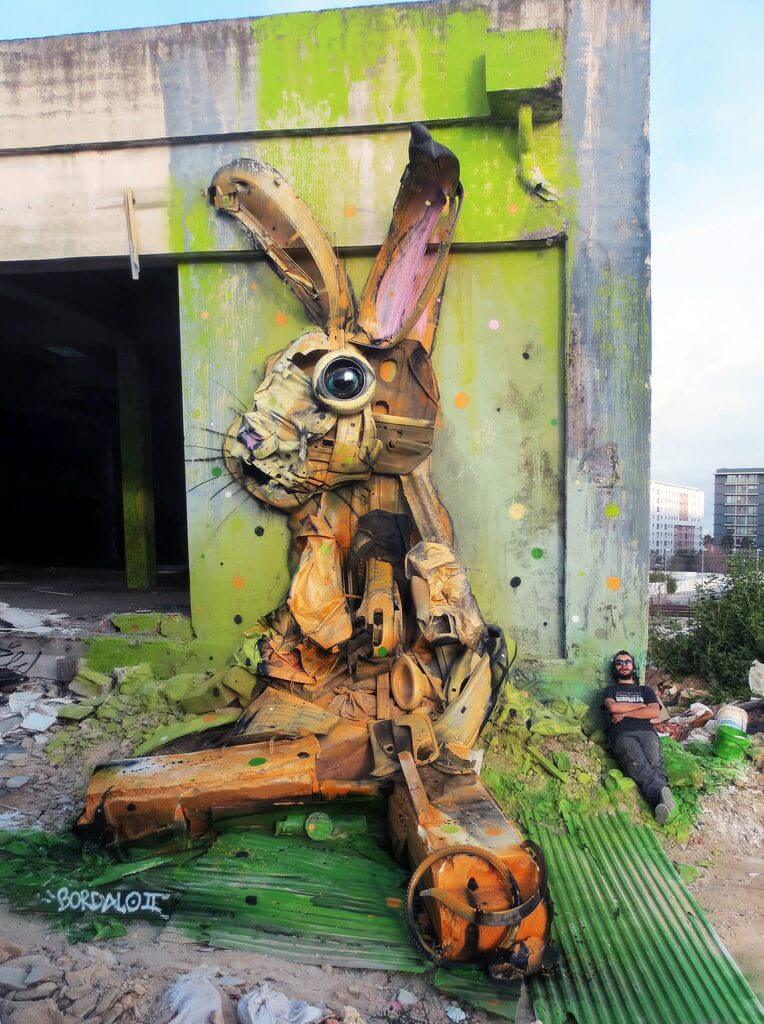
Bordalo II, Neutral Big Trash Animals. Images © Bordalo II.
Half-Half: Revealing the Animal and the Waste
The Half-Half subseries makes Bordalo II’s material contradiction much more explicit. One side of the animal appears closer to the naturalistic language of Neutral, while the other exposes the vivid colours, shapes and textures of the discarded objects from which it is made.
Bordalo II describes the series as a confrontation between the real animal and the animal born from trash, placing the two visual identities beside one another to emphasise the relationship between wildlife and the materials contributing to the destruction of natural habitats.
An early example, Half Rabbit, was created in Vila Nova de Gaia, Portugal, in 2017, establishing a visual structure that Bordalo II would continue developing across species and continents.
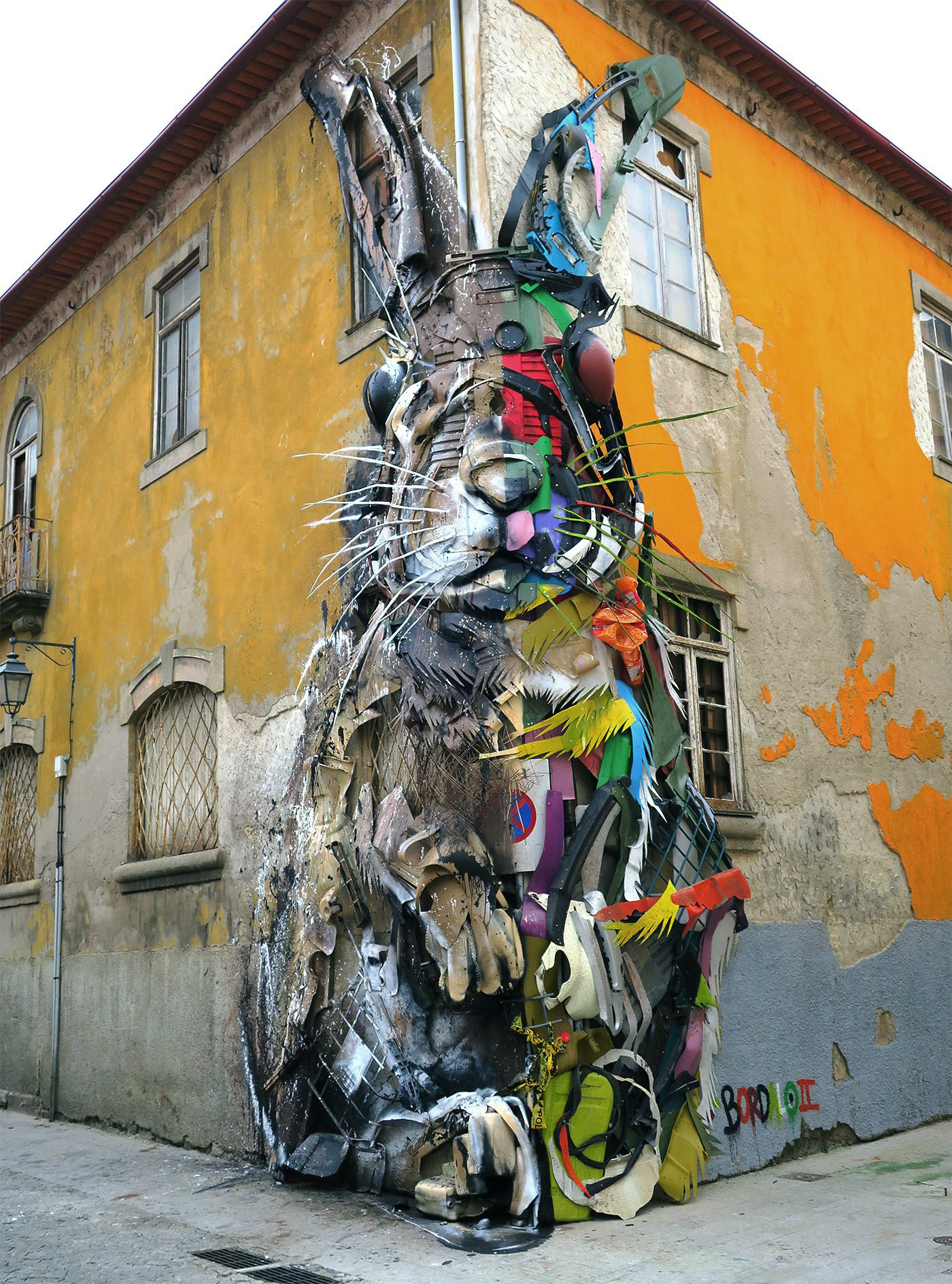
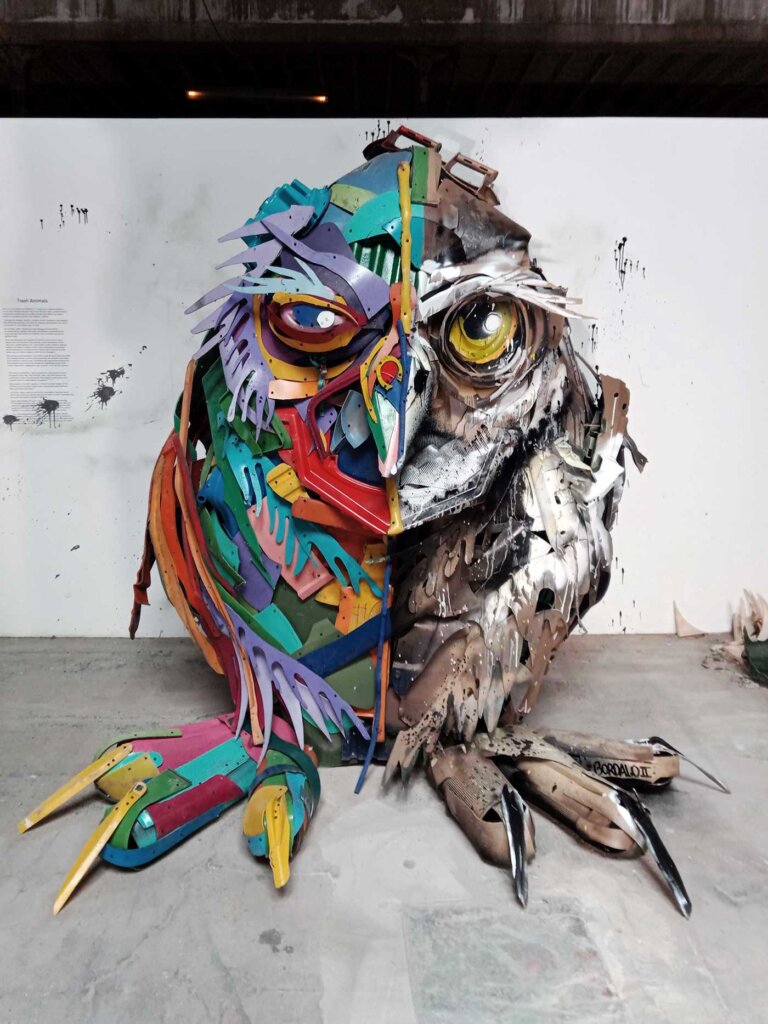
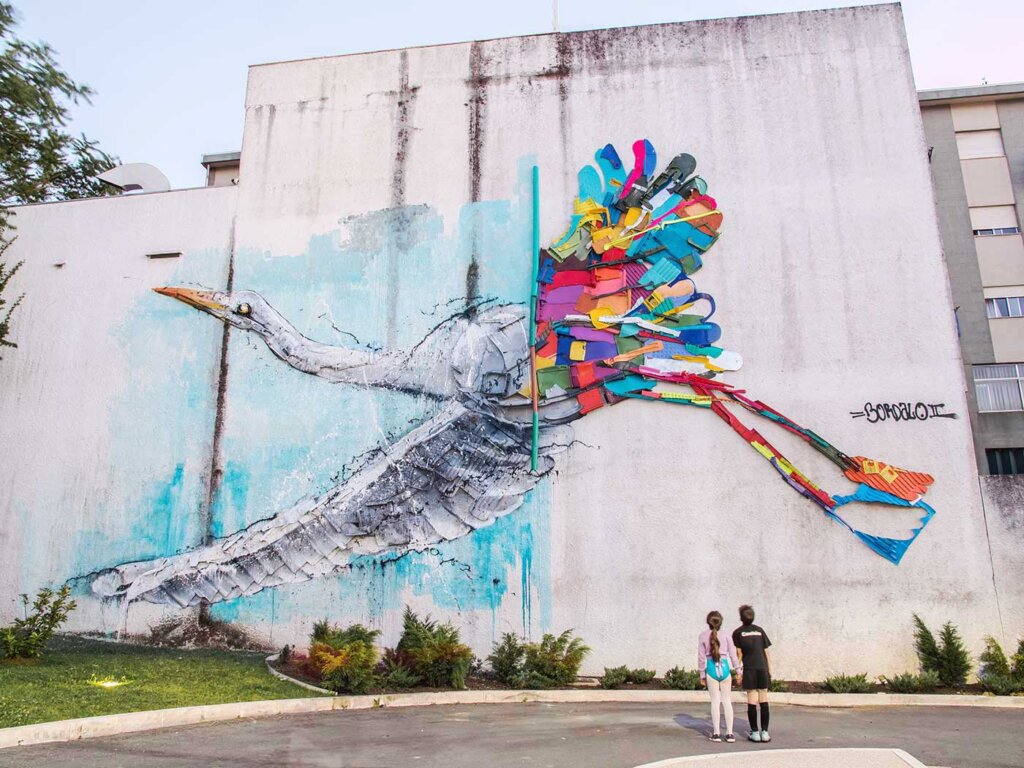
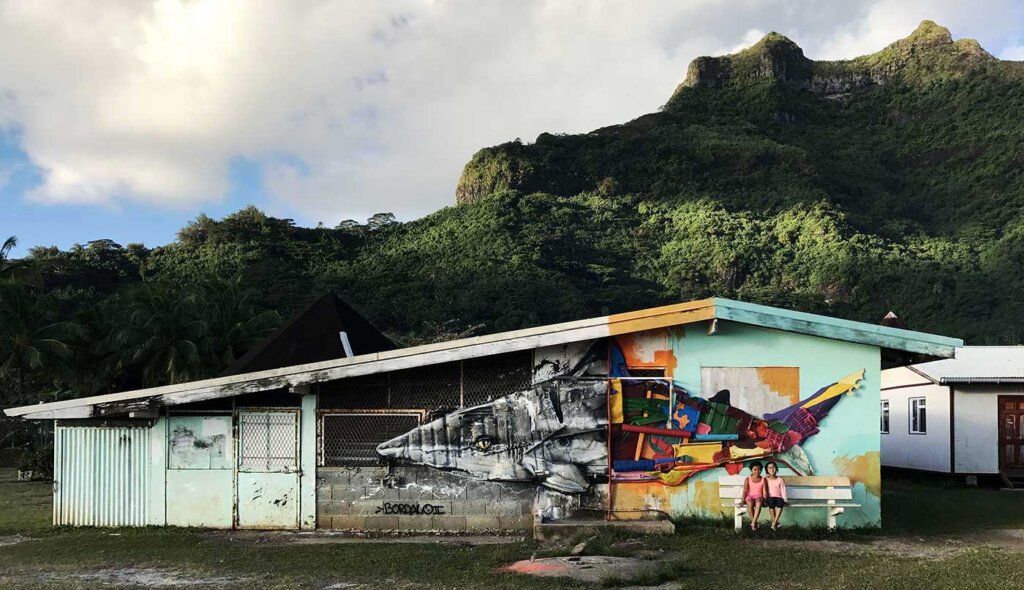
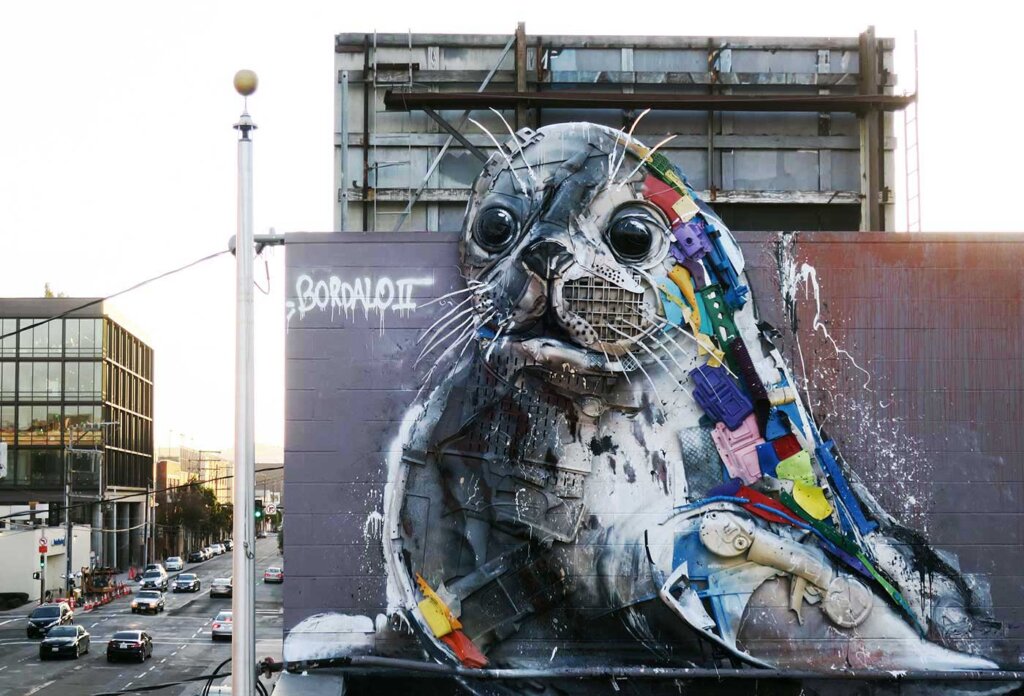
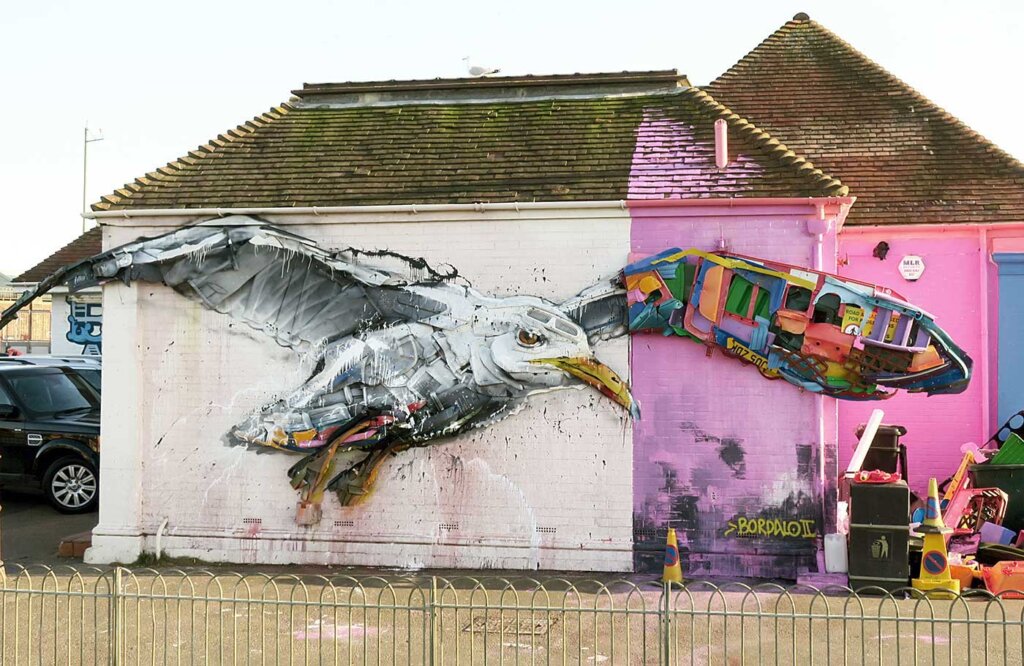
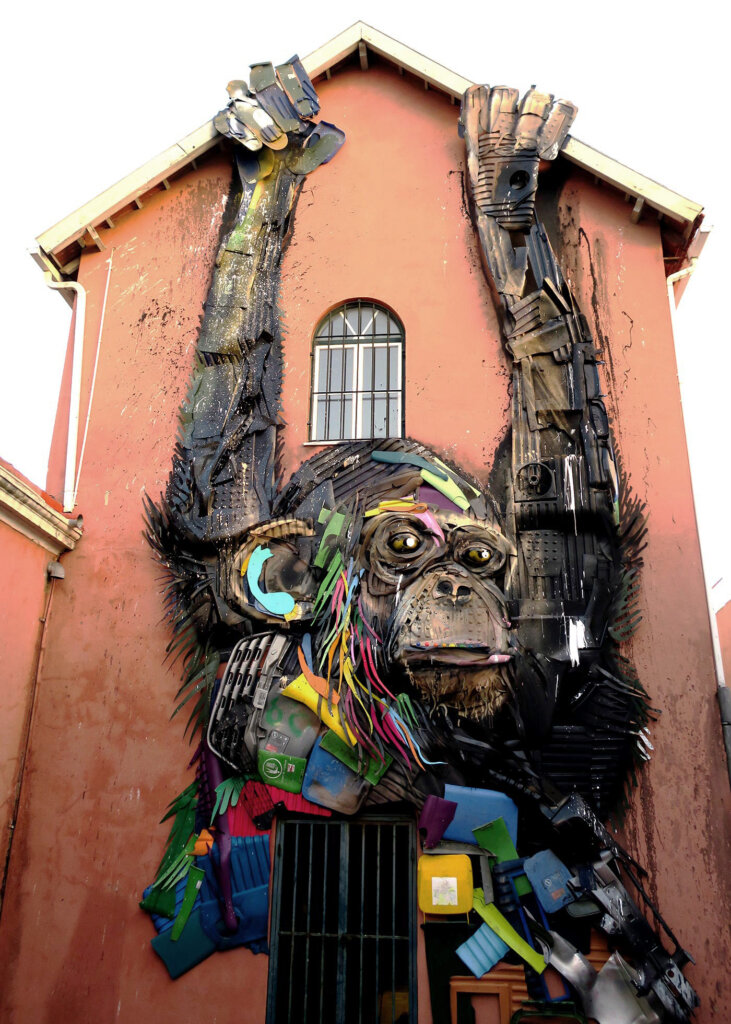
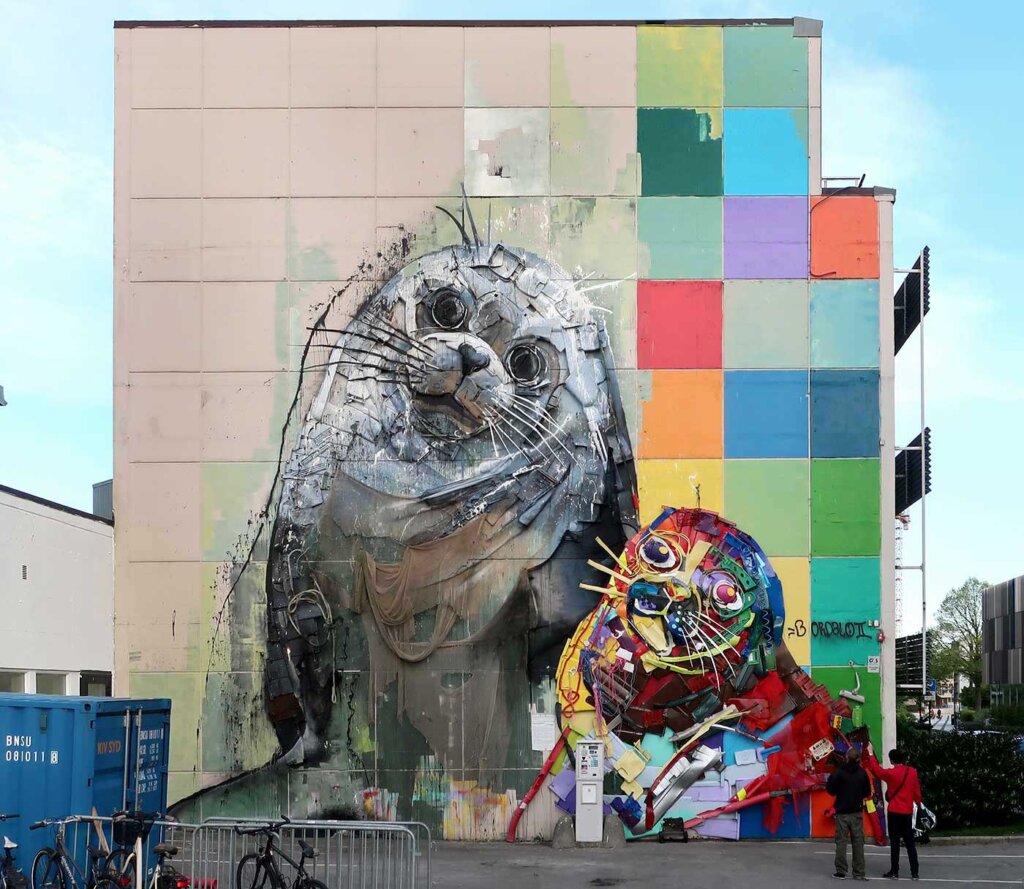
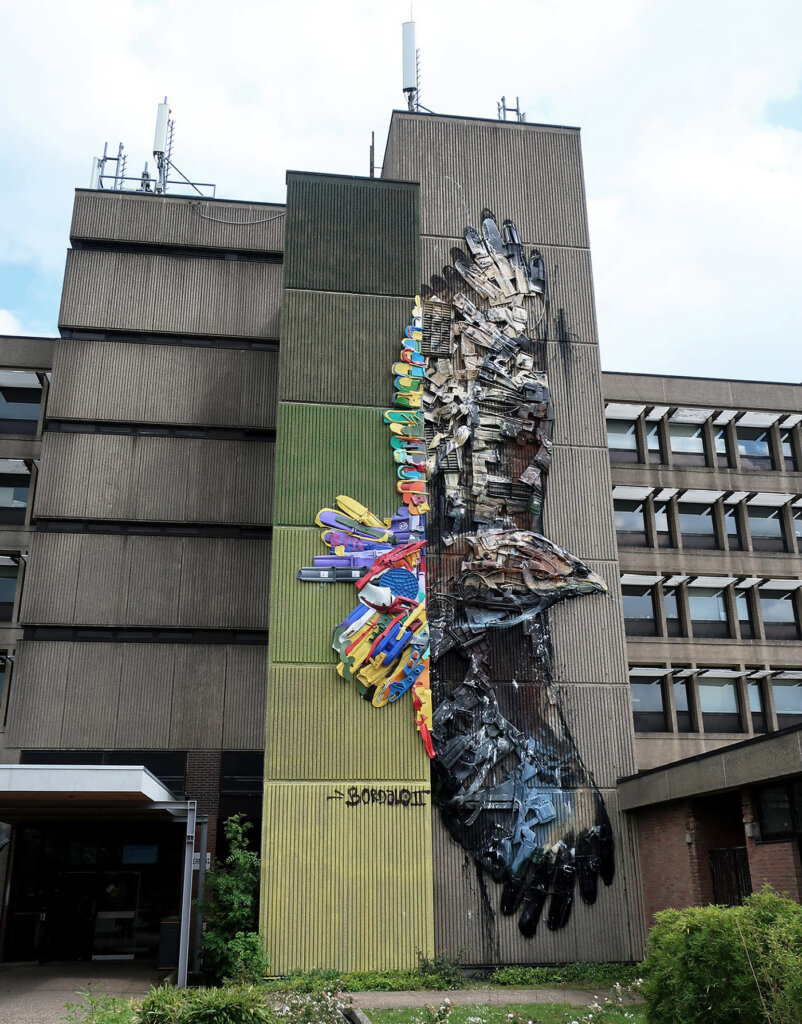
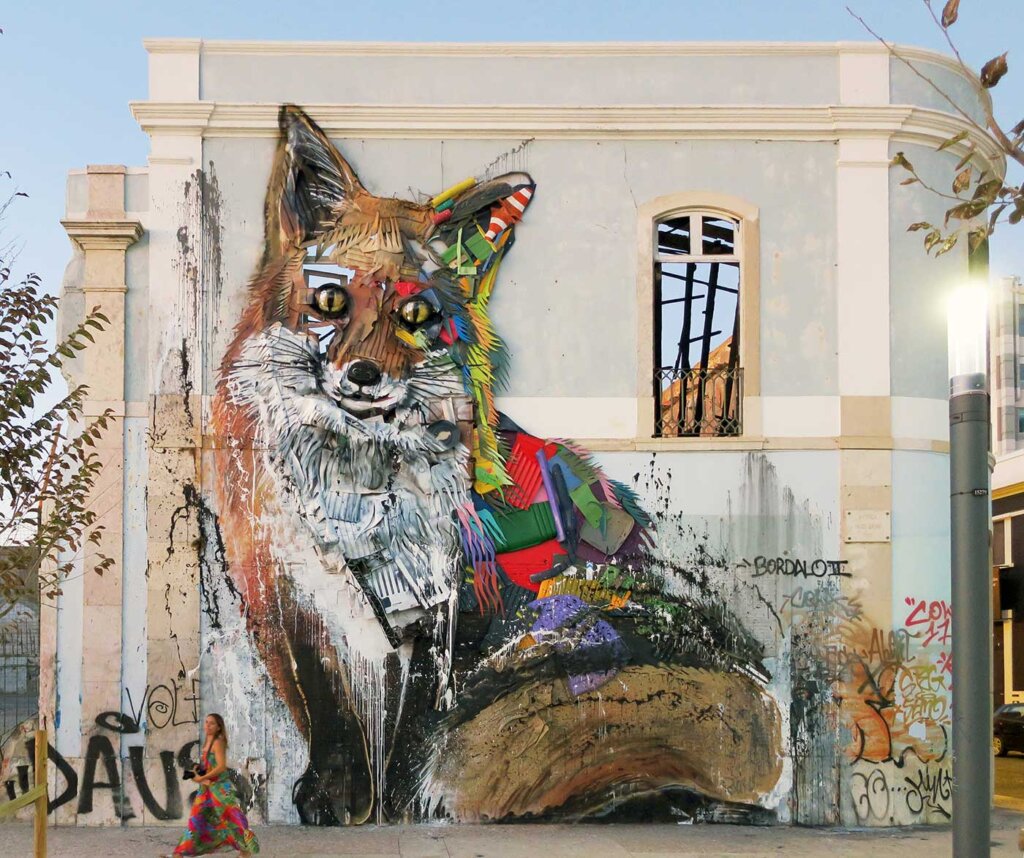
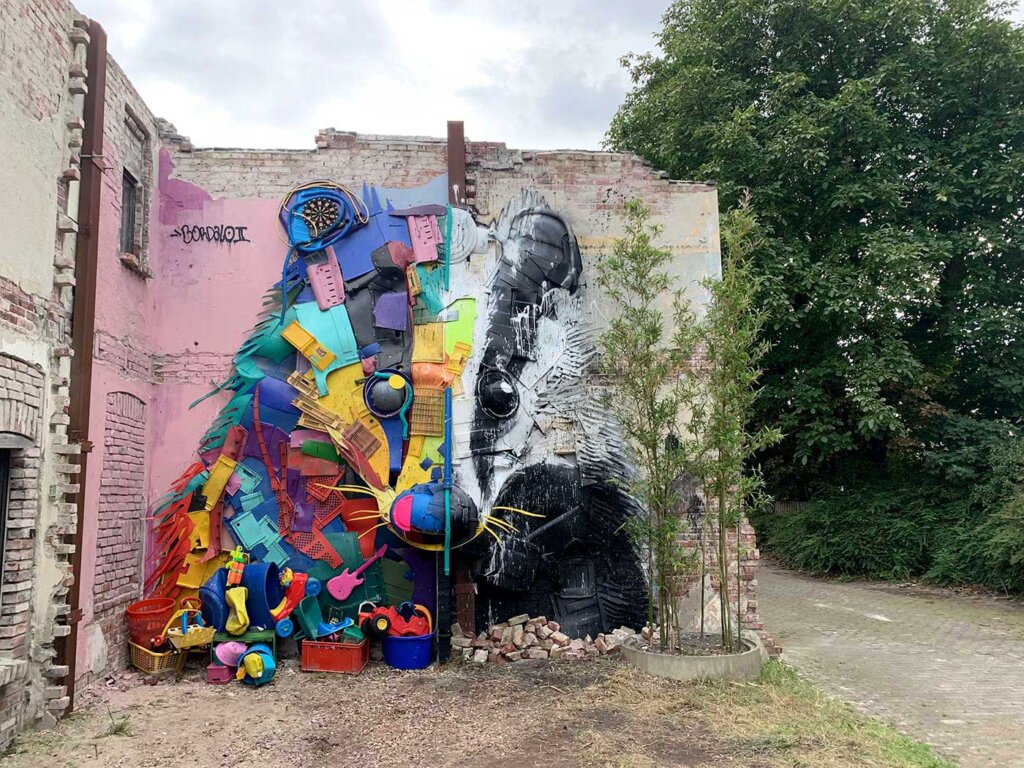
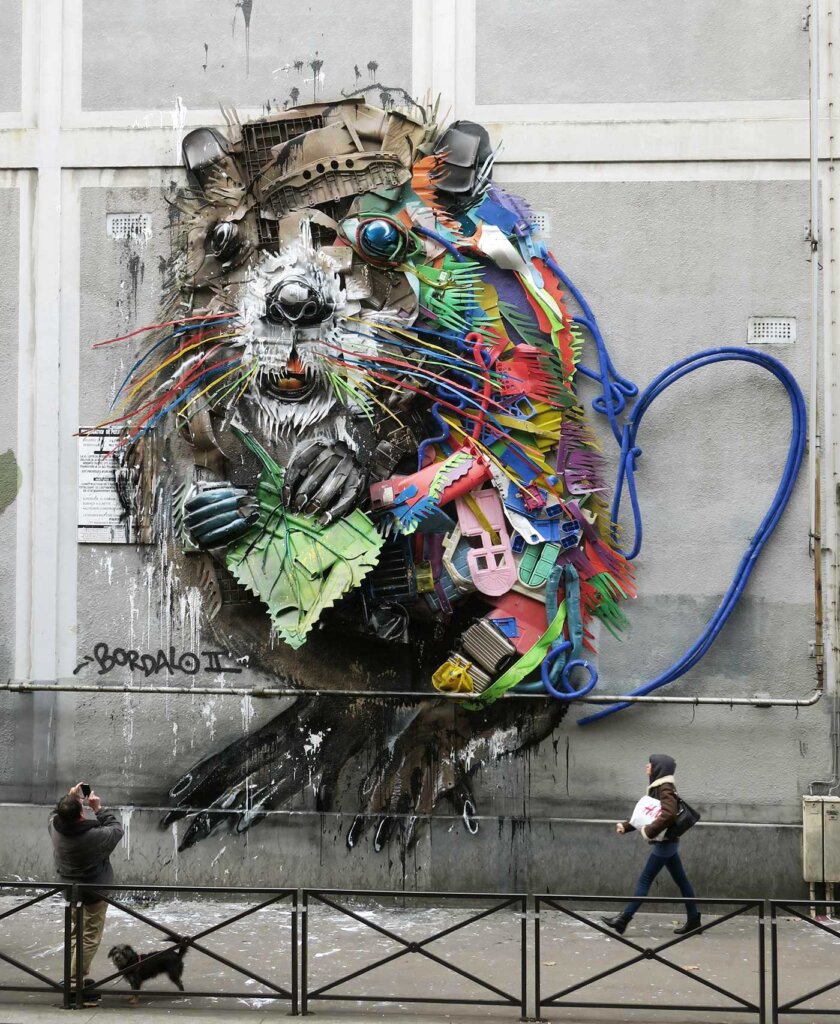
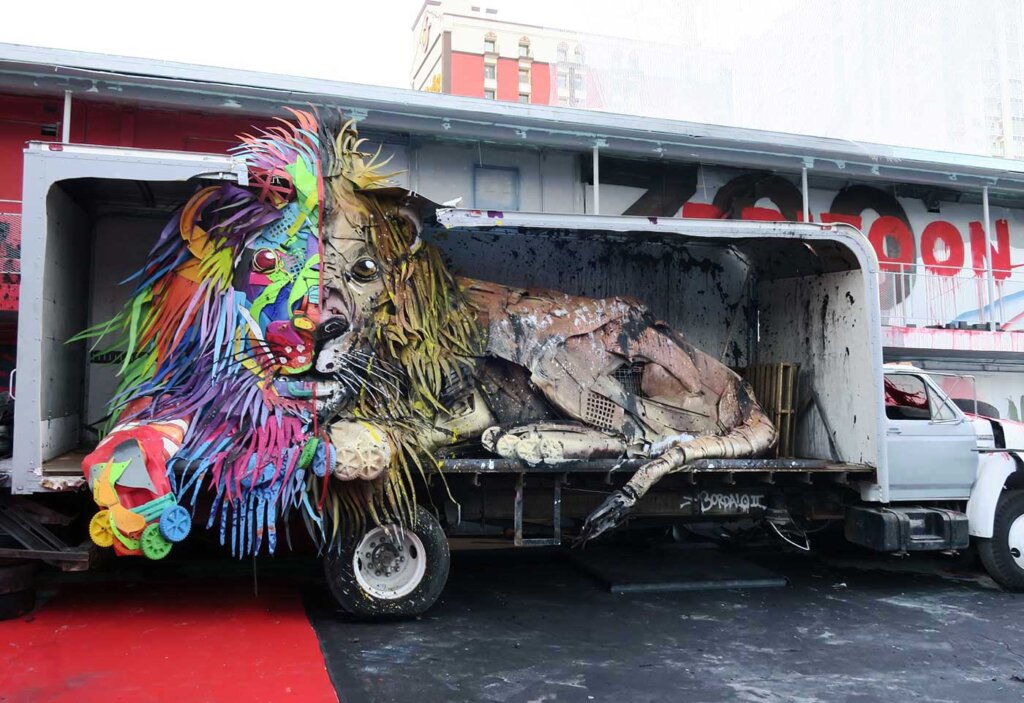

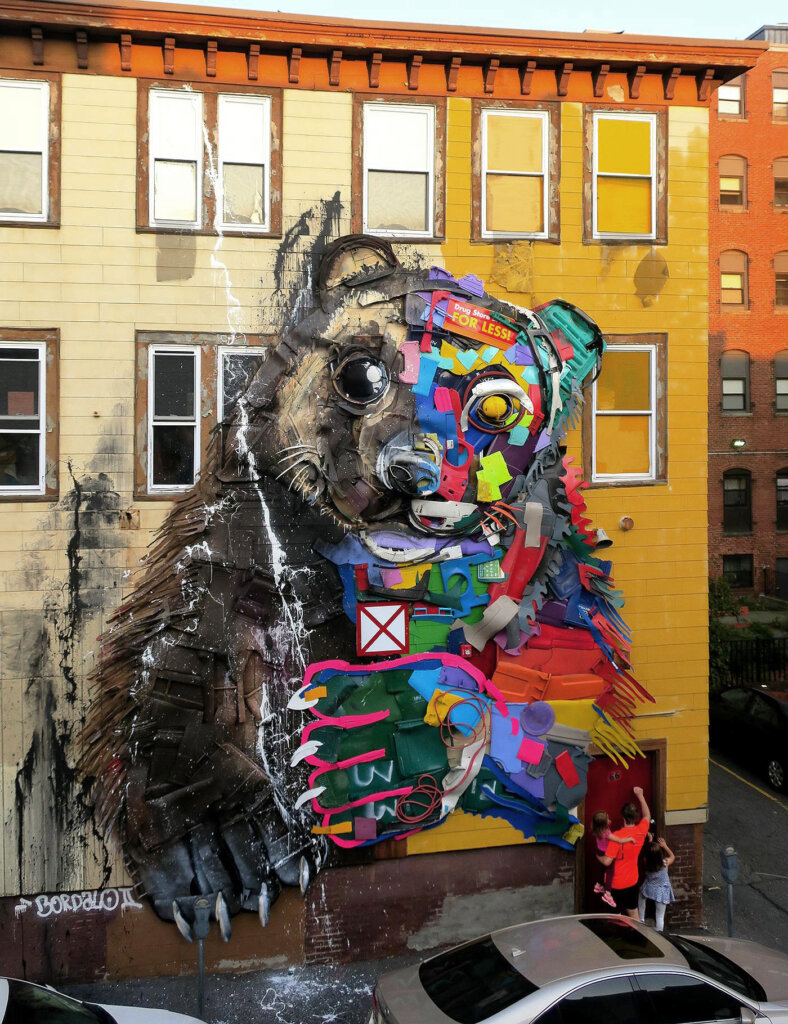
Bordalo II, Half-Half Big Trash Animals. Images © Bordalo II.
Plastic: Removing the Camouflage
With the Plastic subseries, Bordalo II removes the camouflage almost entirely. Instead of disguising the discarded materials beneath paint, he allows plastics and other found objects to retain their original colours, textures and recognisable forms.
The result is deliberately artificial. Brilliant colour and layered fragments of consumer objects become the surface of the animal, allowing viewers to identify the rubbish while simultaneously reading the creature assembled from it. Bordalo II’s official description emphasises this exposure of the materials themselves, allowing their colours and individual forms to become more prominent.
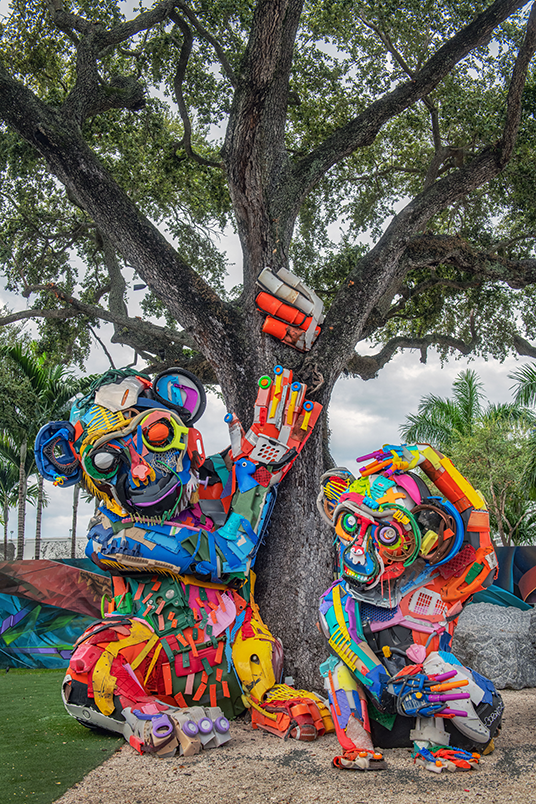
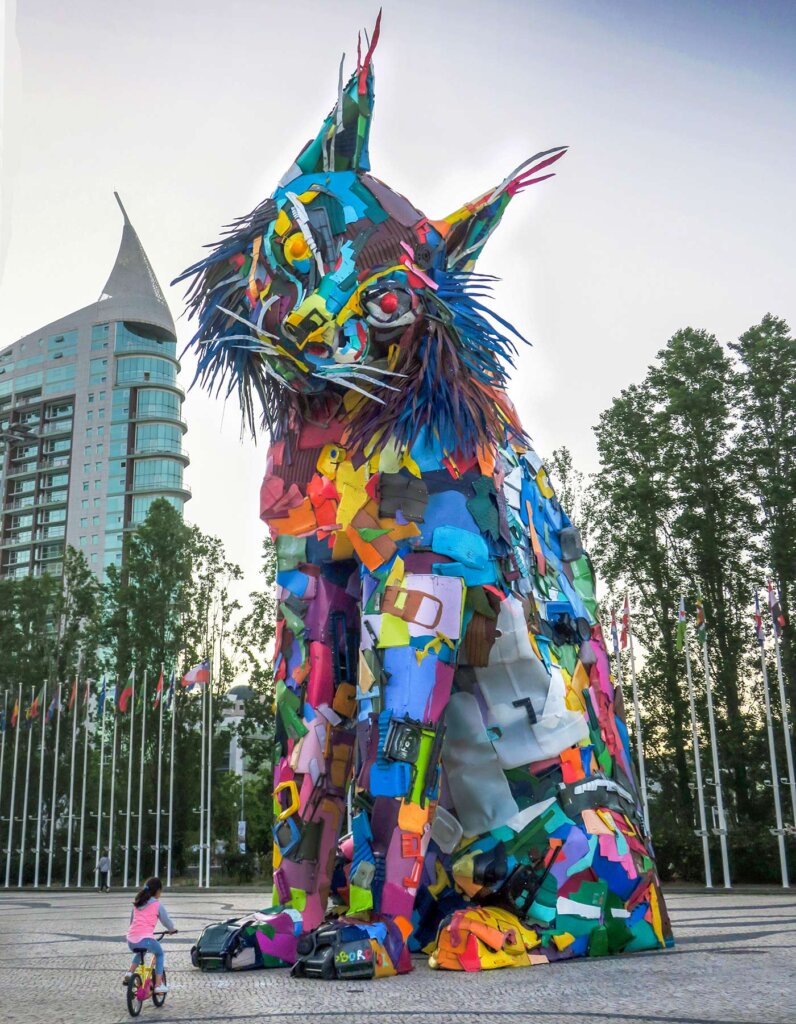
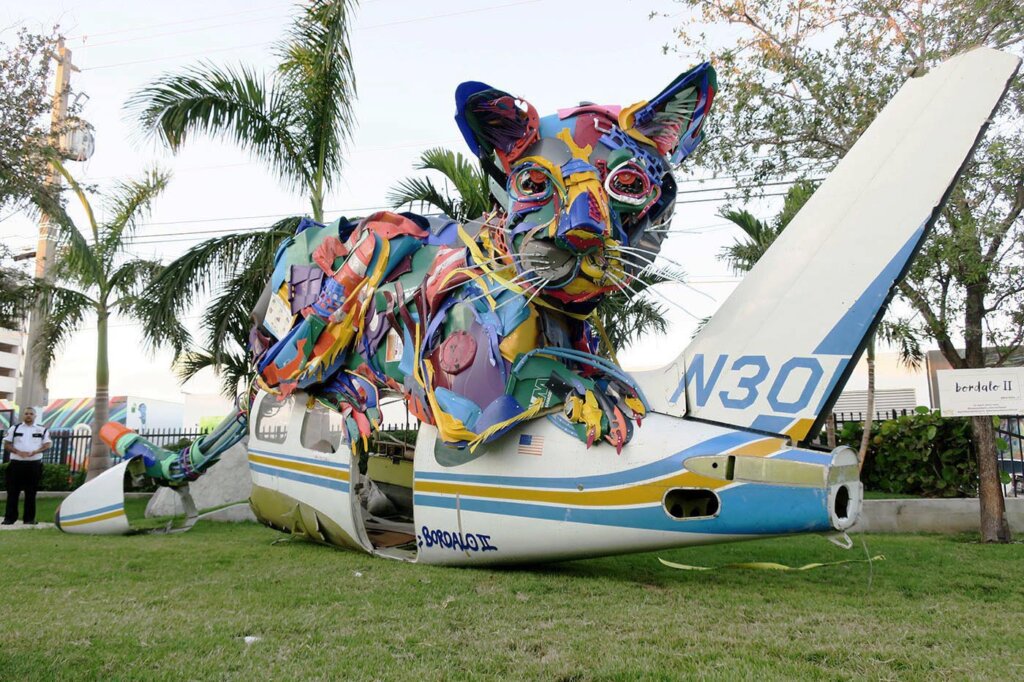
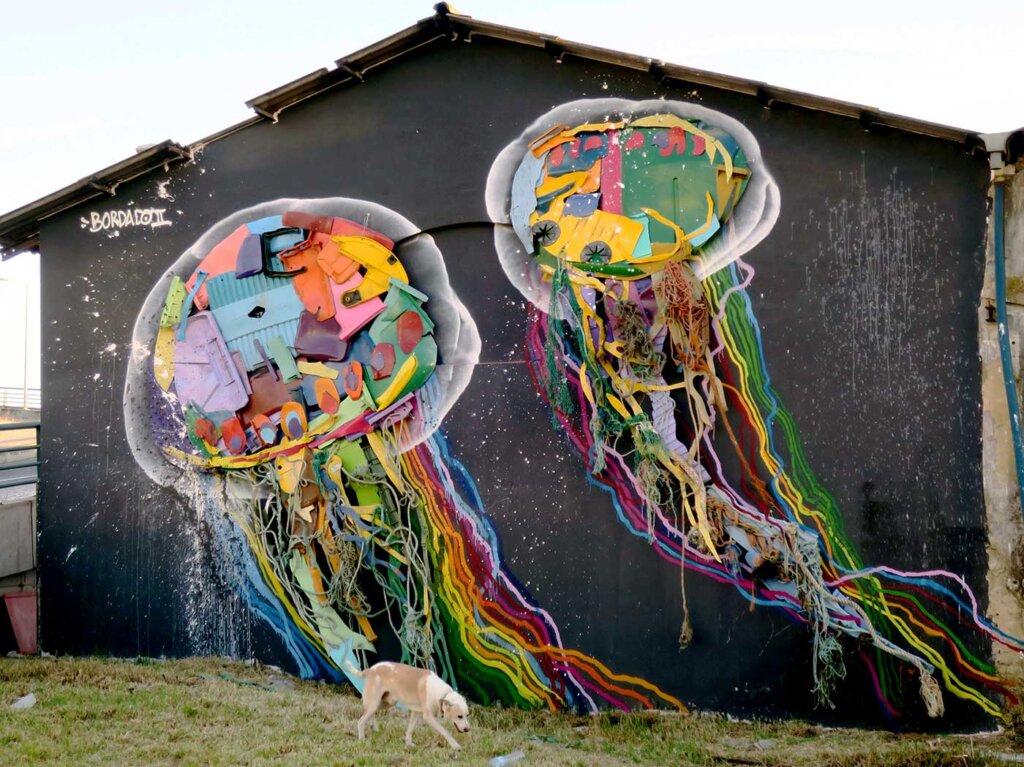
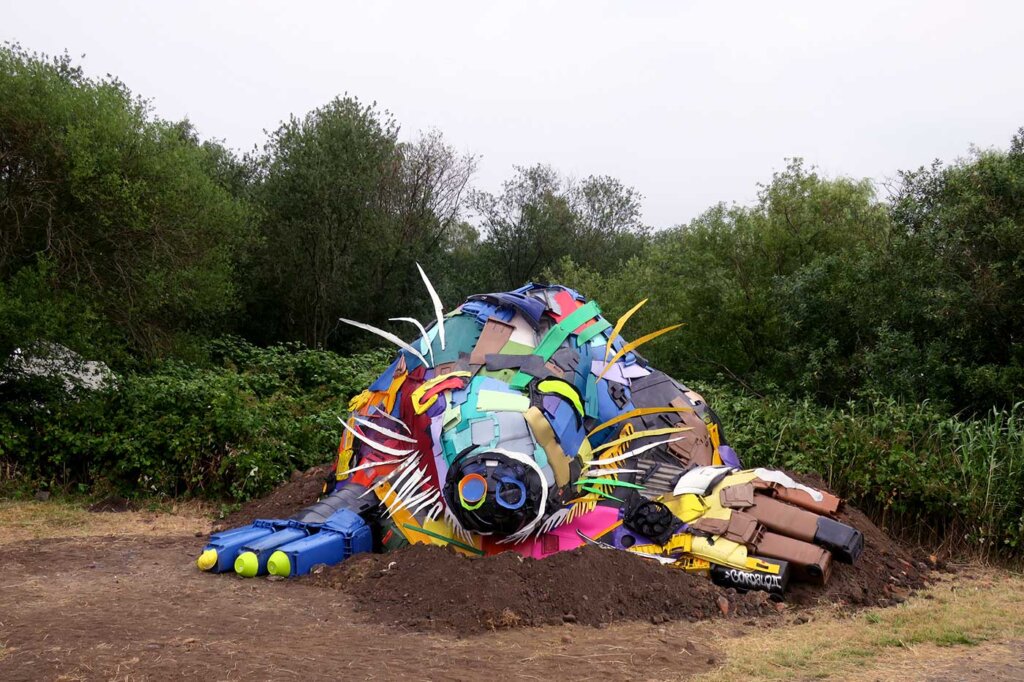


Bordalo II, Plastic Big Trash Animals. Images © Bordalo II.
The Plastic Frog, created in Lisbon in 2017, became an important early example of this material language and was associated with the period surrounding Bordalo II’s ATTERO exhibition. The wall would later take on another chapter in the artist’s evolving visual language when the frog was replaced by the Half-Half Koala in 2026. Contemporary documentation confirms the Plastic Frog dates to 2017.
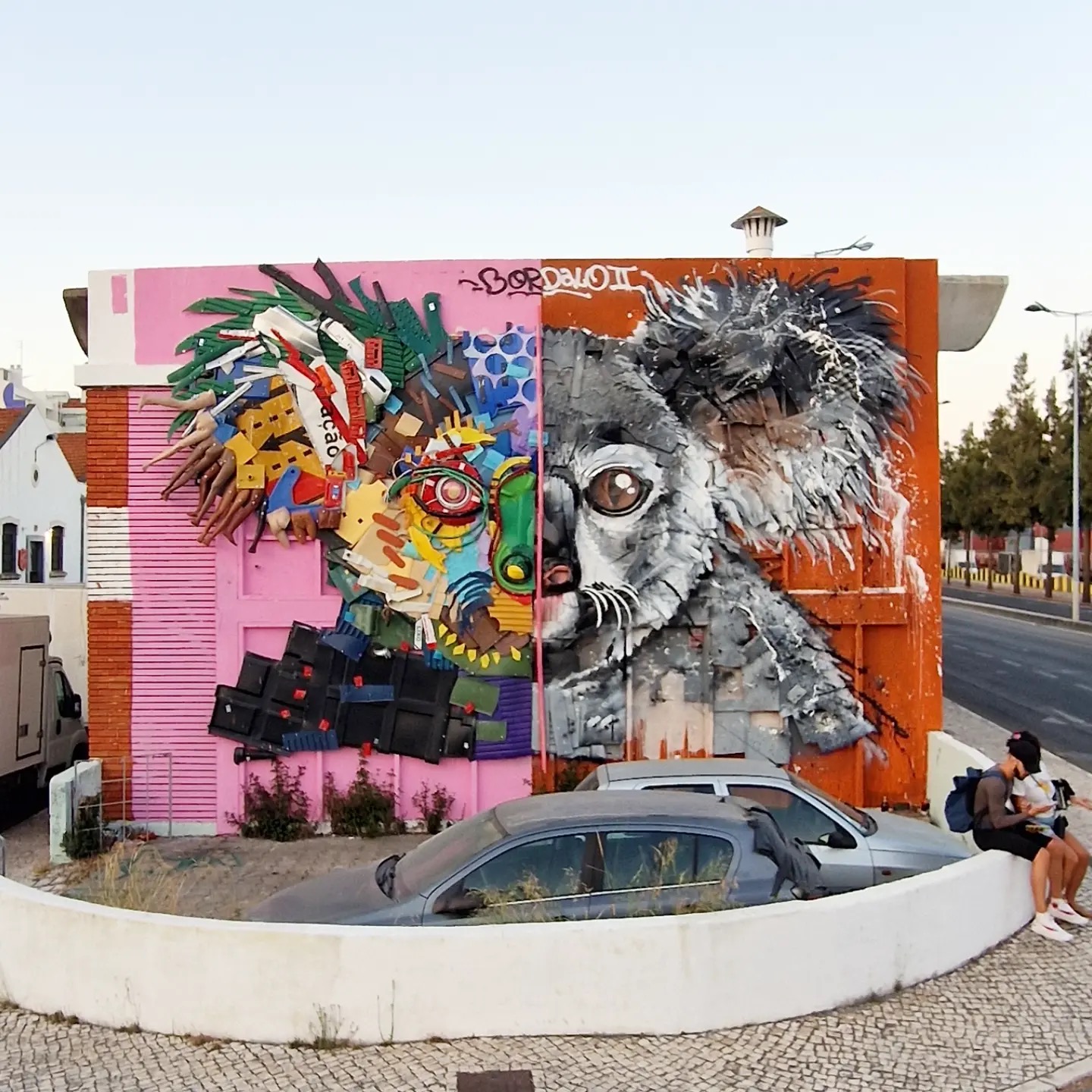
Bordalo II Big Trash Animals Evolution: From Neutral to Plastic
The evolution from Neutral to Half-Half and Plastic reveals Bordalo II’s continuing experimentation with one central contradiction: how can the materials associated with environmental damage be transformed into images of the wildlife affected by them?
In Neutral, waste can almost disappear beneath the animal. In Half-Half, the illusion is divided open. In Plastic, the discarded object is allowed to announce itself completely.
Together, the three approaches show how Bordalo II has developed the Big Trash Animals beyond a single visual formula, using colour, assemblage and exposed material to continually rethink the relationship between consumption, waste and wildlife.
For a wider exploration of the series, its materials and environmental meaning, continue to GraffitiStreet’s Bordalo II Big Trash Animals guide. The later EVILUTION exhibition in Lisbon would push this experimentation further through exhibition-scale environments and new approaches to light and material.
Discover Bordalo II at GraffitiStreet
Discover available Bordalo II artworks at GraffitiStreet, contact us to discuss availability, acquisitions and private viewings, or visit GraffitiStreet Gallery, 25A West Street, Chichester, West Sussex, England PO19 1QW.
Images © Bordalo II