‘Welcome to Gaza’ by Banksy 2015
Banksy returned to Palestine in 2015, continuing a relationship with the region that had already produced his 2005 works on the West Bank barrier and further street art in Bethlehem in 2007. This time his attention turned to Gaza, where he created a series of politically charged murals alongside a satirical short film addressing the Israeli-Palestinian conflict and the realities of life in Gaza. Explore the complete history of Banksy’s art in Palestine

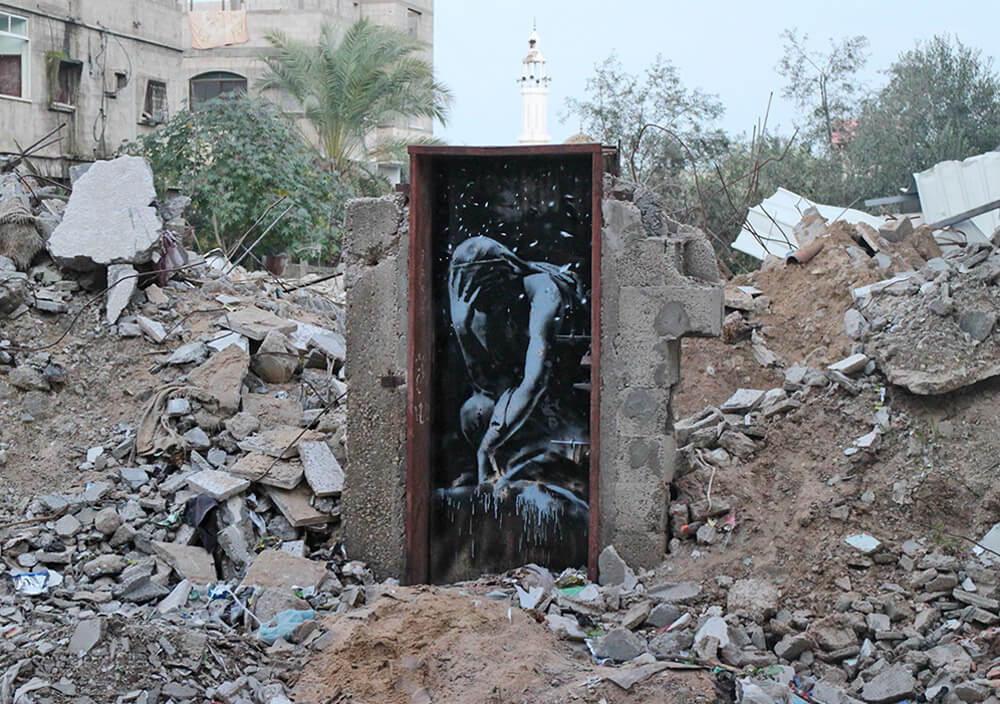

Banksy in Gaza. Image copyright Banksy
Alongside images of the new artworks, Banksy released a short film styled as a darkly satirical travel advertisement. It begins with a commercial plane in flight and the invitation, “Make this the year YOU discover a new destination,”before the words “Welcome to Gaza” appear between the clouds.
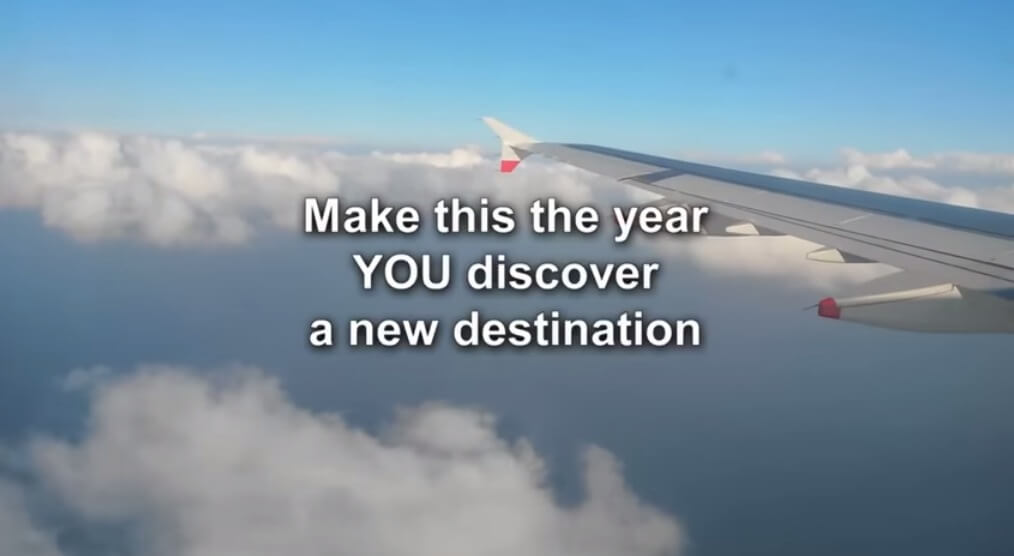
Banksy in Gaza. Image copyright Banksy
The film shows Banksy entering Gaza through a network of tunnels, describing the territory as “well away from the tourist track” and adding that “access is via a network of illegal tunnels.”
Banksy in Gaza. Image copyright Banksy
The tone becomes increasingly stark as the camera moves through the devastation of Gaza, showing children playing among the rubble. “The locals like it so much they never leave,” the film states, before adding, “because they’re not allowed to.”
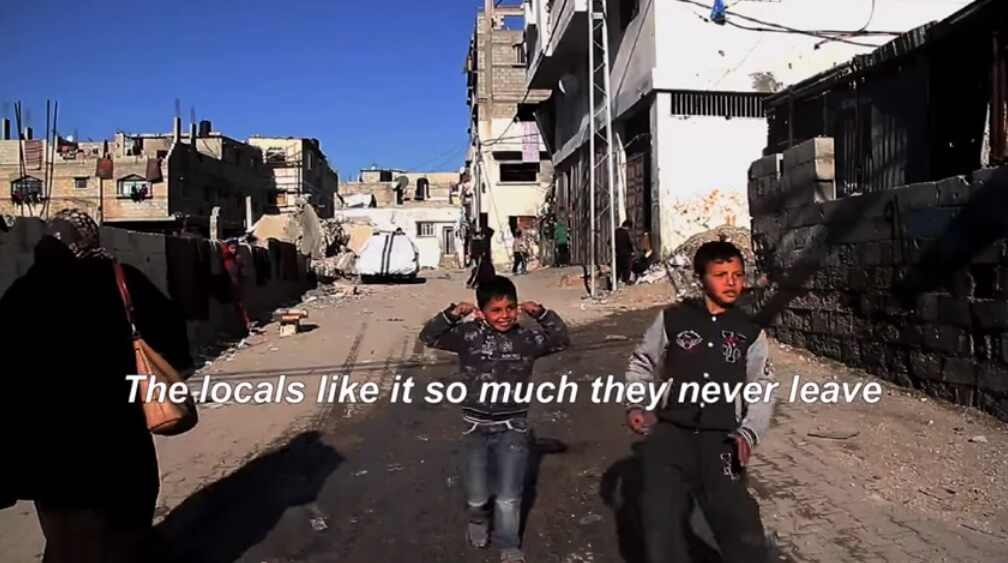

Banksy in Gaza. Image copyright Banksy
As the artist explains in his film,
“Gaza is often described as ‘the world’s largest open air prison’ because no-one is allowed to enter or leave. But that seems a bit unfair to prisons – they don’t have their electricity and drinking water cut off randomly almost every day.” Banksy
Banksy continues the tourism parody by describing Gaza as “nestled in an exclusive setting”, surrounded by walls and gunboats, while references to the destruction caused during the 2014 conflict turn the familiar language of travel advertising into a commentary on everyday life under extraordinary circumstances.

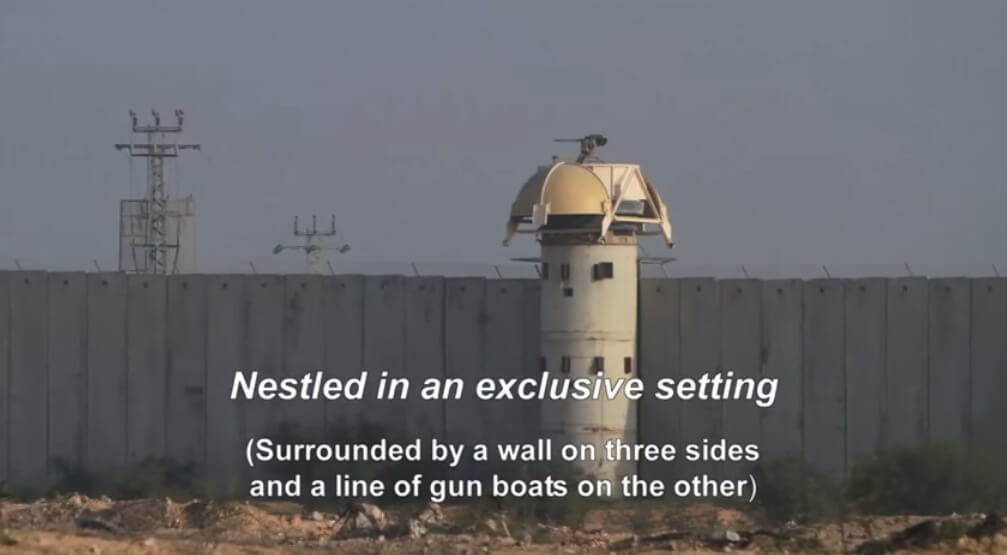
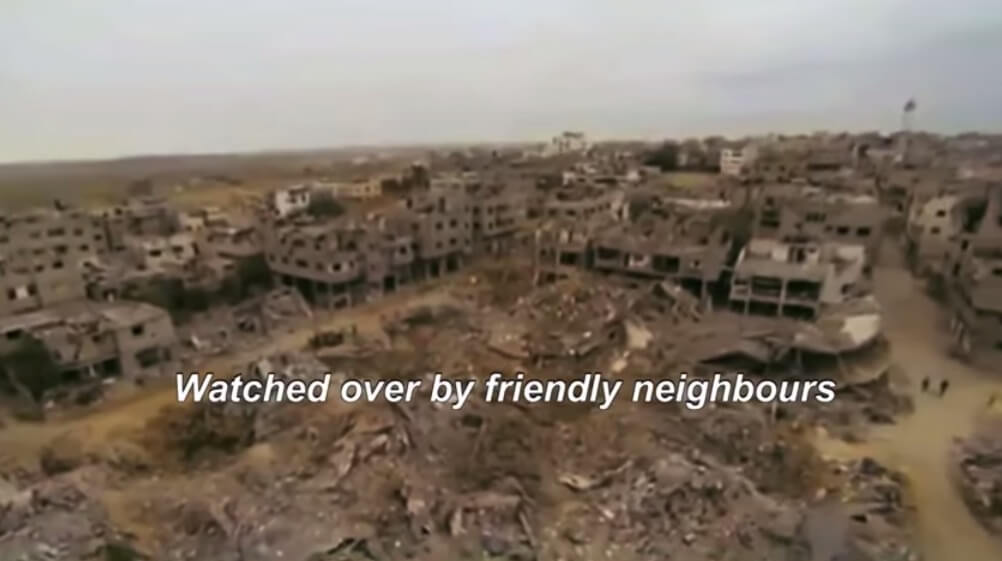
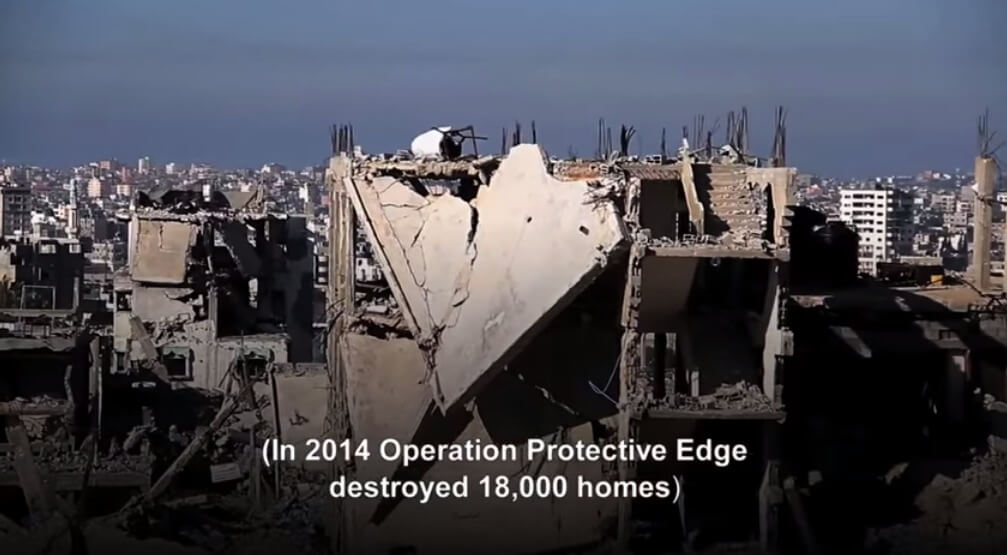
Banksy in Gaza. Image copyright Banksy
The film sarcastically presents Gaza as a place filled with “development opportunities” and “plenty of scope for refurbishment,” setting the language of property and tourism against scenes of damaged buildings and rubble.
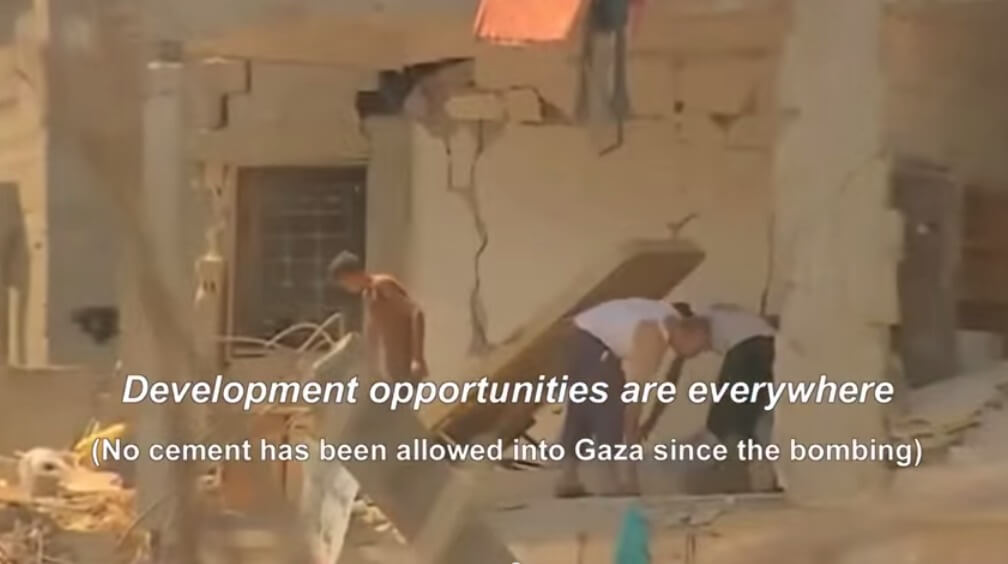
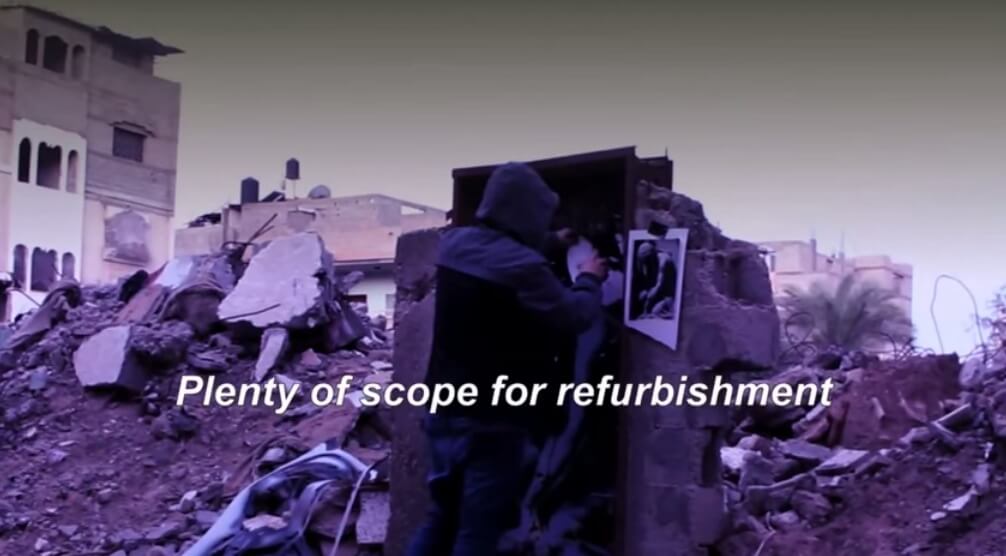
Banksy in Gaza. Image copyright Banksy
Among the ruins, Banksy created several new artworks. One depicts children swinging from an abandoned military watchtower as though it were a fairground ride, transforming the remains of conflict into an image of childhood imagination and resilience.
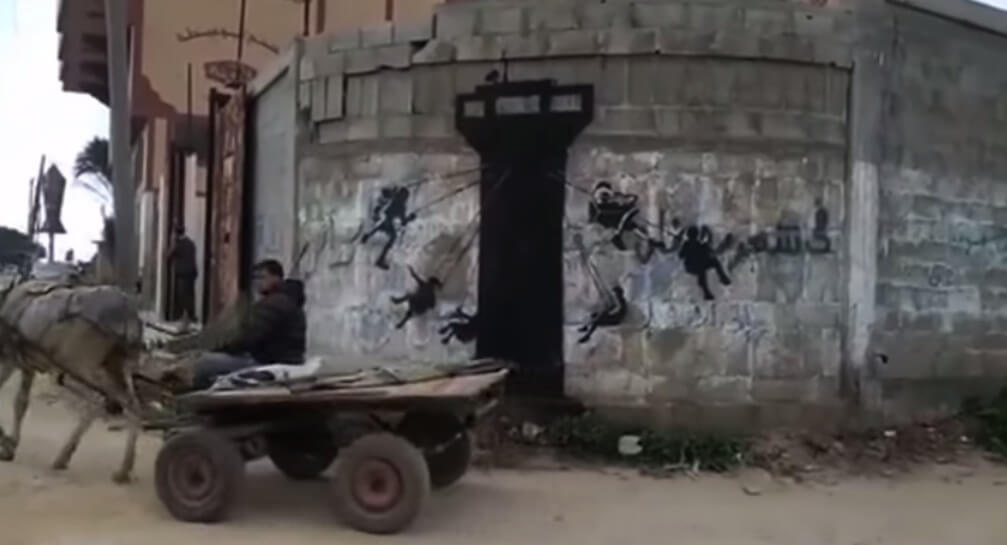

Banksy in Gaza. Image copyright Banksy
The conflict in Gaza has seen the death of many palestinian civilians and over 500 children have been killed. The stencil work depicts Niobe, the figure from Greek mythology who mourns the loss of her children, bringing an art-historical reference to grief and loss into the landscape of Gaza.
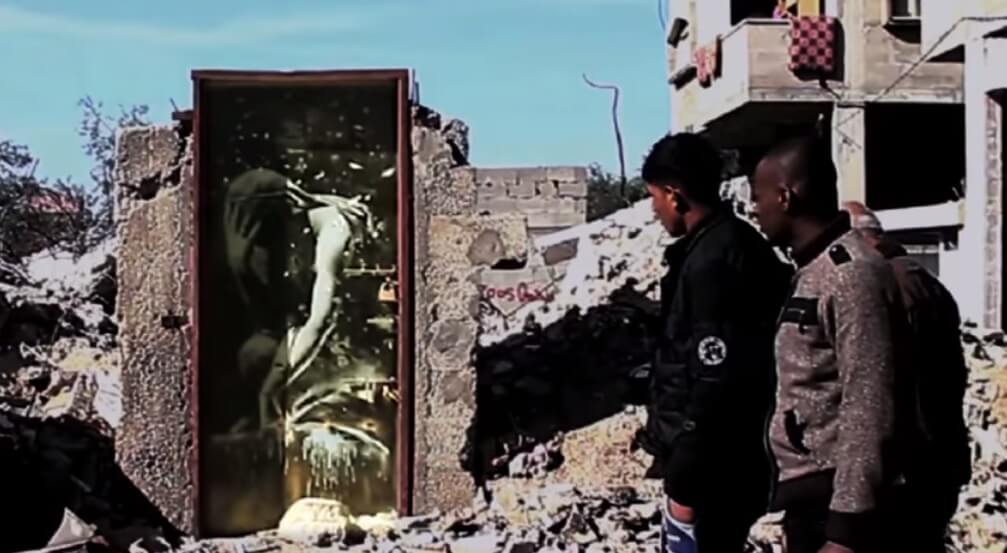
Banksy in Gaza. Image copyright Banksy
Perhaps the most widely recognised image from the series is Gaza Kitty, painted on a damaged building. The kitten plays with a twisted coil of metal as though it were a ball of wool, using the familiar appeal of internet cat imagery to draw attention towards the destruction surrounding it.
Banksy’s Gaza Kitty. Image copyright Banksy.
“A local man came up and said ‘Please – what does this mean?’ I explained I wanted to highlight the destruction in Gaza by posting photos on my website – but on the internet people only look at pictures of kittens.” Banksy
The film then goes to share a conversation with a local man about how his children have nothing to play with, unlike the kitty.
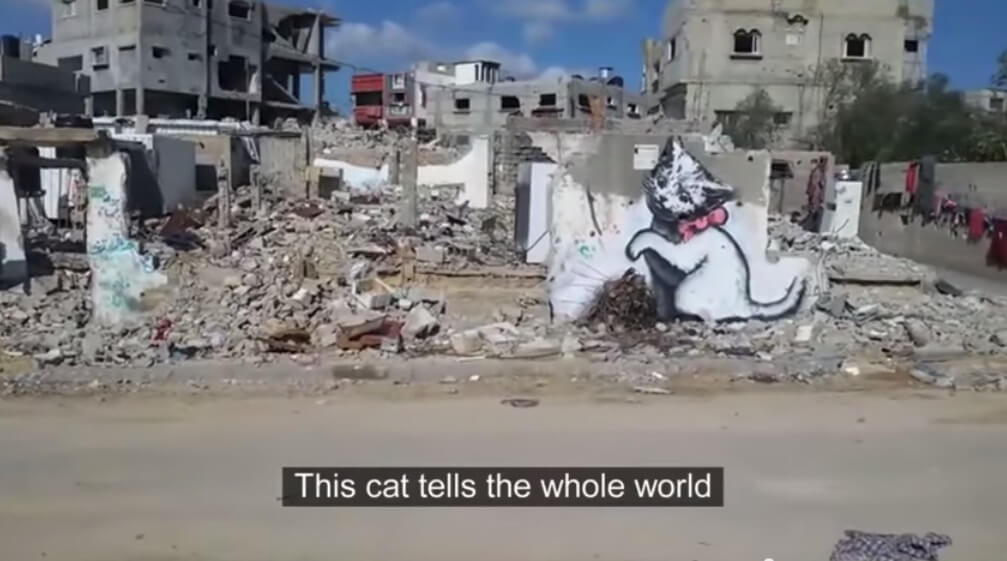

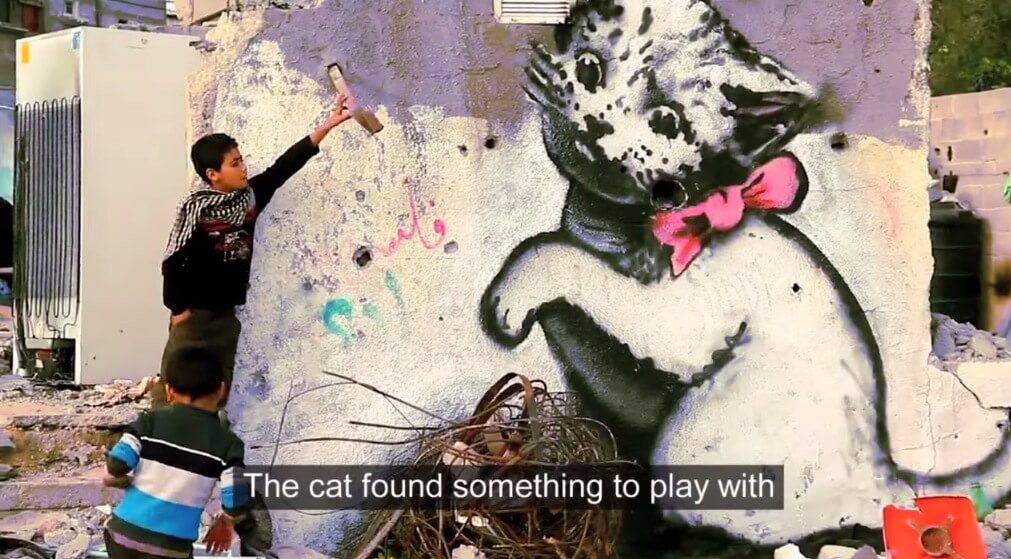
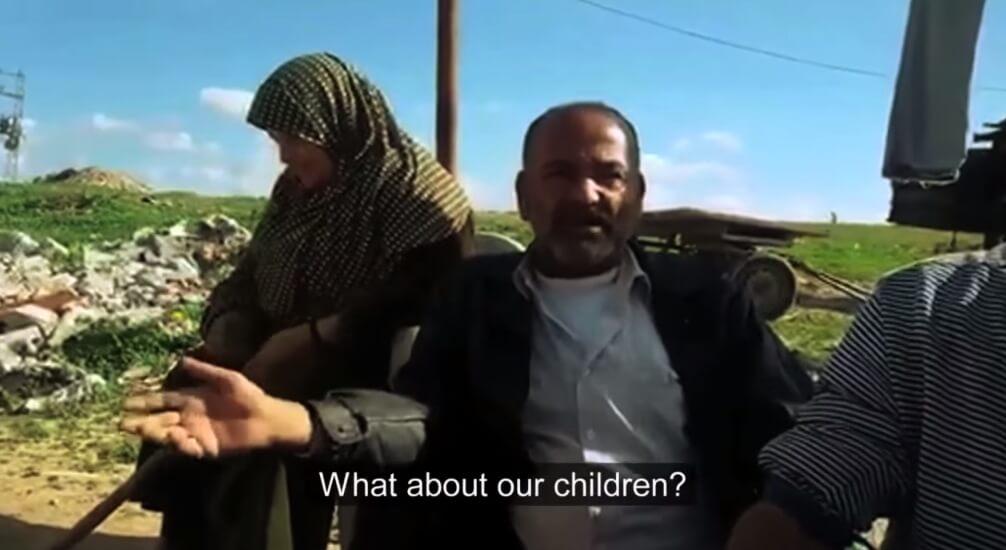
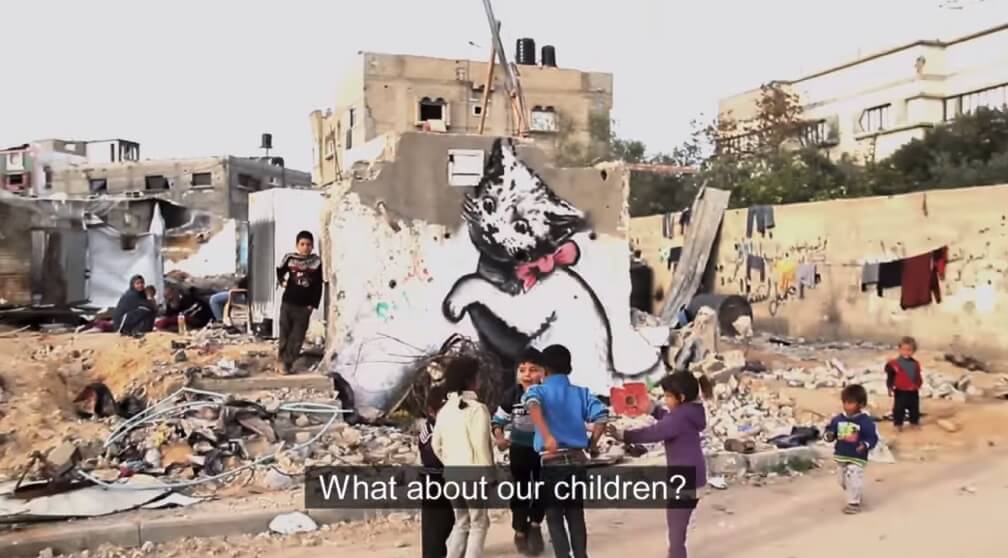
Banksy in Gaza. Image copyright Banksy
The short video concludes with a stark hand-painted message, written across the wall in blood-red paint.
“If we wash our hands of the conflict between the powerful and the powerless we side with the powerful – we don’t remain neutral.”
As with much of Banksy’s work, the film uses wit, irony and stark imagery to carry a powerful political message, reaching a global audience through social media and drawing renewed attention to the realities of life in Gaza.
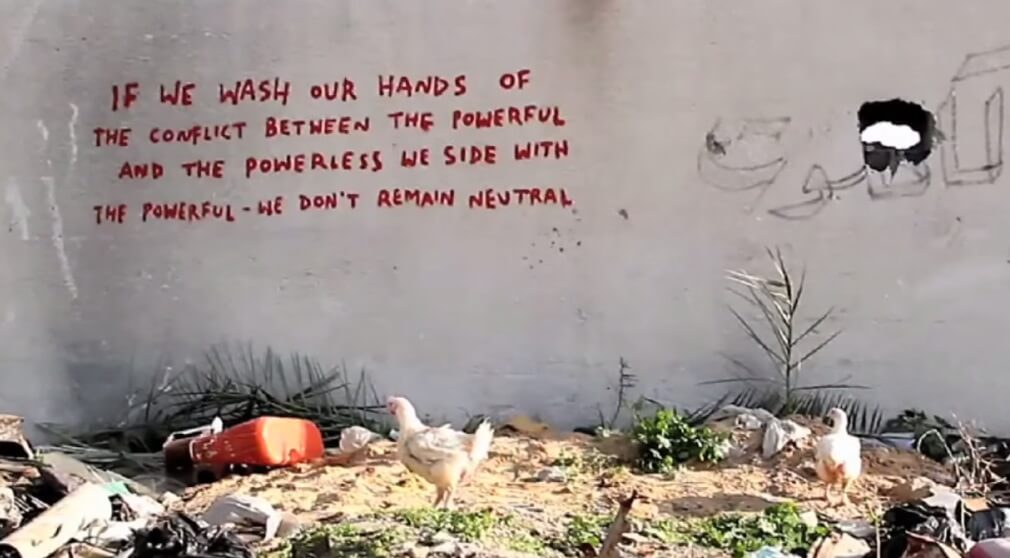
Banksy in Gaza. Image copyright Banksy
Watch Banksy’s full Gaza film below, where satire, documentary footage and street art come together to deliver one of his most direct political statements on the region.
Banksy’s 2015 Gaza intervention belongs to a much longer relationship with Palestine, stretching from his earlier West Bank works to Bethlehem and The Walled Off Hotel. Explore our complete guide to Banksy’s art in Palestine.
Discover Banksy at GraffitiStreet
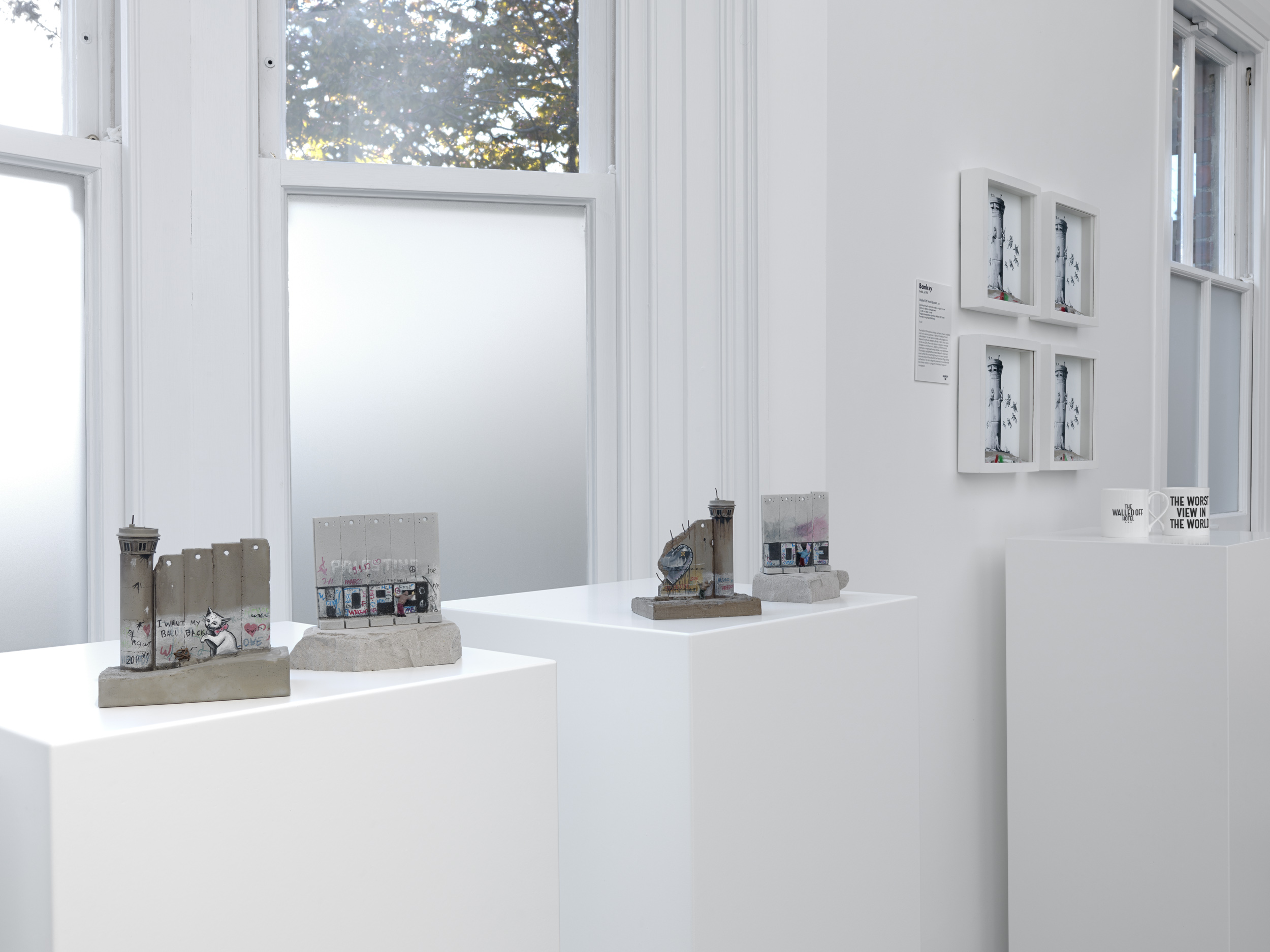
GraffitiStreet gallery presents Banksy Editions Volume I Exhibition – Comfort / Disturb, Chichester.
Explore Banksy artworks at GraffitiStreet or contact us to discuss availability, acquisitions, sourcing and private viewings.