Bordalo II’s Trash Sharks in Tahiti: Ocean Plastic at ONO’U 2019
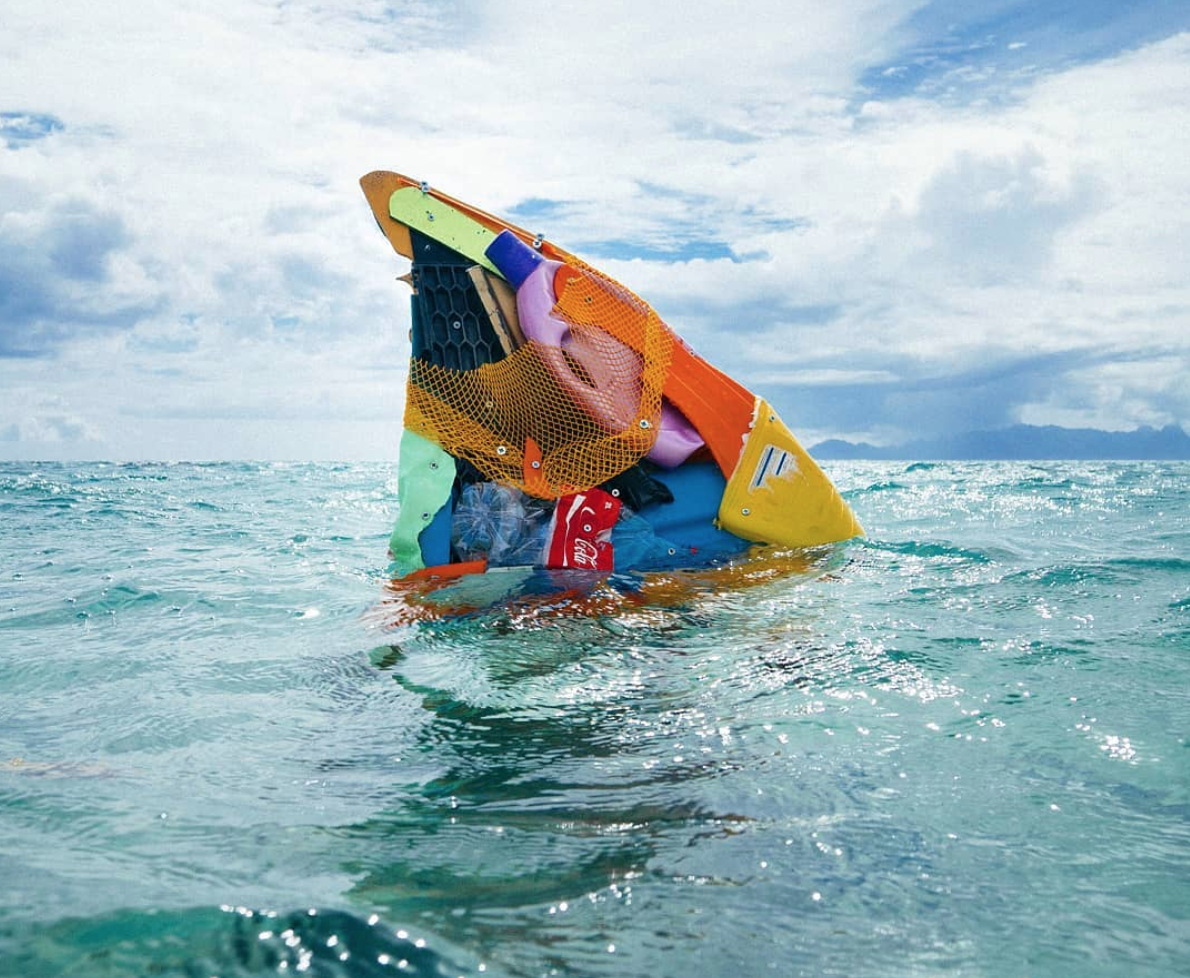
Portuguese artist Bordalo II returned to Tahiti, French Polynesia, for ONO’U, creating a series of marine-inspired works that brought his Big Trash Animals into direct conversation with the Pacific Ocean. The installations included a Half Sea Turtle, a monumental Half Hammerhead Shark and a floating Trash Shark assembled from discarded plastics and other waste.
“The ocean’s most dangerous predator, not the sharks of course, but the trash.” Bordalo II
Against the extraordinary natural environment of Tahiti, Bordalo II used marine animals to confront one of the defining environmental issues affecting the world’s oceans: the accumulation of human waste within habitats on which wildlife depends.
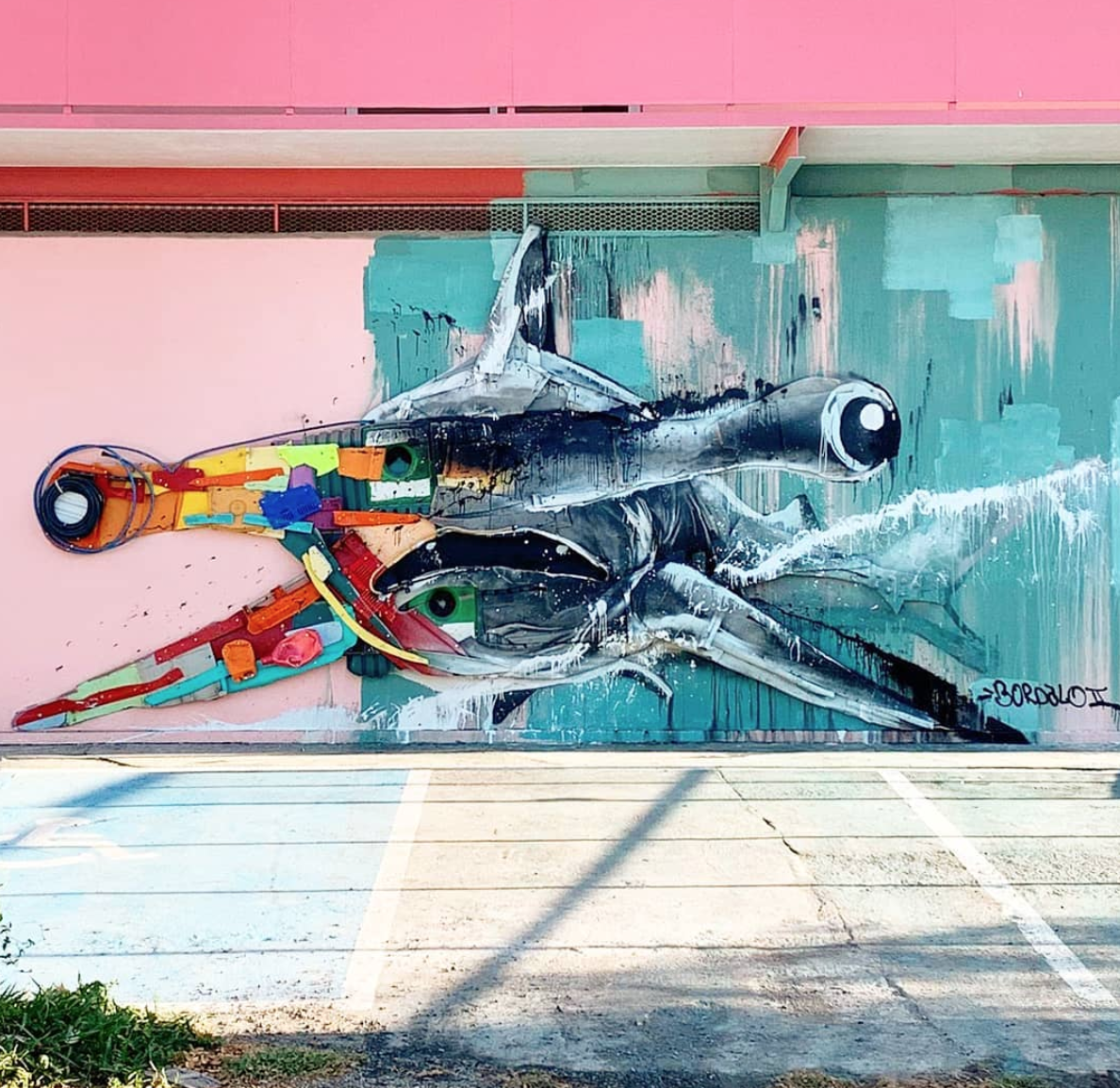
Bordalo II’s Half Hammerhead Shark in Tahiti
For ONO’U 2019, Bordalo II created a Half Hammerhead Shark in Pirae, Tahiti, combining painted imagery with three-dimensional discarded materials. Plastics and found objects emerge from the animal’s form, making the waste physically inseparable from the marine creature it depicts.
The work continued the visual language of Bordalo II’s Half-Half animals, where part of the creature appears more naturalistic while the other reveals the manufactured debris from which it has been constructed.
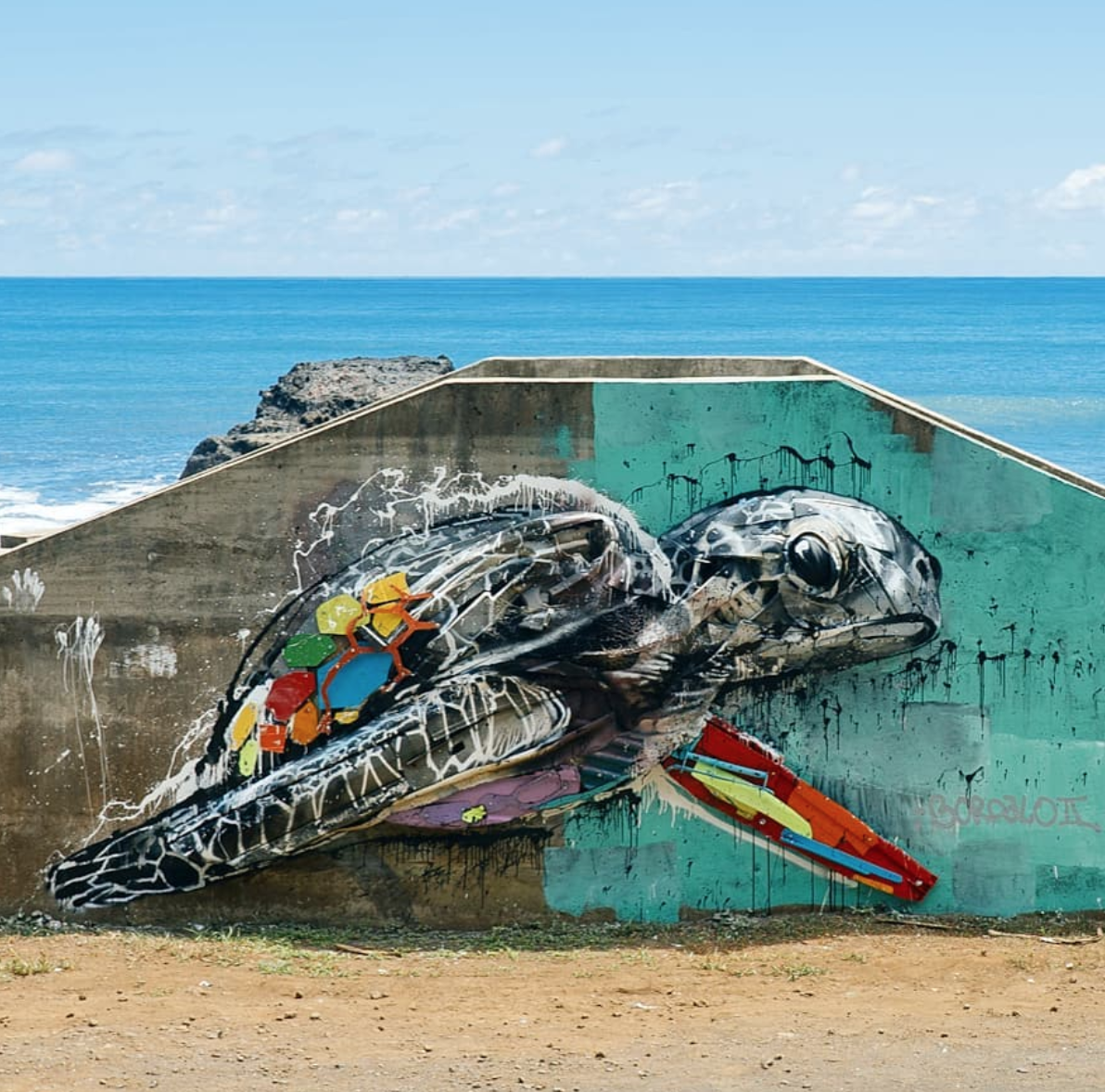
A Sea Turtle Made From Waste
Bordalo II also created a Half Sea Turtle at Papenoo in October 2019, extending the project beyond sharks to another marine animal closely associated with the vulnerability of ocean ecosystems.
Across these works, discarded material operates as more than a recycled medium. Plastics become part of the animal itself, confronting viewers with the uncomfortable relationship between what humans throw away and what eventually enters natural habitats.
Swimming With a Trash Shark
One of the most memorable images from Bordalo II’s time in Tahiti shows the artist swimming through the Pacific beside a floating Trash Shark constructed from brightly coloured discarded materials.
Captured by Australian filmmaker and urban-art documentarian Selina Miles, the image turns Bordalo II’s environmental message into something immediate and almost surreal. A creature traditionally feared as an ocean predator swims beside the artist, yet the shark itself is made from the material Bordalo II identifies as the greater threat: human waste. Contemporary coverage of ONO’U described the floating sculpture as being made from refuse gathered around French Polynesia.
Selina Miles work has documented artists and street-art projects around the world. GraffitiStreet interviewed Selina Miles in 2019 about her filmmaking practice and experience working within urban art.
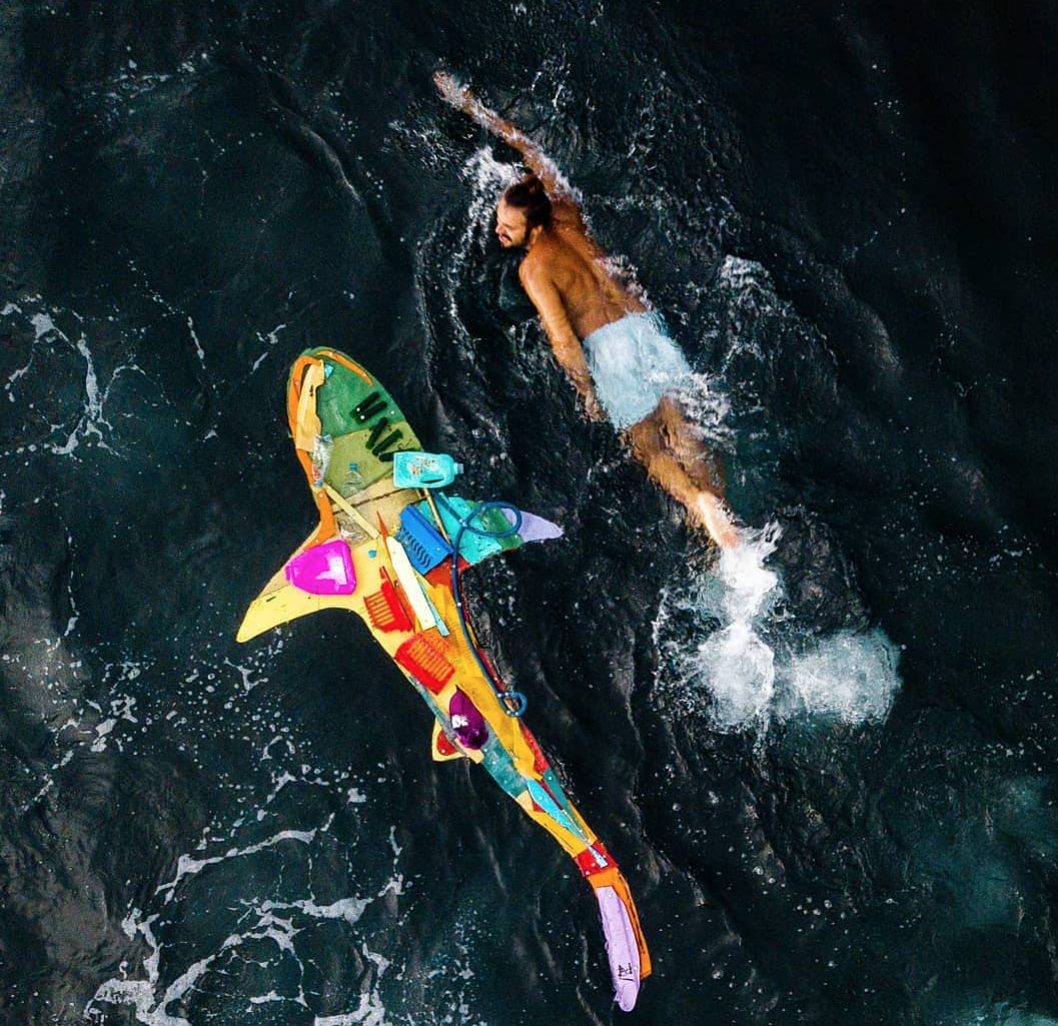
copyright Selina Miles
Trash as the Ocean’s Predator
Bordalo II’s Big Trash Animals use plastics, vehicle parts and other discarded materials to depict animals affected by pollution, excessive consumption and environmental degradation. In Tahiti, placing that material language beside and within the Pacific Ocean gave the idea particular force.
The contrast is deliberately uncomfortable. Brilliant blue water surrounds an animal built from the colourful remnants of consumption, turning ocean plastic from an abstract environmental concern into something visible, physical and difficult to ignore.
From Tahiti to Bordalo II’s Wider Marine Practice
The Tahiti sharks and sea turtle form an important chapter in Bordalo II’s marine animal practice, where marine wildlife becomes a means of exploring plastic pollution, waste and humanity’s relationship with the ocean.
This coastal narrative can be traced from the earlier Hove Trash Seagull in England to the Tahiti works of 2019 and later sculptures such as the Balloon Fish in Trafaria in Portugal.
Together, these works reveal how Bordalo II adapts the language of his Big Trash Animals to individual coastlines, species and communities while retaining a consistent question at their centre: what happens to the waste we leave behind?
Discover Bordalo II at GraffitiStreet
Discover available Bordalo II artworks at GraffitiStreet, contact us to discuss availability, acquisitions and private viewings, or visit GraffitiStreet Gallery, 25A West Street, Chichester, West Sussex, England PO19 1QW.